
In recent years, the rapid proliferation of civilian drones has ushered in a new era of technological innovation, transforming industries from logistics and agriculture to photography and emergency services. As an enthusiast and researcher in this field, I have witnessed firsthand the incredible potential of civilian drones, yet I am increasingly concerned about the regulatory void that surrounds their operation. The term “black flights” or illegal operations of civilian drones has become commonplace, highlighting significant safety and legal risks. This article delves into the legal issues pertaining to the airworthiness management of civilian drones, analyzing their nature, current regulatory frameworks, and the dual gaps in oversight. I aim to propose solutions and legislative pathways to ensure the safe and sustainable integration of civilian drones into our airspace, emphasizing the need for robust legal规制. Throughout this discussion, I will frequently reference civilian drones to underscore their centrality in this debate.
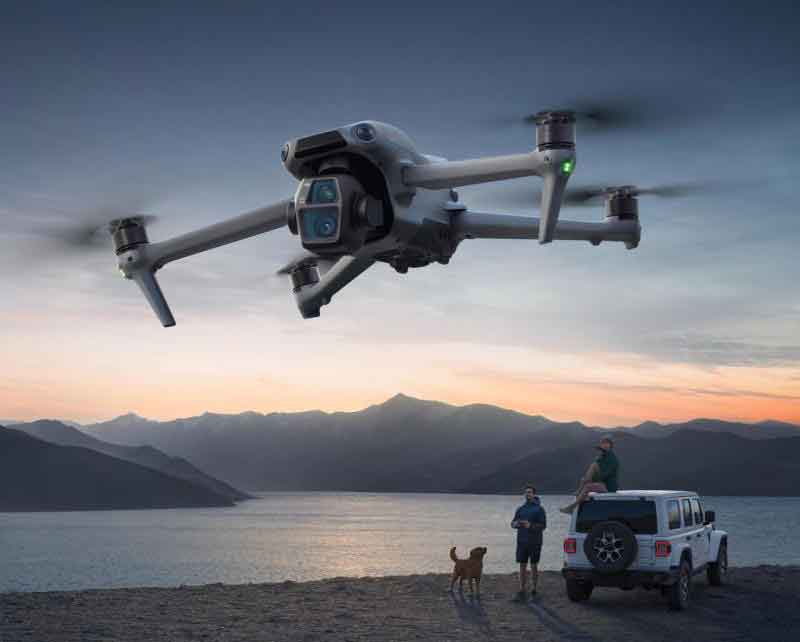
The image above vividly captures the diverse applications of civilian drones, from delivery services to aerial surveys, illustrating their growing presence in daily life. However, this expansion is not without challenges. The incident of a civilian drone nearly colliding with a helicopter in Reno, USA, or the unauthorized flight over the Japanese Prime Minister’s residence, serves as stark reminders of the perils of unregulated operations. In my research, I have found that the core issue lies in the lack of comprehensive airworthiness management and legal supervision for civilian drones. Airworthiness, which encompasses the fitness of an aircraft for safe flight, is traditionally well-established for manned aviation but remains underdeveloped for civilian drones. This gap is exacerbated by legal ambiguities, leading to a situation where civilian drones often operate in a gray area, risking public safety and hindering industry growth.
To understand the legal complexities, it is essential to first define civilian drones and distinguish them from similar devices. Civilian drones, or unmanned aircraft systems (UAS), are aircraft operated without a pilot on board, controlled remotely or autonomously. They differ significantly from model airplanes, which are primarily used for recreation and require continuous manual control within visual line of sight. The distinction is crucial for regulatory purposes, as civilian drones often perform complex tasks beyond visual range, such as mapping, surveillance, or cargo delivery. The International Civil Aviation Organization (ICAO) defines them as unmanned aircraft (UA), but national regulations vary. In my analysis, I categorize civilian drones based on weight, purpose, and operational capabilities, as summarized in the table below. This classification helps in tailoring regulatory approaches, as different types of civilian drones pose varying levels of risk.
| Category | Empty Mass (kg) | Takeoff Mass (kg) | Key Characteristics |
|---|---|---|---|
| Micro | ≤ 7 | ≤ 150 | Used for hobbyist purposes; often exempt from strict rules. |
| Light | 7 to 116 | ≤ 150 | Common in commercial applications like photography. |
| Small | 116 to 5,700 | Varies | Includes agricultural sprayer drones; higher risk profile. |
| Large | > 5,700 | N/A | Rare for civilian use; subject to stringent regulations. |
This classification aligns with guidelines from the Civil Aviation Administration of China (CAAC) and other international bodies. However, the rapid evolution of civilian drone technology means that these categories are fluid, necessitating dynamic regulatory frameworks. For instance, the rise of hybrid civilian drones that combine features of multiple classes complicates oversight. In my view, a risk-based approach is essential, where the regulatory burden scales with the potential hazard posed by civilian drones. This can be expressed through a simple formula for risk assessment:
$$ R = P \times S $$
where \( R \) represents the overall risk of a civilian drone operation, \( P \) is the probability of an incident (e.g., crash or collision), and \( S \) is the severity of consequences (e.g., property damage or injury). By quantifying risk, authorities can prioritize resources for high-risk civilian drones, such as those flying near airports or populated areas. This mathematical model underscores the need for precise data on civilian drone operations, which is currently lacking due to regulatory gaps.
Turning to the global legal landscape, I have observed a patchwork of regulations for civilian drones. In the United States, the Federal Aviation Administration (FAA) has implemented registration requirements for civilian drones weighing between 0.25 kg and 25 kg, with penalties for unauthorized flights near airports. However, the rules remain fragmented, and incidents like the near-miss in Reno highlight enforcement challenges. Japan, after a drone incident at the Prime Minister’s office, enacted stricter laws prohibiting flights over densely populated zones and imposing hefty fines. The United Kingdom emphasizes visual line-of-sight operations and mass limits, while France has introduced severe penalties, including imprisonment, for malicious use of civilian drones. The table below compares key regulatory aspects across these countries, focusing on civilian drones.
| Country | Registration Required | Flight Restrictions | Penalties for Violations |
|---|---|---|---|
| USA | Yes, for drones 0.25–25 kg | No-fly zones near airports | Fines up to $25,000 |
| Japan | Not specified | Ban over crowds and buildings | Fines up to ¥500,000 |
| UK | No, but recommended | Visual line-of-sight required | Case-by-case fines |
| France | Yes, for certain categories | Strict no-fly zones | Up to 1 year in prison |
Despite these efforts, I argue that many regulations are reactive rather than proactive, failing to address the root causes of illegal flights involving civilian drones. In China, for example, while temporary rules exist, such as the “Light and Small Unmanned Aircraft Operation (Trial) Regulation,” there is no overarching law dedicated to civilian drones. The “Civil Aviation Law” of 1995 predates the drone era, leaving civilian drones in a legal limbo. From my perspective, this dual缺位—both in airworthiness management and legal oversight—is the primary challenge. On one hand, airworthiness standards for civilian drones are absent or inconsistent; on the other hand, legal监管 is fragmented across multiple agencies, leading to confusion and inefficiency.
Delving deeper into the airworthiness management gap, I note that civilian drones lack uniform national technical standards. Currently, only industry-specific guidelines exist, such as those for aerial surveying, which are inadequate for the broad spectrum of civilian drones. Without standardized production and maintenance protocols, civilian drones may be prone to failures, increasing the risk of accidents. Moreover, detection technologies for civilian drones are underdeveloped. Unlike manned aircraft equipped with transponders, civilian drones are small and low-flying, making them difficult to track with traditional radar. This technical shortfall hampers enforcement against illegal flights of civilian drones. To illustrate, consider the signal-to-noise ratio in radar detection of civilian drones:
$$ SNR = \frac{P_t G^2 \lambda^2 \sigma}{(4\pi)^3 R^4 k T B F} $$
where \( SNR \) is the signal-to-noise ratio, \( P_t \) is transmitted power, \( G \) is antenna gain, \( \lambda \) is wavelength, \( \sigma \) is radar cross-section of the civilian drone, \( R \) is range, \( k \) is Boltzmann’s constant, \( T \) is temperature, \( B \) is bandwidth, and \( F \) is noise figure. The small \( \sigma \) of civilian drones results in low SNR, complicating detection. This formula underscores the need for advanced monitoring systems, such as networked sensors or cloud-based platforms, to manage civilian drones effectively.
On the legal监管 front, I identify two main issues: unclear regulatory authorities and incomplete legal frameworks for civilian drones. In many jurisdictions, civilian drones fall under the purview of multiple bodies—aviation authorities, market regulators, sports associations, and even police departments. This multiplicity leads to bureaucratic delays and loopholes, as seen in cases where operators of civilian drones face ambiguous审批 processes. For instance, in China, obtaining flight approval for civilian drones can involve up to ten agencies, discouraging compliance. Furthermore, laws do not clearly define property rights or liability for civilian drones, creating uncertainties in cases of damage or theft. From my analysis, this legal vacuum incentivizes “black flights” of civilian drones, as operators perceive low risks of punishment.
To address these gaps, I propose solutions centered on airworthiness and legal reforms for civilian drones. First, a “dual-certification” system should be mandatory for civilian drones. This means that both the drone itself and its operator must be certified. Each civilian drone should have a unique registration code linked to its owner, similar to a license plate, and operators must possess pilot licenses based on competency tests. This approach ensures traceability and accountability for civilian drones. The certification process can be modeled as:
$$ C_d = f(R, M, O) $$
where \( C_d \) represents the certification level for a civilian drone, \( R \) is risk assessment (as defined earlier), \( M \) is mass category, and \( O \) is operational purpose (e.g., commercial or recreational). Higher \( C_d \) values would entail stricter requirements for civilian drones. Implementing this system requires digital platforms for registration and real-time monitoring of civilian drones, leveraging technologies like GPS and cloud computing.
Second, regulatory development must keep pace with technological advances in civilian drones. I advocate for dynamic standards that evolve with innovation, rather than static rules. For example, the use of geo-fencing—software that restricts civilian drones from entering prohibited zones—should be standardized across manufacturers. Additionally, autonomous civilian drones should be equipped with collision avoidance systems, whose performance can be evaluated using algorithms like:
$$ A_{ca} = \sum_{i=1}^{n} w_i \cdot p_i $$
where \( A_{ca} \) is the collision avoidance efficacy score for a civilian drone, \( w_i \) are weights for different scenarios (e.g., urban vs. rural), and \( p_i \) are probabilities of successful avoidance. Regular audits of such systems for civilian drones would enhance airworthiness.
Moving to legislative pathways, I believe that effective regulation of civilian drones should be guided by two principles: minimal intervention and risk-based分级处理. Minimal intervention means avoiding over-regulation that stifles innovation in civilian drone technology; instead, rules should focus on high-risk areas. Risk-based分级处理 involves tailoring responses to the threat level, as shown in the table below for civilian drones.
| Risk Level | Characteristics of Civilian Drones | Regulatory Response |
|---|---|---|
| Low | Micro drones, visual line-of-sight, rural areas | Light-touch registration; educational campaigns |
| Medium | Light drones, commercial use, suburban zones | Mandatory certification; flight logs required |
| High | Large drones, autonomous flights, urban settings | Strict审批; real-time tracking; insurance mandates |
These principles should inform the establishment of clear regulatory bodies for civilian drones. I recommend creating a dedicated unmanned aircraft management committee, consolidating authority from various agencies to streamline oversight of civilian drones. This committee would coordinate policy, enforcement, and public awareness efforts specifically for civilian drones. Simultaneously, legal frameworks must be完善 to cover the entire lifecycle of civilian drones—from manufacturing and sale to operation and disposal. Key elements include:
- Defining property rights for civilian drones through registration systems.
- Establishing “air traffic rules” for civilian drones, such as no-fly zones around critical infrastructure.
- Implementing standardized signal protocols for civilian drones to enable communication and avoid mid-air collisions.
- Developing emergency response mechanisms for incidents involving civilian drones, with liability rules based on negligence or strict liability.
- Specifying penalties for违规 operations of civilian drones, ranging from fines to criminal charges for severe cases.
In my view, these measures should be codified in a comprehensive “Civilian Drone Airworthiness and Operations Act,” similar to road traffic laws. Such legislation would provide legal certainty and promote responsible use of civilian drones. To illustrate the economic impact, consider a cost-benefit analysis for regulating civilian drones:
$$ NB = \sum_{t=0}^{T} \frac{B_t – C_t}{(1 + r)^t} $$
where \( NB \) is net benefit, \( B_t \) are benefits from reduced accidents and increased productivity of civilian drones, \( C_t \) are costs of implementation, \( r \) is discount rate, and \( T \) is time horizon. Studies suggest that proper regulation of civilian drones yields positive \( NB \), justifying the investment.
Throughout this discussion, I have emphasized the centrality of civilian drones in modern society. Their potential is immense, but so are the risks if left unmanaged. From personal experience, I have seen how civilian drones can revolutionize logistics, as in delivery services, or enhance agricultural efficiency through precision spraying. However, without robust airworthiness and legal frameworks, incidents like “black flights” will persist, undermining public trust. The integration of civilian drones into national airspace requires a balanced approach—fostering innovation while ensuring safety. This entails continuous research and adaptation, as civilian drone technology evolves rapidly.
In conclusion, the legal and airworthiness challenges surrounding civilian drones are pressing issues that demand immediate attention. Through this analysis, I have highlighted the dual gaps in management and proposed solutions like dual certification, risk-based regulation, and dedicated legislation. By embracing principles of minimal intervention and分级处理, we can create an environment where civilian drones thrive safely. The future of civilian drones hinges on collaborative efforts among governments, industry, and the public to build a coherent regulatory ecosystem. As we move forward, let us prioritize the sustainable development of civilian drones, ensuring they serve as tools for progress rather than sources of hazard. The journey toward comprehensive oversight of civilian drones is complex, but with informed policies and technological integration, it is undoubtedly achievable.