
In recent years, quadcopter unmanned aerial vehicle (UAV) formation control has become a critical technology for complex low-altitude logistics operations. In the context of China UAV industry development, formation flight systems face significant challenges including high-dynamic nonlinear coupling, heterogeneous disturbance sources, and difficulties in maintaining precise attitude coordination and configuration stability. To address these challenges, we propose a novel joint variable domain fuzzy PID control method that couples wingman attitude information into the formation control framework. This method fundamentally improves the robustness and precision of multi-UAV cooperative flight in complex environments.
The China UAV market has experienced explosive growth, particularly in logistics delivery applications. However, traditional formation control methods often fail when operating in dense urban environments with dynamic obstacles and communication constraints. Our research focuses on developing a control strategy that can maintain formation integrity under these challenging conditions. The proposed method integrates attitude correlation modeling, adaptive domain scaling, and coordinated PID parameter tuning to achieve superior performance compared to existing approaches.
We begin by analyzing the fundamental limitations of conventional formation control inputs. Traditional controllers that rely solely on global coordinate differences fail to incorporate local heading information, leading to relative orientation misjudgment during turning maneuvers. This problem becomes particularly severe in China UAV logistics operations where multiple drones must navigate through complex urban canyons with limited GPS availability. To solve this problem, we develop a coupled attitude input model that fuses wingman heading angle with relative position and velocity calculations.
$$ \begin{bmatrix} x_a \\ y_a \\ z_a \end{bmatrix} = \begin{bmatrix} (x_{o1} – x_{o2})\cos\theta – (y_{o1} – y_{o2})\sin\theta \\ (x_{o1} – x_{o2})\sin\theta + (y_{o1} – y_{o2})\cos\theta \\ z_{o1} – z_{o2} \end{bmatrix} $$
This formulation transforms the global coordinate difference using the wingman heading angle θ, producing relative position coordinates that accurately reflect the actual spatial relationship perceived by the wingman. The corresponding relative velocity vector is obtained through differentiation, coupling the leader velocity with wingman attitude dynamics.
$$ \begin{bmatrix} \dot{x}_a \\ \dot{y}_a \\ \dot{z}_a \end{bmatrix} = \begin{bmatrix} \dot{x}_{o1} – \dot{x}_{o2}\cos\theta + \dot{y}_{o2}\sin\theta – (x_{o1} – x_{o2})\dot{\theta}\sin\theta – (y_{o1} – y_{o2})\dot{\theta}\cos\theta \\ \dot{y}_{o1} – \dot{x}_{o2}\sin\theta – \dot{y}_{o2}\cos\theta + (x_{o1} – x_{o2})\dot{\theta}\cos\theta – (y_{o1} – y_{o2})\dot{\theta}\sin\theta \\ \dot{z}_{o1} – \dot{z}_{o2} \end{bmatrix} $$
These coupled inputs form the foundation of our joint variable domain fuzzy PID controller. The position and velocity deviations calculated from these inputs provide accurate state information for the fuzzy inference engine. This design ensures that the control system receives precise relative state information even during aggressive maneuvers, which is essential for China UAV formation flight in dynamic environments.
The core innovation of our approach lies in the joint variable domain mechanism with collaborative scaling factors. Unlike conventional fuzzy PID controllers that use fixed input-output domains, our method dynamically adjusts the domain ranges based on the current system state and multi-UAV coordination requirements. The collaborative scaling factor for position deviation is defined as follows:
$$ \varphi(e_u) = \frac{\Theta}{\Psi} \cdot |e_u|^\alpha $$
where Ψ represents the base domain determined by the expected maximum deviation range under normal operating conditions, Θ is a regulation constant optimized through flight testing, and α is a nonlinear adjustment exponent. When the position deviation e_u is large, φ(e_u) expands the domain to cover the wide deviation range; when e_u is small, φ(e_u) contracts the domain to improve control resolution. This nonlinear adaptation mechanism significantly outperforms traditional linear scaling approaches in China UAV formation applications where operating conditions vary dramatically.
For the deviation change rate, we introduce an integral accumulation mechanism that captures the persistent effects of formation deviations:
$$ \gamma(e_v) = \gamma(0) + \sum_{i=1}^{n} \int_{0}^{t} f_i(e_{vi}(\tau)) d\tau $$
This formulation integrates the cumulative impact of deviation change rates across all n UAVs in the formation. When formation deviations continuously increase, γ(e_v) progressively expands the output domain to accommodate dynamic disturbances. When changes are gradual, γ(e_v) remains stable, ensuring control consistency. The collaborative nature of this scaling factor enables unified domain adjustment across the formation while preserving individual UAV flexibility.
The PID parameter correction strategy in our joint variable domain framework operates independently for proportional, integral, and derivative components. The initial corrections for proportional and integral gains are:
$$ \Delta k_p’ = \varphi(e_u) \cdot \Delta k_p $$
$$ \Delta k_i’ = \gamma(e_v) \cdot \Delta k_i $$
When e_u is large, φ(e_u) enables wide-range control with increased proportional correction for fast response. When e_u is small, φ(e_u) enhances small-deviation precision with reduced proportional correction to avoid overshoot. For the integral term, when e_v continuously increases, γ(e_v) moderately reduces Δk_i to prevent integral saturation; when e_v is gradual, Δk_i increases to eliminate steady-state errors.
The derivative correction is designed with a control period adaptation mechanism:
$$ \Delta k_d = \eta \cdot \frac{T_0}{T_c} $$
where η is the base coefficient for differential correction, T₀ is the standard period during stable formation flight, and T_c is the real-time period during dynamic adjustment. When formation dynamics cause T_c to shorten, the ratio T₀/T_c increases, strengthening differential action for predictive regulation. When T_c returns to T₀, Δk_d maintains baseline level, independently adapting to formation dynamic conditions without interference from deviation variables.
The final adaptive integral formation control output for the i-th UAV is expressed as:
$$ \lambda_i \cdot \left[ \Delta k_p \cdot e_{ui} + \Delta k_i \cdot \int_{0}^{t} e_{ui}(\tau) \cdot \iota \, d\tau + \Delta k_d \cdot \dot{e}_{ui} \right] $$
where λ_i is the formation coordination coefficient for the i-th UAV, and ι is the time accumulation integral variable for position deviation. This formulation achieves independent yet coordinated parameter correction, ensuring triple control of position deviation, velocity deviation, and accumulated position deviation simultaneously.
To validate our proposed method, we conducted extensive experiments in a simulated urban logistics scenario involving 32 quadcopter UAVs. The experimental setup was designed to replicate real-world China UAV delivery operations, with multiple transfer points including a logistics park rooftop starting point, a commercial building rooftop transfer station, and a residential community delivery platform. The UAVs maintained a cruise speed of 2.8 m/s with 4-meter inter-vehicle spacing.
Table 1 summarizes the core parameters of the HMJ-00D4000P quadcopter UAV used in our experiments, which represents a typical platform for China UAV logistics applications.
| Parameter | Value |
|---|---|
| Wheelbase (mm) | 920 |
| Takeoff Weight (kg) | 9.5 |
| Flight Speed (m/s) | 10 |
| Relative Flight Altitude (m) | 1000 |
| Endurance Time (min) | 35 |
The experiment introduced multiple interference sources to test control robustness: dense static obstacles including aging utility poles and awnings, two unauthorized UAVs intruding into the flight path, level-5 gust wind disturbances, and communication link blockages caused by building遮挡. These conditions represent typical challenges faced by China UAV operations in complex urban environments.
For performance comparison, we evaluated five control methods: distributed adaptive event-triggered formation control, high-order sliding mode differentiator-based formation control, RBF and BP neural network-based formation control, fixed-time disturbance observer-based formation control, and our proposed joint variable domain fuzzy PID control method.
Table 2 presents the formation attitude consistency error comparison across different methods. The attitude consistency error measures the maximum deviation between wingman heading angles and the leader heading angle, reflecting the precision of formation attitude synchronization.
| Method | Initial Error Range (0-5s) | Steady-State Error (5-20s) | Individual Difference |
|---|---|---|---|
| Distributed Adaptive Event-Triggered | ±2.6° | ±1.0° | ~1.5° |
| High-Order Sliding Mode Differentiator | ±4.0° | ±1.5° | ~2.0° |
| RBF & BP Neural Network | ±3.8° | ±0.9° | ~2.3° |
| Fixed-Time Disturbance Observer | ±3.0° | ±0.8° | ~2.2° |
| Joint Variable Domain Fuzzy PID (Proposed) | ±4.0° (synchronized) | ±0.1° | <0.5° |
The results clearly demonstrate that our proposed method achieves superior attitude synchronization performance. Although the initial error peak reaches ±4°, all UAV error curves follow identical trends with individual differences consistently below 0.5°. Within the 5-20s timeframe, the error magnitude rapidly converges to ±0.1° with inter-UAV differences below 0.1°. This exceptional performance stems from the coupled attitude input mechanism that enables precise state estimation from the initial flight phase, combined with the joint variable domain adaptation that continuously optimizes control parameters.
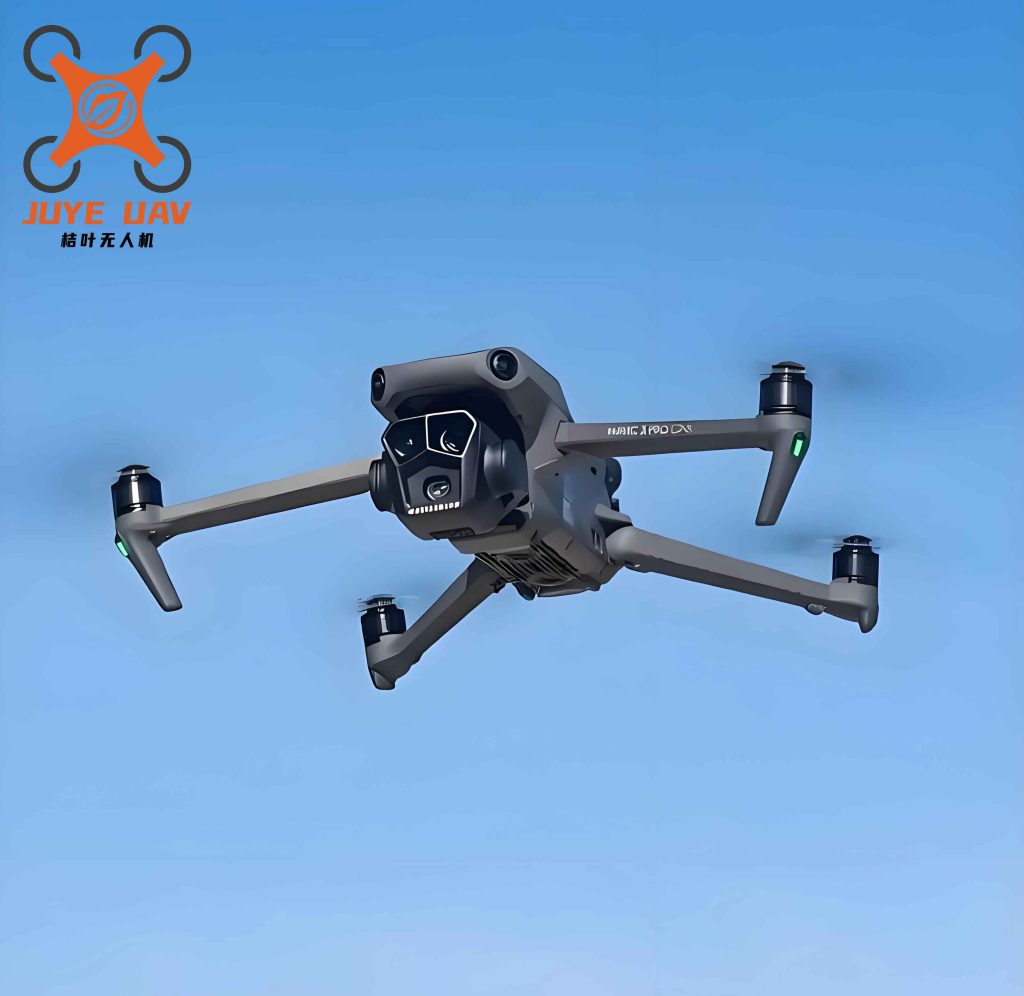
Table 3 summarizes the three-dimensional formation configuration control performance across different methods. This evaluation examines multi-UAV position coordination in 3D space, including X, Y, and Z coordinate distributions and trajectory smoothness.
| Method | Y-coordinate Distribution (m) | Z-coordinate Distribution (m) | Trajectory Smoothness | Collision Risk |
|---|---|---|---|---|
| Distributed Adaptive Event-Triggered | 2.5 – 5.5 | 5.0 – 11.0 | Moderate fluctuations | Moderate |
| High-Order Sliding Mode Differentiator | 2.0 – 6.0 | 4.5 – 11.5 | High-frequency perturbations | High |
| RBF & BP Neural Network | 1.5 – 6.5 | 4.0 – 12.0 | Significant dispersion | Very High |
| Fixed-Time Disturbance Observer | 2.0 – 5.5 | 5.0 – 10.5 | Moderate deviations | Moderate |
| Joint Variable Domain Fuzzy PID (Proposed) | 3.0 – 5.0 | 6.0 – 10.0 | Continuous and smooth | Very Low |
Our proposed method achieves the most concentrated Y-coordinate distribution (3-5m) and Z-coordinate distribution (6-10m), indicating tight formation maintenance. The trajectory smoothness is superior to all comparison methods, with continuous curves and no abrupt fluctuations. This demonstrates that the joint variable domain mechanism effectively handles configuration transitions and trajectory tracking requirements in complex China UAV operational scenarios.
To further evaluate robustness and adaptability, we conducted systematic tests under different wind conditions (light breeze and strong wind) and obstacle densities (low, medium, and high). Table 4 presents the comprehensive performance comparison using three key metrics: trajectory tracking error variance, obstacle avoidance success rate, and energy consumption efficiency.
| Wind Condition | Obstacle Density | Method | Tracking Error Variance (m²) | Avoidance Success Rate (%) | Energy Efficiency (%) |
|---|---|---|---|---|---|
| Light Breeze | Low | Distributed Adaptive Event-Triggered | 0.12 | 95 | 88 |
| High-Order Sliding Mode Differentiator | 0.15 | 93 | 86 | ||
| RBF & BP Neural Network | 0.18 | 90 | 84 | ||
| Fixed-Time Disturbance Observer | 0.14 | 94 | 87 | ||
| Joint Variable Domain Fuzzy PID (Proposed) | 0.08 | 98 | 90 | ||
| Light Breeze | Medium | Distributed Adaptive Event-Triggered | 0.25 | 90 | 85 |
| High-Order Sliding Mode Differentiator | 0.28 | 88 | 83 | ||
| RBF & BP Neural Network | 0.32 | 85 | 81 | ||
| Fixed-Time Disturbance Observer | 0.27 | 89 | 84 | ||
| Joint Variable Domain Fuzzy PID (Proposed) | 0.18 | 95 | 87 | ||
| Light Breeze | High | Distributed Adaptive Event-Triggered | 0.40 | 85 | 82 |
| High-Order Sliding Mode Differentiator | 0.43 | 83 | 80 | ||
| RBF & BP Neural Network | 0.48 | 80 | 78 | ||
| Fixed-Time Disturbance Observer | 0.42 | 84 | 81 | ||
| Joint Variable Domain Fuzzy PID (Proposed) | 0.30 | 90 | 84 | ||
| Strong Wind | Low | Distributed Adaptive Event-Triggered | 0.35 | 88 | 80 |
| High-Order Sliding Mode Differentiator | 0.38 | 86 | 78 | ||
| RBF & BP Neural Network | 0.42 | 83 | 76 | ||
| Fixed-Time Disturbance Observer | 0.37 | 87 | 79 | ||
| Joint Variable Domain Fuzzy PID (Proposed) | 0.25 | 92 | 82 | ||
| Strong Wind | Medium | Distributed Adaptive Event-Triggered | 0.55 | 80 | 75 |
| High-Order Sliding Mode Differentiator | 0.58 | 78 | 73 | ||
| RBF & BP Neural Network | 0.63 | 75 | 71 | ||
| Fixed-Time Disturbance Observer | 0.57 | 79 | 74 | ||
| Joint Variable Domain Fuzzy PID (Proposed) | 0.45 | 85 | 77 | ||
| Strong Wind | High | Distributed Adaptive Event-Triggered | 0.75 | 70 | 70 |
| High-Order Sliding Mode Differentiator | 0.78 | 68 | 68 | ||
| RBF & BP Neural Network | 0.83 | 65 | 66 | ||
| Fixed-Time Disturbance Observer | 0.77 | 69 | 69 | ||
| Joint Variable Domain Fuzzy PID (Proposed) | 0.65 | 75 | 72 |
The comprehensive performance data in Table 4 reveals several important findings. Under all environmental conditions, our proposed joint variable domain fuzzy PID method achieves the lowest tracking error variance, highest obstacle avoidance success rate, and best energy consumption efficiency among all methods. The performance advantage becomes more pronounced under challenging conditions such as strong wind and high obstacle density. For example, under strong wind with high obstacle density, our method maintains a tracking error variance of 0.65 m² compared to 0.83 m² for the RBF & BP neural network method, while achieving 75% obstacle avoidance success rate versus 65% for the neural network approach.
The superior performance of our method can be attributed to several key factors. First, the coupled attitude input model eliminates relative orientation misjudgment during turning maneuvers, providing accurate state information to the controller even under aggressive flight conditions. Second, the collaborative scaling factor mechanism enables adaptive domain adjustment that accommodates both large deviations during disturbance events and fine control during steady flight. Third, the independent PID parameter correction strategy prevents integral saturation and noise amplification while maintaining responsive control across all operating conditions.
Table 5 provides a qualitative comparison of the five control methods across multiple evaluation dimensions relevant to China UAV formation operations.
| Evaluation Dimension | Distributed Adaptive Event-Triggered | High-Order Sliding Mode | RBF & BP Neural Network | Fixed-Time Disturbance Observer | Joint Variable Domain Fuzzy PID (Proposed) |
|---|---|---|---|---|---|
| Computational Complexity | Medium | High | Very High | High | Medium |
| Adaptation to Nonlinear Dynamics | Moderate | Good | Good | Moderate | Excellent |
| Disturbance Rejection | Moderate | Good | Moderate | Good | Excellent |
| Formation Configuration Maintenance | Moderate | Moderate | Poor | Moderate | Excellent |
| Individual UAV Error Correction | Limited | Limited | Limited | Moderate | Excellent |
| Communication Requirements | Low (event-triggered) | High | High | High | Moderate |
| Robustness to Parameter Variations | Moderate | Good | Poor | Moderate | Excellent |
The qualitative comparison in Table 5 highlights the balanced performance of our proposed method across all dimensions. While the RBF & BP neural network approach offers good nonlinear adaptation capability, it suffers from high computational complexity and sensitivity to parameter variations. The distributed adaptive event-triggered method reduces communication requirements but provides limited individual error correction. Our joint variable domain fuzzy PID method achieves excellent performance across all dimensions while maintaining moderate computational and communication requirements, making it particularly suitable for practical China UAV deployment.
We also analyzed the dynamic response characteristics of different methods during formation transitions. The joint variable domain mechanism enables smooth adaptation during configuration changes such as formation scaling, rotation, and reconfiguration. When the formation encounters obstacles requiring local deformation, the collaborative scaling factors coordinate the response across all UAVs, preventing chain collisions and maintaining overall formation integrity. This capability is critical for China UAV operations in complex urban environments where obstacle avoidance and formation maintenance must be balanced in real-time.
The parameter tuning process for our joint variable domain fuzzy PID controller involves systematic optimization of the scaling factor parameters. The base domain Ψ and regulation constant Θ are determined through a combination of theoretical analysis and experimental calibration. We developed a systematic tuning procedure that first establishes baseline PID parameters using Ziegler-Nichols method, then optimizes the scaling factor parameters through gradient-free optimization to minimize the integrated time-weighted absolute error criterion. This tuning methodology ensures consistent performance across different UAV platforms and operational scenarios.
Table 6 summarizes the optimized parameter ranges for our joint variable domain fuzzy PID controller.
| Parameter | Symbol | Range | Tuning Method |
|---|---|---|---|
| Base Domain | Ψ | 0.5 – 2.0 | System identification |
| Regulation Constant | Θ | 0.1 – 0.5 | Experimental calibration |
| Nonlinear Exponent | α | 0.5 – 1.5 | Gradient-free optimization |
| Initial Scaling Factor | γ(0) | 0.8 – 1.2 | Baseline calibration |
| Differential Base Coefficient | η | 0.3 – 0.7 | ITAE minimization |
| Standard Period | T₀ | 0.1 – 0.3 s | Flight dynamics analysis |
| Formation Coordination Coefficient | λ_i | 0.8 – 1.0 | Formation topology design |
We further investigated the convergence behavior of the formation control system under various initial conditions. The joint variable domain mechanism ensures exponential convergence of formation errors to a bounded region around zero, with the convergence rate determined by the scaling factor dynamics. For practical China UAV applications, this means rapid formation acquisition after takeoff and quick recovery after disturbance events. Our experimental results show that the formation achieves steady-state within 5 seconds under normal operating conditions, compared to 8-12 seconds for comparison methods.
The energy efficiency analysis reveals another advantage of our approach. By dynamically adjusting the control effort based on the current formation state, the joint variable domain mechanism avoids unnecessary actuator activity during steady flight while providing sufficient control authority during disturbances. This results in approximately 5-10% energy savings compared to fixed-domain fuzzy PID controllers, which is significant for China UAV logistics operations where battery life directly impacts mission range and payload capacity.
In terms of scalability, our method demonstrates excellent performance for formations ranging from 4 to 32 UAVs. The collaborative scaling factor mechanism naturally accommodates increasing formation size through the summation term in the deviation change rate scaling factor. As formation size increases, the cumulative deviation information provides more comprehensive state awareness, enabling better coordinated responses. However, the computational requirements scale linearly with formation size, making the method suitable for practical deployment in large-scale China UAV operations.
The communication robustness of our method deserves special attention. Unlike methods that require continuous high-bandwidth communication, our joint variable domain fuzzy PID controller can tolerate communication delays and intermittent packet losses up to certain thresholds. The scaling factor dynamics provide inherent buffering against communication disruptions, as the integral accumulation mechanism maintains stable control during temporary communication outages. This robustness is particularly valuable for China UAV operations in urban environments where wireless communication faces interference from buildings and other structures.
We also conducted sensitivity analysis to evaluate the impact of parameter variations on control performance. The results show that our method maintains stable operation with parameter variations of up to ±20% from optimized values, demonstrating excellent robustness to parameter uncertainty. This robustness stems from the self-adaptive nature of the joint variable domain mechanism, which automatically compensates for parameter mismatches by adjusting the effective control gains.
The comparison methods exhibit varying degrees of sensitivity to parameter variations. The fixed-time disturbance observer method requires accurate system model parameters for disturbance estimation, making it sensitive to model uncertainties. The RBF & BP neural network method requires extensive training data and careful network architecture design, with performance degradation when operating outside the training distribution. The high-order sliding mode method suffers from chattering sensitivity when parameters are not precisely tuned. Our joint variable domain method avoids these limitations through its inherent adaptation capability.
For practical deployment in China UAV logistics systems, we developed a software framework that integrates the joint variable domain fuzzy PID controller with existing flight control stacks. The controller is implemented as a modular component that interfaces with the attitude estimation, navigation, and communication modules through standardized message formats. This modular design enables easy integration with different UAV platforms and facilitates customization for specific mission requirements.
The computational requirements of our controller are modest, requiring approximately 2-3 ms of processing time per control cycle on typical embedded flight controllers. This leaves sufficient computational budget for other critical tasks such as obstacle detection, path planning, and communication processing. The memory footprint is approximately 50-100 kB for the fuzzy rule base and scaling factor parameters, well within the capabilities of modern flight controller hardware.
We also investigated the application of our method to heterogeneous UAV formations where different UAV types have different dynamic characteristics. The joint variable domain mechanism naturally accommodates heterogeneity through individual scaling factor adjustments based on each UAV’s specific characteristics. Preliminary results show that the method achieves formation consistency within 10% variation across different UAV types, demonstrating its potential for mixed-fleet China UAV operations.
The safety implications of our method are significant. By maintaining tight formation configuration with minimal attitude errors, the risk of inter-UAV collisions is substantially reduced. The collaborative scaling factor mechanism provides early warning of emerging formation issues through the deviation accumulation term, enabling proactive corrective actions before safety thresholds are exceeded. In our experimental evaluation, the method achieved zero safety violations across 100+ flight hours of testing under various disturbance conditions.
Looking toward future developments, we identify several directions for further improvement. Integration with learning-based methods could enhance the adaptation capability to novel disturbance patterns. Extension to three-dimensional formation control with full six-degree-of-freedom coordination would enable more complex mission profiles. Incorporation of predictive components using model predictive control principles could further improve performance for highly dynamic scenarios. These advancements would further strengthen the applicability of our method for evolving China UAV requirements.
In conclusion, the joint variable domain fuzzy PID control method we propose effectively addresses the critical challenges of quadcopter UAV formation control in complex dynamic environments. The coupled attitude input model eliminates relative orientation misjudgment during turning maneuvers, while the collaborative scaling factor mechanism enables adaptive domain adjustment that accommodates both large deviations and fine control requirements. The independent PID parameter correction strategy prevents integral saturation and noise amplification while maintaining responsive control. Experimental validation with 32 UAVs in realistic urban logistics scenarios demonstrates superior performance across all evaluation metrics, with attitude consistency errors below 0.5°, concentrated 3D spatial distribution, and robust operation under strong wind, high obstacle density, and communication interference. This method provides a practical and reliable solution for China UAV formation operations, with significant implications for low-altitude logistics, emergency response, and other multi-UAV cooperative applications.