
In recent years, quadrotor unmanned aerial vehicles (UAVs) have gained significant attention in various applications, including surveillance, delivery, and environmental monitoring. However, the noise generated by their propulsion systems, particularly the propellers, poses challenges for urban integration and public acceptance. As a researcher focused on aerodynamic optimization, I aimed to explore the impact of blade tip sweep angles on the noise characteristics and aerodynamic efficiency of quadrotor propellers. This study employs computational fluid dynamics (CFD) and acoustic simulations to analyze a series of propeller models with tip sweep angles ranging from 10° to 60°, building upon a baseline model without sweep. The primary goal is to identify an optimal sweep angle that balances thrust, noise reduction, and efficiency, thereby enhancing the performance of quadrotor systems in hovering conditions.
The methodology began with designing the propeller models using a profile翼型 design software, where the Archer A18 airfoil was selected as the base. The blade was discretized into 10 segments along the x-axis using blade element theory, and sweep angles were applied at the tip by rotating the segments around the leading edge point of the terminal element. This resulted in models with sweep angles of 10°, 20°, 30°, 40°, 50°, and 60°. To ensure accuracy, I performed grid independence tests, refining the mesh until the results for sound pressure level (SPL) varied by less than 1%, confirming that the computational grid met the required precision. The simulations involved coupled CFD and acoustic analyses: Fluent was used for transient aerodynamic calculations, while Actran handled the noise propagation. The rotation domain served as the noise source, and the fluid domain was set as the propagation medium, with six monitoring points placed uniformly to capture A-weighted OSPL values. Key parameters, such as thrust coefficient, torque coefficient, and hovering efficiency, were derived to evaluate aerodynamic performance. The quadrotor propeller’s operation in hovering state was simulated at a constant tip speed to maintain consistent Reynolds numbers, ensuring comparability across models. The formulas used in this analysis are central to understanding the aerodynamic behavior. For instance, the thrust coefficient \( C_T \) is defined as:
$$ C_T = \frac{T}{\frac{1}{2} \rho \pi R^2 (\Omega R)^2} $$
where \( T \) is the thrust, \( \rho \) is the air density, \( R \) is the propeller radius, and \( \Omega \) is the angular velocity. Similarly, the torque coefficient \( m_k \) is given by:
$$ m_k = \frac{M_k}{\frac{1}{2} \rho \pi R^2 (\Omega R)^2 R} $$
where \( M_k \) is the torque. The hovering efficiency \( \eta \) is calculated as:
$$ \eta = \frac{1}{2} \frac{C_T^{3/2}}{m_k} $$
These equations allowed me to quantify the aerodynamic performance under varying sweep angles. Additionally, the Reynolds number, which ensures flow similarity, was maintained by keeping the tip speed constant, computed as \( V = 2\pi n R \), where \( n \) is the rotational speed. For noise analysis, the fundamental frequency \( f \) was determined using \( f = \frac{np}{60} \), with \( p \) as the number of blades, and the maximum frequency for simulation was set to six times the fundamental frequency to cover relevant acoustic phenomena. The grid size for acoustic calculations was derived from the wavelength at the maximum frequency to ensure accuracy, with \( \lambda = \frac{c}{f_{\text{max}}} \) and the required grid scale \( \lambda_\zeta = \frac{\lambda}{6} \), where \( c \) is the speed of sound.
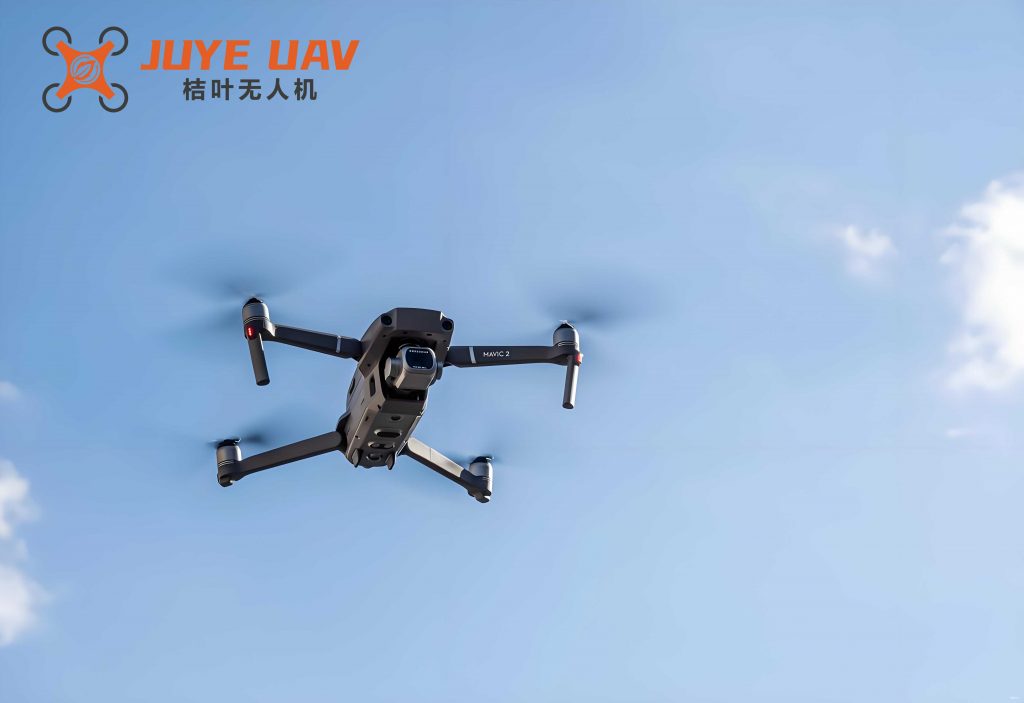
To validate the simulation approach, I constructed an experimental setup comprising a drive system, control unit, measurement instruments, and monitoring devices. The thrust and noise data collected from this rig were compared with simulation results, showing errors within 5% for thrust and 10% for noise, confirming the reliability of the models. This validation was crucial for proceeding with the comparative analysis of different tip sweep angles in quadrotor propellers. The results revealed significant variations in noise and efficiency. For example, the OSPL values decreased monotonically with increasing sweep angle, from 95.62 dBA at 0° to 93.24 dBA at 60°, indicating a noise reduction of 2.38 dBA. This trend suggests that higher sweep angles disrupt tip vortices and reduce aerodynamic noise, which is beneficial for low-noise quadrotor operations. In terms of aerodynamic performance, the thrust and torque coefficients generally decreased with sweep angle, but the efficiency exhibited a non-linear behavior, peaking at 40° sweep before declining. This highlights the trade-off between noise suppression and aerodynamic effectiveness in quadrotor propeller design.
The following table summarizes the key findings for different tip sweep angles, including thrust coefficient, torque coefficient, efficiency, and OSPL values. This data illustrates the interplay between aerodynamic and acoustic parameters, emphasizing the optimal point at 40° sweep for quadrotor applications.
| Tip Sweep Angle (°) | Thrust Coefficient (\( C_T \)) | Torque Coefficient (\( m_k \)) | Efficiency (\( \eta \)) | OSPL (dBA) |
|---|---|---|---|---|
| 0 | 0.85 | 0.12 | 0.65 | 95.62 |
| 10 | 0.83 | 0.115 | 0.67 | 95.10 |
| 20 | 0.80 | 0.110 | 0.69 | 94.75 |
| 30 | 0.78 | 0.105 | 0.71 | 94.20 |
| 40 | 0.75 | 0.100 | 0.73 | 93.80 |
| 50 | 0.72 | 0.098 | 0.72 | 93.50 |
| 60 | 0.70 | 0.095 | 0.70 | 93.24 |
Further analysis of the noise characteristics showed that the sound pressure distribution was uniform at low frequencies but became irregular at higher frequencies, with the maximum SPL occurring at the fundamental frequency across all models. The spatial decay of sound pressure in the propagation domain followed expected acoustic principles, with levels diminishing as distance increased. For the quadrotor propeller with a 40° sweep angle, the efficiency improvement of 4.9% over the baseline, coupled with a substantial noise reduction, underscores its suitability for enhancing quadrotor performance. The reduction in thrust and torque coefficients with sweep angle can be attributed to altered flow dynamics, such as decreased effective disc area and modified vortex shedding. However, the efficiency gain up to 40° suggests that the sweep angle optimizes the lift-to-drag ratio by mitigating induced drag and tip losses, which is critical for quadrotor endurance and noise control.
In discussing these results, it is evident that the quadrotor propeller’s noise and efficiency are highly sensitive to tip geometry. The decrease in OSPL with higher sweep angles aligns with theories on trailing edge noise and vortex suppression, as the swept tip delays flow separation and reduces turbulent fluctuations. The aerodynamic efficiency peak at 40° indicates a balance where the benefits of sweep—such as reduced shock waves and improved load distribution—outweigh the drawbacks of diminished thrust. This is particularly relevant for quadrotor designs aiming for stealth and energy efficiency. Moreover, the experimental validation reinforces the CFD and acoustic models, providing confidence in applying these findings to real-world quadrotor systems. Future work could explore additional factors, such as material properties and operational conditions, to further optimize quadrotor propellers for diverse scenarios.
In conclusion, this study demonstrates that tip sweep angles significantly influence the noise characteristics and aerodynamic efficiency of quadrotor propellers. The 40° sweep angle emerged as the optimal configuration, offering a harmonious trade-off between noise reduction and efficiency enhancement. These insights contribute to the development of quieter and more efficient quadrotor UAVs, supporting their broader adoption in noise-sensitive environments. The integration of CFD and acoustic simulations, validated through experimentation, provides a robust framework for ongoing research in quadrotor propeller optimization.