
In the contemporary global economy, technological innovation serves as a critical driver of sustainable development and competitive advantage. As nations transition toward knowledge-based economies, enterprises that harness cutting-edge technologies not only propel industrial upgrades but also reshape international market dynamics. This paper explores the internationalization strategies of technological innovation enterprises, with a focus on DJI, a pioneering company in the unmanned aerial vehicle (UAV) industry. By examining DJI’s journey from a startup to a global leader, we aim to derive insights applicable to small and medium-sized enterprises (SMEs) in the tech sector. The analysis incorporates theoretical frameworks, empirical data, and strategic evaluations, emphasizing the roles of innovation, market adaptation, and leadership in fostering international success.
Technological innovation encompasses a broad spectrum of activities, from fundamental research to commercial application, involving multiple stakeholders such as enterprises, universities, research institutions, and governments. Enterprises, as primary actors, leverage innovation to develop new products, enhance services, and optimize processes, thereby achieving high returns and externalities. For instance, the UAV industry, exemplified by DJI UAV products, demonstrates how innovation can create new market segments and redefine user experiences. This paper structures its discussion around key themes: a review of relevant literature, theoretical foundations of technological innovation, a detailed case study of DJI’s internationalization, and practical implications for other enterprises.
Literature Review
Research on technological innovation enterprises often highlights the interplay between external support mechanisms and internal capabilities. Studies indicate that government policies, financial systems, and social capital significantly influence innovation outcomes. For example, empirical analyses reveal that while government subsidies may not always directly enhance financing efficiency, they can positively interact with corporate social capital to foster innovation. In the context of internationalization, factors such as policy uncertainty, currency dynamics, and managerial expertise play pivotal roles. The following table summarizes key findings from recent studies on technological innovation and enterprise internationalization:
| Study Focus | Key Variables | Findings |
|---|---|---|
| Financing Efficiency | Government Support, Financial Development, Social Capital | Negative correlation between government support and financing efficiency; positive effects from financial development and social capital. |
| Profit Efficiency | Government Procurement, Subsidies, Service Outsourcing | All three variables positively impact profit efficiency in tech firms. |
| Internationalization Drivers | Policy Uncertainty, Currency Internationalization, Political Connections | Renminbi internationalization boosts firm internationalization, especially for non-state-owned enterprises in eastern regions. |
| Innovation Capacity | R&D Investment, Modern Technology, Evaluation Systems | Multi-dimensional assessment frameworks are crucial for measuring and enhancing innovation capabilities. |
Moreover, the concept of “born-global” enterprises, which internationalize rapidly after inception, is particularly relevant to DJI. Such firms typically leverage digital platforms and global networks to overcome traditional barriers. The integration of risk investment and intellectual property management further underscores the importance of strategic resource allocation in technological innovation.
Theoretical Foundations of Technological Innovation
Technological innovation is defined as the process of generating and applying new knowledge, techniques, and processes to create products or services that meet evolving societal needs. It spans basic research, applied development, and commercialization, involving a collaborative ecosystem of enterprises, academic institutions, and governments. The core characteristics of technological innovation include uncertainty, high returns, externalities, and pervasiveness, as outlined below:
- Uncertainty: Innovation outcomes are influenced by complex, non-linear factors such as market volatility, technical challenges, and information asymmetry. This can be modeled probabilistically: $$ P(Success) = f(I, M, T) $$ where \( I \) represents information availability, \( M \) market conditions, and \( T \) technical expertise.
- High Returns: Successful innovations, like the DJI drone series, can yield substantial profits by capturing market share through technological superiority. The return on innovation (ROI) can be expressed as: $$ ROI = \frac{\text{Net Benefits from Innovation}}{\text{R&D Investment}} $$ where net benefits include revenue growth and cost savings.
- Externalities: Knowledge spillovers enable follower firms to imitate leading technologies, reducing R&D costs and accelerating market entry. This externality effect can be represented as: $$ E = \alpha \cdot K_{spillover} + \beta \cdot M_{learning} $$ where \( E \) is the externality benefit, \( K \) knowledge spillover, and \( M \) market learning.
- Pervasiveness: Innovation permeates all sectors of the economy, driven by advancements in fields like artificial intelligence and materials science. The diffusion rate follows a logistic growth model: $$ D(t) = \frac{L}{1 + e^{-k(t – t_0)}} $$ where \( D(t) \) is adoption at time \( t \), \( L \) the maximum adoption level, \( k \) the growth rate, and \( t_0 \) the midpoint of adoption.
Enterprises serve as the primary actors in this framework, with universities and governments playing supportive roles. For instance, DJI’s collaboration with academic institutions has been instrumental in refining its UAV technologies, including the DJI FPV model, which combines high-speed performance with user-friendly controls.
Case Study: DJI’s Internationalization Strategy
DJI’s rise as a global leader in the UAV industry offers a compelling example of successful internationalization. Founded in 2006, the company initially focused on helicopter flight control systems before pivoting to multi-rotor UAVs. Its strategic evolution can be divided into three phases: initial exploration, rapid growth, and breakthrough innovation. Each phase is analyzed through the lenses of entrepreneurial spirit, industrial development, and market environment, with an emphasis on how DJI UAV products like the DJI drone series and DJI FPV model capitalized on global opportunities.
Phase 1: Initial Exploration (2006–2010)
During this phase, DJI’s founder demonstrated strong entrepreneurial vision by prioritizing R&D despite limited resources. The team engaged with online forums to understand user needs, leading to innovations in flight stability. The industrial landscape was nascent, with few competitors, allowing DJI to target niche markets of hobbyists. Market conditions favored experimentation, as regulatory frameworks for civilian UAVs were underdeveloped. The initial product iterations laid the groundwork for future DJI UAV models, with a focus on core technologies like flight control systems. A key moment was the development of free-hovering capabilities, which enhanced the appeal of DJI drone products internationally.
Phase 2: Rapid Growth (2010–2014)
Entrepreneurial decision-making accelerated DJI’s expansion, as the company invested in gimbal technology and launched the “Phantom” series. This DJI drone lineup revolutionized aerial photography by integrating high-resolution cameras and real-time data transmission. Industrial demand surged, with applications expanding to filmmaking, agriculture, and disaster response. For example, Hollywood productions adopted DJI UAVs for cost-effective filming, while consumers embraced them for recreational use. Market dynamics were shaped by technological advancements and evolving policies. The following table summarizes the growth indicators during this phase:
| Year | Key Product | Market Impact | Sales Growth (%) |
|---|---|---|---|
| 2012 | Phantom 1 | Introduced user-friendly UAVs | 50 |
| 2014 | Phantom 2 | Integrated HD video; recognized by Time Magazine | 120 |
Strategically, DJI leveraged digital marketing and social media to build a global brand, avoiding dependencies on single distributors like GoPro. This autonomy ensured control over innovation and pricing, critical for the DJI FPV and other future models.
Phase 3: Breakthrough Innovation (2014–Present)
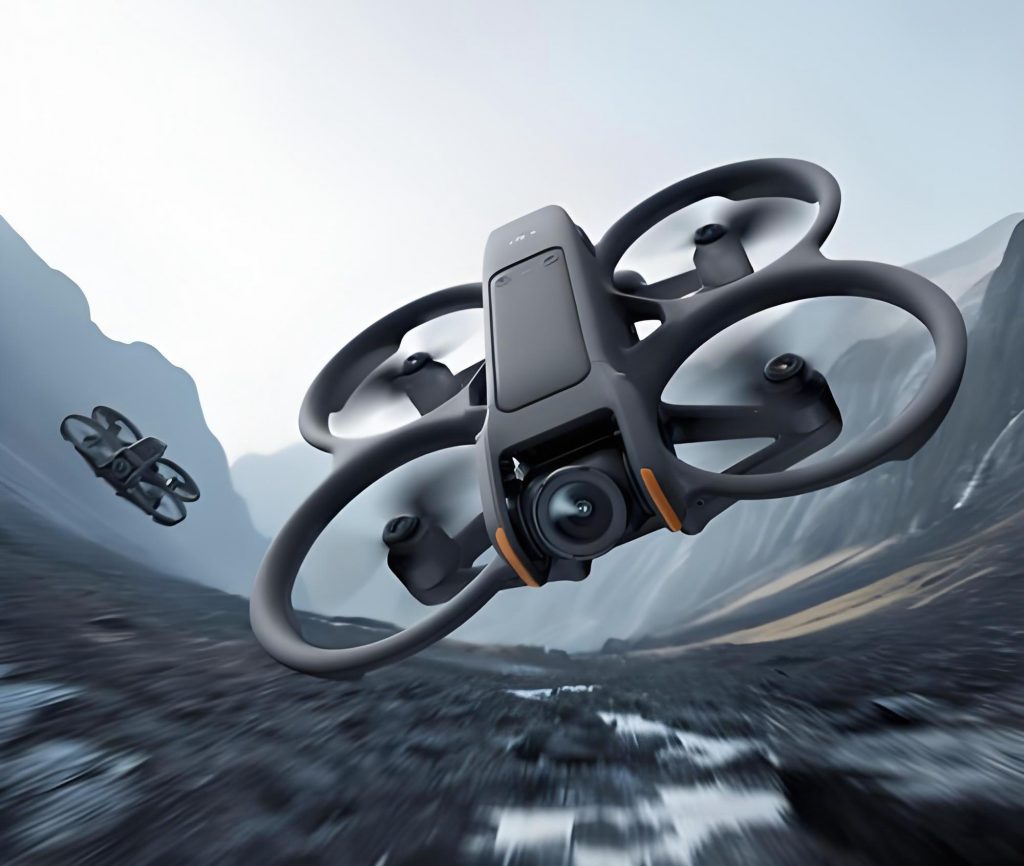
In this phase, DJI’s leadership emphasized long-term growth over short-term gains, rejecting premature IPO offers in favor of sustained R&D. The industrial ecosystem became more competitive, with rivals like 3D Robotics emerging. However, DJI maintained dominance through continuous innovation, such as the DJI FPV, which offers immersive flight experiences. Market environments were characterized by stricter regulations and geopolitical tensions, including U.S.-China trade disputes. Despite challenges, DJI’s focus on proprietary technology—evidenced by extensive patent filings—ensured resilience. The global and Chinese market shares for DJI UAV products are illustrated below:
| Region | Market Share (%) | Key Driver |
|---|---|---|
| Global | 70 | Technological superiority |
| China | 50 | Domestic policy support |
Innovation metrics, such as patent applications, peaked during this period, reflecting DJI’s commitment to R&D. The company also engaged in open innovation by releasing software development kits, enabling third-party enhancements to DJI drone platforms. The DJI FPV, in particular, exemplifies how user-centric design can expand applications to racing, cinematography, and education.
To quantify DJI’s innovation trajectory, consider the knowledge production function: $$ K = A \cdot R^α \cdot H^β $$ where \( K \) is knowledge output (e.g., patents), \( A \) total factor productivity, \( R \) R&D expenditure, and \( H \) human capital. DJI’s high \( α \) and \( β \) values indicate efficient resource utilization, driving the success of products like the DJI UAV series.
Implications for Technological Innovation Enterprises
DJI’s internationalization journey offers valuable lessons for SMEs in the tech sector. First, cultivating entrepreneurial resilience is essential; leaders must balance risk-taking with strategic foresight. Second, technological prowess, as demonstrated by DJI’s core innovations in DJI drone and DJI FPV systems, should be a perpetual focus. Third, market positioning must align with global demand, targeting underserved segments. Fourth, learning from industry leaders can accelerate international entry, while talent acquisition and collaboration with academia fuel innovation. The following recommendations are derived from DJI’s experience:
- Enhance Technological Capabilities: Invest in R&D to develop proprietary technologies, reducing external dependencies. For example, DJI’s in-house production of components insulated it from trade disruptions.
- Adapt to Market Needs: Conduct thorough market research to identify gaps, as seen in DJI’s expansion from hobbyist to professional sectors.
- Foster Innovation Ecosystems: Partner with universities and research institutes to access cutting-edge knowledge and talent.
- Implement Agile Strategies: Use digital tools for global marketing and supply chain management, mimicking DJI’s social media-driven growth.
A strategic framework for internationalization can be modeled as: $$ S = γ \cdot T + δ \cdot M + ε \cdot P $$ where \( S \) is success, \( T \) technological innovation, \( M \) market adaptation, and \( P \) policy alignment. For SMEs, optimizing these variables can enhance competitiveness in markets dominated by players like DJI.
Conclusion
The international development of technological innovation enterprises hinges on a synergistic blend of innovation, strategic vision, and market agility. DJI’s ascent in the global UAV industry, powered by products such as DJI UAV, DJI drone, and DJI FPV, underscores the importance of core technological competencies and adaptive internationalization strategies. By emulating DJI’s focus on R&D, talent development, and customer-centric innovation, SMEs can navigate the complexities of global markets. Future research could explore cross-industry applications or the impact of digital transformation on innovation cycles. Ultimately, the journey of enterprises like DJI reaffirms that technological innovation is not merely a business imperative but a catalyst for sustainable global progress.