
As a radio frequency management professional, I have witnessed the rapid proliferation of UAV drones in various sectors, including aerial photography, power line inspection, agricultural monitoring, and emergency response. These UAV drones rely heavily on relay devices to extend communication ranges, especially in long-distance missions where obstacles and Earth’s curvature impede direct signals. However, the widespread deployment of UAV drone relay systems has introduced significant radio frequency interference issues, particularly affecting satellite services such as Earth exploration. In this article, I will delve into a detailed case study of interference caused by UAV drone relay equipment, analyze the underlying challenges, and propose comprehensive solutions using tables and formulas to summarize key points. The goal is to enhance the management of UAV drone communications to mitigate such disruptions.
UAV drone relay devices are critical components that receive and forward signals—including video, audio, and data—between UAV drones and ground control stations. They operate on radio frequencies to facilitate real-time information sharing, but improper use can lead to harmful interference with licensed services. For instance, satellite Earth exploration bands, which are essential for environmental monitoring and scientific research, are vulnerable to unauthorized transmissions from UAV drone systems. I recall a recent interference investigation where an unknown signal disrupted satellite operations in the 1400-1427 MHz band, a frequency range reserved for sensitive Earth observation. Through on-site measurements and analysis, we traced the source to a UAV drone relay device installed on a high-rise building, highlighting the urgent need for better regulatory oversight.
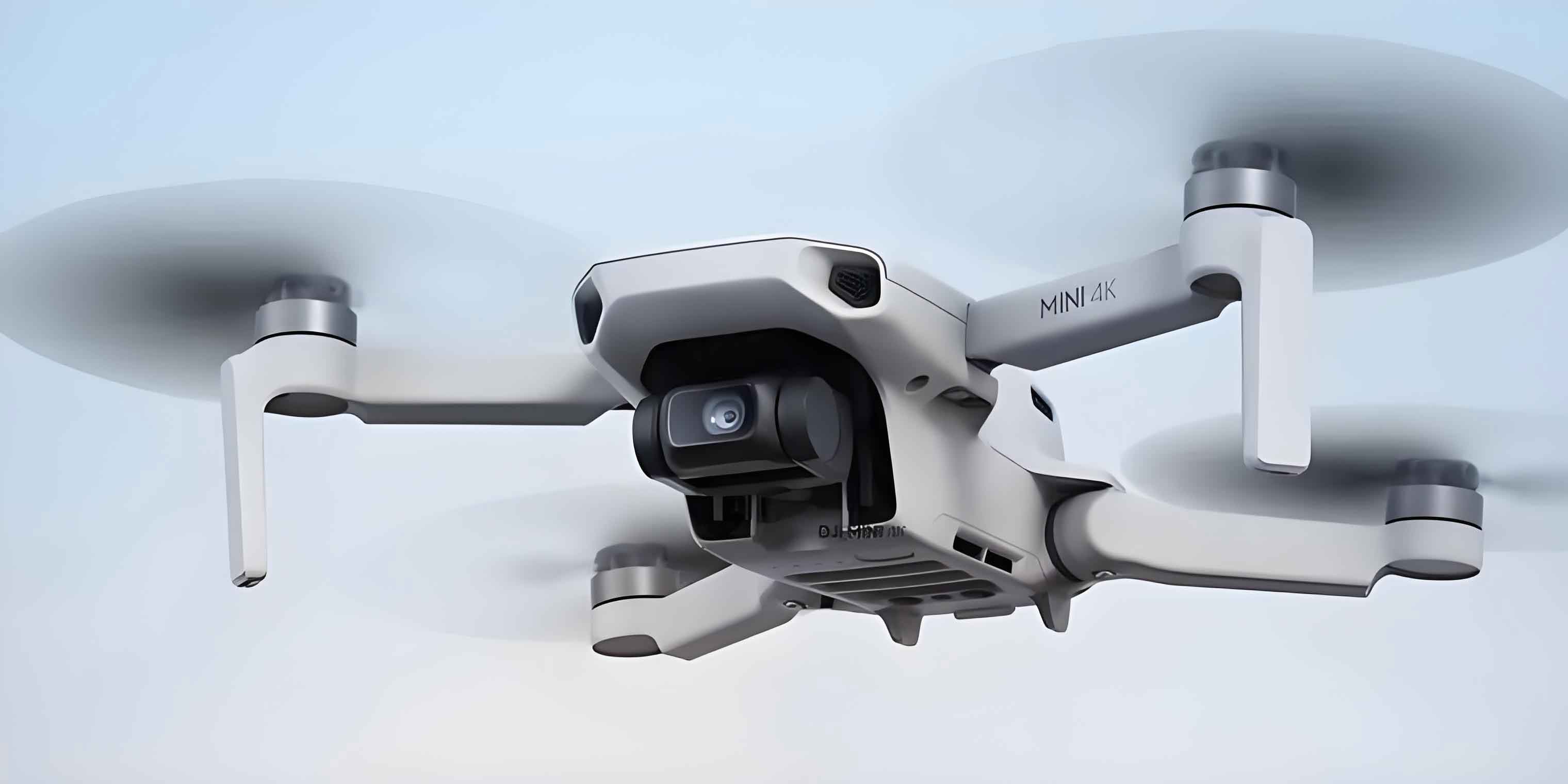
The interference detection process typically begins with a complaint from authorized users, such as satellite operators. In this case, we received a report of harmful interference in the 1400-1427 MHz band, with geolocation data pointing to a residential area near a riverbank. Using mobile monitoring vehicles and spectrum analyzers like the PR100, we detected suspicious signals slightly above the noise floor. The signal characteristics, including its bandwidth and power, suggested an illegal transmitter. Given the urban environment with dense high-rise buildings, we hypothesized that the interference source might be located on rooftops. After systematic testing, including on-off switching, we identified the culprit: a UAV drone relay device used for river inspection, operating in the 1396-1416 MHz range. This frequency band is not allocated for civilian UAV drone communications, indicating a clear violation of spectrum regulations. The device was subsequently shut down, eliminating the interference, as confirmed by follow-up spectrum scans.
To better understand the technical aspects, let’s examine the radio propagation model for UAV drone relay signals. The received signal power \( P_r \) at a satellite or monitoring station can be expressed as:
$$ P_r = P_t + G_t + G_r – L_p – L_f $$
where \( P_t \) is the transmit power of the UAV drone relay device, \( G_t \) and \( G_r \) are the antenna gains of the transmitter and receiver, respectively, \( L_p \) is the path loss, and \( L_f \) represents additional losses due to fading or obstacles. For interference to occur, \( P_r \) must exceed the noise threshold of the victim system. In the case of satellite Earth exploration, the allowable interference level is strictly regulated. We can calculate the interference margin \( I_m \) as:
$$ I_m = P_r – N_0 – C/N $$
where \( N_0 \) is the noise power spectral density and \( C/N \) is the required carrier-to-noise ratio for the satellite service. If \( I_m > 0 \), harmful interference is likely. For UAV drone relays, transmit power often varies, and improper calibration can lead to excessive \( P_t \), causing \( I_m \) to become positive even in distant locations.
The frequency bands allocated for civilian UAV drones are crucial to avoid such issues. According to regulations, such as those outlined by the International Telecommunication Union (ITU), specific bands are designated for remote control, telemetry, and data transmission. Below is a table summarizing common frequency bands for UAV drone operations globally, contrasted with the interference band observed in this case:
| Band Designation | Frequency Range (MHz) | Primary Use | Notes |
|---|---|---|---|
| UAV Drone Control Bands | 1430-1444, 2400-2476, 5725-5829 | Remote control and data links for civilian UAV drones | Officially allocated for unmanned aviation systems |
| Interference Band (Case Study) | 1396-1416 | Illegal operation of UAV drone relay device | Overlaps with satellite Earth exploration band (1400-1427 MHz) |
| Satellite Earth Exploration | 1400-1427 | Environmental monitoring and scientific data collection | Protected under international agreements |
This table underscores the importance of adhering to allocated bands to prevent conflicts. The UAV drone relay device in question operated outside these limits, causing significant disruption. Moreover, the proliferation of UAV drones in commercial markets has led to a diversity of equipment, often sold without proper frequency compliance checks. This highlights a broader management challenge: the lack of awareness and enforcement in the UAV drone ecosystem.
From my perspective, the current management of UAV drone communication systems faces several hurdles. First, the rapid evolution of UAV drone technology outpaces regulatory frameworks, leading to frequency abuse. Many users, including government agencies and private companies, are unaware of spectrum policies, resulting in accidental interference. Second, monitoring efforts for less commonly used bands are often reactive rather than proactive; we tend to investigate only after complaints arise, allowing illegal operations to persist. Third, there is insufficient publicity regarding radio equipment certification and sales备案, which exacerbates non-compliance among UAV drone operators. These issues are compounded by the global nature of UAV drone sales, with online platforms offering devices that may not meet local regulations.
To address these challenges, I propose a multi-faceted approach centered on strengthening regulations, enhancing monitoring, and increasing education. Below is a table outlining key recommendations for radio management authorities:
| Recommendation Area | Specific Actions | Expected Outcome |
|---|---|---|
| Regulatory Enhancement | Enforce device type approval and sales备案 for UAV drone systems; update policies to cover new technologies | Reduce unauthorized frequency use by UAV drones |
| Proactive Monitoring | Increase spectrum surveillance in UAV drone bands, especially near critical infrastructure; use automated detection systems | Early identification of interference sources from UAV drones |
| Stakeholder Collaboration | Establish communication channels with sectors using UAV drones (e.g., utilities, agriculture); share frequency usage data | Quick resolution of interference cases involving UAV drones |
| Public Awareness | Launch campaigns to educate UAV drone users on spectrum rules; distribute guidelines in multiple languages | Improved compliance and reduced accidental interference from UAV drones |
Implementing these measures requires robust technical tools. For instance, spectrum monitoring can be optimized using algorithms that detect anomalies in real-time. Consider a detection metric \( D \) based on signal power and bandwidth:
$$ D = \int_{f_1}^{f_2} (S(f) – N(f)) \, df $$
where \( S(f) \) is the measured signal power spectral density, \( N(f) \) is the baseline noise, and \( f_1 \) to \( f_2 \) define the frequency band of interest. If \( D \) exceeds a threshold \( T \), an alert is triggered for potential interference from UAV drone relays. This can be integrated into automated monitoring networks to provide continuous coverage.
Furthermore, the interference potential of UAV drone systems depends on their operational parameters. We can model the effective isotropic radiated power (EIRP) of a UAV drone relay as:
$$ \text{EIRP} = P_t \times G_t $$
and the power flux density \( \Phi \) at a distance \( d \) from the transmitter is given by:
$$ \Phi = \frac{\text{EIRP}}{4\pi d^2} $$
For satellite services, the allowable \( \Phi \) is limited to prevent degradation. By comparing calculated \( \Phi \) values with regulatory limits, we can assess compliance. For example, if a UAV drone relay has \( P_t = 1 \, \text{W} \) and \( G_t = 10 \, \text{dBi} \), then \( \text{EIRP} = 10 \, \text{W} \). At \( d = 10 \, \text{km} \), \( \Phi \approx 7.96 \times 10^{-9} \, \text{W/m}^2 \), which might exceed thresholds for sensitive satellite bands. This underscores the need for power control in UAV drone equipment.
In addition to technical solutions, policy frameworks must evolve. The recent “Interim Measures for Radio Management of Civilian Unmanned Aerial Vehicles” provide a foundation, but they need widespread dissemination. I advocate for mandatory training for UAV drone operators, covering topics like frequency selection, interference avoidance, and legal responsibilities. This could be integrated into licensing processes for commercial UAV drone use. Moreover, international cooperation is vital, as UAV drones often operate across borders; harmonized frequency allocations can minimize cross-border interference.
Looking ahead, the growth of UAV drone applications will continue to pressure spectrum resources. Emerging technologies, such as 5G-based UAV drone communications and swarm operations, will require new frequency bands and more sophisticated management. We must anticipate these trends by conducting regular spectrum assessments and updating regulations proactively. For instance, dynamic spectrum sharing techniques could allow UAV drones to operate in secondary bands without harming primary users. This involves algorithms that adjust transmit parameters based on real-time spectrum occupancy, a concept known as cognitive radio. The interference avoidance condition can be expressed as:
$$ \sum_{i=1}^{N} P_i \cdot B_i \leq I_{\text{thresh}} $$
where \( P_i \) and \( B_i \) are the power and bandwidth of each UAV drone transmitter, and \( I_{\text{thresh}} \) is the total interference threshold for the protected service. By enforcing this constraint, UAV drone networks can coexist with satellite systems.
To illustrate the scale of the UAV drone market and its regulatory gaps, here is a table summarizing global trends and associated interference risks:
| Region | Estimated UAV Drone Population (Millions) | Common Interference Reports | Regulatory Status |
|---|---|---|---|
| North America | 2.5 | Clashes with aviation and satellite bands | Strict type approval, but enforcement varies |
| Europe | 1.8 | Issues in 2.4 GHz and 5.8 GHz bands | Harmonized rules under EASA, but challenges remain |
| Asia-Pacific | 4.0 | Widespread frequency abuse in rural areas | Patchwork regulations; growing awareness |
| Global Total | ~10 | Increasing satellite interference cases | Need for unified standards for UAV drones |
This table emphasizes the urgency of coordinated action. As a radio management professional, I believe that by leveraging technology, policy, and education, we can mitigate interference from UAV drone relay systems. Key steps include deploying advanced monitoring infrastructure, fostering industry partnerships, and promoting best practices among UAV drone users. For example, utilities companies using UAV drones for infrastructure inspection should be required to conduct pre-deployment frequency checks and report their operational parameters to authorities.
In conclusion, the case of UAV drone relay interference with satellite Earth exploration serves as a wake-up call for the radio management community. Through detailed analysis and proactive measures, we can safeguard critical spectrum resources while supporting the beneficial applications of UAV drones. By implementing the recommendations outlined here—including enhanced monitoring, regulatory enforcement, and stakeholder engagement—we can reduce interference incidents and ensure the sustainable growth of the UAV drone industry. The journey requires continuous adaptation, but with collaborative efforts, we can achieve a harmonious radio frequency environment for all users.