
The maintenance of urban lighting infrastructure is a critical, yet traditionally resource-intensive, component of modern city management. Conventional methods, reliant on manual nighttime inspections conducted by personnel in vehicles, are plagued by significant inefficiencies, high operational costs, and inherent safety risks. Inspectors face the dangers of working at height and in traffic, while management entities struggle with real-time oversight, delayed fault detection, and fragmented communication between maintenance and regulatory bodies. These challenges are exacerbated by a shortage of skilled technicians and the vast, complex urban environments that need to be covered. This article details the design and implementation of a transformative intelligent inspection system that synergizes Unmanned Aerial Vehicles (UAV drones), Artificial Intelligence (AI), and edge computing to address these longstanding issues. The system establishes a “device-edge-cloud” collaborative architecture, enabling fully automated, data-driven management from task planning and intelligent analysis to closed-loop fault resolution.
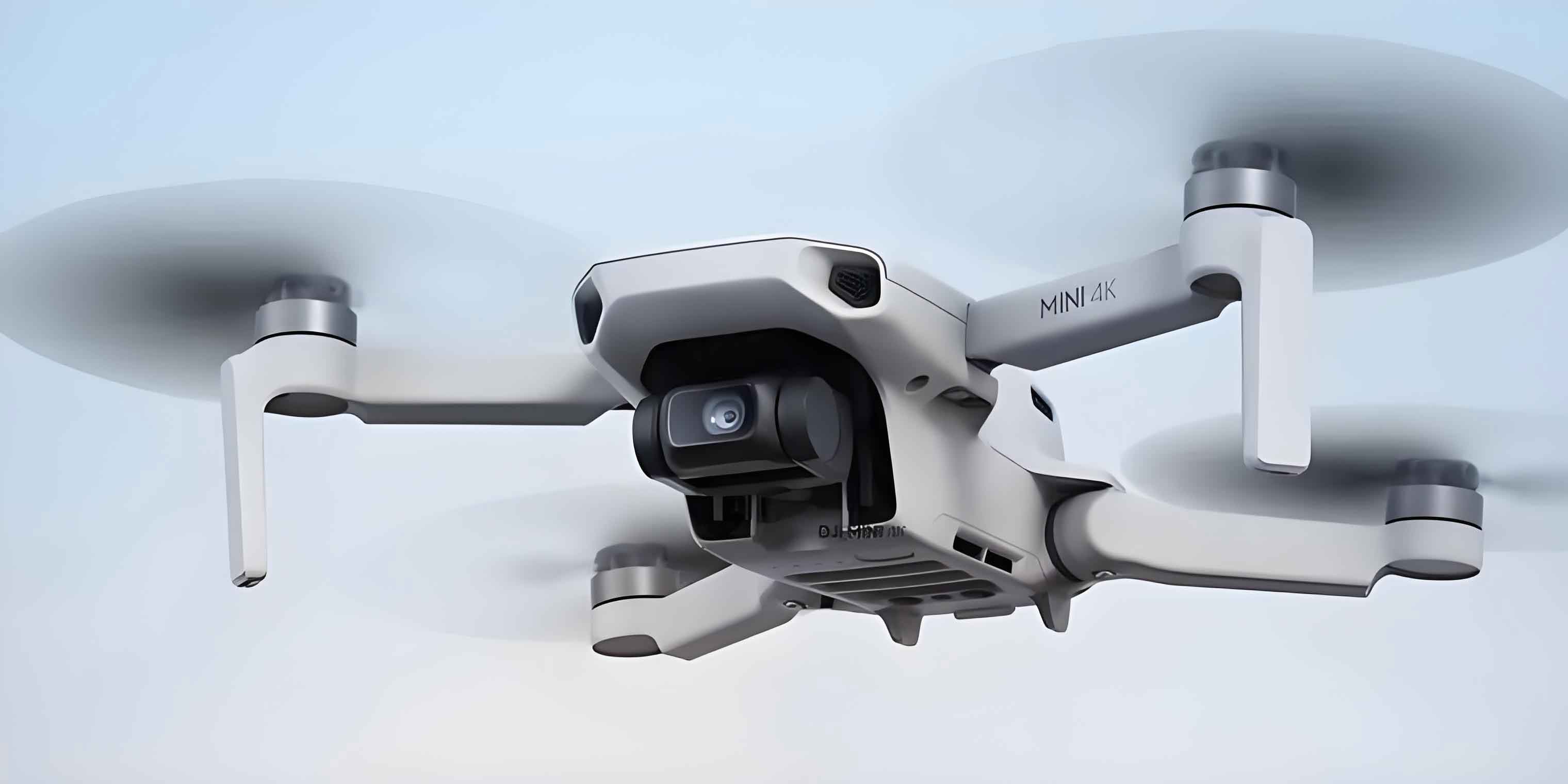
The paradigm shift is driven by the convergence of two powerful technological trends: the rise of the low-altitude economy and the explosive advancement of AI. Nationally, policies such as the “National Comprehensive Three-Dimensional Transportation Network Plan” have formally introduced the concept of the low-altitude economy, positioning it as a new growth engine. This sector, encompassing logistics, infrastructure management, and urban air mobility, finds a perfect physical and operational partner in UAV drones. Simultaneously, the “AI Plus” initiative has propelled AI to become a core driver of new industrialization. Breakthroughs in generative AI, coupled with exponentially growing computing power from dedicated AI chips, have made sophisticated computer vision and analysis tasks commercially viable. The integration of UAV drones with AI is redefining value chains across industries, from power grid inspections to urban governance, creating replicable models for intelligent operations.
Our system is engineered to leverage this synergy specifically for urban lighting. It moves beyond simple aerial photography, creating an integrated “perception-analysis-decision-action” loop. The core objective is to replace subjective, periodic human checks with continuous, objective, and intelligent monitoring, thereby achieving digital and intelligent transformation in urban lighting maintenance.
System Architecture: A Device-Edge-Cloud Synergy
The intelligent inspection ecosystem is built upon a layered, cooperative architecture designed for scalability, real-time processing, and robust data management. It integrates physical hardware, communication networks, AI processing layers, and application platforms.
| Architectural Layer | Components | Primary Function |
|---|---|---|
| Device Layer (End) | AI-equipped UAV Drones, Autonomous Drone Docks/Airports, Smart AI Inspection Terminals. | Data acquisition (imagery, video), autonomous flight, initial edge-based processing. |
| Communication Layer | 5G/4G, Dedicated Wireless (2.4/5.8 GHz), Beidou/GPS, Internet. | High-bandwidth, low-latency data transmission, precise positioning, and command & control links. |
| Edge & Core Processing Layer | Edge AI Terminals, Centralized AI Model & Algorithm Servers. | Real-time inference on the edge, deep learning model execution, data analysis, and feature recognition. |
| Platform & Application Layer (Cloud) | Comprehensive Smart Lighting Management Platform, UAV Fleet Management, GIS, Mobile Apps. | Task planning, data visualization, workflow management, decision support, and closed-loop maintenance dispatch. |
The operational workflow begins at the platform layer, where inspection tasks are planned and scheduled. These tasks are dispatched to autonomous drone docks installed on smart streetlight poles or dedicated sites. The UAV drones, equipped with high-resolution cameras and onboard/edge AI processors, execute the pre-defined flight paths. Captured imagery is processed in near real-time using computer vision algorithms to identify anomalies. This processing can occur on the edge device (the drone or its dock) for immediate alerting or be streamed to central servers for more complex analysis. Identified faults are geotagged, classified, and automatically generate work orders within the management platform, initiating the repair and verification cycle.
The mathematical foundation for the autonomous flight path planning can be modeled as an optimization problem, minimizing energy consumption and time while ensuring complete coverage:
$$ \min_{P} \left( \alpha \cdot T(P) + \beta \cdot E(P) \right) $$
$$ \text{subject to: } \bigcup_{i=1}^{n} C(p_i) = A, \quad S(p_i) \cap O = \emptyset $$
where \( P = \{p_1, p_2, …, p_n\} \) represents the flight path, \( T(P) \) is the total time, \( E(P) \) is the energy consumption, \( \alpha \) and \( \beta \) are weighting coefficients, \( C(p_i) \) is the area covered at point \( p_i \), \( A \) is the total target area, and \( O \) represents no-fly zones or obstacles.
Core Technologies and Intelligent Workflow
The system’s intelligence is rooted in several key technologies that transform raw video feeds into actionable insights.
1. Computer Vision and Deep Learning Algorithms: At the heart of the system are convolutional neural networks (CNNs) and vision transformers trained on vast datasets of urban lighting fixtures. These models automatically detect and classify a wide range of faults. The detection process for a single fixture can be framed as:
$$ \text{Fault Confidence} = F_{\theta}(I_{patch}) = [c_{lamp\_out}, c_{damage}, c_{tilt}, c_{obstruction}, …] $$
where \( F_{\theta} \) is the trained AI model with parameters \( \theta \), \( I_{patch} \) is the image patch containing the lighting fixture, and \( c \) represents the confidence score for each potential fault class. A fault is reported when any \( c > \tau \), where \( \tau \) is a pre-defined confidence threshold.
2. Communication and Positioning: Reliable, low-latency communication is vital. UAV drones utilize a multi-mode approach: dedicated wireless frequencies for direct, low-latency control, and 5G/4G for high-bandwidth data transmission of imagery and telemetry. Beidou/GPS provides centimeter-level positioning, ensuring accurate geotagging of every identified fault.
3. Edge Computing: Deploying AI inference capabilities on the edge—on the drone itself or within the smart dock—is crucial for responsiveness. This allows for immediate detection of critical failures (e.g., complete street segment blackout) without waiting for cloud processing, enabling faster initial alerts. The edge-cloud workload can be balanced:
$$ \text{Processing Decision} = \begin{cases}
\text{Edge}, & \text{if } L(f) > L_{critical} \text{ and } B < B_{threshold} \\
\text{Cloud}, & \text{otherwise}
\end{cases} $$
where \( L(f) \) is the estimated severity of a potential fault \( f \), \( B \) is the available bandwidth, and \( L_{critical} \), \( B_{threshold} \) are system parameters.
The Intelligent Inspection Management Platform
The cloud-based platform serves as the mission control center, integrating all data streams and functionalities into a cohesive management environment. Its design follows a “One Center, One Map, One Platform, Two Databases, N Applications” philosophy.
Key Functional Modules:
- Task Planning & UAV Fleet Management: Allows managers to create detailed, periodic inspection plans based on GIS data, fixture importance, and historical fault rates. It manages the entire fleet of UAV drones and autonomous docks, monitoring their status, scheduling missions, and tracking real-time execution.
- Visualization & GIS Integration: All data is presented on a dynamic 2D/3D map. Inspection tracks, real-time drone locations, and identified faults are visually overlaid. “Inspection Heatmaps” visually highlight areas with high fault frequency or low inspection coverage, guiding strategic resource allocation.
| Platform Module | Specific Capabilities |
|---|---|
| Task Planning | Create periodic plans, assign routes, manage drone/dock assets. |
| Real-Time Monitoring | View live drone feed, track flight path adherence, see real-time fault alerts on map. |
| Data Query & Analysis | Query faults by type, time, location; analyze trends; generate coverage reports. |
| Work Order Management | Automatically generate and dispatch repair tickets; track progress to closure. |
| Performance & KPI Dashboard | Monitor inspection completion rates, fault detection accuracy, repair response times. |
3. AI-Powered Analysis & Closed-Loop Processing: This is the system’s brain. The platform receives and processes analysis results from the AI servers. It automatically validates, categorizes, and logs each detected event. Crucially, it initiates the closed-loop workflow by creating a work order, assigning it to the relevant maintenance team via a mobile app, and tracking its completion through final verification, often involving a follow-up inspection by the UAV drones.
4. Mobile Application & Field Support: Maintenance personnel use a dedicated mobile app to receive assigned work orders, navigate to the precise fault location using integrated maps, access fault details and images, and update the job status (e.g., “in progress,” “completed,” “requires additional parts”). This seamlessly integrates field operations with central management.
Smart Streetlight Poles as UAV Drone Infrastructure Hubs
A pivotal innovation in this system is the repurposing of streetlight poles into intelligent infrastructure nodes for the low-altitude economy. We have deployed specialized composite poles (e.g., 12-meter height) that integrate high-efficiency LED lighting with an autonomous drone dock (e.g., DJI Dock 3) at the top. This transforms a passive lighting asset into an active, networked launch and recovery base for UAV drones.
These “Drone-in-a-Pole” systems are strategically located to provide optimal coverage. They house and protect the drone, keep its batteries charged, and facilitate fully autonomous operations without on-site human intervention. The supporting AI inspection terminal, with significant processing power (e.g., 6 TOPS), is colocated, managing drone dispatch, data reception, and initial processing. The key performance metrics of this integrated hardware platform are summarized below:
| Parameter | Specification / Performance |
|---|---|
| Pole Function | Dual-purpose: Public Lighting + UAV Drone Base Station |
| Drone Operations | Fully autonomous take-off, mission execution, landing, charging |
| AI Terminal Compute | 6 TOPS, 8-core processor |
| Environmental Rating | Operational range: -20°C to 70°C; IP67 protection |
| Communication | 5G, Ethernet, Beidou/GPS |
This integration offers profound benefits. It drastically reduces the logistical cost and complexity of drone deployment, as the infrastructure is already powered and connected. It enables persistent, on-demand inspection capabilities across the city. The operational impact is clear: a single drone operating from these networked poles can cover an area that would require multiple manual inspection teams.
Performance Metrics and Quantitative Outcomes
The implementation of this system in a pilot urban area has yielded quantitatively significant improvements across all key performance indicators. The shift from manual to intelligent, drone-based inspection creates a new efficiency frontier.
The overall system effectiveness can be evaluated using a composite metric that weighs improvements in cost, time, and coverage:
$$ \text{System Effectiveness Index (SEI)} = w_1 \cdot \frac{C_{manual}}{C_{UAV}} + w_2 \cdot \frac{T_{manual}}{T_{UAV}} + w_3 \cdot \frac{Cov_{UAV}}{Cov_{manual}} $$
where \( C \) represents cost, \( T \) represents time per inspection cycle, \( Cov \) represents spatial and fault coverage quality, and \( w \) are weighting factors summing to 1. Our pilot data demonstrates an SEI improvement exceeding 2.5x.
| Performance Indicator | Traditional Manual Method | UAV+AI Intelligent System | Improvement |
|---|---|---|---|
| Inspection Efficiency | Baseline (2 persons, 1 vehicle per night shift) | Fully autonomous, simultaneous multi-area patrols | > 50% increase in area covered per time unit |
| Operational Cost | High (labor, vehicle, overtime, insurance) | Primarily electricity & periodic maintenance | ~60% reduction in comprehensive cost |
| Fault Detection Rate | Subjective, prone to misses, especially for minor or high-altitude faults | Consistent, algorithmic analysis of high-res imagery | Near 100% for defined fault classes; earlier detection of developing issues |
| Worker Safety Risk | High (night work, traffic, working at height) | Minimal (drone operates autonomously, personnel work daytime on specific repairs) | Elimination of high-risk inspection activities |
| Data & Documentation | Paper-based or simple digital logs, limited imagery | Comprehensive digital trail: flight paths, images, fault tags, repair records | Full digitization enabling audit, analysis, and predictive maintenance |
Furthermore, the system enables advanced lighting performance analytics. By analyzing the imagery, it can estimate luminance distribution and identify areas of poor uniformity, a task nearly impossible with manual methods. This can be modeled by processing the captured image \( I(x,y) \) of a road section:
$$ \text{Uniformity Index} = \frac{L_{min}}{L_{avg}} $$
where \( L_{min} \) and \( L_{avg} \) are the minimum and average luminance values derived from the calibrated image data within the region of interest. This allows for proactive quality assurance of the lighting service itself.
Pathways for Replication and Scalable Deployment
The successful pilot demonstrates a viable technological path. For broader national or international adoption, a structured, phased approach is recommended.
Phase 1: Benchmarking and Regional Pilot Expansion: Initial replication should focus on cities with existing smart city initiatives and demonstrated digital governance capacity, such as those in the Yangtze River Delta and Pearl River Delta regions. These cities can serve as secondary benchmarks, refining the model for different urban typologies.
Phase 2: Standardization and Ecosystem Development: Critical to scaling is the development of industry standards for drone-dock interfaces, data communication protocols, and AI model output formats. This reduces integration costs and ensures interoperability between equipment from different vendors. Encouraging the formation of industry alliances—integrating drone manufacturers, AI software firms, lighting companies, and network operators—will foster a healthy ecosystem and accelerate innovation.
Phase 3: Diversified Business Models and Advanced Applications: The underlying infrastructure and data flows can support value-added services. This includes selling anonymized, aggregated urban spatial data, developing risk-assessment models for insurer partnerships, or offering “Inspection-as-a-Service” to smaller municipalities. The core platform can also be expanded to inspect other vertical urban assets (e.g., traffic signs, bridges, building facades) using the same fleet of UAV drones, maximizing return on investment.
Risk Mitigation and Adaptive Design: A scalable framework must incorporate robust risk controls. This entails deploying unified UAV traffic management (UTM) systems for airspace coordination, implementing end-to-end data encryption, and developing drones with enhanced durability for diverse climatic conditions (e.g., anti-corrosion for coastal areas, rotor guards for rainy regions). The operational model must be adaptable, potentially combining autonomous drones with piloted ones for complex scenarios.
Conclusion
The integration of UAV drones with artificial intelligence and edge computing presents a paradigm-shifting solution for urban lighting maintenance. The system described herein transcends mere automation; it establishes a new standard for intelligent infrastructure management. By implementing a synergistic device-edge-cloud architecture, it enables the continuous, precise, and data-rich monitoring of lighting assets. The results are unambiguous: dramatic improvements in operational efficiency and safety, substantial reductions in lifecycle costs, and the transformation of maintenance from a reactive, labor-intensive task into a proactive, data-driven strategic function.
This approach exemplifies the tangible value of converging the low-altitude economy with “AI Plus” initiatives. It repurposes existing urban furniture—the streetlight pole—into a smart node for future city services. The generated data asset provides unprecedented visibility into the state of city infrastructure, laying the groundwork for predictive analytics and truly resilient urban operations. The technology path is validated; the challenge now lies in its thoughtful adaptation and scaled deployment across the diverse landscapes of our cities, paving the way for a smarter, safer, and more efficiently maintained urban environment.