
In the realm of unmanned aerial vehicles, the quadrotor drone represents a unique and highly maneuverable platform. Its configuration, featuring four independently controlled rotors, provides exceptional stability and agility, making it ideal for applications ranging from aerial photography to precision delivery and environmental monitoring. The core challenge, however, lies in achieving fully autonomous flight through a reliable and intelligent navigation system. This article delves into the comprehensive design and implementation of such a system, focusing on the integration of advanced sensors, robust control algorithms, and sophisticated path-planning software to enable the quadrotor drone to operate intelligently and independently in complex environments.
The fundamental principle of quadrotor drone flight control is based on the precise management of thrust and torque. The four rotors are arranged in a square pattern, with diagonally opposite rotors spinning in the same direction to cancel out reactive torques, allowing for stable hover. Motion is achieved by differentially varying the speeds of these rotors. For instance, pitch (forward/backward tilt) is generated by creating a thrust difference between the front and rear rotors, while roll (side-to-side tilt) is produced by a difference between the left and right rotors. Yaw rotation is accomplished by slightly altering the total torque balance. This underactuated nature, where only four control inputs (motor speeds) dictate six degrees of freedom (position and orientation), necessitates a highly responsive and accurate control system. The intelligent navigation system built upon this platform must, therefore, seamlessly blend real-time attitude stabilization with long-term positional guidance.
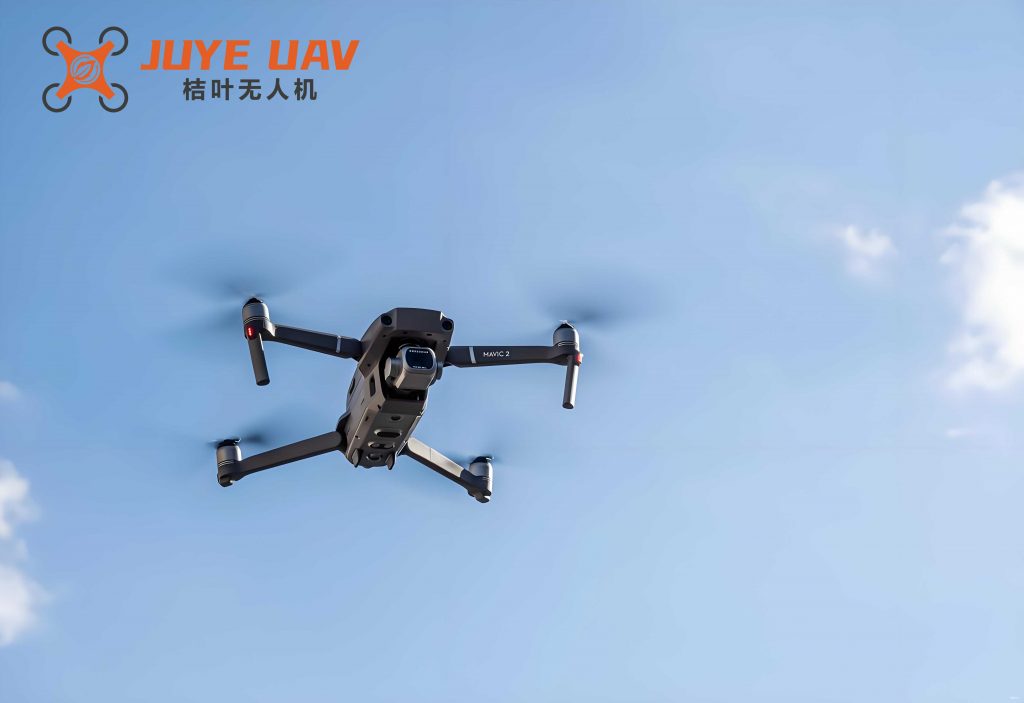
The overall architecture of our intelligent navigation system for the quadrotor drone is bifurcated into two primary subsystems: the Flight Control System (FCS) and the Navigation Guidance System (NGS). The FCS is responsible for the millisecond-level stabilization of the drone’s attitude, ensuring it remains level and responsive to commands. The NGS handles macro-level tasks, such as determining the drone’s global position, calculating optimal paths, and issuing high-level movement directives to the FCS. These systems communicate through a dedicated serial link, creating a hierarchical control structure. A ground control station (GCS) software provides the human-machine interface, allowing for mission planning, real-time monitoring, and manual override. The entire data flow and component interaction are summarized in the table below.
| System Layer | Primary Component | Key Function | Core Technology/Algorithm |
|---|---|---|---|
| Flight Control System (FCS) | Main Controller (ATmega644) | Sensor data fusion, real-time attitude calculation, PID loop execution. | Sensor Fusion, PID Control |
| Inertial Measurement Unit (IMU) | Measures angular rates and linear accelerations. | MEMS Gyroscopes & Accelerometers | |
| Brushless DC Motor Drivers | Executes speed commands from the FCS to adjust rotor thrust. | BLDC Motor Control (BEMF) | |
| Navigation Guidance System (NGS) | Navigation Controller (STM32F103) | Runs navigation algorithms, fuses GPS/Compass data, manages mission logic. | Kalman Filtering, Path Planning |
| GPS Module (LEA-5T) | Provides absolute position and velocity estimates. | Satellite Navigation | |
| Electronic Compass (KMZ51) | Provides absolute heading reference. | Magnetometry | |
| Data Logging (SD Card) | Records flight telemetry for post-mission analysis. | – | |
| Communication | Wireless Serial Module (XBee Series 2) | Establishes a bidirectional link between the quadrotor drone and the GCS. | Long-Range RF Communication |
| Ground Control | PC-Based Software | Digital map loading, waypoint path planning, real-time telemetry display. | Graphical User Interface (GUI) |
The hardware design of the flight control system is centered around precision sensing and rapid computation. The heart of the FCS is a high-performance 8-bit microcontroller, which manages the data acquisition from a custom-built Inertial Measurement Unit. The IMU combines three single-axis micro-electromechanical systems (MEMS) gyroscopes, each providing a voltage proportional to the angular rate around its sensitive axis, and a single three-axis MEMS accelerometer that measures proper acceleration. The selection of these specific sensors was based on their small form factor, low weight, and adequate performance for a micro quadrotor drone. The outputs are analog voltages, which are filtered through passive low-pass filters to mitigate high-frequency noise before being digitized by the microcontroller’s analog-to-digital converters. This setup allows for the continuous monitoring of the vehicle’s dynamic state. The relationship between sensor output and physical quantity is often linear within the operational range. For the accelerometer, the measured acceleration $a_m$ along an axis is related to the true acceleration $a_t$, the gravity component $g$, and the sensor’s orientation $\theta$ by:
$$ a_m = a_t + g \cdot \sin(\theta) + \eta_a $$
where $\eta_a$ represents measurement noise. Similarly, for the gyroscope, the measured angular rate $\omega_m$ is:
$$ \omega_m = \omega_t + b_g + \eta_g $$
where $\omega_t$ is the true angular rate, $b_g$ is a slowly varying bias, and $\eta_g$ is noise.
For altitude estimation, a barometric pressure sensor is incorporated. The atmospheric pressure $P$ decreases approximately exponentially with altitude $h$:
$$ P(h) = P_0 \cdot \left(1 – \frac{L \cdot h}{T_0} \right)^{\frac{g \cdot M}{R \cdot L}} $$
where $P_0$ is sea level standard pressure, $L$ is the temperature lapse rate, $T_0$ is sea level standard temperature, $g$ is gravitational acceleration, $M$ is molar mass of air, and $R$ is the universal gas constant. For the operational range of a micro quadrotor drone, a linear approximation is often sufficient, where the sensor’s output voltage $V_{out}$ is proportional to the altitude change $\Delta h$:
$$ \Delta h = k \cdot (V_{out} – V_{ref}) $$
where $k$ is a calibration constant and $V_{ref}$ is the output at a reference altitude.
The navigation system hardware is designed for computational intensity and reliability. A 32-bit ARM Cortex-M3 core microcontroller serves as the navigation processor, chosen for its superior number-crunching capability necessary for running advanced filtering algorithms like the Kalman filter. It interfaces with a high-sensitivity GPS receiver module, which provides National Marine Electronics Association (NMEA) protocol sentences containing latitude, longitude, altitude, speed, and time. The electronic compass module, based on anisotropic magnetoresistive sensors, delivers heading information relative to magnetic north. A critical aspect of the quadrotor drone’s navigation is the synergistic use of these sensors; the GPS gives absolute but sometimes noisy or intermittent position data, while the inertial sensors from the FCS provide smooth, high-frequency relative motion data but suffer from drift. The navigation controller fuses these data streams.
The propulsion system of the quadrotor drone utilizes brushless DC motors for their high efficiency, reliability, and power-to-weight ratio. Each motor is driven by a dedicated electronic speed controller based on a microcontroller that implements a trapezoidal commutation scheme using back-electromotive force (BEMF) sensing for rotor position detection. The three-phase full-bridge driver circuit, typically consisting of six N-channel MOSFETs, is controlled by pulse-width modulation signals from the driver microcontroller. The effective voltage, and thus the motor speed $\omega_m$, is controlled by the duty cycle $D$ of the PWM signal and the battery voltage $V_{bat}$:
$$ V_{eff} = D \cdot V_{bat} $$
The generated thrust $T$ for a propeller is approximately proportional to the square of its rotational speed:
$$ T = k_T \cdot \omega_m^2 $$
where $k_T$ is the thrust constant. The total thrust and moments acting on the quadrotor drone body can be modeled as:
$$
\begin{bmatrix}
F_z \\ \tau_\phi \\ \tau_\theta \\ \tau_\psi
\end{bmatrix}
=
\begin{bmatrix}
k_T & k_T & k_T & k_T \\
0 & -l k_T & 0 & l k_T \\
-l k_T & 0 & l k_T & 0 \\
k_Q & -k_Q & k_Q & -k_Q
\end{bmatrix}
\begin{bmatrix}
\omega_1^2 \\ \omega_2^2 \\ \omega_3^2 \\ \omega_4^2
\end{bmatrix}
$$
where $F_z$ is the total vertical thrust, $\tau_\phi, \tau_\theta, \tau_\psi$ are the rolling, pitching, and yawing moments respectively, $l$ is the distance from the center of mass to a motor, $k_Q$ is the propeller torque constant, and $\omega_i$ is the speed of the i-th motor. This matrix formulation is central to the attitude controller’s motor mixing algorithm.
The software architecture for the quadrotor drone’s intelligent navigation is where the theoretical models are translated into real-time performance. The flight control software runs on the FCS microcontroller and is fundamentally a sensor fusion and feedback control loop. The raw gyroscope and accelerometer data are first filtered. A complementary filter is employed to blend the high-frequency response of the gyroscope with the low-frequency stability of the accelerometer to estimate the attitude angles (roll $\phi$ and pitch $\theta$). The filter operates in the discrete-time domain. Let $\theta_{gyro}[k]$ be the angle from integrating the gyroscope rate and $\theta_{acc}[k]$ be the angle from the accelerometer gravity vector. The complementary filter estimate $\hat{\theta}[k]$ is:
$$ \hat{\theta}[k] = \alpha \cdot (\hat{\theta}[k-1] + \omega_{gyro}[k] \cdot \Delta t) + (1 – \alpha) \cdot \theta_{acc}[k] $$
where $\alpha$ is a filter coefficient between 0 and 1, and $\Delta t$ is the sampling period. For full 3D orientation without gimbal lock, a quaternion representation is used. The quaternion $\mathbf{q} = [q_w, q_x, q_y, q_z]^T$ is updated using the gyroscope readings $\boldsymbol{\omega} = [\omega_x, \omega_y, \omega_z]^T$:
$$ \dot{\mathbf{q}} = \frac{1}{2} \mathbf{q} \otimes \begin{bmatrix} 0 \\ \boldsymbol{\omega} \end{bmatrix} $$
This is discretized for implementation. The accelerometer data is then used to correct drift in the quaternion estimate via a gradient descent or Kalman filter step.
The stabilized attitude estimates are fed into a nested PID control loop structure. The outer loop typically manages position or velocity (commanded by the NGS), while the inner loop directly controls attitude. The control law for each axis (e.g., roll) is given by:
$$ u_{\phi}(t) = K_{p,\phi} e_{\phi}(t) + K_{i,\phi} \int_0^t e_{\phi}(\tau) d\tau + K_{d,\phi} \frac{de_{\phi}(t)}{dt} $$
where $e_{\phi}(t) = \phi_{desired}(t) – \hat{\phi}(t)$ is the error. The output $u_{\phi}$ is then converted, via the control allocation matrix, into desired motor speed squared values $\omega_i^2$. The following table summarizes typical sensor fusion and control parameters tuned for a micro quadrotor drone.
| Parameter | Symbol | Typical Value/Range | Description |
|---|---|---|---|
| Complementary Filter Coefficient | $\alpha$ | 0.98 – 0.995 | Weight given to gyroscope integration vs. accelerometer. |
| PID Proportional Gain (Roll/Pitch) | $K_p$ | 1.5 – 3.0 | Determines immediate reaction to error. |
| PID Integral Gain (Roll/Pitch) | $K_i$ | 0.01 – 0.05 | Eliminates steady-state error. |
| PID Derivative Gain (Roll/Pitch) | $K_d$ | 0.05 – 0.15 | Damps oscillations and predicts future error. |
| Control Loop Frequency | $f_{control}$ | 250 – 500 Hz | Rate at which the PID loop is executed. |
| IMU Sampling Frequency | $f_{IMU}$ | 100 – 200 Hz | Rate at which gyro/accel data is read. |
The navigation software on the NGS controller is centered on data fusion and path following. The primary challenge is to obtain a smooth, accurate, and reliable estimate of the quadrotor drone’s state vector $\mathbf{x}$, which includes position $\mathbf{p}^n = [p_N, p_E, p_D]^T$ (North, East, Down), velocity $\mathbf{v}^n = [v_N, v_E, v_D]^T$, and attitude $\boldsymbol{\Theta} = [\phi, \theta, \psi]^T$. Measurements come from the GPS ($\mathbf{z}_{GPS}$: latitude, longitude, altitude, velocity), the electronic compass ($\psi_{mag}$), and the FCS’s inertial data (acceleration and angular rates in body frame $\mathbf{a}^b, \boldsymbol{\omega}^b$). A discrete-time extended Kalman filter is implemented for this sensor fusion task. The state prediction step uses the inertial data:
$$ \hat{\mathbf{x}}_{k|k-1} = f(\hat{\mathbf{x}}_{k-1|k-1}, \mathbf{u}_{k-1}) $$
$$ \mathbf{P}_{k|k-1} = \mathbf{F}_k \mathbf{P}_{k-1|k-1} \mathbf{F}_k^T + \mathbf{Q}_k $$
where $f(\cdot)$ is the nonlinear state transition function based on kinematics, $\mathbf{u}$ contains the specific force and angular rate measurements, $\mathbf{F}$ is the Jacobian of $f$, $\mathbf{P}$ is the error covariance matrix, and $\mathbf{Q}$ is the process noise covariance. The update step occurs when GPS or compass data is available:
$$ \mathbf{K}_k = \mathbf{P}_{k|k-1} \mathbf{H}_k^T (\mathbf{H}_k \mathbf{P}_{k|k-1} \mathbf{H}_k^T + \mathbf{R}_k)^{-1} $$
$$ \hat{\mathbf{x}}_{k|k} = \hat{\mathbf{x}}_{k|k-1} + \mathbf{K}_k (\mathbf{z}_k – h(\hat{\mathbf{x}}_{k|k-1})) $$
$$ \mathbf{P}_{k|k} = (\mathbf{I} – \mathbf{K}_k \mathbf{H}_k) \mathbf{P}_{k|k-1} $$
Here, $h(\cdot)$ is the measurement model, $\mathbf{H}$ its Jacobian, $\mathbf{R}$ the measurement noise covariance, and $\mathbf{K}$ the Kalman gain. This filter effectively suppresses GPS noise and bridges short-term GPS signal losses using inertial dead reckoning, which is crucial for a quadrotor drone operating near obstacles or indoors where GPS may be degraded.
Path planning and following logic is implemented on the NGS. The ground control station software allows an operator to define a series of waypoints $\mathbf{W}_i = (Lat_i, Lon_i, Alt_i)$ on a digital map. This list is transmitted to the quadrotor drone via the wireless link. The navigation controller then calculates the desired trajectory. A common following strategy is to use a line-of-sight guidance law. For a leg between waypoints $\mathbf{W}_i$ and $\mathbf{W}_{i+1}$, the desired horizontal position $\mathbf{p}_{des}$ is a point ahead on the line, and the cross-track error $e_{ct}$ is computed. The desired heading $\psi_{des}$ is then calculated as:
$$ \psi_{des} = \psi_{path} + \arctan\left( \frac{-e_{ct}}{\Delta_{lookahead}} \right) $$
where $\psi_{path}$ is the heading of the path leg, and $\Delta_{lookahead}$ is a look-ahead distance parameter. This desired heading, along with the desired altitude and speed, forms the setpoint for the flight control system’s outer loop.
The ground control station software is a critical component of the intelligent navigation ecosystem for the quadrotor drone. Developed as a PC application, it features a graphical user interface that can load georeferenced digital maps (e.g., from OpenStreetMap). The operator can click to set waypoints, define actions (e.g., hover, take picture), and upload the mission to the quadrotor drone. During flight, the software displays real-time telemetry data overlayed on the map, including the drone’s current position, attitude indicators, battery voltage, sensor status, and the planned path. All communication with the quadrotor drone is handled through the wireless serial module, which provides a transparent serial link over a range sufficient for most applications of a micro quadrotor drone. The software also logs all incoming data for post-mission analysis, which is invaluable for tuning the navigation and control algorithms.
The performance of the integrated intelligent navigation system was evaluated through a series of flight tests. The key metric was the autonomous path-following accuracy of the quadrotor drone. With the Kalman filter actively fusing GPS and inertial data, the positional error was significantly reduced compared to using raw GPS data alone. The table below quantifies the improvement in positioning accuracy observed during a typical outdoor flight test for the quadrotor drone.
| Condition | Mean Horizontal Error (m) | Standard Deviation (m) | Maximum Error (m) | Remarks |
|---|---|---|---|---|
| Raw GPS Fix | 2.8 | 1.5 | 6.2 | Subject to multipath and atmospheric delays. |
| Kalman Filter Output (GPS+IMU) | 1.1 | 0.7 | 2.5 | Smoothed trajectory, reduced noise spikes. |
| During Short GPS Dropout (2s) | N/A (Dead Reckoning) | N/A | < 5.0 (Position Drift) | Filter prediction based on IMU maintains course. |
The attitude control performance was also critical. The quadrotor drone was able to maintain stable hover with attitude angles typically within $\pm 1^\circ$ of level in calm conditions. The response to step changes in commanded roll or pitch was swift and damped, with a settling time under one second. The system successfully executed autonomous missions consisting of takeoff, flying to multiple waypoints in a defined sequence, hovering at specified points, and returning to the launch location for landing. This demonstrated the practical realization of intelligent navigation for the quadrotor drone platform.
In conclusion, the design and implementation of an intelligent navigation system for a micro quadrotor drone involve a intricate synthesis of multi-disciplinary engineering. The core lies in the hierarchical integration of a high-bandwidth, sensor-driven flight control system with a strategic, filter-based navigation guidance system. The use of complementary filtering for attitude estimation and Kalman filtering for positional state estimation proves highly effective in creating a robust and accurate navigation solution for the quadrotor drone. The inclusion of a versatile ground control station with path planning capabilities completes the loop, enabling true autonomous mission execution. While challenges remain in areas such as obstacle avoidance, energy-optimal path planning, and operation in GPS-denied environments, the presented system forms a solid foundation. Future work on this quadrotor drone platform may explore the integration of vision-based sensors, advanced nonlinear control techniques, and swarm coordination algorithms, further pushing the boundaries of what is possible with intelligent aerial robotics.