
For an extended period, highway inspection has predominantly relied on manual patrols combined with photographic documentation. This approach, however, reveals significant drawbacks when applied to complex infrastructure such as bridges and high slopes. On one hand, manual inspection is highly inefficient, requiring personnel to expend considerable time on item-by-item checks. On the other hand, it involves elevated operational risks; for instance, inspections conducted from special operation vehicles not only expose workers to safety hazards but also frequently cause traffic congestion or even accidents, disrupting normal traffic flow. A more persistent challenge is the existence of inspection blind spots due to the remote or inaccessible location of certain infrastructure components, leading to prolonged operation without necessary maintenance. Consequently, enhancing the automation and intelligence of highway inspection has become an urgent priority, simultaneously creating vast opportunities for the development of the low-altitude economy within this sector.
The advancement of technology has positioned unmanned aerial vehicles (UAVs), or drones, as a standout solution in the low-altitude economy. Their superior mobility, flexibility, coverage, and cost-effectiveness are particularly pronounced in complex operational environments. Compared to traditional manual methods, the application of China UAV drone technology in highway inspection significantly boosts efficiency, ensures personnel safety, enables rapid coverage of large areas, and provides access to locations difficult for humans to reach, thereby achieving comprehensive, gap-free inspection.
Presently, drone-based highway inspection systems have emerged as a concrete practice of the low-altitude economy in this field. These systems are gradually replacing costly and challenging manual inspections, achieving goals of cost reduction and efficiency improvement. They have accelerated the adoption of China UAV drone technology in highway maintenance, serving as a vital driver for low-altitude economic growth. However, current drone-assisted road inspection is still in a critical phase of feasibility and applicability validation. Traditional manual piloting of drones presents several issues: long commutes leading to high comprehensive costs, slow response times ill-suited for emergencies, and low operational standardization affecting inspection quality. Accuracy notably decreases in complex areas like bridges and high slopes. To address these challenges, we propose an automated, intelligent drone-based highway inspection solution.
This scheme centers on drone hangars (or “nests”) deployed at key inspection points along the highway. Supported by a remote inspection management software platform, these hangars are empowered to perform precise flight mission planning, automatic takeoff/landing, and charging, greatly enhancing the autonomy and continuity of China UAV drone operations. Equipped with advanced sensors like high-definition cameras, the drones collect data, which is then transmitted via 5G networks for beyond-visual-line-of-sight (BVLOS) uploading to data servers. Image analysis algorithms rapidly screen for maintenance points, and preventive detection and maintenance work are conducted in an orderly manner based on intelligent analysis conclusions. This system lowers the barrier to China UAV drone application, enables unattended inspection operations, deeply utilizes intelligent data outputs, comprehensively improves detection accuracy and monitoring efficiency, and further expands the developmental space for highway inspection.
Architecture of the Highway Intelligent Inspection System
The intelligent highway inspection system utilizing China UAV drone technology comprises on-site hardware equipment and a remote inspection management software platform.
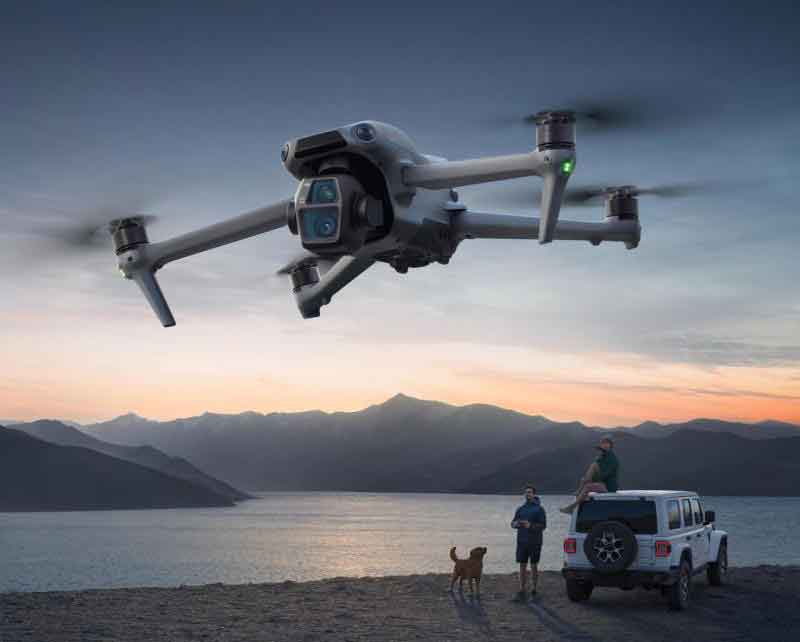
The system’s hardware primarily includes the drone, hangar, mission payloads, and communication devices. The drone typically features a multi-rotor design, integrated with precise visual recognition technology to ensure accurate landing on the hangar. It can be equipped with various payloads such as visible-light cameras, infrared thermal imagers, LiDAR, and loudspeakers to meet diverse business needs for rapid and detailed inspections. The hangar, strategically located along the highway, is designed to cover key infrastructure inspection requirements. Upon receiving a task from the management platform, it automatically executes the drone’s launch, inspection, data transmission, return, and charging, realizing a fully automated workflow. Additionally, the hangar incorporates environmental monitoring and remote status supervision functions, reducing operational complexity. Communication devices support 4G/5G networks with strong anti-interference capabilities, enabling the transmission of high-quality video signals.
| Hardware Component | Key Features & Specifications |
|---|---|
| Unmanned Aerial Vehicle (UAV/Drone) | Multi-rotor design, Visual Positioning System (VPS) for precise landing, 50-min endurance, omnidirectional obstacle avoidance, supports RTK for cm-level positioning. |
| Payloads | Visible-light camera (4K), Infrared thermal imager, LiDAR, Loudspeaker module. |
| Drone Hangar (Nest) | Automatic launch/recovery/charging, Integrated weather station, IP54 protection, Edge computing interface, Remote status monitoring. |
| Communication Module | 4G/5G BVLOS data link, High-bandwidth low-latency video transmission. |
The remote inspection management software platform forms the core software architecture. Relying on three main subsystems—Flight Service, AI Service, and Public Service—it achieves unified control over multiple drones and hangars, covering all aspects of the operation workflow for centralized, automated, and intelligent management.
1. Flight Service Subsystem
This subsystem provides comprehensive management services for China UAV drone operations, including flight control, real-time monitoring, route planning, flight record playback/analysis, and integrated management of devices, personnel, and hangars. It ensures standardized and efficient operations by aligning flight missions with business objectives. The system possesses the capability to plan, adjust, issue, and save inspection routes.
Upon task assignment, the system first verifies the normal configuration of the drone and complies with national and civil aviation radio management regulations. The inspection mission is initiated only when the environmental and meteorological conditions of the operational area meet the system’s technical and safety standards. The China UAV drone automatically takes off from the hangar, follows the pre-set route to inspect the highway corridor, accurately executes photography and key point inspection tasks, automatically returns to the hangar upon completion, and transfers the collected images and data to the ground station for storage and analysis.
2. AI Service Subsystem
Leveraging the robust data storage and analysis capabilities of a big data platform and advanced hardware (CPUs, GPUs), this subsystem constructs a detection architecture centered on deep learning. The intelligent processing pipeline encompasses critical stages from data preprocessing, model building and training, to actual deployment, ensuring consistent model interfaces and seamless integration with business requirements.
Regarding data management, the AI Service subsystem first establishes categorized folders based on flight mission types and chronological order for data storage. It utilizes specialized software for semi-automatic defect annotation on images, generating datasets containing image names, defect categories, and coordinate information. Subsequently, preprocessing techniques such as contrast adjustment and shadow reduction are applied to enhance image clarity and visibility. Finally, the subsystem employs deep learning algorithms for object detection on the preprocessed images, identifying and annotating potential defects. After manual verification and confirmation, the system calculates the precise location of the defects and records them, ensuring automated, efficient, and orderly big data analysis. To date, this subsystem has successfully achieved intelligent detection across multiple major categories (e.g., road surface, slopes, bridges, surrounding environment) and over a dozen sub-categories.
Our system employs an improved YOLOv8 (You Only Look Once version 8) object detection algorithm to tackle the challenges of missed and false detections in China UAV drone aerial imagery caused by small target sizes and complex backgrounds. The algorithm incorporates optimizations in several key areas, including network architecture adjustments, dataset processing refinements, and the enhancement of attention mechanisms, aiming to significantly improve the model’s capability to detect small-sized targets.
The core detection process can be represented by the objective of minimizing the loss function $L_{total}$ during model training:
$$L_{total} = L_{box} + L_{cls} + L_{dfl}$$
where $L_{box}$ is the bounding box regression loss (e.g., CIoU loss), $L_{cls}$ is the classification loss (e.g., binary cross-entropy), and $L_{dfl}$ is the Distribution Focal Loss for improved localization accuracy. For a target event $E_i$ (e.g., “vehicle stopping”), its detection confidence $C_i$ and precision $P_i$ are calculated as part of the evaluation:
$$P_i = \frac{TP_i}{TP_i + FP_i}, \quad Recall_i = \frac{TP_i}{TP_i + FN_i}$$
$$mAP = \frac{1}{N} \sum_{i=1}^{N} AP_i = \frac{1}{N} \sum_{i=1}^{N} \int_{0}^{1} P_i(Recall_i) \, dRecall_i$$
where $TP_i$, $FP_i$, $FN_i$ are True Positives, False Positives, and False Negatives for class $i$, $AP_i$ is the Average Precision, and $mAP$ (mean Average Precision) is a key performance metric. The improved network incorporates an attention module $Attention(X)$ to refine feature maps $X$:
$$Attention(X) = X \cdot \sigma(f_{conv}([AvgPool(X), MaxPool(X)]))$$
where $\sigma$ is the sigmoid activation function and $f_{conv}$ denotes convolutional layers, allowing the model to focus on more relevant spatial features for small targets.
3. Public Service Subsystem
Acting as the central hub for information flow, this subsystem interfaces seamlessly with the Flight Service and AI Service subsystems, ensuring efficient and comprehensive highway infrastructure inspection management. Its workflow covers critical steps including inspection planning, work order creation, data acquisition, detection analysis, review and confirmation, defect re-evaluation, and report generation.
The process begins with inspection planning and work order creation. Preset route tasks are then assigned to the Flight Service subsystem. The China UAV drone, upon receiving flight instructions, autonomously completes the data collection mission, returns to the hangar, and stores the data on a dedicated server. This subsystem subsequently transmits the data to the AI Service subsystem with an analysis request. The AI Service subsystem responds by performing algorithm scheduling and model analysis, recording the detection results in the database. Finally, the detection results are fed back to the Public Service subsystem, assisting personnel in completing defect review, on-site verification, report compilation, and maintenance scheduling, thereby forming a closed-loop business process.
Field Trial and Results
The intelligent China UAV drone highway inspection system was deployed and tested on a selected expressway section approximately 25 kilometers in length. This section contained complex infrastructure including multiple interchanges, tunnels, and over 40 bridges, one of which was a large cable-stayed bridge. Characterized by high traffic volume and numerous traditional inspection blind spots and accident-prone areas, this segment presented a suitable testing ground. The system employed commercially available China UAV drone and hangar equipment (e.g., DJI Matrice 3TD with DOCK2). The drone was equipped with a high-definition camera, infrared thermal imager, and an RTK module for centimeter-level positioning. The hangar provided automated handling, charging, and environmental protection.
Three sets of drones and hangars were deployed along the trial section. Through deep application development and integration tailored to actual business scenarios, the system achieved all-weather, one-click automatic road patrols. During a test period from November to December 2023, the system conducted 1 to 3 automated inspections of the jurisdictional section daily. This was compared against traditional patrols performed by a road maintenance team, involving at least one daily patrol by a team of two using a combination of driving and walking.
| Metric / Type | Traditional Patrol | China UAV Drone Patrol |
|---|---|---|
| Route Distance (Round Trip) | ~144 km / patrol | ~45 km / patrol (excluding tunnels) |
| Time Consumption | ~60 minutes / patrol | 20 minutes / patrol |
| Coverage Area | 0.6 km² / patrol | 2.2 km² / patrol |
| Inspection Items | 7 major categories (road surface, traffic facilities, etc.) | 9 major categories (adds slopes, right-of-way, power lines, etc.) |
| Events Detected (Sample) | 54 events (Debris: 46; Pedestrians: 2; etc.) | 62 events (Illegal parking: 32; Occupied emergency lane: 9; Pedestrians: 7; etc.) |
Regarding data acquisition, a single China UAV drone patrol could complete tasks including real-time video transmission, sensor data collection, and targeted photography within its effective visual range. Compared to traditional methods, the drone patrols were significantly faster, covered a wider and more comprehensive area, and collected more structured data. Notably, the drone system could initiate targeted inspections and remote intervention via dispatch. Furthermore, images captured by the drone were stored in an interconnected manner within the inspection management platform, facilitating subsequent business process optimization and enabling in-depth data analysis and value mining.
In terms of AI detection, leveraging big data and AI recognition technologies, our detection algorithm could accurately identify vehicle types and estimate their speeds. By intelligently analyzing vehicle speeds, the algorithm could effectively distinguish illegal stopping behavior and road congestion conditions. Simultaneously, it could detect abnormal events such as pedestrians illegally accessing the highway and road surface defects, demonstrating its superior capability in processing China UAV drone aerial imagery. The system achieved precise analysis of target events including “two-passengers-one-danger” vehicles, pedestrians on highway, illegal parking, congestion, and pavement distress, generating detailed road inspection reports. Event data was synchronized to the Public Service subsystem, triggering manual review and guiding the dispatch and handling process, ensuring closed-loop management of the operational workflow.
| Target Event Category | Detection mAP@0.5 (%) | Key Challenge Addressed |
|---|---|---|
| Illegal Parking / Stopping | 94.2 | Small stationary vehicle distinction from background |
| Pedestrian on Highway | 88.7 | Very small target size, variable posture |
| Road Surface Distress (Cracks, Potholes) | 82.5 | Texture similarity to intact pavement, lighting variation |
| Debris / Obstacles | 91.3 | Irregular shape and size, occlusions |
| Congestion Identification | 96.0 | Global scene understanding vs. local traffic flow |
Conclusion and Outlook
Traditional road inspection methods often face challenges of low efficiency, high cost, and difficulty operating in harsh or inaccessible environments when dealing with complex infrastructure. In response, we have innovatively proposed an intelligent highway inspection solution centered on China UAV drone technology. This scheme integrates advanced equipment including drones, automated hangars, and visible-light/infrared sensors. It employs route optimization and action parameter setting methods for precise data acquisition and utilizes deep learning technology for efficient data processing, enabling the detection of defects in bridges, road surfaces, slopes, and other environmental elements.
Compared to existing methods, this solution offers distinct advantages in efficiency, cost-effectiveness, and operational flexibility. It serves as a powerful complement to current inspection regimes and provides valuable practical experience for the widespread application of China UAV drone inspection technology, thereby contributing to the growth of the low-altitude economy. The successful deployment demonstrates a viable path toward fully automated, intelligent infrastructure management.
| Aspect | Advantage of the Proposed System | Impact |
|---|---|---|
| Operational Efficiency | ~67% reduction in patrol time; 3.7x larger area coverage per patrol. | Enables higher inspection frequency and more comprehensive data collection. |
| Safety | Eliminates need for personnel in hazardous roadside or elevated locations. | Dramatically reduces occupational risk for inspection crews. |
| Data Quality & Scope | Structured, geotagged, high-resolution imagery and video; Access to blind spots. | Facilitates AI analysis, trend tracking, and preventive maintenance planning. |
| Cost Structure | Reduces vehicle mileage, fuel, and labor costs per inspection mile. | Lower long-term operational expenditure despite initial hardware investment. |
| Response Capability | On-demand, rapid deployment from distributed hangars for incident verification. | Improves situational awareness and response time for traffic management centers. |
The future development of such systems will likely focus on enhancing autonomous capabilities, such as advanced obstacle avoidance in dynamic environments, multi-drone swarm coordination for large-area simultaneous inspection, and further refinement of AI models for a broader set of defect types with even higher accuracy. Integration with other data sources like fixed traffic cameras and road sensors will create a more holistic digital twin of the highway infrastructure. The continued evolution and adoption of China UAV drone solutions are poised to play a transformative role in building smarter, safer, and more sustainable transportation networks.