
In the evolving landscape of modern warfare, the emergence of drone swarms presents a formidable challenge to traditional air defense systems. As an researcher deeply involved in the development of next-generation defense technologies, I have witnessed firsthand the limitations of conventional approaches when faced with autonomous, collaborative, and intelligent aerial threats. Drone swarms, characterized by their wide operational range, high survivability, flexibility, and cost-effectiveness, are increasingly deployed for missions such as reconnaissance, electronic warfare, and saturation attacks. Their inherent robustness and self-organizing capabilities expose critical vulnerabilities in existing ground-based anti-aircraft systems, including difficulties in early warning, slower command decisions, reduced interception efficacy, and unfavorable cost-benefit ratios. To address this urgent need for effective countermeasures, I propose the construction of an intelligent, air-ground协同 anti-drone swarm confrontation system. This system embodies the principle of “systematic synergy and intelligent supremacy,” aiming to achieve all-weather, precise detection and coordinated interception of drone swarms, thereby advancing our capabilities in intelligent aerial defense.
The concept of anti-drone warfare encompasses a multi-faceted approach. From my analysis of current global developments, counter-drone technologies primarily focus on three pillars: detection and early warning, interference and deception, and kinetic interception. A summary of these approaches is presented in Table 1.
| Category | Methods | Key Principles & Challenges |
|---|---|---|
| Detection & Early Warning | Radar, Electro-Optical/Infrared (EO/IR), Radio Frequency (RF) sensing, Acoustic sensors | Fusion of multi-source data using AI algorithms for tracking and identifying “low, slow, small, and numerous” (LSSN) targets. Challenges include clutter rejection and target discrimination within dense swarms. |
| Interference & Deception | Electromagnetic jamming, Cyber attacks, GPS/communication spoofing, Camouflage & decoys | Disrupting command and control (C2) and navigation links to cause communication loss, trajectory deviation, or forced landing. Deceiving onboard sensors to degrade targeting. Focuses on attrition and mission degradation. |
| Kinetic Interception | Surface-to-Air Missiles (SAMs), Directed Energy Weapons (Laser, HPM), Kinetic impactors, Net-capture systems, Biological interceptors (e.g., eagles) | Physical destruction or capture of drones or their launch platforms. SAMs are precise but costly. Laser and High-Power Microwave (HPM) weapons offer high precision and scalability against swarms. Net-capture is suitable for low-volume, mini-UAV threats. |
While these technologies form the foundation, their isolated application often leads to fragmented defense with limited scope and adaptability. The passive nature of many traditional anti-drone systems makes them reactive. Therefore, a proactive, intelligent, and integrated system is imperative. Inspired by concepts of active defense, I advocate for a system that employs its own swarm of low-cost, agile counter-UAVs to preemptively engage hostile swarms through a combination of detection, jamming, interception, disruption, destruction, and capture. This shift from point defense to a dynamic, networked system-of-systems is the core of my proposed framework.
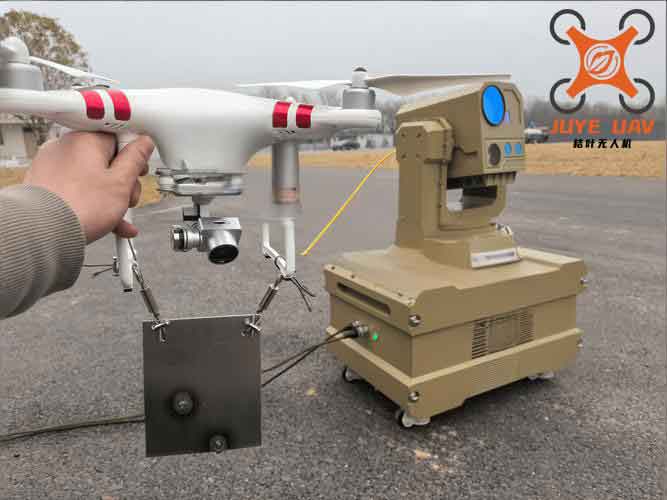
The envisioned Intelligent Anti-Drone Swarm Countermeasure System is a distributed, air-ground协同作战体系 that integrates command, control, communications, intelligence, surveillance, reconnaissance (C3ISR), and effector functions. It is designed for sustained, round-the-clock operations in complex environments. Its primary function is to enable rapid, precise detection, identification, threat assessment, and agile, multi-layered interception of incoming drone swarms, significantly enhancing systematic confrontation effectiveness.
The system architecture is composed of three interoperable and intelligent subsystems, as detailed in Table 2.
| Subsystem | Components | Primary Functions |
|---|---|---|
| Air-Ground Collaborative Intelligent Command & Communication (C2) | Airborne C2 nodes, Vehicle-mounted C2 stations, Man-portable C2 units. | Rapid intelligence fusion, threat analysis, decision support, mission planning & sequencing, real-time command of all assets, battle damage assessment (BDA), and adaptive re-tasking. Employs advanced HMI (voice, gesture, BCI). |
| Air-Ground Collaborative Intelligent Detection | Air/ground unmanned EO/IR recon platforms, Air/ground unmanned radar platforms, Air/ground unmanned electronic support measures (ESM) platforms. | Autonomous, cooperative surveillance forming a low-altitude integrated air defense warning network. AI-based multi-source/multi-modal data fusion for precise detection, tracking, and identification of swarm signatures (RF, visual, acoustic). |
| Air-Ground Collaborative Intelligent Interception | Air/ground unmanned electronic attack (EA) systems, Air/ground unmanned HPM weapons, Air/ground unmanned laser weapons, Air/ground unmanned kinetic strike systems, Air/ground unmanned net-capture systems. | Autonomous, coordinated engagement. Provides layered defense: soft-kill (jamming/spoofing) followed by hard-kill (DEW, kinetic, capture) based on threat priority and rules of engagement. |
The operational workflow of this integrated anti-drone system is a closed-loop, OODA (Observe, Orient, Decide, Act) cycle accelerated by artificial intelligence. The process is as follows:
1. Target Detection & Identification: Unmanned air and ground detection platforms, deployed as forward, dispersed sensor clusters, activate their suites (radar, RF, EO/IR). They collaboratively scan designated airspace, forming a persistent surveillance mesh. Upon detecting a potential swarm, they initiate multi-target tracking and classification, fusing data in real-time to estimate swarm size, formation, and type. This intelligence is continuously fed back to the C2 subsystem.
2. Command, Control, & Decision-Making: Commanders, aided by the intelligent C2 system, receive the fused situational picture. AI algorithms assist in threat evaluation, intent recognition, and resource allocation. An optimal engagement plan is generated, decomposing the mission into specific action sequences for each available interceptor platform. These commands are disseminated via secure, resilient datalinks.
3. Coordinated Interception & Neutralization: The interception platforms execute their assigned sequences autonomously yet cooperatively. Typically, the first layer employs networked electronic attack to disrupt the swarm’s internal communication and navigation, aiming to induce confusion or break its coherence. Subsequently, based on the assessed threat level and swarm disposition, directed energy weapons (laser for precise, single-target attrition; HPM for area effects against electronics) and kinetic systems (interceptor drones, missiles) are employed to physically degrade the swarm. Net-capture systems might engage high-value targets for recovery and analysis.
4. Effect Assessment & Adaptation: The detection subsystem continuously monitors the engagement zone, assessing the results of the counter-swarm actions. This BDA data is fed back to the C2 system. AI-driven analytics evaluate the success of the chosen tactics, and the system can dynamically re-plan and re-task assets to address residual threats, completing the kill chain and ensuring mission adaptability.
The realization of this sophisticated anti-drone system hinges on breakthroughs in several core technologies, where mathematical models and algorithms play a pivotal role.
1. Holographic Digital Array Radar (HDAR) Technology: Overcoming the limitations of traditional radars against LSSN targets requires a paradigm shift. HDAR utilizes digital array antennas for multi-beam transmission and simultaneous multi-beam reception, enabling long-duration “staring” observation of a region. This allows for high integration gain and multi-dimensional high-resolution detection. Key algorithms include:
– Joint Motion Compensation & Coherent Integration: To improve SNR for微小目标, we employ compensation methods that account for both platform and target motion. The integration gain can be modeled as:
$$ G_{int} = 10 \log_{10}(N \cdot T_{obs} \cdot B) \text{ dB} $$
where \(N\) is the number of coherently integrated pulses, \(T_{obs}\) is the observation time, and \(B\) is the bandwidth. Advanced filters (e.g., Keystone transform) are used to correct range migration.
– Swarm Population Estimation: Using super-resolution techniques in the range-Doppler domain, we can estimate the number of closely spaced targets. A model based on spatial spectrum estimation (e.g., MUSIC algorithm) can be applied:
$$ \mathbf{R} = \mathbb{E}[\mathbf{x}(t)\mathbf{x}^H(t)] = \mathbf{A}\mathbf{P}\mathbf{A}^H + \sigma^2\mathbf{I} $$
where \(\mathbf{R}\) is the covariance matrix of received signals, \(\mathbf{A}\) is the steering vector matrix, \(\mathbf{P}\) is the source power matrix, and \(\sigma^2\) is noise power. The number of sources (drones) is estimated from the eigenvalue distribution.
– Trajectory Tracking & Association: For tracking individual elements within the swarm, we use a combination of Kalman filtering with spatial constraints and Hough transforms for pattern detection in the track space:
$$ \hat{\mathbf{x}}_{k|k} = \hat{\mathbf{x}}_{k|k-1} + \mathbf{K}_k (\mathbf{z}_k – \mathbf{H}_k \hat{\mathbf{x}}_{k|k-1}) $$
where \(\hat{\mathbf{x}}\) is the state estimate, \(\mathbf{K}\) is the Kalman gain, and \(\mathbf{z}\) is the measurement. Graph-based methods associate detections to tracks in dense environments.
2. Multi-Source Information Fusion & Intelligent Situational Awareness: Fusing heterogeneous data (RF, EO/IR, radar) is critical. We employ Bayesian filtering frameworks extended for multi-sensor scenarios:
$$ p(\mathbf{x}_k | \mathbf{z}_{1:k}) \propto p(\mathbf{z}_k | \mathbf{x}_k) \int p(\mathbf{x}_k | \mathbf{x}_{k-1}) p(\mathbf{x}_{k-1} | \mathbf{z}_{1:k-1}) d\mathbf{x}_{k-1} $$
where \(\mathbf{x}_k\) is the target state at time \(k\), and \(\mathbf{z}_{1:k}\) are all measurements. Deep learning models, particularly convolutional neural networks (CNNs) and recurrent neural networks (RNNs), are trained on vast datasets of drone swarm signatures to classify swarm types (e.g., reconnaissance vs. attack) and identify formation patterns and potential weak points (key leader nodes). This enables predictive intent analysis, a cornerstone of intelligent anti-drone operations.
3. Swarm-vs-Swarm Adversarial Decision-Making & Planning: To counter the emergent intelligence of a drone swarm, our system’s decision engine must exhibit superior, collaborative artificial intelligence. We formulate this as a multi-agent reinforcement learning (MARL) problem. The objective is to find a joint policy \(\pi^*\) that maximizes the expected cumulative reward for the counter-swarm alliance:
$$ \pi^* = \arg\max_{\pi} \mathbb{E}_{\pi} \left[ \sum_{t=0}^{T} \gamma^t R_t(s_t, \mathbf{a}_t) \right] $$
where \(s_t\) is the global state (including enemy swarm status), \(\mathbf{a}_t\) is the joint action of all friendly agents, \(R_t\) is the reward (e.g., drones neutralized, resources conserved), and \(\gamma\) is a discount factor. We use actor-critic architectures with centralized training and decentralized execution (CTDE) to enable cooperative tactics like flanking, divide-and-conquer, and prioritized target engagement. A knowledge graph of anti-drone tactics supplements the learning model for rapid initial planning.
4. Blockchain-Inspired Autonomous Swarm Coordination: Ensuring reliable, decentralized coordination among our own counter-swarm UAVs is vital. Drawing from blockchain principles, we implement a Practical Byzantine Fault Tolerance (PBFT) consensus mechanism among the agents. Each agent proposes actions based on its local view and a shared tactical intent. Consensus is reached on the validity and sequence of actions, forming an immutable “action chain.” A utility function \(U_i(a)\) incentivizes agents to propose actions that maximize global mission value:
$$ U_i(a) = w_1 \cdot \text{ThreatReduction}(a) + w_2 \cdot \text{ResourceEfficiency}(a) – w_3 \cdot \text{Risk}(a) $$
Agents with higher-utility proposals have a greater weight in consensus, creating a merit-based, self-organizing command structure resilient to communication dropouts or node failures—a critical feature for robust anti-drone networks.
5. Adversarial Machine Learning for Cyber-Physical Attack & Defense: Since hostile swarms likely use deep learning for perception and navigation, we develop adversarial attack capabilities. We craft adversarial examples \(\mathbf{x}’\) from normal sensor inputs \(\mathbf{x}\) by adding a subtle perturbation \(\delta\):
$$ \mathbf{x}’ = \mathbf{x} + \delta, \quad \text{s.t.} \|\delta\|_p \leq \epsilon $$
The perturbation is designed to cause misclassification by the enemy’s neural network \(f(\cdot)\): \(f(\mathbf{x}’) \neq f(\mathbf{x})\). This can be achieved via gradient-based methods like the Fast Gradient Sign Method (FGSM):
$$ \delta = \epsilon \cdot \text{sign}(\nabla_{\mathbf{x}} J(\theta, \mathbf{x}, y_{\text{target}})) $$
Conversely, to defend our own AI systems from such attacks, we employ adversarial training, where models are trained on a mixture of clean and adversarially perturbed data, and defensive distillation techniques to smooth the model’s decision surface.
6. High-Bandwidth, Anti-Jamming Communication: The nervous system of our anti-drone system must be impervious to enemy electronic warfare. We employ cognitive radio techniques for dynamic spectrum access and anti-jamming. A key metric is the achievable rate under jamming:
$$ C = B \cdot \log_2\left(1 + \frac{P_s |h_s|^2}{N_0 B + P_j |h_j|^2}\right) $$
where \(P_s\) and \(P_j\) are signal and jamming power, \(h_s\) and \(h_j\) are channel gains. We use frequency hopping, direct sequence spread spectrum, and MIMO beamforming to nullify jammers. Adaptive modulation and coding (AMC) ensure robust links:
$$ \text{Mode Selection} = \arg\max_{m \in M} R_m \cdot (1 – \text{BER}_m(\gamma)) $$
where \(R_m\) is the rate of mode \(m\), and \(\text{BER}_m\) is its bit error rate as a function of SNR \(\gamma\).
7. Human-Machine Intelligent Fusion Interaction: To maintain optimal control in complex engagements, the system features multimodal human-machine interfaces (HMIs). We integrate inputs from voice commands, joysticks, touch, eye-tracking, and even brain-computer interfaces (BCI). A fusion algorithm combines these inputs with the machine’s situational awareness to generate validated commands. For instance, a BCI-based selection can be modeled as classifying neural signals \(\mathbf{e}\) into intended commands \(c\):
$$ P(c|\mathbf{e}) = \frac{P(\mathbf{e}|c)P(c)}{\sum_{c’} P(\mathbf{e}|c’)P(c’)} $$
This allows commanders to interact with the anti-drone system intuitively and efficiently, making critical intervention decisions at the speed of thought.
The proposed intelligent anti-drone system offers distinct advantages over traditional, piecemeal counter-drone solutions, as summarized in Table 3.
| Aspect | Traditional Anti-Drone Systems | Intelligent Air-Ground Anti-Drone Swarm System |
|---|---|---|
| Systemic Efficacy | Often single-purpose (e.g., jamming gun, laser); limited integration; reactive posture. | High. Integrates AI-driven detection, decision-making, and multi-layer interception (soft & hard kill) into a cohesive OODA loop, enabling proactive and adaptive swarm neutralization. |
| Operational Flexibility | Fixed or semi-mobile deployments; limited to point defense or short-range protection. | High. Supports dynamic, multi-mode operations (Air-Air, Ground-Ground, Air-Ground协同). Suitable for area defense of critical assets, mobile convoy protection, and border/coastal patrol. |
| Sustainability in Complex Environments | Manned systems have endurance limits and high risk in contested zones. | High. Unmanned platforms can operate in extreme climates and high-threat areas for extended periods, reducing operator fatigue and casualty risk, offering superior cost-benefit over time. |
| Resilience & Scalability | Single points of failure; scaling requires duplicating entire systems. | High. Distributed, networked architecture is inherently resilient. The swarm-of-swarms concept allows for graceful degradation and easy scaling by adding more low-cost counter-UAV nodes. |
| Threat Response Time | Often slower due to manual detection, assessment, and engagement processes. | Superior. Automated sensor-to-shooter loops and AI-powered decision support drastically compress the timeline from detection to interception, which is critical against fast-moving drone swarms. |
In conclusion, the development and deployment of an intelligent, air-ground协同 anti-drone swarm countermeasure system represent a necessary evolution in aerial defense. By embracing principles of distributed autonomy, artificial intelligence, and networked warfare, this system moves beyond the limitations of legacy defenses. It transforms the challenge of countering drone swarms from a problem of isolated interception into one of orchestrated, intelligent system confrontation. The integration of advanced sensing, swarm-vs-swarm tactics, resilient communication, and human-machine teaming creates a dynamic and adaptable shield. This system not only provides a robust solution to the pressing threat of drone swarms but also lays the foundational architecture for future intelligent air defense ecosystems, ensuring dominance in the increasingly contested and automated battlespace of tomorrow. The path forward requires continued investment in the core technologies outlined, with a focus on testing and refining these concepts in realistic, large-scale exercises to mature this vital component of modern national defense. The era of smart anti-drone warfare has begun, and systems built on these principles will be at the forefront.