
The global imperative for clean energy has accelerated the adoption of photovoltaic (PV) systems in the built environment. University campuses, characterized by extensive roof areas and significant energy consumption, present ideal candidates for large-scale PV retrofits. Such projects not only contribute to institutional sustainability goals and reduce operational costs but also serve as living laboratories for student education and research. However, traditional planning methods relying on two-dimensional drawings and empirical judgment are often inadequate. They struggle to fully account for complex spatial geometries, micro-shadowing effects from surrounding structures, and optimal panel placement, potentially compromising the project’s scientific rigor and economic viability. This research explores and demonstrates a modernized workflow, utilizing UAV drones for high-precision data acquisition and subsequent 3D reality modeling to drive the entire lifecycle of a PV retrofit project for a university teaching building, from initial assessment to detailed planning and performance simulation.
The Significance of UAV-Based Aerial Survey in PV Retrofit Planning
The integration of UAV drones into architectural surveying represents a paradigm shift. Unlike manual measurements or traditional aerial photogrammetry, UAV drones offer unparalleled flexibility, efficiency, and data richness. For PV retrofit projects, this translates into several critical advantages. Firstly, UAV drones equipped with high-resolution cameras can rapidly capture hundreds of overlapping images from multiple angles and altitudes, creating a comprehensive digital record of the building’s geometry and its context. This dataset forms the foundation for an accurate 3D model. Secondly, the ability to safely and repeatedly inspect difficult-to-access areas, such as high-rise rooftops or complex facades, is significantly enhanced. Thirdly, the data derived from UAV drones is inherently spatial and quantitative, enabling precise calculations of available area, volumetric analysis, and sophisticated simulations. The transition from 2D abstraction to 3D digital twin fundamentally enhances decision-making, allowing for the optimization of panel layout, the mitigation of shading losses, and accurate prediction of energy yield before any physical work begins.
Technical Principles and Methodological Framework
2.1 Data Acquisition Principles with UAV Drones
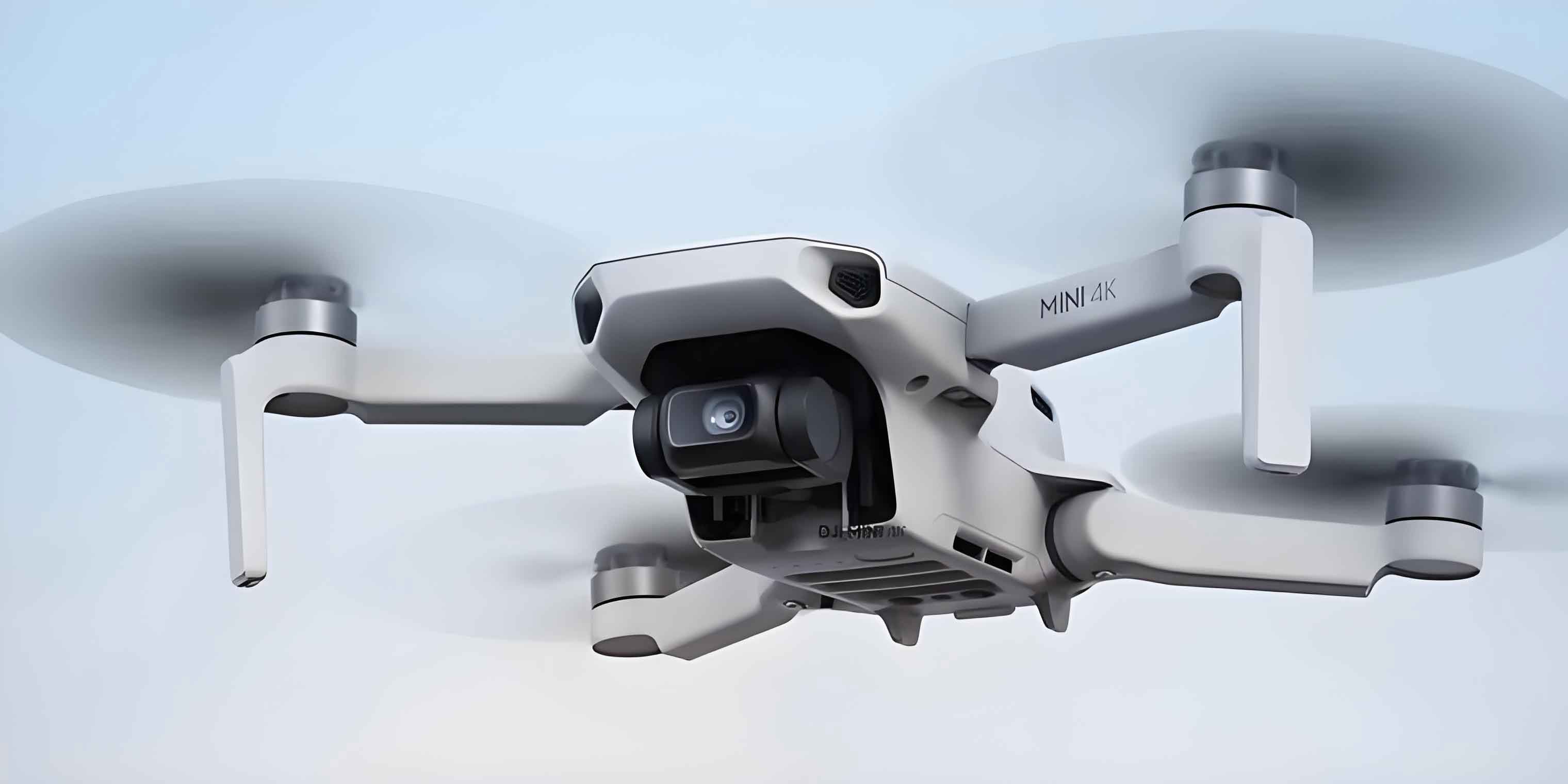
The efficacy of the entire workflow hinges on the principles of aerial photogrammetry executed by UAV drones. A typical mission involves a UAV drone, such as the DJI Mavic 3E, which is equipped with a high-resolution global shutter camera and, crucially, a Real-Time Kinematic (RTK) positioning module. The core principle is to capture a series of overlapping photographs of the target structure from known positions in space.
The flight is governed by the following photogrammetric requirements:
- Overlap: Consecutive images along the flight path must have a high degree of forward overlap (typically 80-90%). Adjacent flight lines must have significant side overlap (typically 70-80%). This overlap is essential for the software to identify common points (tie points) across multiple images.
- Ground Sampling Distance (GSD): This is the distance between pixel centers measured on the ground, defining the spatial resolution of the model. It is determined by the flight altitude (H), camera focal length (f), and sensor pixel size (p). The GSD can be approximated by:
$$GSD = \frac{H \times p}{f}$$
For a UAV drone survey targeting architectural accuracy, a GSD of 1-3 cm is often targeted. - Camera Angle: While nadir (straight-down) imagery is essential for roof mapping, oblique imagery captured at angles (e.g., 45 degrees) is critical for reconstructing building facades and capturing details of parapets, HVAC units, and other rooftop obstructions.
The onboard RTK system provides centimeter-level geolocation for each captured image, drastically reducing the need for ground control points (GCPs) and streamlining field operations while maintaining high absolute accuracy.
2.2 3D Reality Modeling and Analysis
The collected imagery from the UAV drones is processed using specialized software (e.g., DJI Terra). The process follows a structured pipeline:
- Aerial Triangulation (AT) & Sparse Point Cloud Generation: The software automatically identifies thousands of unique feature points across all overlapping images. Using photogrammetric bundle adjustment algorithms, it solves for the precise 3D coordinates of these points and the exact orientation (position and attitude) of every camera at the moment of capture. This results in a georeferenced sparse point cloud.
- Dense Point Cloud Reconstruction: For every pixel in the imagery, the software uses multi-view stereo (MVS) algorithms to find corresponding pixels in other images and calculate its 3D coordinate. This generates a dense point cloud containing millions of points, accurately representing every visible surface.
- Mesh Generation and Texturing: The dense point cloud is converted into a contiguous triangular mesh (a surface model). Finally, the original images are projected onto this mesh, applying realistic textures to create a photorealistic 3D reality model.
This model serves as the primary digital asset. Its utility is extended through analytical functions, including:
$$ \text{Surface Area} = \sum_{i=1}^{n} A_i $$
where $A_i$ is the area of an individual mesh triangle on the roof plane.
Furthermore, the model can be used for solar exposure analysis by calculating the solar irradiance $I$ on a given surface, considering its tilt $\beta$ and azimuth $\gamma$, and the sun’s position defined by altitude $\alpha_s$ and azimuth $\gamma_s$ over time.
Applied Research: A University Teaching Building PV Retrofit Case Study
3.1 Mission Planning and Data Acquisition with UAV Drones
The subject was a multi-story teaching building with a composite roof structure. A systematic flight plan was devised for the UAV drones:
| Parameter | Setting | Rationale |
|---|---|---|
| UAV Platform | DJI Mavic 3E (RTK) | High-resolution camera, mechanical shutter, RTK for georeferencing. |
| Flight Altitude | 80 m | Achieved a GSD of ~2.0 cm, balancing detail and coverage. |
| Flight Speed | 4 m/s | Ensured sufficient image sharpness and overlap. |
| Image Overlap | 85% (Front), 75% (Side) | Exceeded standard thresholds for robust 3D reconstruction. |
| Camera Angle | Nadir + 45° Oblique | Comprehensive coverage of roof surfaces and building facades. |
| Total Images Captured | ~2,100 | Complete dataset for high-detail modeling. |
The UAV drones executed autonomous flights based on this plan, ensuring consistent, repeatable, and safe data collection over the potentially hazardous rooftop environment.
3.2 Model Generation, Accuracy Assessment, and Feature Extraction
The imagery from the UAV drones was processed to generate a textured 3D mesh model. The model’s metric accuracy was validated by comparing coordinates of distinct, measurable features (like roof corners and vent pipe bases) in the model against measurements taken with a total station.
| Check Point | Model Easting (m) | Survey Easting (m) | ΔE (m) | Model Northing (m) | Survey Northing (m) | ΔN (m) | Model Elevation (m) | Survey Elevation (m) | ΔZ (m) |
|---|---|---|---|---|---|---|---|---|---|
| CP-01 | 415287.123 | 415287.118 | +0.005 | 3456123.457 | 3456123.462 | -0.005 | 52.341 | 52.335 | +0.006 |
| CP-02 | 415302.874 | 415302.867 | +0.007 | 3456108.921 | 3456108.915 | +0.006 | 52.298 | 52.305 | -0.007 |
| CP-03 | 415295.562 | 415295.555 | +0.007 | 3456115.334 | 3456115.339 | -0.005 | 48.776 | 48.782 | -0.006 |
The Root Mean Square Error (RMSE) was calculated to quantify accuracy:
$$RMSE_{XY} = \sqrt{\frac{\sum_{i=1}^{n}(\Delta E_i^2 + \Delta N_i^2)}{n}} = 0.008 \text{ m}$$
$$RMSE_{Z} = \sqrt{\frac{\sum_{i=1}^{n}\Delta Z_i^2}{n}} = 0.009 \text{ m}$$
This sub-centimeter level accuracy confirmed the model’s suitability for precise engineering planning. Using the model’s measurement tools, key parameters for PV planning were extracted directly:
| Surface | Available Area (m²) | Average Tilt Angle | Primary Azimuth |
|---|---|---|---|
| Main Roof Section A | 588.2 | 5° | 180° (South) |
| Main Roof Section B | 749.9 | 5° | 180° (South) |
| South-facing Facade | 223.1 | 90° (Vertical) | 180° (South) |
The total viable area identified was $588.2 + 749.9 + 223.1 = 1561.2 \text{ m}^2$.
3.3 PV System Design, Simulation, and Benefit Analysis
Leveraging the accurate 3D model, a detailed PV system was designed. The model was used to perform shading analysis throughout the year to exclude areas with significant occlusion. Panel layout was optimized to maximize density while respecting access pathways and structural constraints. The final design specifications were as follows:
| Component | Specification | Quantity / Capacity | Notes |
|---|---|---|---|
| PV Module | Mono-crystalline, 590W | 851 modules | Dimensions: 1.65m x 0.992m |
| System Capacity | – | $851 \times 590W = 502.09 \text{ kWp}$ | Peak power |
| Inverter | String Inverters | Multiple units | Total AC capacity aligned with DC. |
| Mounting System | Aluminum, ballasted on roof | For 1561.2 m² area | Tilt ~15° on flat roof sections. |
The annual energy production $E_{out}$ was simulated using the model’s geometry and local Typical Meteorological Year (TMY) data, applying the PV performance model:
$$E_{out} = P_{STC} \times \frac{G_{poa}}{G_{STC}} \times \eta_{inv} \times \eta_{other} \times (1 – \gamma (T_{cell} – T_{STC}))$$
Where:
$P_{STC}$ = System DC power at STC (502.09 kW),
$G_{poa}$ = Plane of Array Irradiance (kWh/m²),
$G_{STC}$ = Irradiance at STC (1 kW/m²),
$\eta_{inv}$ = Inverter efficiency (~97%),
$\eta_{other}$ = Other losses (wiring, soiling, ~95%),
$\gamma$ = Temperature coefficient (-0.34%/°C),
$T_{cell}$ = Cell temperature,
$T_{STC}$ = Temperature at STC (25°C).
The simulation yielded an estimated annual output of $E_{out} \approx 544,000 \text{ kWh}$.
A comprehensive 25-year economic and environmental analysis was conducted, comparing the retrofit scenario against the baseline.
| Financial Metric | Value | Calculation / Assumption |
|---|---|---|
| Total Project Cost (CAPEX) | $625,000 | Includes modules, inverters, mounting, engineering, installation. |
| Annual Energy Generation | 544,000 kWh | From simulation. |
| Annual Utility Cost Savings | $43,520 | Assuming $0.08/kWh retail electricity rate. $544,000 \times 0.08$ |
| Simple Payback Period | 14.4 years | $CAPEX / Annual Savings = 625,000 / 43,520$ |
| Net Present Value (NPV) | $189,250 | 25-year analysis, 5% discount rate, 1% annual OPEX of CAPEX, 2% utility inflation. |
| Levelized Cost of Energy (LCOE) | $0.052 / kWh | $$LCOE = \frac{\sum_{t=1}^{n} \frac{I_t + M_t}{(1+r)^t}}{\sum_{t=1}^{n} \frac{E_t}{(1+r)^t}}$$ |
| Environmental Metric | Annual Impact | Cumulative (25 yrs) | Calculation Basis |
|---|---|---|---|
| CO₂ Emissions Avoided | 386 metric tons | 9,650 metric tons | Based on grid emission factor of 0.71 kg CO₂/kWh. |
| SOx, NOx, PM Avoided | Significant | Significant | Proportional reduction from displaced fossil generation. |
Conclusion and Future Outlook
This research conclusively demonstrates that UAV drones are a transformative technology for planning and implementing PV retrofits on university campuses. The workflow, from autonomous data capture by UAV drones to the creation of a high-fidelity 3D reality model, provides a data-driven foundation for every subsequent step: accurate site assessment, optimal system design, reliable energy yield simulation, and detailed economic forecasting. The precision and efficiency offered by UAV drones eliminate guesswork, reduce site survey risks, and enable the optimization of system performance and financial return.
The future of this integration is promising. The role of UAV drones will expand beyond initial surveying to include construction progress monitoring and post-installation inspection using thermal imaging to identify faulty panels. The convergence of UAV drones with other technologies like LiDAR can enhance model accuracy, especially in complex, densely vegetated sites. Furthermore, the rich datasets from UAV drones can feed into Building Information Modeling (BIM) processes and Digital Twin platforms, enabling dynamic energy management and predictive maintenance of the PV asset over its entire lifecycle. Finally, this practical application of UAV drones offers immense pedagogical value, providing students with hands-on experience in cutting-edge technologies that span renewable energy, geomatics, and data science, preparing them to lead in a sustainable, digital future.
References
- Nex, F., & Remondino, F. (2014). UAV for 3D mapping applications: a review. Applied Geomatics, 6(1), 1-15.
- Agüera-Vega, F., Carvajal-Ramírez, F., & Martínez-Carricondo, P. (2017). Assessment of photogrammetric mapping accuracy based on variation flight parameters using unmanned aerial vehicle. Measurement, 98, 268-279.
- Jiang, Y., Zhang, Y., & Zhang, H. (2021). A review on the application of UAV photogrammetry in renewable energy system planning. Renewable and Sustainable Energy Reviews, 150, 111495.
- International Renewable Energy Agency (IRENA). (2019). Future of Solar Photovoltaic: Deployment, investment, technology, grid integration and socio-economic aspects.
- Duffie, J. A., & Beckman, W. A. (2013). Solar Engineering of Thermal Processes. John Wiley & Sons.