
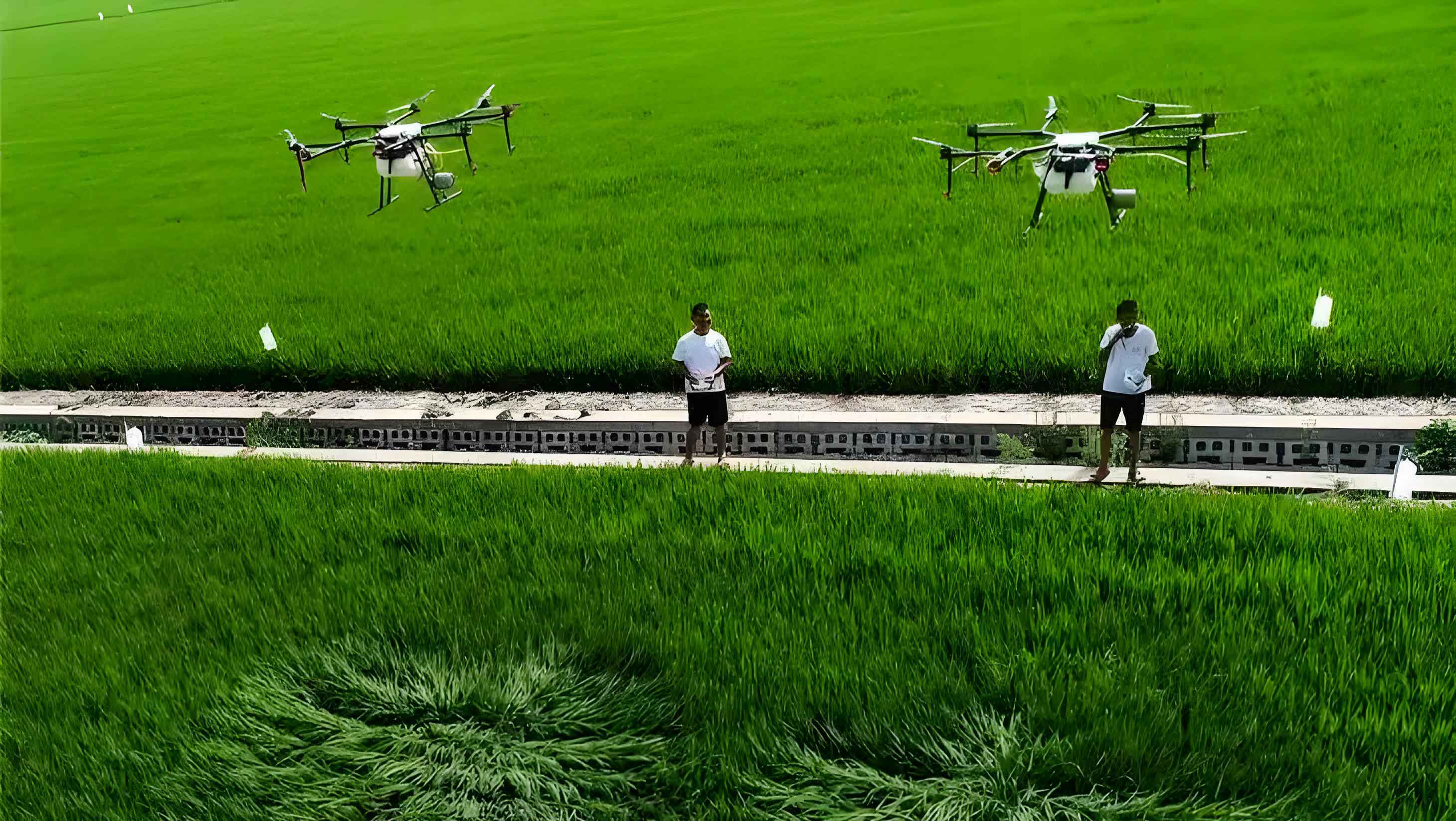
The rapid advancement of smart agriculture and the acceleration of agricultural modernization have positioned agricultural drone technology as a pivotal tool in crop protection, renowned for its efficiency, precision, and environmental benefits. As a major agricultural province in China, Henan’s adoption and promotion of agricultural drones are of paramount importance for enhancing production efficiency, reducing pesticide usage, and achieving sustainable green development. However, despite the maturing technology, its widespread adoption remains constrained by various factors including farmers’ cognitive levels, usage barriers, policy support, and the external environment. Consequently, a deep exploration of the factors influencing farmers’ willingness to adopt agricultural drones in Henan holds significant theoretical and practical value for promoting the technology’s application both within the province and nationwide. This study employs an integrated Technology Acceptance Model (TAM) and Theory of Planned Behavior (TPB) framework to dissect the psychological and social determinants of adoption intention.
The theoretical underpinning of this research lies in two established models of behavioral intention. The Technology Acceptance Model (TAM), proposed by Davis, posits that an individual’s acceptance of a new technology is primarily determined by two beliefs: Perceived Usefulness (PU) and Perceived Ease of Use (PEOU). These can be formally expressed as:
$$ \text{Behavioral Intention} \propto \text{Perceived Usefulness (PU)} + \text{Perceived Ease of Use (PEOU)} $$
Where Perceived Usefulness is defined as “the degree to which a person believes that using a particular system would enhance his or her job performance,” and Perceived Ease of Use refers to “the degree to which a person believes that using a particular system would be free of effort.”
Complementing this, the Theory of Planned Behavior (TPB) by Ajzen suggests that an individual’s behavioral intention is influenced by their Attitude toward the behavior (ATT), Subjective Norm (SN), and Perceived Behavioral Control (PBC). The relationship is summarized as:
$$ \text{Behavioral Intention} = w_1(\text{ATT}) + w_2(\text{SN}) + w_3(\text{PBC}) $$
Here, Attitude reflects one’s positive or negative evaluation of performing the behavior; Subjective Norm captures the perceived social pressure from important others; and Perceived Behavioral Control denotes the perceived ease or difficulty of performing the behavior, akin to self-efficacy.
An integrated TAM-TPB model synthesizes these perspectives, offering a more comprehensive framework. In this integrated view, the core TAM constructs (PU and PEOU) are often treated as antecedent beliefs that shape one’s Attitude (from TPB) toward using the technology. This Attitude, along with Subjective Norm and Perceived Behavioral Control, then directly influences the Behavioral Intention to adopt. The integrative framework is illustrated below:
$$ \text{PEOU} \rightarrow \text{PU} $$
$$ \{\text{PU, PEOU}\} \rightarrow \text{ATT} $$
$$ \{\text{ATT, SN, PBC}\} \rightarrow \text{Behavioral Intention (BI)} $$
Based on this integrated TAM-TPB framework, the following research hypotheses were formulated for the adoption of agricultural drones:
- H1: Perceived Usefulness (PU) has a positive effect on the Behavioral Intention (BI) to adopt agricultural drones.
- H2: Perceived Ease of Use (PEOU) has a positive effect on the Behavioral Intention (BI) to adopt agricultural drones.
- H3: Perceived Ease of Use (PEOU) has a positive effect on Perceived Usefulness (PU).
- H4: Perceived Usefulness (PU) has a positive effect on Attitude (ATT) towards using agricultural drones.
- H5: Perceived Ease of Use (PEOU) has a positive effect on Attitude (ATT) towards using agricultural drones.
- H6: Attitude (ATT) has a positive effect on the Behavioral Intention (BI) to adopt agricultural drones.
- H7: Subjective Norm (SN) has a positive effect on the Behavioral Intention (BI) to adopt agricultural drones.
- H8: Perceived Behavioral Control (PBC) has a positive effect on the Behavioral Intention (BI) to adopt agricultural drones.
To test these hypotheses, a structured questionnaire was developed. The measurement scales for the six latent constructs—Perceived Ease of Use (PEOU), Perceived Usefulness (PU), Attitude (ATT), Subjective Norm (SN), Perceived Behavioral Control (PBC), and Behavioral Intention (BI)—were adapted from established literature. Each construct was measured using three items on a five-point Likert scale ranging from 1 (Strongly Disagree) to 5 (Strongly Agree). The design of the measurement items is summarized in the table below.
| Construct | Code | Measurement Items (Abbreviated) |
|---|---|---|
| Perceived Ease of Use | PEOU | 1. The agricultural drone technology is easy for me to master. 2. I can easily complete spraying tasks with the drone. 3. I can adapt to the challenges posed by the drone technology. |
| Perceived Usefulness | PU | 1. Agricultural drones can improve pest control efficiency. 2. Agricultural drones can save labor input. 3. Agricultural drones can reduce pesticide usage. |
| Attitude | ATT | 1. Using an agricultural drone is a worthwhile experience. 2. Mastering drone technology boosts my confidence in using new tech. 3. Using a drone is an innovative thing to do. |
| Subjective Norm | SN | 1. People important to me support my use of agricultural drones. 2. People important to me think I should try using a drone. 3. I would use a drone based on recommendations from others. |
| Perceived Behavioral Control | PBC | 1. I have the resources/knowledge to purchase/use an agricultural drone. 2. The risks of using a drone are within my capability to manage. 3. The operation difficulty of a drone is within my ability. |
| Behavioral Intention | BI | 1. I intend to use agricultural drone technology. 2. It is likely that I will use an agricultural drone. 3. I will definitely use an agricultural drone in the future. |
Data were collected from farmers across Henan’s major agricultural zones using a combination of online and offline surveys. A total of 680 questionnaires were distributed, resulting in 593 valid responses after screening, yielding an effective response rate of 87.2%. The sample demographics indicated that 61.38% were male, the average age was 46.7 years, 92.26% had a high school education or below, and the average cultivated land area per capita was 0.28 hectares. While 79.34% of respondents had heard of agricultural drones, only 18.26% had direct experience using them.
The collected data were analyzed using SPSS 26.0 and AMOS 26.0 software. First, the reliability and validity of the measurement model were assessed. The Kaiser-Meyer-Olkin (KMO) measure was 0.835, and Bartlett’s test of sphericity was significant (χ² = 7450.89, p < 0.001), confirming the suitability of the data for factor analysis. As shown in Table 2, the Cronbach’s Alpha coefficients for all constructs ranged from 0.796 to 0.842, exceeding the recommended threshold of 0.7, indicating good internal consistency reliability. The Composite Reliability (CR) values ranged from 0.741 to 0.843, also meeting the acceptable standard. For convergent validity, the Average Variance Extracted (AVE) for each construct was above 0.5 (ranging from 0.573 to 0.687). Furthermore, the square root of each construct’s AVE (values on the diagonal in Table 2) was greater than its correlations with other constructs, supporting discriminant validity.
| Construct | Inter-Construct Correlations and Assessment Metrics | Cronbach’s α | CR | AVE | |||||
|---|---|---|---|---|---|---|---|---|---|
| PEOU | PU | ATT | SN | PBC | BI | ||||
| PEOU | 0.853 | 0.813 | 0.741 | 0.674 | |||||
| PU | 0.635 | 0.917 | 0.822 | 0.756 | 0.573 | ||||
| ATT | 0.714 | 0.751 | 0.852 | 0.805 | 0.797 | 0.549 | |||
| SN | 0.480 | 0.566 | 0.631 | 0.806 | 0.842 | 0.802 | 0.687 | ||
| PBC | 0.521 | 0.585 | 0.625 | 0.723 | 0.748 | 0.804 | 0.816 | 0.589 | |
| BI | 0.563 | 0.619 | 0.546 | 0.618 | 0.643 | 0.729 | 0.796 | 0.843 | 0.632 |
Note: Diagonal elements (in bold) are the square roots of the AVE.
Subsequently, a structural equation model (SEM) was constructed to test the hypothesized relationships. The model fit indices, presented in Table 3, demonstrate an excellent fit between the proposed model and the observed data. The ratio of chi-square to degrees of freedom (χ²/df) was 1.557, well below the threshold of 3. The Root Mean Square Residual (RMR) was 0.062, and the Root Mean Square Error of Approximation (RMSEA) was 0.052, both below the 0.08 benchmark. The Goodness-of-Fit Index (GFI), Adjusted Goodness-of-Fit Index (AGFI), Normed Fit Index (NFI), Incremental Fit Index (IFI), Tucker-Lewis Index (TLI), and Comparative Fit Index (CFI) all met or exceeded the recommended value of 0.9.
| Fit Index | Recommended Value | Model Value | Judgment |
|---|---|---|---|
| χ² | – | 876.951 | – |
| df | – | 563 | – |
| χ²/df | < 3 | 1.557 | Excellent |
| RMR | < 0.08 | 0.062 | Excellent |
| GFI | > 0.9 | 0.909 | Good |
| AGFI | > 0.9 | 0.912 | Good |
| NFI | > 0.9 | 0.916 | Good |
| IFI | > 0.9 | 0.904 | Good |
| TLI | > 0.9 | 0.985 | Excellent |
| CFI | > 0.9 | 0.904 | Good |
| RMSEA | < 0.08 | 0.052 | Excellent |
The path coefficients and their significance levels from the SEM analysis are summarized in Table 4. All eight hypotheses were supported by the data. The results confirm that both Perceived Usefulness (β = 0.468, p < 0.001) and Perceived Ease of Use (β = 0.407, p < 0.001) have significant direct positive effects on the Behavioral Intention to adopt agricultural drones, supporting H1 and H2. Furthermore, Perceived Ease of Use strongly influences Perceived Usefulness (β = 0.573, p < 0.001), supporting H3, indicating that easier-to-use agricultural drones are also perceived as more useful.
As hypothesized in the integrated model, both Perceived Usefulness (β = 0.196, p < 0.01) and Perceived Ease of Use (β = 0.276, p < 0.01) positively shape farmers’ Attitude towards using agricultural drones (H4 and H5). This Attitude, in turn, has a significant direct effect on Behavioral Intention (β = 0.287, p < 0.001), supporting H6. The core TPB constructs also play crucial roles: Subjective Norm exhibits a strong positive effect on intention (β = 0.307, p < 0.001), supporting H7, and Perceived Behavioral Control has a significant, albeit slightly smaller, positive effect (β = 0.198, p < 0.01), supporting H8.
| Hypothesis | Path | Standardized Path Coefficient (β) | P-value | Supported? |
|---|---|---|---|---|
| H1 | PU → BI | 0.468 | *** | Yes |
| H2 | PEOU → BI | 0.407 | *** | Yes |
| H3 | PEOU → PU | 0.573 | *** | Yes |
| H4 | PU → ATT | 0.196 | ** | Yes |
| H5 | PEOU → ATT | 0.276 | ** | Yes |
| H6 | ATT → BI | 0.287 | *** | Yes |
| H7 | SN → BI | 0.307 | *** | Yes |
| H8 | PBC → BI | 0.198 | ** | Yes |
Note: *** p < 0.001, ** p < 0.01.
The findings of this study offer several important insights and policy implications for promoting agricultural drones in Henan and similar contexts. The strong direct effects of Perceived Usefulness and Perceived Ease of Use underscore the need for continuous technological improvement. Manufacturers of agricultural drones should focus on enhancing core functionalities that deliver clear economic benefits—such as superior spraying accuracy, longer battery life, and better crop penetration—to bolster Perceived Usefulness. Simultaneously, user interface design, automated flight planning, and simplified maintenance procedures are critical for improving Perceived Ease of Use. The strong link between PEOU and PU suggests that efforts to simplify operation can have a compounded positive effect by also making the technology seem more useful.
The significant role of Attitude, which is shaped by both PU and PEOU, highlights the importance of shaping farmers’ cognitive and affective evaluations. Extension services and training programs should not only teach operational skills but also emphatically communicate the tangible benefits (usefulness) and demonstrate the straightforward nature (ease) of using an agricultural drone. Positive first-hand experiences or demonstrations can be instrumental in fostering a favorable attitude.
The powerful influence of Subjective Norm indicates that the adoption decision is highly social. Policymakers and promoters can leverage this by identifying and supporting “opinion leaders” within farming communities—such as progressive farmers, leaders of cooperatives, or respected local agronomists—who can champion the use of agricultural drones. Success stories and testimonials from peers can be highly effective in generating positive social pressure and normative influence.
Finally, the confirmed effect of Perceived Behavioral Control points to the necessity of addressing practical barriers. Financial constraints are a major component of PBC. Therefore, government subsidies, low-interest loan programs, or cooperative-based rental models for agricultural drones can significantly enhance farmers’ perception of control over the resources needed for adoption. Comprehensive and hands-on training programs are equally vital to build farmers’ self-efficacy, ensuring they feel confident in their ability to operate and manage the technology effectively, thereby increasing their Perceived Behavioral Control.
In conclusion, this study successfully applied the integrated TAM-TPB model to elucidate the complex factors driving the adoption intention of agricultural drones among farmers in Henan Province. The empirical validation of all hypotheses confirms that adoption behavior is a function of rational technology assessment (PU, PEOU), personal disposition (ATT), social influence (SN), and perceived capability (PBC). For agricultural drones to achieve widespread adoption and contribute fully to agricultural modernization, a multi-faceted promotion strategy is essential. This strategy must simultaneously advance technological design for utility and usability, implement targeted training to shape attitudes and skills, foster positive social narratives through community leaders, and design supportive policies that alleviate financial and operational barriers to enhance perceived control. Such an integrated approach, informed by the nuanced understanding provided by this research, will be crucial for accelerating the integration of agricultural drone technology into the future of farming.