
In recent years, the application scope of drone technology has expanded rapidly, becoming a key driver in industries such as agriculture, logistics, surveying, and entertainment. As the demand for skilled professionals grows, drone training has emerged as a critical pathway for individuals to acquire specialized skills. However, many practitioners lack formal education, relying instead on short-term training programs that may not fully address industry needs. Therefore, technical colleges play a vital role in providing comprehensive drone training through an integrated work-study model. This model combines theoretical knowledge with hands-on practice, ensuring that students gain both competency and adaptability. In this article, I will outline a detailed framework for implementing such a model in drone training programs, focusing on curriculum design, teaching methods, practical implementation, facility management, and assessment strategies. The goal is to enhance the quality of drone training and contribute to a skilled workforce that meets evolving industry demands.
Drone training must be dynamic and responsive to technological advancements. The integrated work-study approach emphasizes real-world applications, fostering a learning environment where students can immediately apply concepts. For instance, in drone training, students not only learn about aerodynamics and electronics but also engage in flight simulations and field operations. This holistic method ensures that drone training is not just about theory but about building actionable skills. Throughout this discussion, I will emphasize the importance of continuous improvement in drone training, supported by data-driven adjustments and industry collaboration. By adopting this model, technical colleges can become hubs for excellence in drone training, producing graduates who are ready to tackle complex challenges in the drone industry.
Curriculum Reform and Innovation for Drone Training
The foundation of effective drone training lies in a well-structured curriculum that balances theory and practice. In our drone training program, we have overhauled the course offerings to reflect current industry trends and future projections. This involves regular updates to course content, integration of practical modules, and diverse evaluation mechanisms. Drone training must cover a wide range of topics, from basic principles to advanced applications, ensuring students are versatile professionals. Below, I detail the key aspects of curriculum reform in drone training.
First, timely updates to courses and materials are essential for relevant drone training. We conduct biannual surveys of drone industry developments, analyzing job market demands and technological shifts. This data informs our curriculum adjustments, ensuring that drone training aligns with skills needed in sectors like aerial photography, precision agriculture, and infrastructure inspection. For example, as drone regulations evolve, we incorporate safety and compliance modules into drone training. The following table summarizes core course modules in our drone training program, highlighting their focus and weight in the overall curriculum.
| Course Module | Description | Percentage in Curriculum | Key Drone Training Skills |
|---|---|---|---|
| Basic Drone Principles | Covers aerodynamics, electronics, and drone components. | 20% | Understanding drone mechanics and design. |
| Flight Control and Navigation | Hands-on training in piloting, GPS usage, and autonomous flight. | 30% | Mastering flight operations and safety protocols. |
| Sensors and Aerial Imaging | Focuses on camera systems, LiDAR, and data collection techniques. | 25% | Developing skills in data acquisition and analysis. |
| Drone Safety and Regulations | Includes airspace laws, risk management, and emergency procedures. | 15% | Ensuring compliant and safe drone operations. |
| Application and Innovation | Projects on drone uses in agriculture, logistics, and creative industries. | 10% | Fostering problem-solving and innovation in drone applications. |
To quantify the effectiveness of curriculum updates in drone training, we use a formula that measures alignment with industry needs: $$ \text{Alignment Score} = \sum_{i=1}^{n} w_i \cdot C_i $$ where \( w_i \) represents the weight of industry feedback for skill \( i \), and \( C_i \) denotes the coverage of that skill in the curriculum. This score helps us prioritize updates, ensuring drone training remains relevant. Additionally, we adjust courses based on regional industry structures and student preferences, avoiding a one-size-fits-all approach. For instance, in areas with strong agricultural sectors, drone training emphasizes crop monitoring and pesticide spraying techniques.
Second,精心策划实践操作内容 is translated to meticulous planning of practical content in drone training. We embed practical elements throughout the learning journey, creating a “course-learning-practice” chain that reinforces knowledge application. In our drone training program, we implement a “three-teacher” model: a lead instructor, an assistant, and an industry practitioner from partner enterprises. This ensures students receive guidance in both campus and real-world settings. Practical sessions are categorized into three competency blocks—basic, professional, and扩展能力—each with tailored exercises. For example, in basic drone training, students perform drone试飞 to identify issues, then learn maintenance and debugging through hands-on repairs. This problem-oriented approach enhances engagement and skill retention in drone training.
Third,多元化开展课程评估 involves diversified course evaluation in drone training. We incorporate student feedback through anonymous online surveys after each course, collecting insights on content clarity and practical relevance. This data drives iterative improvements in drone training strategies. Moreover, we regularly survey partner enterprises to assess how well our drone training matches their developmental focus. The feedback is analyzed using a metric: $$ \text{Training Match Index} = \frac{\text{Number of Matched Skills}}{\text{Total Skills Required}} \times 100\% $$ This index guides adjustments, such as increasing hands-on hours for high-demand skills. By involving multiple stakeholders—students, teachers, and employers—we ensure that drone training is both effective and adaptive.
Transformation of Teaching and Learning Methods in Drone Training
Effective drone training requires a shift from traditional lecture-based methods to interactive, practice-centric approaches. In our drone training program, we prioritize experiential learning, providing ample opportunities for students to engage with drones directly. This transformation addresses common gaps in drone training, such as insufficient practice time and limited collaboration. Below, I outline three key strategies for enhancing teaching and learning in drone training.
First, we emphasize practice over theory, integrating both in drone training. Historically, drone training programs allocated only 30% of time to practical work, but we have increased this to 50% to balance the scales. For instance, theory classes on drone aerodynamics are held in实践基地, where students can immediately test concepts via flight simulations. This integration is captured by the formula: $$ \text{Integration Efficiency} = \frac{\text{Practical Hours}}{\text{Theory Hours}} \cdot \log(1 + \text{Student Engagement}) $$ which we use to optimize scheduling. By co-locating theory and practice, drone training becomes more immersive, helping students grasp complex topics like flight dynamics through direct application.
Second, we provide extended练习时间和空间 for drone training. Beyond scheduled classes, we designate dedicated practice zones in our drone基地,开放 during evenings and weekends. This allows students to refine skills like drone assembly or flight maneuvers at their own pace. The availability is tracked using: $$ \text{Practice Accessibility} = \frac{\text{Available Hours per Week}}{\text{Student Demand}} $$ ensuring equitable access. Previously, students had only 1-2 hours of实操 per week, but now they can log over 10 hours, significantly boosting proficiency in drone training. We also lend equipment for group projects, encouraging independent learning.
Third, we promote collaborative learning through小组 in drone training. Students are grouped into teams that share drones and tools, working on tasks like mapping a campus area or designing a delivery route. This fosters peer-to-peer knowledge exchange, a critical aspect of drone training. The following table compares traditional and collaborative methods in drone training, highlighting benefits of the latter.
| Aspect | Traditional Drone Training | Collaborative Drone Training |
|---|---|---|
| Equipment Access | Limited to individual use during class. | Shared within groups, increasing hands-on time. |
| Learning Outcomes | Focus on individual performance. | Emphasis on teamwork and problem-solving. |
| Skill Application | Structured exercises with fixed outcomes. | Open-ended projects mirroring real-world scenarios. |
| Assessment | Based on exams and solo tasks. | Includes group deliverables and peer evaluations. |
Group performance in drone training is evaluated using: $$ \text{Group Score} = \alpha \cdot \text{Task Completion} + \beta \cdot \text{Peer Feedback} + \gamma \cdot \text{Innovation} $$ where \( \alpha, \beta, \gamma \) are weights reflecting collaboration quality. This approach not only enhances technical skills but also soft skills like communication, vital for careers in drone operations.
Implementation Plan and Methods for Practical Drone Training
Practical drone training is the cornerstone of the work-study model, requiring clear objectives, relevant content, and diverse methods. In our drone training program, we design practical sessions to bridge classroom knowledge with industry applications. This section details how we structure practical drone training to cultivate职业性 and实践性人才.
First, we define explicit goals for practical drone training. Aligned with the work-study philosophy, these goals focus on developing problem-solving abilities and job-ready skills. For example, in drone training, we target specific sectors like航拍,测绘, and物流配送, tailoring exercises to each. The goals are quantified using: $$ \text{Practical Goal Achievement} = \frac{\text{Skills Demonstrated}}{\text{Skills Targeted}} \times 100\% $$ which we monitor through assessments. By concentrating on two to three high-demand areas, we ensure depth in drone training, preparing students for niche roles such as agricultural drone operators or survey technicians.
Second, we curate practical content centered on core drone training courses like “Drone Technology Overview,” “Drone Piloting and Competition,” and “Drone Assembly and AI Applications.” These courses guide hands-on activities, from basic drone assembly to advanced flight missions. The content is segmented into levels, as shown in the table below, to scaffold learning in drone training.
| Practice Level | Activities | Drone Training Objectives | Duration (Hours) |
|---|---|---|---|
| Basic | Simulated flights, component identification. | Build familiarity with drone controls and safety. | 40 |
| Intermediate | Real-flight training, basic repairs. | Develop操控 skills and troubleshooting abilities. | 60 |
| Advanced | Application projects (e.g., aerial mapping). | Master industry-specific tools like ground station software. | 80 |
For instance, in advanced drone training, students learn to use ground stations for route planning and task allocation, skills quantified by: $$ \text{Skill Proficiency} = \sum_{j=1}^{m} p_j \cdot \exp\left(-\frac{\text{Errors}_j}{\text{Attempts}_j}\right) $$ where \( p_j \) is the priority of skill \( j \). This mathematical approach helps us refine content, ensuring drone training covers critical competencies like interpreting geospatial data.
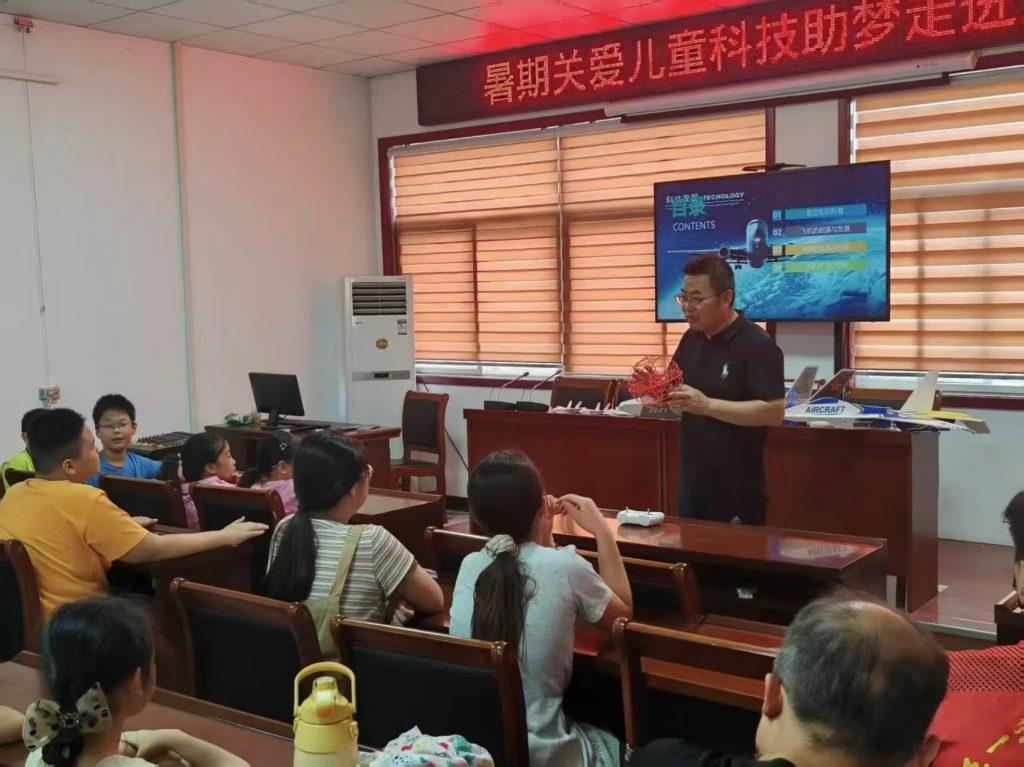
Third, we employ varied methods for practical drone training, including仿真实验,实验探究, and参观实践. Among these,实际操作 and参观实践 are most effective, offering direct exposure to drone applications. We partner with local drone companies for factory visits, where students observe real-world operations. After visits, industry experts conduct模拟课 on campus, sharing insights on topics like precision agriculture spraying—a nuanced aspect of drone training that campus teachers might lack. This synergy enhances the practicality of drone training. The figure below illustrates a typical drone training session in our outdoor facility, highlighting the immersive environment we foster.
Post-visit, students undertake internships at these enterprises, applying skills in live projects. This phased approach—from observation to实操—ensures comprehensive drone training. The effectiveness is measured by: $$ \text{Internship Impact} = \frac{\text{Students Offered Jobs}}{\text{Total Interns}} \cdot \ln(\text{Employer Satisfaction}) $$ which consistently shows high returns for our drone training program.
Construction and Management of Drone Training Bases
Drone training bases are vital for hands-on learning, requiring careful setup and oversight. In our drone training ecosystem, we have established dedicated facilities that simulate real-world conditions, ensuring safety and accessibility. This section covers the establishment, scheduling, and staffing of drone training bases.
First, we set up bases with multiple zones to support diverse drone training activities. Each base includes a simulation lab for virtual flights, a comprehensive lab for assembly and maintenance, and an outdoor area for actual flying. The specifications are summarized in the table below, emphasizing how each zone contributes to drone training.
| Base Zone | Purpose in Drone Training | Key Features | Safety Measures |
|---|---|---|---|
| Simulation Lab | Virtual flight practice and data processing. | High-end simulators, VR headsets, software suites. | Guarded systems, anti-collision protocols. |
| Comprehensive Lab | Drone assembly, debugging, and repair. | Workbenches, toolkits, testing equipment. | Static discharge controls, safety gear. |
| Outdoor Flight Area | Real-flight exercises and application trials. | Open field, weather stations,监控 cameras. | Net barriers, emergency response kits. |
The capacity of these bases is optimized using: $$ \text{Base Utilization} = \frac{\text{Active Training Hours}}{\text{Total Operational Hours}} \cdot 100\% $$ which we aim to keep above 80% to maximize resources in drone training. Regular maintenance checks ensure equipment reliability, crucial for uninterrupted drone training.
Second, we structure实训时间 to accommodate all students in drone training. Time slots are allocated in batches,避免 overcrowding and allowing focused practice. For example, morning sessions might cover basic drone training for beginners, while afternoons host advanced projects. We use a scheduling formula: $$ \text{Optimal Schedule} = \arg\min_{t} \left( \sum_{k} \text{Wait Time}_k + \text{Idle Time}_k \right) $$ where \( t \) represents time blocks, minimizing delays in drone training. This ensures each student gets at least 15 hours of实操 per month, reinforcing skills through repetition.
Third, we build a robust师资队伍 for drone training. Given that drone technology is新兴, many instructors come from related fields, so we provide ongoing professional development. Teachers undergo certification in drone操控,飞行, and maintenance, with skills assessed via: $$ \text{Instructor Competency} = \frac{\text{Certifications Held}}{\text{Required Certifications}} \cdot \text{Experience Factor} $$ We also hire industry veterans as adjunct faculty, bringing real-world insights into drone training. For instance, an expert from a logistics company might teach drone delivery modules, enriching the curriculum. This blend of academic and practical expertise elevates the quality of drone training.
Assessment Methods for Practical Drone Training
Assessment in drone training must be multifaceted, capturing both theoretical knowledge and hands-on proficiency. In our drone training program, we employ staged evaluations and comprehensive exams to ensure students master essential skills. This section describes our approach to考核 in drone training.
First, we conduct regular作业测试 at different stages of drone training. During theory phases, quizzes test concepts like drone regulations or aerodynamics. In simulation phases, exams assess virtual flight accuracy. In practical phases, students perform tasks like drone repairs or mission planning, graded against rubrics. The weightage of these assessments is shown in the table below, highlighting the emphasis on practical performance in drone training.
| Training Stage | Assessment Type | Frequency | Weight in Final Grade |
|---|---|---|---|
| Theory | Quizzes and written exams. | Biweekly | 30% |
| Simulation | Virtual flight tests and scenario analyses. | Monthly | 20% |
| Practical | Hands-on projects and field exercises. | Per module | 50% |
Each assessment is scored using: $$ \text{Stage Score} = \sum_{l=1}^{q} w_l \cdot s_l $$ where \( w_l \) is the weight for skill \( l \), and \( s_l \) is the score. This granular tracking helps identify gaps in drone training, allowing timely interventions. For example, if a student struggles with flight stability, we provide extra simulation time.
Second, we organize a final综合考试 in partnership with enterprises, integrating theory, practice, and industry applications. This exam is a graduation requirement for drone training, ensuring students meet professional standards. The composite score is computed as: $$ \text{Final Exam Score} = 0.3 \cdot T + 0.5 \cdot P + 0.2 \cdot I $$ where \( T \) is theory score, \( P \) is practical score, and \( I \) is industry evaluation. Enterprises contribute by designing real-world tasks, such as conducting a drone survey for a mock client. This alignment makes drone training directly relevant to job markets. Students who fail must complete remedial training, underscoring the rigor of our drone training program.
Moreover, we use assessment data to refine drone training continuously. For instance, if exam results show low scores in drone maintenance, we increase hands-on hours for that module. This feedback loop, expressed as: $$ \text{Training Adjustment Factor} = \frac{\text{Deficiency Areas}}{\text{Total Areas}} \cdot \text{Improvement Rate} $$ ensures that drone training evolves based on performance metrics.
Conclusion
In summary, the integrated work-study model for drone training in technical colleges offers a robust framework for developing skilled drone professionals. By reforming curricula, transforming teaching methods, implementing practical plans, managing training bases, and adopting comprehensive assessments, we enhance the effectiveness of drone training. This model prioritizes hands-on experience and industry collaboration, ensuring that drone training is not only educational but also employment-oriented. As drone technology advances, continuous adaptation will be key to sustaining high-quality drone training. Through these efforts, we aim to supply the drone industry with competent人才, supporting its growth and innovation. The success of this drone training model hinges on commitment from educators, students, and enterprises, fostering a ecosystem where learning and application converge seamlessly.