
In recent years, the rapid development of 6G networks, low-altitude flight technologies, and the low-altitude economy has positioned low altitude UAVs as pivotal platforms for expanding communication coverage and enhancing sensing capabilities. Low altitude drones can overcome terrestrial limitations, offering line-of-sight links and dynamic mobility. This has spurred significant interest in integrated sensing and communication (ISAC) for low altitude UAVs, where communication and sensing functions are co-designed to optimize spectrum efficiency, reduce hardware costs, and enable mutual performance enhancement. However, this integration introduces unique challenges, such as waveform compatibility, interference mitigation, and resource allocation in dynamic aerial environments. In this article, I synthesize recent advancements in ISAC for low altitude UAVs, covering application scenarios, key technologies like waveform design and AI-driven solutions, and future research directions. The focus remains on enabling efficient, secure, and adaptive systems for diverse low-altitude operations.
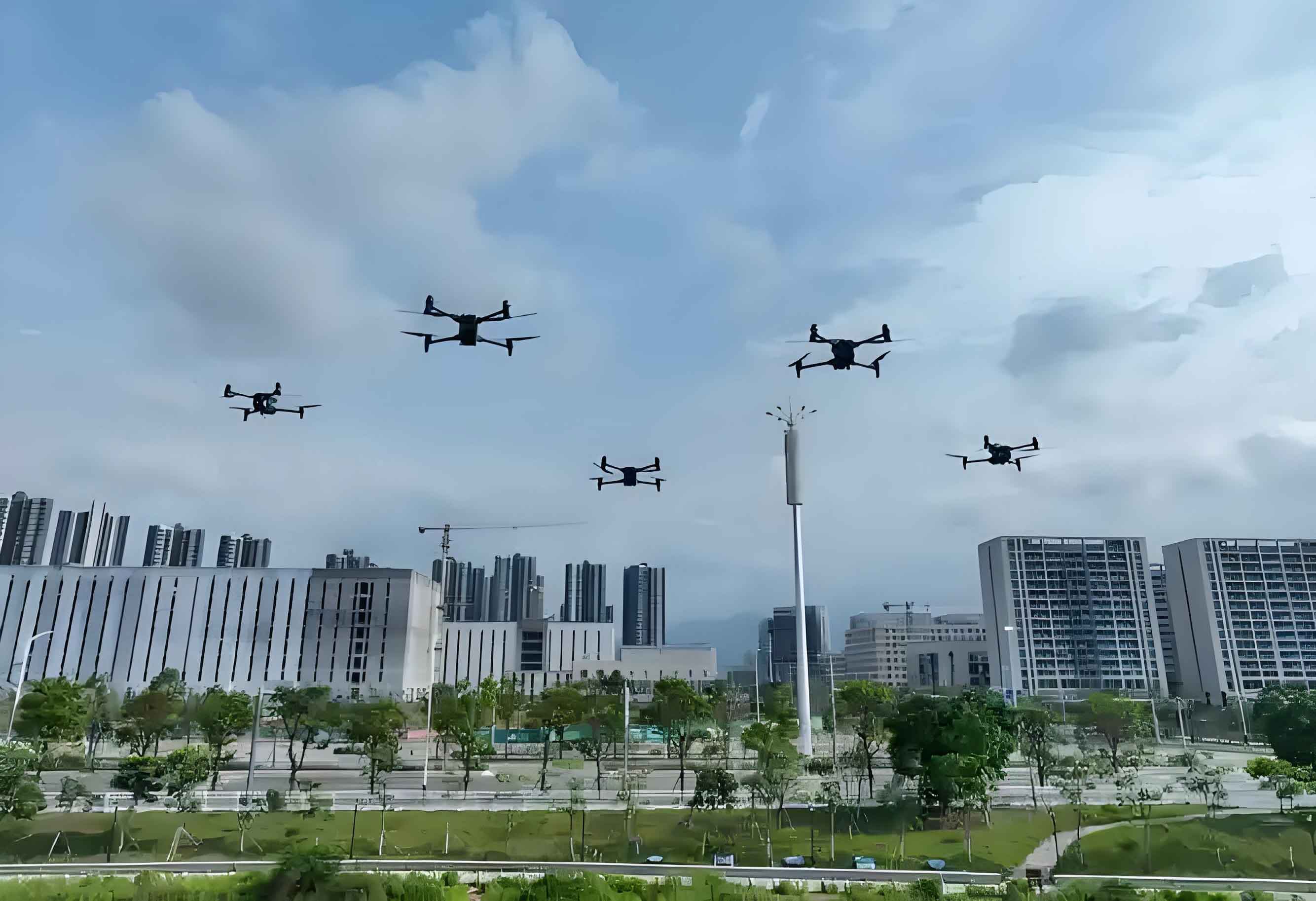
Low altitude UAVs operate below 500 meters, making them ideal for urban, rural, and maritime environments. They serve dual roles: as cooperative or adversarial targets for sensing, and as mobile ISAC platforms. For instance, in urban surveillance, a low altitude UAV can simultaneously monitor traffic through radar imaging and relay data via communication links. In environmental monitoring, these drones collect sensor data while performing obstacle detection. Key scenarios include drone swarms for coordinated tasks, where ISAC ensures real-time inter-drone communication and environmental awareness, and emergency response, where low altitude UAVs provide rapid sensing and connectivity in disaster zones. The fusion of ISAC with IoT and edge computing further amplifies their utility, enabling distributed data processing for applications like precision agriculture. Here, low altitude UAVs act as aerial nodes, integrating with ground-based IoT devices to form adaptive networks. However, challenges like spectrum congestion and real-time decision-making persist, necessitating robust ISAC frameworks.
Waveform Design for ISAC Low Altitude UAVs
Waveform design is critical for balancing communication and sensing performance in low altitude UAVs. Orthogonal Frequency Division Multiplexing (OFDM) is widely adopted due to its spectral efficiency, but it suffers from high Peak-to-Average Power Ratio (PAPR) and sensitivity to Doppler shifts in high-mobility low altitude UAV scenarios. To address this, researchers have developed enhanced variants. For example, Repeat Symbols OFDM (RS-OFDM) mitigates Inter-Carrier Interference (ICI) caused by Doppler effects, improving radar imaging robustness. The baseband OFDM signal can be expressed as:
$$s_{\text{OFDM}}(t) = \sum_{k=0}^{N-1} X_k e^{j2\pi k \Delta f t},$$
where \(X_k\) represents modulated symbols, \(\Delta f\) is the subcarrier spacing, and \(N\) is the number of subcarriers. For low altitude drones, this achieves a 20 dB improvement in peak sidelobe ratio under large Doppler offsets but at the cost of increased PAPR. Alternative waveforms like Orthogonal Chirp Division Multiplexing (OCDM) offer better resistance to range-Doppler coupling, with lower hardware complexity for resource-constrained low altitude UAVs. Its formulation is:
$$s_{\text{OCDM}}(t) = \sum_{m=0}^{M-1} c_m \exp\left(j\pi \mu (t – mT)^2\right),$$
where \(c_m\) are data symbols, \(\mu\) is the chirp rate, and \(T\) is the symbol duration. Orthogonal Time Frequency Space (OTFS) modulation, tailored for high-speed low altitude UAVs, provides higher spectral efficiency than OFDM by reducing cyclic prefix overhead. The OTFS signal in delay-Doppler domain is:
$$x[\ell, k] = \sum_{n=0}^{N-1} \sum_{m=0}^{M-1} X[m,n] e^{j2\pi \left( \frac{m\ell}{M} – \frac{nk}{N} \right)},$$
where \(X[m,n]\) are information symbols. Despite advantages, OTFS introduces higher latency, making it less suitable for delay-sensitive ISAC tasks in low altitude drones. Table 1 summarizes key waveform comparisons for low altitude UAV applications.
| Waveform Type | Key Advantages | Key Disadvantages | Suitability for Low Altitude UAVs |
|---|---|---|---|
| OFDM / RS-OFDM | High spectral efficiency, low computational complexity | Sensitive to Doppler shifts, high PAPR | Moderate for static or low-mobility scenarios |
| OCDM | Suppresses range-Doppler coupling, high range resolution | High computational load, moderate PAPR | High for resource-limited low altitude drones |
| OTFS | Superior spectral efficiency, robust in high-Doppler environments | Higher latency, complex implementation | High for high-speed low altitude UAVs |
| Weighted Custom Waveforms | Good compatibility in specific environments (e.g., maritime) | Vulnerable to small-scale fading and clutter | Moderate for specialized low altitude UAV missions |
Radar Imaging in Low Altitude UAV ISAC Systems
Synthetic Aperture Radar (SAR) imaging is essential for low altitude UAVs to achieve high-resolution environmental mapping. Traditional SAR relies on dedicated hardware, but ISAC integrates communication signals for imaging, reducing size, weight, and cost. For low altitude drones, this enables lightweight systems suitable for urban or remote areas. A common approach uses uplink reference signals to emulate SAR functionality. The radar image formation can be modeled as:
$$I(x,y) = \left| \sum_{n=0}^{N-1} s_r(t_n) \cdot \exp\left(-j\frac{4\pi}{\lambda} R_n\right) \right|^2,$$
where \(s_r(t_n)\) is the received signal at time \(t_n\), \(\lambda\) is the wavelength, and \(R_n\) is the range to the target. Time-Frequency Spectrum Shaping (TFSS) techniques optimize waveform design for dual-function SAR, minimizing peak sidelobe levels (PSL). For instance, PSL-TFSS algorithms suppress PSL to -19.9 dB, with only 9% mainlobe broadening, enhancing stealth and efficiency for low altitude UAVs. However, challenges remain in achieving real-time processing and high resolution under motion uncertainties. Subspace-based algorithms improve this by jointly estimating angle and distance, reducing localization errors to ~1.1 m in experimental validations. These methods are particularly effective for low altitude drones in cluttered environments, but they require further optimization for multi-target scenarios and adverse weather conditions.
Interference Management Strategies
Interference poses significant risks to ISAC performance in low altitude UAVs, including mutual interference between communication and sensing, co-channel interference in dense networks, and security threats from malicious drones. Adaptive algorithms are commonly employed to mitigate mutual and co-channel interference. For example, in OFDM-based ISAC, Signal-to-Interference Ratio (SIR) optimization is used. The SIR for echo signals can be expressed as:
$$\text{SIR} = \frac{P_s}{P_i + \sigma^2},$$
where \(P_s\) is the signal power, \(P_i\) is the interference power, and \(\sigma^2\) is the noise variance. Iterative interference cancellation algorithms reduce bit error rates to below \(10^{-5}\) for low altitude UAVs, enhancing radar detection. For security, Digital and Physical Identities (DPIs) mapping identifies unauthorized low altitude drones by fusing communication-derived digital IDs with sensed physical IDs. This approach reduces ranging errors by 51.18% compared to digital-only methods. Reconfigurable Intelligent Surfaces (RIS) are also leveraged; for instance, RIS-equipped low altitude UAVs use passive beamforming to counter jamming and eavesdropping. Artificial noise injection further secures transmissions, with formulations like:
$$\mathbf{y}_e = \mathbf{H}_e \mathbf{x} + \mathbf{H}_{an} \mathbf{n} + \mathbf{w},$$
where \(\mathbf{y}_e\) is the eavesdropper’s received signal, \(\mathbf{H}_e\) and \(\mathbf{H}_{an}\) are channels, \(\mathbf{x}\) is the information signal, \(\mathbf{n}\) is artificial noise, and \(\mathbf{w}\) is noise. Integrated Sensing, Jamming, and Communications (ISJC) frameworks extend this by using noise for both jamming and sensing, improving resilience for low altitude UAV swarms. Table 2 categorizes interference management techniques.
| Interference Type | Management Technique | Effectiveness for Low Altitude UAVs | Limitations |
|---|---|---|---|
| Mutual/Co-channel Interference | Adaptive SIR Optimization | High flexibility, reduces BER to ≤10^{-5} | High computational overhead |
| Unauthorized Drone Threats | DPI Mapping | 50%+ reduction in ranging error, low latency | Complex implementation |
| Jamming/Eavesdropping | RIS with Artificial Noise | Enhances security without extra hardware | Increases transmit power |
| Multi-eavesdropper Attacks | ISJC Frameworks | Improves network resilience | Requires accurate channel knowledge |
Resource Management and Trajectory Design
Optimizing resource allocation and flight trajectories is vital for maximizing ISAC efficiency in low altitude UAVs, given their mobility-induced channel variations. Joint designs often involve user association, beamforming, and 3D trajectory planning. A typical optimization problem maximizes communication throughput while meeting sensing constraints:
$$\max_{\mathbf{P}, \mathbf{T}} \sum_{u=1}^U R_u(\mathbf{P}, \mathbf{T}) \quad \text{s.t.} \quad \Gamma_s \geq \Gamma_{\min}, \quad \sum \mathbf{P} \leq P_{\max},$$
where \(R_u\) is the data rate for user \(u\), \(\mathbf{P}\) is power allocation, \(\mathbf{T}\) is the trajectory, \(\Gamma_s\) is the sensing SNR, and \(\Gamma_{\min}\) is the minimum requirement. For multi-drone systems, deep reinforcement learning (DRL) optimizes trajectories, improving weighted spectral efficiency by 14.3% over heuristic methods. In IoT applications, clustering-based algorithms avoid redundant sensing and boost energy efficiency by 20-30% for low altitude UAVs. Trajectory complexity is reduced using deterministic approaches like catenary-based paths, which offer closed-form solutions. Velocity optimization is crucial; for example, a 10 m/s speed minimizes power consumption while maintaining sensing accuracy. Successive Convex Approximation (SCA) and semi-definite relaxation are common numerical methods. However, real-time adaptability for dynamic environments remains challenging for low altitude drones.
AI Technology Applications in ISAC Low Altitude UAVs
Artificial Intelligence (AI) addresses ISAC complexities for low altitude UAVs through machine learning (ML), deep learning (DL), and deep reinforcement learning (DRL). In waveform design, DL optimizes dual-function signals. For instance, Deep Neural Networks (DNNs) jointly design RIS phase shifts and waveforms:
$$\min_{\mathbf{\Phi}, \mathbf{W}} \alpha \cdot \text{SINR}^{-1} + \beta \cdot \text{MUI},$$
where \(\mathbf{\Phi}\) is the RIS phase matrix, \(\mathbf{W}\) is the beamforming matrix, SINR is sensing SNR, and MUI is multi-user interference. This achieves 0.69 dB SINR gain and 138.8% rate improvement for low altitude UAVs. DRL excels in resource management; reward functions combining mutual information and communication rates optimize power and trajectory in swarm scenarios. Federated Learning (FL) enhances privacy by training models distributively:
$$\min_{\mathbf{w}} \sum_{k=1}^K \frac{n_k}{n} F_k(\mathbf{w}),$$
where \(F_k\) is the local loss at device \(k\), \(n_k\) is local data size, and \(n\) is total data. For rural low altitude UAVs, RL-based resource allocation increases communication performance by 40% and sensing accuracy by 20%. DRL also integrates sensing, communication, and computation, raising service success rates from 16.32% to 61.44%. Despite benefits, AI faces challenges like data scarcity and security vulnerabilities, which FL and generative AI aim to resolve.
Future Research Prospects
Future research for ISAC in low altitude UAVs must address AI integration challenges, air-ground-sea computing, and detection efficiency. AI models require high-quality training data, but sensor noise and data scarcity hinder performance. Solutions include generative AI for synthetic data and few-shot learning. Transfer learning and online training improve adaptability but increase latency. For security, FL combined with covert communication can protect sensitive ISAC data from adversarial attacks. Computational demands are another hurdle; distributed computing frameworks could alleviate this for resource-constrained low altitude drones.
Air-ground-sea integrated computing offloads intensive tasks from low altitude UAVs to edge servers, balancing energy and latency:
$$\min_{\mathbf{O}} \sum_{i} E_i^{\text{comp}} + E_i^{\text{trans}} \quad \text{s.t.} \quad D_i \leq D_{\max},$$
where \(E_i^{\text{comp}}\) and \(E_i^{\text{trans}}\) are computation and transmission energy, \(D_i\) is delay, and \(D_{\max}\) is the maximum tolerable delay. Low altitude UAVs assist in task scheduling across heterogeneous networks, leveraging ISAC for real-time channel sensing. Detection efficiency gains can come from millimeter-wave/THz bands for higher resolution, advanced imaging like SAR, and edge computing. Hardware integration must reduce size and cost for low altitude UAV deployment. Formulas like the radar range equation highlight efficiency:
$$P_r = \frac{P_t G_t G_r \lambda^2 \sigma}{(4\pi)^3 R^4},$$
where \(P_r\) is received power, \(P_t\) is transmitted power, \(G_t\) and \(G_r\) are antenna gains, \(\sigma\) is target cross-section, and \(R\) is range. Multi-band fusion and AI-driven compression will further enhance low altitude UAV capabilities.
Conclusion
ISAC for low altitude UAVs represents a transformative approach for 6G and low-altitude economies, integrating communication and sensing to achieve spectral and hardware efficiencies. Key advancements in waveform design, radar imaging, interference management, resource optimization, and AI applications have been reviewed, highlighting solutions like OTFS for high-mobility scenarios and DRL for joint trajectory planning. Challenges persist in AI robustness, computing offload, and detection efficiency. Future work should focus on AI-data security, scalable computing frameworks, and hardware miniaturization to enable widespread adoption. As research progresses, ISAC-equipped low altitude UAVs will play a crucial role in smart cities, environmental monitoring, and emergency services, driving innovation in the low-altitude economy.