
The rapid development of the low-altitude economy, leveraging low-altitude airspace resources, has positioned Unmanned Aerial Vehicles (UAVs) as pivotal tools in modern China. China UAV drones are extensively deployed across diverse sectors including data acquisition, logistics delivery, emergency response, infrastructure monitoring, and smart agriculture. Path planning technology stands as the fundamental pillar enabling the safe and efficient operation of these drones, making its in-depth research critically significant for the high-quality advancement of China’s burgeoning low-altitude economy.
Path planning for China UAV drones necessitates a comprehensive consideration of multifaceted constraints and objectives. Primarily, safety is paramount, requiring effective avoidance of static obstacles such as buildings and no-fly zones to ensure the safety of both the drone itself and people on the ground. Secondly, economy must be addressed by minimizing potential losses from drone damage or collisions with structures and ground assets. Thirdly, social impact should be mitigated by reducing noise pollution to minimize disruption to residents’ daily lives. Finally, operational efficiency demands the planning of shorter, safer flight paths to lower operational costs and enhance overall performance. A significant challenge in current research lies in the quantitative modeling of risks, particularly the unified characterization and integration of multi-source, dynamic risks such as those to ground personnel and vehicles, noise pollution, and wind field disturbances. This gap hinders the holistic safety and sustainability of drone operations in complex urban settings. Therefore, achieving a rational path planning methodology that ensures flight safety while improving efficiency, reducing various risks and costs, and alleviating social impacts, has become a key issue urgently requiring resolution to promote the sustainable and healthy development of the low-altitude economy in China.
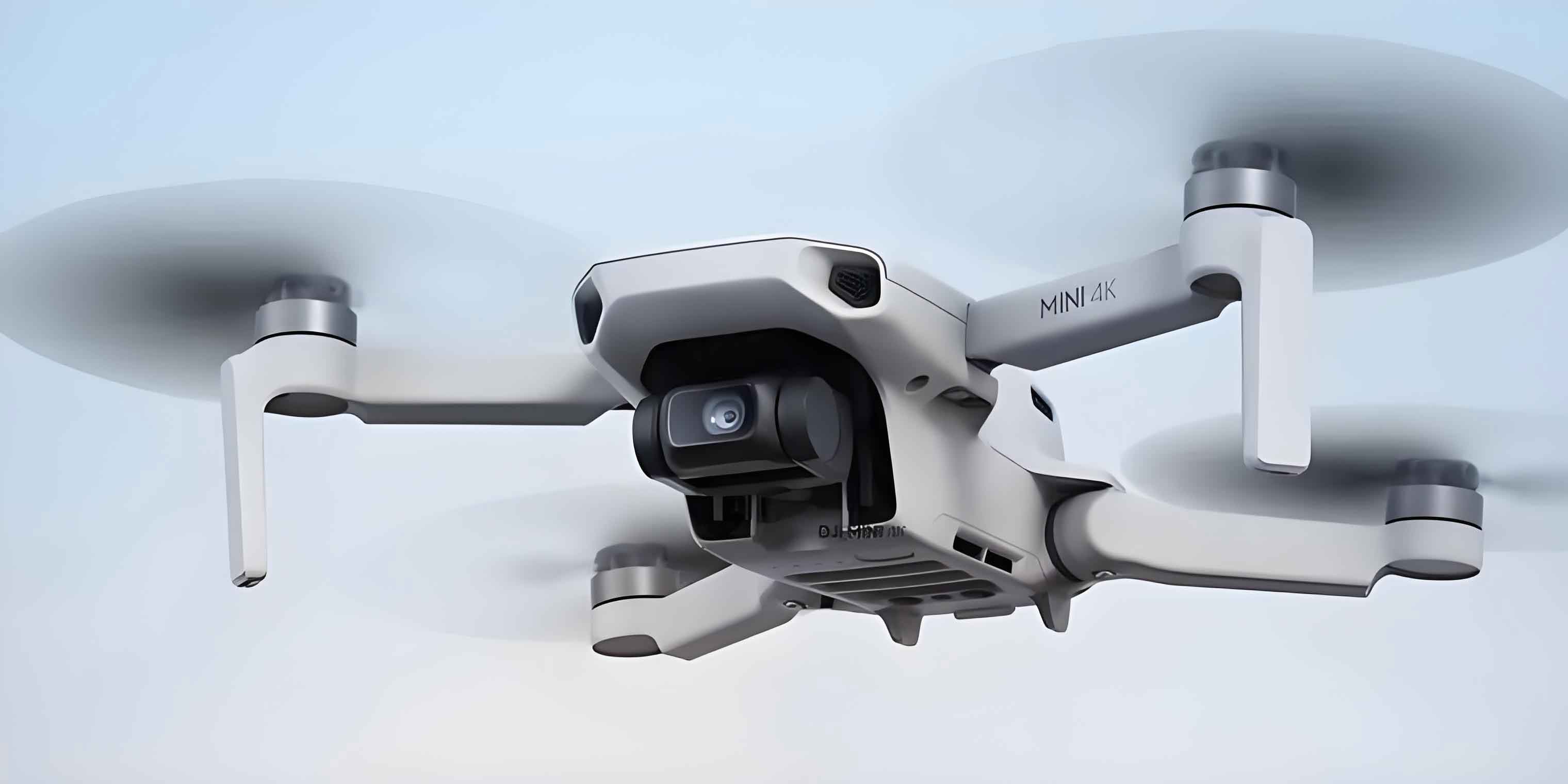
Addressing these challenges, this paper proposes an integrated methodological framework for multi-UAV cooperative path planning that fuses risk-averse modeling with a hybrid resolution strategy. We first construct a realistic three-dimensional (3D) risk-aware environment model for urban China. Subsequently, we develop an enhanced path planning algorithm for individual China UAV drones within this dynamic risk landscape. Finally, we establish a cooperative coordination model for multiple drones, featuring a novel hybrid conflict resolution strategy. This comprehensive approach aims to generate collaborative flight paths that are both safe and cost-effective, providing theoretical support for the secure and efficient operation of low-altitude drones in China.
1. Modeling the Multi-Source Risk Urban Complex Environment
1.1 3D Grid Map Construction
The low-altitude environment is characterized by dense and irregularly distributed buildings. To ensure safe UAV operations, a Cartesian coordinate system is established. The geospatial bounding box of the experimental area is defined, with its southwestern corner as the origin $$O$$. The positive X-axis points east (increasing longitude), the positive Y-axis points north (increasing latitude), and the positive Z-axis points upward (increasing altitude). Based on UAV performance parameters and mission requirements, the operational environment is discretized into uniformly sized 3D voxels (grid cells). By extracting building footprints, heights, and other relevant geospatial information, a 3D grid map is constructed. Grid cells containing static obstacles (e.g., buildings) are marked as non-traversable, while all others are designated as traversable free space.
1.2 Multi-Source Risk Assessment Modeling
Operating China UAV drones in complex urban environments with dense populations, high traffic flow, and concentrated buildings exposes them to multiple risks. To achieve a quantitative assessment, a comprehensive risk assessment model is formulated. The total risk cost $$r$$ (measured in cost units per flight hour) is decomposed into four primary components: personnel casualty risk $$r_d$$, building collision (property) risk $$r_b$$, noise disturbance risk $$r_n$$, and wind disturbance risk $$r_w$$.
$$
r = w_d r_d + w_b r_b + w_n r_n + w_w r_w
$$
where $$w_d, w_b, w_n, w_w$$ are the weighting coefficients for the respective risks, reflecting their relative importance in the overall safety and social impact assessment for China UAV drone operations.
1.2.1 Personnel Casualty Risk Model
Given the density of pedestrians and vehicles in cities, a drone crash poses a risk of collision with people, either on foot or inside vehicles. This risk cost $$r_d$$ is defined as the expected number of casualties per flight hour and consists of pedestrian and in-vehicle casualty risks:
$$
r_d = r_{peo} + r_{car}
$$
The pedestrian casualty risk $$r_{peo}$$ is modeled as a chain of probabilistic events: drone failure, collision with a pedestrian, and resulting fatality:
$$
r_{peo} = P_{crash} \times N_{hit\_p} \times Q_{death\_p}
$$
where $$P_{crash}$$ is the drone failure rate, $$Q_{death\_p}$$ is the probability of fatality upon impact with a pedestrian, and $$N_{hit\_p}$$ is the expected number of pedestrians hit, which depends on population density $$D_{peo}$$ and the affected area $$S_{hit}$$:
$$
N_{hit\_p} = S_{hit} \times D_{peo}
$$
The affected area $$S_{hit}$$ is approximated based on drone dimensions $$L_u$$, pedestrian geometry (height $$H_p$$, radius $$R_p$$), and the descent angle $$\beta$$ during a crash:
$$
S_{hit} = \pi \left( L_u + R_p + \frac{H_p}{\tan(\beta)} \right)^2
$$
The fatality probability $$Q_{death\_p}$$ is modeled using a dose-response relationship with the impact kinetic energy $$E$$:
$$
Q_{death\_p} = \frac{1}{1 + (\delta / (E – \epsilon))^{1/4}}
$$
where $$\delta$$ is the kinetic energy causing 50% lethality, and $$\epsilon$$ is a threshold energy. The impact energy $$E$$ is derived from the drone’s mass $$m$$ and impact velocity $$v$$, which itself depends on fall height $$h$$, gravity $$g$$, drag coefficient $$R_I$$, and air density $$\rho_A$$:
$$
E = \frac{1}{2} m v^2 = \frac{1}{2} m \left( \frac{mg}{\rho_A R_I S_{hit}} \left( 1 – e^{ -\frac{\rho_A R_I S_{hit} h}{m} } \right) \right)
$$
Similarly, the in-vehicle casualty risk $$r_{car}$$ is calculated as:
$$
r_{car} = P_{crash} \times N_{hit\_c} \times Q_{death\_c}
$$
where $$N_{hit\_c} = S_{hit} \times D_{car}$$, with $$D_{car}$$ being the vehicle density. $$Q_{death\_c}$$ is computed similarly to $$Q_{death\_p}$$ but uses a combined kinetic energy $$E_{c_k}$$ accounting for both drone impact velocity $$v$$ and vehicle speed $$v_c$$: $$E_{c_k} = \frac{1}{2} m (v^2 + v_c^2)$$.
1.2.2 Building Collision (Property) Risk Model
Dense urban buildings present a significant property damage risk. The risk generally decreases with increasing altitude as building density reduces. The property risk cost $$r_b$$ is modeled as a function of flight height $$h$$ and the local building height distribution $$\phi(h_b; \mu, \sigma)$$, assumed to be log-normal:
$$
r_b =
\begin{cases}
\alpha_b \cdot \phi(h; \mu, \sigma), & \text{if } 0 < h < \mu_b \\
\alpha_b \cdot \phi(\mu_b; \mu, \sigma), & \text{if } h \geq \mu_b
\end{cases}
$$
where $$\alpha_b$$ is a risk coefficient, and $$\mu_b$$ is a characteristic building height parameter. The log-normal probability density function is:
$$
\phi(h_b; \mu, \sigma) = \frac{1}{h_b \sigma \sqrt{2\pi}} e^{-\frac{(\ln(h_b) – \mu)^2}{2\sigma^2}}
$$
1.2.3 Noise Disturbance Risk Model
To quantify the social impact of noise, the drone is treated as a point sound source. The noise disturbance risk $$r_n$$ is proportional to the number of people exposed to significant noise levels:
$$
r_n = S_{noi}(l) \times D_{peo} \times l(noi)
$$
where $$S_{noi}(l)$$ is the area where the sound pressure level (SPL) exceeds a defined threshold, $$D_{peo}$$ is the population density in that area, and $$l(noi)$$ is the SPL at a specific location. The SPL at a distance from the source decays according to the geometric spreading law for a point source:
$$
l(noi) = l(noi_0) – 20 \log_{10}\left(\frac{noi}{noi_0}\right)
$$
where $$l(noi_0)$$ is the reference SPL at distance $$noi_0$$.
1.2.4 Wind Disturbance Risk Model
Wind fields, particularly in urban canyons, can destabilize drones, increasing the risk of deviation or collision. A simplified wind risk cost $$r_w$$ is proposed, proportional to the total airspeed and the time required for stabilization:
$$
r_w = k \cdot t_{control} \cdot v_{total}
$$
where $$k$$ is a scaling coefficient, $$t_{control}$$ is the estimated control/stabilization time constant, and $$v_{total}$$ is the magnitude of the vector sum of the drone’s airspeed $$\vec{v}$$ and the local wind velocity $$\vec{v}_w$$: $$v_{total} = |\vec{v} + \vec{v}_w|$$.
1.2.5 Dynamic Risk Map Generation
Critical risk components like population density $$D_{peo}$$ and vehicle density $$D_{car}$$ are dynamic. To create a temporally varying risk map, real-world data for a typical day is processed. The dynamic density $$D(T)$$ at any time $$T$$ is obtained via cubic spline interpolation of hourly data points:
$$
D(T) = a_i + b_i(T-T_i) + c_i(T-T_i)^2 + d_i(T-T_i)^3, \quad T \in [T_i, T_{i+1}]
$$
where $$a_i, b_i, c_i, d_i$$ are spline coefficients for the interval $$i$$. The total risk $$r(x, y, z, T)$$ at each grid cell and time step is computed by integrating all four risk models using the interpolated dynamic densities, resulting in a 4D (space + time) dynamic risk map that guides the path planning for China UAV drones.
2. Multi-UAV Cooperative Path Planning Model
We propose a two-layer model for static pre-flight planning. The first layer performs risk-aware optimal path planning for individual China UAV drones. The second layer performs conflict detection and resolution among multiple drone paths to ensure cooperative, collision-free operations.
2.1 Single-UAV Path Planning Model
For a drone traveling from start $$(x_0, y_0, z_0)$$ to goal $$(x_n, y_n, z_n)$$ via waypoints $$(x_i, y_i, z_i)$$, the objectives are to minimize both the total path length $$D$$ and the cumulative path risk $$R$$.
Objectives:
$$
\min D = \min \sum_{i=1}^{n} \sqrt{(x_i – x_{i-1})^2 + (y_i – y_{i-1})^2 + (z_i – z_{i-1})^2}
$$
$$
\min R = \min \sum_{i=0}^{n} r(x_i, y_i, z_i, T_i)
$$
Constraints: The path must satisfy operational limits including maximum flight distance $$D_{max}$$, maximum altitude $$H_{max}$$, minimum segment length $$l_{min}$$, and maximum turning/pitch angles $$\psi_{max}, \theta_{max}$$.
$$
\sum_{i=1}^{n} \sqrt{(x_i – x_{i-1})^2 + (y_i – y_{i-1})^2 + (z_i – z_{i-1})^2} \leq D_{max}
$$
$$
0 \leq z_i \leq H_{max}
$$
$$
\sqrt{(x_i – x_{i-1})^2 + (y_i – y_{i-1})^2 + (z_i – z_{i-1})^2} \geq l_{min}
$$
$$
0 \leq \psi_i \leq \psi_{max}, \quad 0 \leq \theta_i \leq \theta_{max}
$$
2.1.1 Enhanced A* Algorithm with Risk-Distance Heuristic
We enhance the classic A* algorithm by designing a novel heuristic function that fuses risk and distance information from the dynamic risk map. The evaluation function for a node $$x$$ is $$f(x)=g(x)+h(x)$$, where $$g(x)$$ is the actual cost from start to $$x$$, and $$h(x)$$ is the estimated cost to goal. The heuristic $$h(x)$$ is a weighted sum of the estimated remaining risk $$R(x)$$ and Euclidean distance $$D(x)$$:
$$
h(x) = w_{h1} \cdot R(x) + w_{h2} \cdot D(x)
$$
This dual-component heuristic actively guides the search away from high-risk regions while simultaneously pursuing shorter paths, effectively balancing safety and efficiency for the China UAV drone.
The algorithm proceeds as follows: The 3D grid and dynamic risk map are initialized. The search maintains OPEN and CLOSED lists. In each iteration, the node with the smallest $$f(x)$$ is expanded. The cost to move to a neighbor includes both distance and the risk value from the risk map at the corresponding time step. The search terminates when the goal is reached or no path exists.
2.2 Multi-UAV System Coordination Model
When conflicts (simultaneous occupancy of the same spatial cell) are detected among pre-planned paths, a coordination mechanism is activated. To avoid oscillatory behavior and reduce computational complexity, a priority-based system is established where only the lower-priority drone in a conflict pair executes a resolution maneuver.
2.2.1 Dynamic Priority Assignment
For each drone $$k$$ involved in a conflict, a priority score $$Z_k$$ is calculated based on multiple factors:
1. Conflict Count (C_n): Number of distinct conflicts the drone is involved in. Drones with more conflicts are assigned lower priority.
2. Total Path Risk (R_k): Cumulative risk along its planned path.
3. Total Path Length (S_k): Length of its planned path.
4. Remaining Distance Ratio (S_{r_k}): Ratio of remaining path length at the conflict point to the total path length.
If conflict counts differ, the drone with the higher count gets lower priority. If counts are equal, priority is determined by a composite score of the other three normalized metrics:
$$
Z_k = \eta_1 \tilde{R}_k + \eta_2 \tilde{S}_k + \eta_3 \tilde{S}_{r_k}
$$
where $$\eta_1, \eta_2, \eta_3$$ are weights determined by the Analytic Hierarchy Process (AHP), and $$\tilde{\cdot}$$ denotes normalized values. Higher priority is given to drones with higher total risk (less maneuverability margin), longer paths (to preserve overall mission time), and larger remaining distance (lower task completion). The China UAV drone with the higher $$Z_k$$ value maintains its right of way.
2.2.2 Hybrid Conflict Resolution Strategy
A hybrid strategy combining “path replanning” and “origin hold” is proposed for the lower-priority drone. The choice depends on the geometry of the conflict. Let $$\gamma$$ be the angle between the velocity vectors of the two conflicting drones at the conflict point.
$$
\text{If } \gamma \geq 180^\circ – \omega: \quad \text{Execute Path Replanning}
$$
$$
\text{Else}: \quad \text{Execute Origin Hold (Wait)}
$$
Here, $$\omega$$ is a tolerance angle (e.g., 30°). This rule states that near-head-on conflicts ($$\gamma$$ close to 180°) are resolved via local path replanning for the lower-priority drone, starting from a point before the conflict and treating the conflict zone as a temporary obstacle. For other conflict angles (e.g., crossing or overtaking), the lower-priority drone is instructed to delay its start by one or more time steps (hold at origin), which is computationally inexpensive and often sufficient for conflict resolution. This hybrid approach balances solution optimality and computational speed for coordinating multiple China UAV drones.
3. Simulation Experiments and Analysis
To validate the proposed methodology, simulations are conducted in a realistic 6km x 6km urban area of Nanjing, China. The airspace up to 120m is discretized into 50m x 50m x 30m grids. The environment includes residential, commercial, industrial, and park areas. A DJI Phantom 4 Pro quadcopter is used as the reference China UAV drone model. Key parameters for risk calculation and algorithm execution are listed in the table below.
| Parameter Category | Parameter | Value/Source |
|---|---|---|
| UAV Specifications | Mass (m) | 1.388 kg |
| Failure Rate (P_crash) | 6.04e-5 per flight hour | |
| Reference Size (L_u) | 0.35 m | |
| Reference Noise @2m | 78.4 dB | |
| Risk Model | Lethality Energy (δ, ε) | δ = 1e6 J, ε = 232 J |
| Risk Weights (w_d, w_b, w_n, w_w) | 0.4, 0.2, 0.2, 0.2 | |
| AHP Weights (η_1, η_2, η_3) | 0.637, 0.258, 0.105 | |
| Environment & Planning | Air Density (ρ_A) | 1.225 kg/m³ |
| Max Flight Altitude (H_max) | 120 m | |
| Grid Resolution | 50m x 50m x 30m | |
| Conflict Angle Tolerance (ω) | 30° |
3.1 Dynamic Risk Map Generation Results
The multi-source risk models are integrated using dynamic population and traffic density data for a typical day. The combined risk maps at different flight layers (30m, 60m, 90m, 120m) for two time instances (09:00 and 10:00) are generated. Key observations are:
- The 30m layer exhibits the highest average risk due to significant pedestrian and noise impact.
- Risk generally decreases with altitude as building density and noise impact reduce.
- The 120m layer, while having lower population-related risks, shows increased risk patches due to simulated wind field effects from CFD analysis.
- Risks at 10:00 are uniformly higher than at 09:00 due to increased population and traffic density, demonstrating the temporal dynamics crucial for planning China UAV drone missions.
3.2 Single-UAV Path Planning Performance
The proposed Enhanced A* algorithm is compared against standard Dijkstra, Ant Colony Optimization (ACO), and Particle Swarm Optimization (PSO) algorithms. The comparison focuses on the two primary objectives: path length and cumulative path risk.
| Algorithm | Path Length (m) | Cumulative Path Risk | Improvement vs. Benchmarks |
|---|---|---|---|
| Proposed Enhanced A* | 9805.62 | 2424.39 | Baseline |
| Dijkstra | 10870.45 | 2595.30 | Length: -9.80%, Risk: -6.59% |
| Ant Colony Optimization (ACO) | 11134.72 | 3273.58 | Length: -11.94%, Risk: -25.94% |
| Particle Swarm Optimization (PSO) | 10839.74 | 3039.49 | Length: -9.54%, Risk: -20.24% |
The results confirm the superiority of the proposed algorithm. It successfully generates paths that actively circumvent high-risk urban zones (e.g., dense commercial districts) while achieving the shortest distance. Compared to Dijkstra, ACO, and PSO, the Enhanced A* reduces path risk by 6.59%, 25.94%, and 20.24%, respectively, and also finds shorter paths. This demonstrates its effectiveness in balancing safety and efficiency for a single China UAV drone.
3.3 Multi-UAV Cooperative Planning Results
The cooperative framework is tested with 5, 10, and 15 China UAV drones, each assigned random start-goal pairs within the urban area. The initial globally optimal paths are generated using the Enhanced A* algorithm. Conflict detection identifies spatiotemporal overlaps.
Priority Assignment: For the 10-UAV scenario, conflicts were detected among drones {1,2,4,5,10}. After calculating the composite score $$Z_k$$, the priorities were determined. For instance, UAV 4 had the highest priority ($$Z_4=0.820$$) due to its long path and high remaining distance ratio, while UAV 2 had the lowest ($$Z_2=0.150$$). This dynamic prioritization effectively guides the conflict resolution process.
Hybrid Strategy Performance: The proposed “Replan + Hold” hybrid strategy is compared against the standalone “Path Replanning” and “Origin Hold” strategies. Performance is evaluated based on total mission time (simulated time for all drones to complete their trips) and algorithm computation time.
| Number of UAVs | Conflict Resolution Strategy | Total Mission Time (s) | Algorithm Computation Time (s) |
|---|---|---|---|
| 5 | Hybrid (Replan + Hold) | 622.31 | 8.51 |
| Path Replanning Only | 610.12 (+2.0%) | 11.28 (+32.5%) | |
| Origin Hold Only | 640.45 (-2.83%) | 3.27 (-61.6%) | |
| 10 | Hybrid (Replan + Hold) | 674.88 | 14.32 |
| Path Replanning Only | 659.34 (+2.36%) | 19.73 (+37.8%) | |
| Origin Hold Only | 697.83 (-3.29%) | 5.58 (-61.0%) | |
| 15 | Hybrid (Replan + Hold) | 676.42 | 16.48 |
| Path Replanning Only | 658.73 (+2.69%) | 25.92 (+57.3%) | |
| Origin Hold Only | 705.25 (-4.09%) | 6.49 (-60.6%) |
The analysis reveals the strengths of the hybrid strategy. While “Path Replanning Only” yields the shortest mission time (most optimal paths), it incurs the highest computational cost, which grows significantly with swarm size. Conversely, “Origin Hold Only” has the lowest computation time but leads to the longest mission delays. The proposed Hybrid Strategy strikes an effective balance. It reduces the computational time compared to full replanning by 24.56% to 36.42% across scenarios, while simultaneously reducing mission time compared to simple waiting by 2.83% to 4.09%. This demonstrates its practical utility for efficiently managing conflicts in scalable multi-China UAV drone operations.
4. Conclusion and Future Work
This study presents a comprehensive framework for the safe and efficient cooperative path planning of China UAV drones in complex urban low-altitude environments. The key contributions are threefold:
- Dynamic Multi-Source Risk Modeling: A realistic 4D dynamic risk map was constructed by integrating quantitative models for personnel casualty, property damage, noise disturbance, and wind impact. This map provides a crucial safety-aware representation of the urban environment for China UAV drone operations.
- Risk-Aware Single-UAV Path Planning: An enhanced A* algorithm was developed, incorporating a novel heuristic that fuses estimated remaining risk and distance. This algorithm successfully generates globally optimal paths that minimize both flight distance and exposure to risk, providing a superior foundation for single-drone missions compared to traditional methods.
- Priority-Based Multi-UAV Coordination: A cooperative planning model was established, featuring a dynamic priority assignment mechanism and a hybrid “replan-and-hold” conflict resolution strategy. This system efficiently resolves inter-drone conflicts, significantly reducing computational overhead compared to pure replanning and minimizing mission delay compared to pure waiting, enabling scalable and practical coordination for fleets of China UAV drones.
The simulation results in a real urban area of Nanjing validate the effectiveness of the proposed methods. The single-drone planner outperforms benchmarks in risk and length reduction. The multi-drone coordinator successfully generates safe, conflict-free paths for different swarm sizes, with the hybrid strategy demonstrating a favorable trade-off between solution quality and computational efficiency.
Future work will focus on extending the framework to handle heterogeneous drones with varying risk profiles and dynamic, unpredictable obstacles in real-time. Furthermore, integrating communication constraints and more sophisticated wind field predictions will enhance the practicality and robustness of the planning system for the diverse and expanding applications of China UAV drones in the national low-altitude economy.