
From my perspective as an analyst in the field of aviation maintenance and engineering, the evolution of military unmanned aerial vehicles (UAVs) has been nothing short of revolutionary. The history of military UAVs dates back to the early 20th century, but progress was slow due to limitations in propulsion, control, communication, and navigation technologies, coupled with a lack of systematic understanding of their potential applications. It was not until the 1990s, when U.S. military UAVs demonstrated exceptional performance in several high-tech localized conflicts, that these systems garnered significant attention from armed forces worldwide. Since the dawn of the 21st century, military UAVs have played increasingly vital roles in missions such as surveillance and reconnaissance, targeted tracking, battle damage assessment, and aerial fire support. With advancements in communication technology and artificial intelligence, the concept of manned/unmanned teaming has emerged, propelling military UAVs into more complex domains like air superiority operations and surface strike missions.
Unlike manned aircraft, military UAVs—particularly medium to large ones—constitute a complex equipment system comprising the aerial platform, ground control stations, and ground support systems. They are designed for agile deployment, rapid mobility, and strong battlefield survivability. Consequently, the support for military UAVs leans toward a systematic integrated logistics approach, necessitating the full application of modern information technology to enable rapid diagnosis and comprehensive assessment of UAV subsystems. This facilitates cross-domain, precise, and agile informationalized support capabilities, which are crucial for quickly generating combat effectiveness for military UAVs.
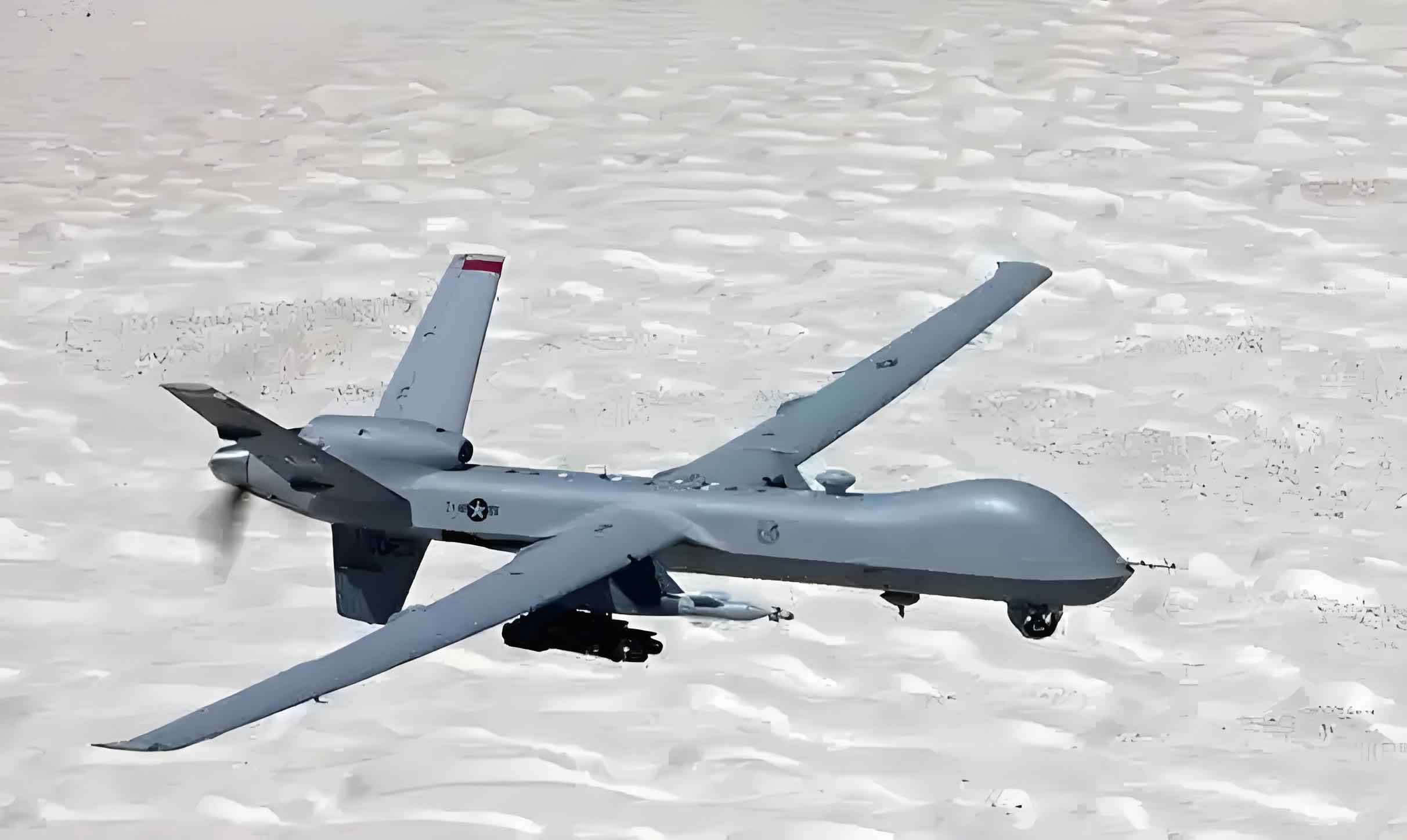
In this article, I will delve into the concept of integrated logistics informationization, analyze current developments and challenges, explore the unique characteristics of military UAV support, reflect on new technological advancements, and outline key capabilities for future military UAV informationalized support. Throughout, I emphasize the critical role of military UAVs in modern warfare and the imperative to enhance their support systems through innovation.
Concept of Integrated Logistics Informationization
Integrated logistics informationization refers to the application of information technology in equipment maintenance and support operations. It involves deeply developing various maintenance information resources, conducting informatization construction or transformation across all stages—including maintenance operations, management, and supply support—and optimizing support workflows. By integrating information technology with equipment maintenance techniques, it focuses support resources on maintenance activities, improves the precision and scientific level of equipment support, and ultimately enhances equipment readiness. From my observation, this evolution is driven by three primary factors:
- Technological Advancement: The rapid development of information technology accelerates the iteration of information systems, thereby pushing forward the progress of equipment support informatization.
- Support Demand Pull: Under current maintenance frameworks, there is a need for specific informationalized capabilities to manage technical states, supply support, maintenance operations, and training support for equipment.
- Future Operational Requirements: To boost operational efficacy in future combat scenarios, support must shift toward mission/performance-based approaches and respond to integrated support needs, necessitating adjustments in logistics informationization.
To summarize these drivers, I present the following table:
| Driver | Description | Impact on Military UAV Support |
|---|---|---|
| Technological Advancement | Rapid updates in IT (e.g., cloud computing, IoT) | Enables real-time data processing and advanced analytics for military UAV systems. |
| Support Demand Pull | Need for efficient state management and resource allocation | Drives development of tailored support systems for complex military UAV platforms. |
| Future Operational Requirements | Emphasis on agile, cross-domain, and precise support | Shifts focus to predictive maintenance and AI-driven decision-making for military UAV fleets. |
Current State of Integrated Logistics Informationization
In my analysis of global practices, nations have continuously developed their integrated support systems for military aircraft, with robust information systems serving as the foundation for efficient operations. For instance, the U.S. military employs an Integrated Logistics System (ILS), where the Air Force Material Command plays a key role in lifecycle data management, depot-level maintenance, and parts supply. Since the 21st century, domestic air forces have also prioritized informationalized transformations, deploying specialized systems like Interactive Electronic Technical Manuals (IETM), Portable Maintenance Aids (PMA), Integrated Training Systems (ITS), and Maintenance Support Information Support Systems (MSISS). These have established a relatively complete informationalized support framework, significantly improving maintenance efficiency for military UAVs and other aircraft.
However, challenges persist. The U.S. F-35 fighter’s Autonomic Logistics System (ALS), which includes a Prognostics and Health Management (PHM) system and an Autonomic Logistics Information System (ALIS), represents a state-of-the-art approach using digital technologies to automate testing, maintenance, and support. Yet, ALIS has faced issues such as delays, system defects, high false alarm rates, and data errors, complicating health assessments and burdening personnel. In response, the U.S. Department of Defense announced the Operational Data Integrated Network (ODIN) in 2020 to replace ALIS, with deployments beginning in 2021. Domestically, numerous support systems exist—like aviation maintenance support systems, maintenance management systems, and training software—but they often operate in isolation or with redundancy. There is a lack of holistic planning, leading to fragmented information, poor resource visibility, limited situational awareness, and low intelligent decision-making support, hindering the generation of flexible and precise support plans for military UAVs.
To illustrate these issues, I have compiled a comparison table:
| Aspect | U.S. Military (F-35 ALS/ALIS) | Domestic Systems |
|---|---|---|
| System Approach | Integrated, automated support with PHM and ALIS | Multiple independent systems (e.g., IETM, PMA, MSISS) |
| Key Challenges | Delays, high false alarms, data errors, management complexity | Lack of integration, fragmented data, low intelligent decision-making |
| Recent Developments | Transition to ODIN for improved data integration | Ongoing efforts to unify systems and enhance coordination |
| Impact on Military UAVs | Highlights need for reliable, scalable support solutions | Underscores urgency for interconnected, smart support networks |
Characteristics of Informationalized Support for Military UAVs
Based on my experience, military UAVs—especially medium to large types—exhibit distinct support characteristics compared to manned aircraft, primarily due to their system composition, remote operation, and mission profiles. These can be summarized as follows:
- Separated Deployment: Military UAV ground control stations and aerial platforms are often deployed separately in a one-station-to-many-aircraft configuration. This requires coordinated support between ground stations and UAVs during mission preparation, differing from the single-aircraft-centric support of manned platforms.
- System Complexity: With long endurance, extensive operational ranges, and diverse payloads, military UAVs generate vast amounts of maintenance data. Support systems must process this data quickly and accurately to provide timely launch recommendations and fault diagnoses.
- Mobile Redeployment: Military UAVs are designed for agile deployment, with configurations varying by mission type. Ground support systems must flexibly configure portable resources based on factors like mission duration, sortie intensity, and combat readiness, minimizing redeployment scales.
Thus, informationalized support for military UAVs should enable cross-domain support, precise support, and agile support. I express these relationships mathematically: let $S$ represent support effectiveness, $C$ for cross-domain capability, $P$ for precision, and $A$ for agility. Then, a simplified model could be:
$$S = f(C, P, A) = \alpha \cdot C + \beta \cdot P + \gamma \cdot A$$
where $\alpha$, $\beta$, and $\gamma$ are weighting coefficients reflecting the importance of each factor for military UAV operations.
To further clarify, here is a table contrasting military UAV and manned aircraft support:
| Characteristic | Military UAVs | Manned Aircraft |
|---|---|---|
| Deployment Mode | Separated (ground stations and platforms) | Integrated (aircraft as primary unit) |
| Data Volume | High due to complex systems and long missions | Moderate, focused on pilot reports and sensors |
| Mobility Needs | High for rapid redeployment and agile support | Lower, with established base infrastructure |
| Support Focus | Cross-domain, precise, and agile capabilities | Traditional maintenance and supply chains |
Reflections on New Information Technology Development and Application
In my view, addressing military UAV support challenges and meeting future demands for large-scale, sustained operations and high-mobility agile support requires leveraging emerging technologies like data links, big data, and artificial intelligence. This will enable integrated air-ground support, precise fault diagnosis and prediction, and intelligent support decision-making.
Integrated Support Based on Data Links
Military UAV data links serve as the critical connection between aerial platforms and ground control stations, transmitting control commands and receiving status data. Key transmitted data includes system states (e.g., airspeed, engine RPM), critical consumables (e.g., fuel levels, battery charge), and severe fault codes. By utilizing data links, real-time health monitoring can be achieved, allowing autonomous fault alerts and proactive support responses—shifting from reactive to proactive maintenance. Additionally, space-based internet networks, composed of low Earth orbit (LEO) satellites, offer low-latency, global coverage. Integrating military UAVs with such networks via secure communications enables cross-domain support, facilitating data sharing, resource consolidation, and mission coordination. The link performance can be modeled using a signal-to-noise ratio formula:
$$SNR = \frac{P_t \cdot G_t \cdot G_r \cdot \lambda^2}{(4\pi d)^2 \cdot k \cdot T \cdot B \cdot L}$$
where $P_t$ is transmit power, $G_t$ and $G_r$ are antenna gains, $\lambda$ is wavelength, $d$ is distance, $k$ is Boltzmann’s constant, $T$ is temperature, $B$ is bandwidth, and $L$ is loss factor. This underpins reliable data exchange for military UAV support.
PHM Systems Based on Big Data
Military UAV maintenance data exhibits the 5V big data traits: Volume (large scale), Velocity (high speed), Variety (diverse sources), Value (low density), and Veracity (accuracy). Conventional software struggles to extract patterns and correlations from such data. Leveraging cloud computing, cloud storage, and distributed databases, deep data mining across the lifecycle—from design and manufacturing to service—can uncover physical meanings and mechanistic logic behind fault models. This enhances ground-based PHM capabilities for accurate fault detection, isolation, remaining useful life (RUL) prediction, and health state assessment. For instance, a reliability function for a military UAV component might be expressed as:
$$R(t) = e^{-\int_0^t \lambda(\tau) d\tau}$$
where $R(t)$ is reliability at time $t$, and $\lambda(\tau)$ is the failure rate function. Big data analytics can refine $\lambda(\tau)$ using historical data from multiple military UAVs.
Support Decision-Making Based on Artificial Intelligence
Artificial intelligence (AI), particularly deep learning, aims to mimic human cognitive functions like thinking, learning, and reasoning. By applying AI to military UAV support, systems can autonomously learn from data, identify patterns in equipment usage under varying combat scenarios, predict material consumption, and assist in planning support activities such as supply, repair, and transportation. A neural network model for decision-making might involve layers of neurons with activation functions:
$$y = \sigma\left(\sum_{i=1}^n w_i x_i + b\right)$$
where $x_i$ are inputs (e.g., mission parameters, UAV health data), $w_i$ are weights, $b$ is bias, and $\sigma$ is an activation function like ReLU. This enables intelligent, adaptive support for military UAV fleets.
To summarize these technological applications, I provide the following table:
| Technology | Application in Military UAV Support | Key Benefits |
|---|---|---|
| Data Links | Real-time health monitoring and cross-domain communication | Enables proactive support and global connectivity for military UAVs |
| Big Data Analytics | PHM systems for fault prediction and lifecycle management | Improves accuracy in diagnostics and prognostics for military UAV systems |
| Artificial Intelligence | Intelligent decision support for resource planning and maintenance | Enhances agility and precision in support operations for military UAVs |
Key Capabilities for Military UAV Informationalized Support
From my standpoint, future military UAV informationalized support must leverage modern IT to establish data standards, build big data platforms, and integrate support information systems. This will realize several key capabilities essential for mission readiness and diverse military tasks.
- Real-Time Support Situational Awareness: Throughout UAV flights, data links continuously transmit system states, consumable data, and fault information. Ground-based PHM systems process this data in real time, offering dynamic monitoring and health assessments. This provides maintenance personnel with visualized, up-to-date insights into military UAV conditions, supporting timely decisions.
- Comprehensive System Health Evaluation: Beyond real-time data, post-flight downloads from maintenance data cards and inputs from ground test equipment (e.g., radar or electronic warfare detectors) are aggregated into big data platforms. Combined with design and manufacturing data from specific military UAV batches, big data analysis enhances PHM capabilities, revealing trends in airframe state and performance. It predicts remaining lifespan and evaluates mission system functionality and combat effectiveness. A health index $H$ can be computed as:
$$H = \sum_{j=1}^m w_j \cdot h_j$$
where $h_j$ are health indicators for subsystems (e.g., engine, sensors), and $w_j$ are weights based on criticality for military UAV missions.
- Maintenance Support Decision Support: AI technologies empower support systems to simulate human intelligence, enabling learning, reasoning, and problem-solving. By assessing military UAV flight capabilities and mission compatibility, these systems can automatically generate mission-tailored support plans and autonomously plan specialized training support. This aligns with the agile and precise support needs of military UAV operations.
- End-to-End Support Process Control: Using digital twin technology, ground support systems can monitor the entire support process in real time. They proactively identify issues, autonomously reconfigure and optimize workflows, and track resource utilization and consumption with early warnings. This ensures full controllability and efficiency in supporting military UAVs.
To encapsulate these capabilities, here is a table linking them to technological enablers:
| Key Capability | Description | Enabling Technologies |
|---|---|---|
| Real-Time Situational Awareness | Continuous monitoring of military UAV health via data streams | Data links, real-time processing algorithms |
| Comprehensive Health Evaluation | Holistic assessment using lifecycle data and big data analytics | Big data platforms, PHM systems, cloud storage |
| Decision Support | AI-driven planning for maintenance and resource allocation | Artificial intelligence, machine learning models |
| Process Control | Digital twin-based monitoring and optimization of support activities | Digital twins, IoT sensors, predictive analytics |
Conclusion
In the future operational landscape, military UAVs will continue to be integral components of combat systems, delivering outstanding military value. To sustain their development and enhance support efficacy, it is imperative to fully apply modern information technologies such as data links, big data, and artificial intelligence. By developing next-generation intelligent support information systems, we can achieve cross-domain, precise, and agile informationalized support capabilities tailored to mission demands. As I reflect on this journey, the focus must remain on innovating support frameworks that keep pace with the evolving roles of military UAVs, ensuring they remain combat-ready and effective in diverse scenarios. The integration of these advancements will not only streamline support processes but also solidify the strategic advantage of military UAVs in modern warfare, paving the way for more resilient and responsive defense infrastructures.