
The proliferation of Unmanned Aerial Vehicles (UAVs) has revolutionized numerous sectors, offering unparalleled advantages in terms of operational efficiency, accessibility, and data acquisition. Among these transformative applications, the domain of security and patrol stands out, where the DJI drone has become an indispensable tool. Equipped with advanced sensors and payloads, a security patrol DJI drone provides a technological, real-time, and intelligent solution for surveillance, emergency response, and public safety missions. While standard flight control applications offer fundamental features like waypoint navigation and media capture, they often lack the specialized modules required for dedicated security operations. This necessitates the development of custom applications tailored to the unique demands of the field. This article delves into the design and implementation of a comprehensive flight control application for security patrol DJI drone systems, leveraging the DJI Mobile SDK to extend functionality beyond basic flight, integrating control for specialized payloads and custom algorithms for automated threat detection and response.
System Architecture and Design Philosophy
The core of a modern security patrol system is the seamless integration of aerial hardware, control software, and ground-based command. The DJI drone, such as the Matrice 300 RTK, serves as the primary aerial platform, renowned for its robustness, extended flight time, and high-payload capacity. The system’s intelligence is bifurcated: low-level flight stability and basic sensor fusion are managed by the drone’s onboard flight controller, while high-level mission logic, payload control, and user interaction are handled by a custom application running on a mobile device connected to the remote controller.
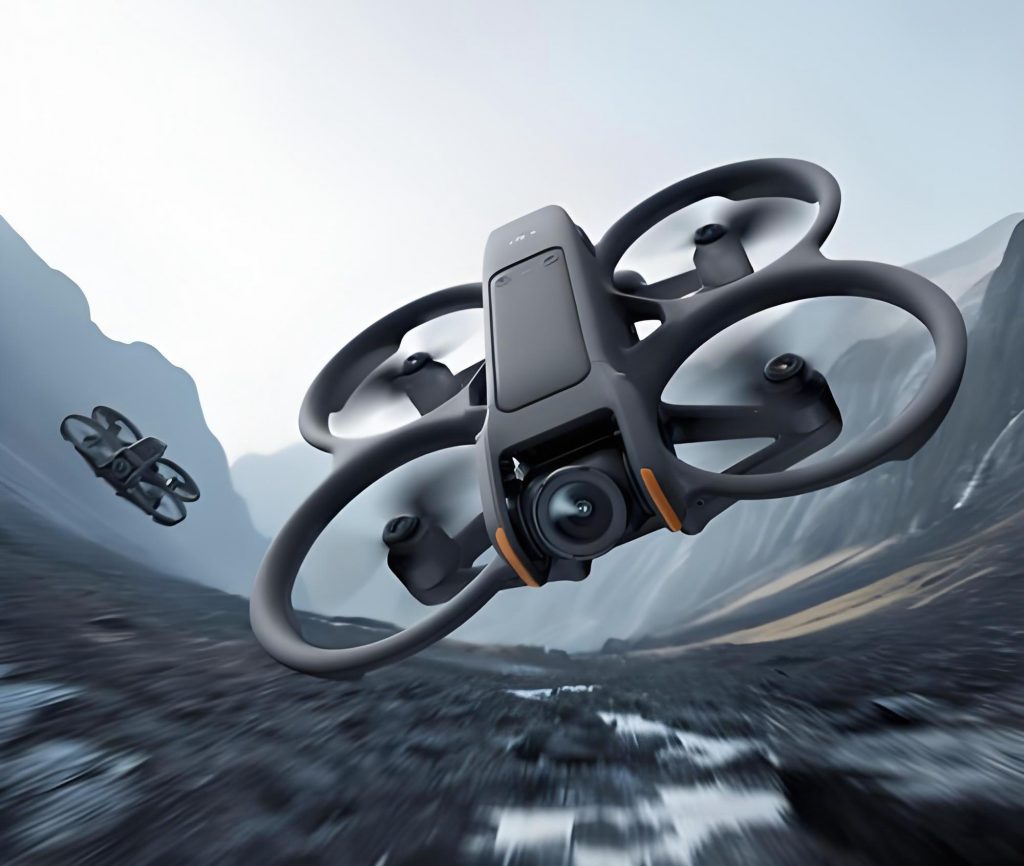
The communication flow is pivotal. The custom application, developed using the DJI Mobile SDK, communicates with the remote controller via a USB or wireless data link. The remote controller, in turn, maintains a secure, low-latency connection with the DJI drone itself. This architecture allows the application to send commands for complex behaviors and receive a rich telemetry data stream including video, flight status, and payload states. The design philosophy centers on modularity and extensibility. The application is not a monolithic program but a framework where core flight controls, payload interfaces, and mission-specific algorithms exist as independent modules that can be updated or replaced without affecting the entire system. This is crucial for adapting the DJI drone to evolving security threats and operational protocols.
| Aspect | Traditional Patrol | DJI Drone-Enhanced Patrol |
|---|---|---|
| Coverage Speed | Limited by human mobility and terrain. | Rapid aerial coverage of large, complex areas. |
| Situational Awareness | Ground-level, limited field of view. | Bird’s-eye view, zoom/thermal imaging, real-time video feed. |
| Response Time | Slower, requires physical deployment to location. | Immediate aerial dispatch and assessment. |
| Risk to Personnel | High in dangerous or inaccessible areas. | Minimized; operators remain at a safe distance. |
| Operational Cost | High long-term costs for personnel and vehicles. | Lower operational cost, scalable deployment. |
| Data Logging | Manual, prone to error. | Automatic geo-tagging of media and flight paths. |
Development Foundation: The DJI Mobile SDK
The DJI Mobile SDK is the cornerstone for developing professional applications for DJI drone platforms. It abstracts the complex, low-level communication protocols into a set of high-level, well-documented APIs for both iOS and Android. This significantly reduces development time and allows engineers to focus on application logic rather than hardware interfacing. The SDK provides comprehensive control over nearly all aspects of the DJI drone and its accessories.
The registration process is the first critical step. Every application must obtain a unique App Key from the DJI Developer platform. This key, tied to the application’s package name, is placed in the AndroidManifest.xml file and is verified during the SDK initialization process. The registration sequence can be modeled as a state machine:
Let $S$ represent the SDK state, where $S \in \\{\text{UNINITIALIZED}, \text{REGISTERING}, \text{REGISTERED}, \text{ERROR}\\}$.
The transition function $\\delta$ for successful registration is:
$$\\delta(S_{\text{UNINITIALIZED}}, \text{registerApp()}) = S_{\text{REGISTERING}}$$
$$\\delta(S_{\text{REGISTERING}}, \text{onSuccess}) = S_{\text{REGISTERED}}$$
Upon successful registration ($S_{\text{REGISTERED}}$), the application can establish a connection to the product (the DJI drone and its remote controller). The connection state $C$ is equally crucial:
$$C = \\begin{cases}
0 & \\text{Product not connected} \\\\
1 & \\text{Remote Controller connected, DJI drone disconnected} \\\\
2 & \\text{Remote Controller and DJI drone connected}
\\end{cases}$$
Only when $C=2$ can the application fully interact with the aerial platform. The DJI Mobile SDK categorizes its APIs into several key domains, as summarized below:
| Domain | Key Classes/Interfaces | Core Capabilities Provided |
|---|---|---|
| Flight Control | FlightController, VirtualStick |
Manual & automated flight (waypoint, follow-me), telemetry data (GPS, altitude, speed). |
| Camera & Gimbal | Camera, Gimbal |
Photo/video capture, parameter control (shutter, ISO), gimbal orientation. |
| Mission Management | WaypointMission, HotpointMission |
Planning, uploading, executing, and monitoring automated flight paths. |
| Media & Payload | MediaManager, Payload |
Accessing and downloading media files; controlling third-party payloads (e.g., speakers, spotlights). |
| System Status | Battery, RemoteController |
Monitoring battery level, signal strength, and hardware status. |
Core Application Modules and Implementation
The security patrol application is built by integrating several key modules on top of the DJI Mobile SDK foundation.
1. User Interface and Basic Flight Control
The primary interface is built using Android’s standard layouts combined with DJI’s UX SDK widgets. The UX SDK provides pre-styled, functional UI components like `FPVWidget` (First Person View), `DashboardWidget` (flight data), and `CameraControlsWidget`, ensuring a consistent and reliable user experience that matches DJI’s ecosystem. The main activity typically uses a `RelativeLayout` or `ConstraintLayout` with the `FPVWidget` occupying the main screen area to display the live video feed from the DJI drone‘s camera. Overlaid on top are control panels for mission selection, payload control, and system status.
Basic flight via the remote controller’s physical sticks works out-of-the-box. The application’s role is to enable advanced automated flight. For instance, creating a waypoint mission involves:
1. Initializing a `WaypointMission.Builder` object.
2. Setting global parameters: auto flight speed ($v_{auto}$), finished action, and heading mode.
3. Adding waypoints. Each waypoint $WP_i$ is defined by its coordinates $(lat_i, lon_i)$, altitude $alt_i$, and heading $\\psi_i$.
$$WP_i = (lat_i, lon_i, alt_i, \\psi_i)$$
4. Uploading the mission to the DJI drone.
5. Executing the mission with start/stop/pause controls.
The application monitors the mission state $M_{state}$ and provides real-time feedback to the operator.
2. Payload Integration: The Speaker Module
A critical payload for security and emergency response is the speaker or shout-hailer. The DJI Mobile SDK provides the `Speaker` class (under the `Accessory` namespace) to manage this payload. The application’s speaker module must handle three main functions: Real-time Shouting, Audio File Playback, and Text-to-Speech (TTS) Broadcasting.
The state management for the speaker is complex. Let $SpState$ represent the speaker’s composite state, which is a tuple of its operational mode, transmission status, and playback status.
$$SpState = (Mode, T_x, P_b)$$
where:
$$Mode \\in \\{IDLE, SHOUT, PLAYBACK, TTS\\}$$
$$T_x \\in \\{IDLE, TRANSMITTING, COMPLETE, ERROR\\}$$
$$P_b \\in \\{IDLE, PLAYING, PAUSED, STOPPED\\}$$
For real-time shouting, the application implements a “push-to-talk” mechanism. When the user presses the button, the mobile device’s microphone is activated, and audio data $A_{mic}(t)$ is captured, encoded (e.g., into PCM or AAC frames), and packaged into data packets $D_pkt$. These packets are streamed to the DJI drone via the `Speaker`’s transmission interface. The process can be modeled as a real-time streaming function:
$$F_{shout}: A_{mic}(t) \\xrightarrow[encode]{} D_{pkt}(t) \\xrightarrow[transmit]{} Spkr_{output}(t – \\Delta)$$
where $\\Delta$ is the total latency from capture to playback on the drone.
For audio file playback, the module first fetches the list of audio files stored on the mobile device or a server. Upon user selection, the file must be transmitted to the DJI drone‘s onboard storage before playback. This involves file chunking, transmission with progress monitoring, and finally triggering playback via the `Speaker.play()` API. The transmission progress $P_{tx}$ is given by:
$$P_{tx} = \\frac{Bytes_{transmitted}}{Bytes_{total}} \\times 100\\%$$
| Action | SDK Method Call | State Transition (From $SpState_0$ to $SpState_1$) |
|---|---|---|
| Start Real-time Shout | Speaker.startTransmission() |
$(IDLE, IDLE, IDLE) \\rightarrow (SHOUT, TRANSMITTING, IDLE)$ |
| Stop Shout | Speaker.stopTransmission() |
$(SHOUT, TRANSMITTING, IDLE) \\rightarrow (IDLE, IDLE, IDLE)$ |
| Upload & Play Audio File | Speaker.playAudioFile() (internally handles tx) |
$(IDLE, IDLE, IDLE) \\rightarrow (PLAYBACK, TRANSMITTING, IDLE) \\rightarrow (PLAYBACK, COMPLETE, PLAYING)$ |
| Stop Playback | Speaker.stopPlay() |
$(PLAYBACK, COMPLETE, PLAYING) \\rightarrow (IDLE, IDLE, STOPPED)$ |
3. Integration of Custom Algorithms for Automated Patrol
The true power of a custom application lies in integrating bespoke computer vision and machine learning algorithms directly into the patrol workflow of the DJI drone. A common requirement is automated person or vehicle detection from the live video stream.
This involves setting up a processing pipeline:
1. Frame Acquisition: Grab video frames $I_t$ from the `FPVWidget` or directly from the `VideoFeed` at time $t$.
2. Pre-processing: Resize $I_t$ to the algorithm’s input dimensions, apply normalization ($I’_{t} = \\frac{I_t – \\mu}{\\sigma}$).
3. Inference: Run the pre-processed frame $I’_{t}$ through a neural network model $\\mathcal{M}$ (e.g., YOLOv5, EfficientDet) to generate detections.
$$\\mathcal{D}_t = \\mathcal{M}(I’_{t}; \\theta)$$
where $\\mathcal{D}_t = \\{ (bbox_i, class_i, confidence_i) \\}$ for $i=1…N$ detections, and $\\theta$ are the model parameters.
4. Post-processing: Filter detections by confidence threshold $\\tau_c$ and apply Non-Maximum Suppression (NMS).
5. Action Triggering: Based on the detection results, the application can automatically trigger actions. For example, if a person is detected in a restricted zone ($class_i = \text{“person”}$ and $bbox_i$ within geo-fence $G$), the application can:
* Command the DJI drone to hover and track the subject (`FollowMe` mission).
* Automatically zoom the camera for a clearer view.
* Initiate an audio warning via the speaker module.
* Capture a high-resolution image and geo-tag it with the incident location $(lat_{drone}, lon_{drone})$.
* Send an alert with all relevant data to a central command server.
The algorithm’s performance is often measured by its inference speed (frames per second – FPS) and accuracy (mAP – mean Average Precision). Balancing these is key for real-time operation on a mobile device connected to the DJI drone.
$$\\text{System Latency}_{detection} = \\text{Frame Grab Delay} + \\text{Pre-process Time} + \\text{Inference Time} + \\text{Post-process Time}$$
For effective tracking, this latency must be low enough to allow for timely robotic action.
4. Other Payloads: Robotic Arm for Payload Delivery
For search and rescue or emergency supply delivery, a DJI drone can be equipped with a robotic arm or a release mechanism. Controlling such a payload involves a different set of commands, often through the SDK’s `Payload` interface or via custom data channels (using `sendDataToOnboardSDK`). The control logic is typically simpler but requires precise safety checks (e.g., ensuring the drone is in a stable hover before release). The release command is only sent when conditions are met:
$$\\text{Release Approved if: } (C=2) \\land (|v_{drone}| < v_{threshold}) \\land (alt_{drone} > alt_{min\\_safe}) \\land (\\text{Arm State} = READY)$$
| Mission Type | Key Input Parameters | Automated Output/Action |
|---|---|---|
| Automated Grid Patrol | Area Polygon, Patrol Altitude, Overlap Ratio | Automatic waypoint generation, consistent camera coverage. |
| Object Detection & Alert | Object Class (e.g., person, vehicle), Confidence Threshold, Alert Method (audio/log/network) | Real-time alerts, automatic subject tracking and recording. |
| Emergency Supply Drop | Target Coordinates, Drop Altitude, Hover Time | Autonomous navigation to target, stability check, payload release command. |
| Perimeter Inspection | Path (waypoints or polygon), Focus Distance from Perimeter | Automatic flight along path with gimbal pointed perpendicular to the path for side inspection. |
Testing, Deployment, and Future Directions
Rigorous testing is conducted in phases: unit testing of individual modules (e.g., speaker transmission logic), integration testing with a connected DJI drone in a controlled environment, and finally, field trials simulating real patrol scenarios. Metrics such as application stability, battery consumption impact, communication reliability under varying signal conditions, and the accuracy of integrated algorithms are meticulously logged and analyzed.
The deployment package (APK for Android) is distributed to security personnel’s mobile devices. A well-designed application minimizes the learning curve by providing an intuitive interface that logically separates basic piloting, mission planning, payload control, and automated alert panels.
The future development of such applications for the DJI drone platform is geared towards greater autonomy and intelligence. This includes:
* Advanced AI Integration: Moving from detection to behavior recognition (e.g., identifying trespassing, loitering, or fallen individuals).
* Swarm Coordination: Using the DJI Mobile SDK alongside other APIs to coordinate multiple DJI drone units for large-area patrol, enabling parallel search patterns and multi-angle incident assessment.
* Enhanced Edge Computing: Deploying more powerful AI models directly on the drone’s onboard computer (if available) or via an attached computing payload, reducing reliance on mobile device processing and network latency.
* Blockchain for Data Integrity: Using blockchain technology to securely and immutably log patrol routes, incident media, and operator actions, which is crucial for legal evidence and audit trails.
The control algorithms will also evolve, potentially incorporating more sophisticated path planning that accounts for dynamic obstacles and weather conditions, using predictive models. The flight path optimization problem can be framed as minimizing total mission time $T$ while ensuring coverage of all critical points $P_{crit}$ and avoiding no-fly zones $Z_{nf}$:
$$\\min_{path} T(path) = \\sum_{seg \\in path} \\frac{distance(seg)}{v(seg)}$$
$$\\text{subject to: } \\forall p \\in P_{crit}, \\exists t: \\text{distance}(drone(t), p) < d_{cover}$$
$$\\text{and } \\forall t, drone(t) \\notin Z_{nf}$$
Conclusion
The development of a specialized flight control application using the DJI Mobile SDK unlocks the full potential of the DJI drone as a transformative tool for security and patrol operations. By moving beyond generic flight apps, developers can create integrated systems that seamlessly combine reliable aerial mobility with mission-specific payload control and intelligent, automated decision-making. This article has outlined the core architectural principles, detailed the implementation of key modules like real-time communication and payload management, and highlighted the integration of custom algorithms for automated threat detection. The resulting system is not merely a remote control for a drone but a comprehensive command and control interface that enhances situational awareness, accelerates response times, and improves operational safety. As the DJI Mobile SDK continues to evolve and hardware capabilities grow, the scope for innovation in developing even more intelligent and autonomous security patrol solutions for the DJI drone platform is vast and holds significant promise for the future of public safety and automated surveillance.