
The sustainable and safe management of mining areas presents significant challenges due to their vast scale, complex topography, dynamic operations, and intricate subsurface structures. Traditional surveying and management methods often struggle to provide comprehensive, accurate, and real-time spatial information, which is crucial for operational planning, safety monitoring, volume calculation, and environmental protection. This gap necessitates the development of high-fidelity, integrated three-dimensional models that encapsulate both the surface morphology and the internal infrastructure of a mining site.
Recent research has explored various technological avenues. Studies utilizing China UAV drone oblique photography have successfully generated detailed surface models, offering excellent visual texture and topographic representation. However, these models frequently lack critical information regarding geological formations, underground workings, and the structural details of surface facilities. Conversely, research focused on Building Information Modeling (BIM) or standalone geological modeling provides rich internal data but often fails to accurately register this information with the actual, as-built surface conditions. This disconnect between exterior and interior data limits the practical utility of the models for holistic mine management. The core problem, therefore, lies in the insufficient integration of high-resolution surface data with semantically rich internal structure information.
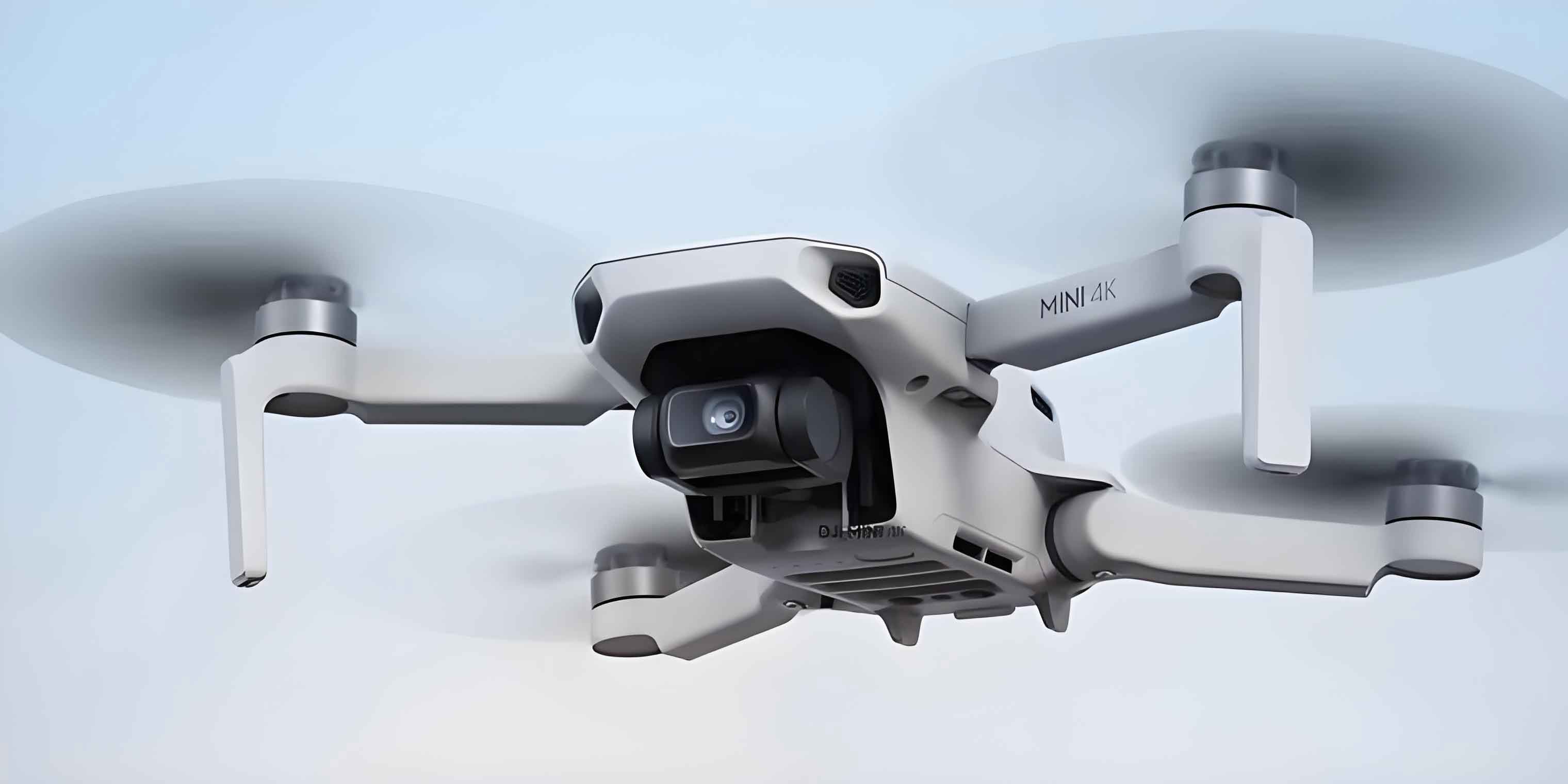
This study proposes a synergistic methodology that combines Unmanned Aerial Vehicle (UAV) oblique photography with BIM technology to construct a comprehensive and accurate 3D digital twin of a mining area. The approach leverages the strengths of each technology: China UAV drone systems efficiently capture dense, textured point clouds of the terrain and surface structures, while BIM provides a robust framework for modeling buildings, infrastructure, and geological layers with associated attributes. The fusion of these datasets creates a model where the precise exterior shell is seamlessly integrated with the detailed internal components, enabling a wide range of analytical applications. Advanced data processing techniques, including Kriging interpolation for geological modeling and the Iterative Closest Point (ICP) algorithm for precise data registration, are employed to ensure model accuracy and coherence.
Methodology for Integrated 3D Modeling
UAV Oblique Photography for Surface Data Acquisition
The first phase involves capturing the mining area’s surface geometry and texture. A China UAV drone platform, such as the DJI Matrice series equipped with a multi-lens oblique camera payload and Real-Time Kinematic (RTK) positioning, is deployed. Oblique photography, capturing images from multiple angles (typically one nadir and four oblique), is essential for reconstructing building facades, steep slopes, and other vertical features that nadir-only photography misses.
Mission planning is critical for complete coverage and high accuracy. The ground sampling distance (GSD), which determines the model’s resolution, is a function of flight altitude and camera sensor parameters. Equally important are the forward and side overlap rates, typically set at 80% and 70% respectively, to ensure robust feature matching during photogrammetric processing. The spacing between adjacent flight lines (D) can be calculated based on the image ground coverage width (W) and the desired side overlap (Os):
$$D = W \cdot (1 – O_s)$$
Post-flight, the collected imagery is processed using Structure-from-Motion (SfM) and Multi-View Stereo (MVS) algorithms in software like ContextCapture or Pix4D. This process involves key steps like feature detection and matching. A common algorithm used is the Scale-Invariant Feature Transform (SIFT). A key part of SIFT is constructing the Difference of Gaussian (DoG) scale-space to detect stable keypoints. The DoG image \(D(x, y, \sigma)\) at a given scale is computed from the difference of two nearby Gaussian-blurred images:
$$D(x, y, \sigma) = G(x, y, k\sigma) – G(x, y, \sigma)$$
where \(G(x, y, \sigma)\) is a Gaussian kernel, \((x, y)\) are pixel coordinates, \(\sigma\) is the scale factor, and \(k\) is a multiplicative constant.
By detecting local extrema in this DoG scale-space, distinctive image features invariant to scale and rotation are identified. Matching these features across multiple images allows for the triangulation of 3D points. The core photogrammetric equation relates a 3D world point \(\mathbf{M}\) to its 2D image projection \(\mathbf{m}\) via the camera projection matrix \(\mathbf{P}\):
$$\mathbf{m} = \mathbf{P} \mathbf{M} = \mathbf{K} [\mathbf{R} | \mathbf{t}] \mathbf{M}$$
Here, \(\mathbf{K}\) is the intrinsic calibration matrix containing focal length (\(f_x, f_y\)) and principal point (\(c_x, c_y\)) parameters:
$$\mathbf{K} = \begin{bmatrix}
f_x & 0 & c_x \\
0 & f_y & c_y \\
0 & 0 & 1
\end{bmatrix}$$
And \([\mathbf{R} | \mathbf{t}]\) represents the extrinsic parameters (rotation and translation) that define the camera’s position and orientation in the world. Solving for these parameters and the 3D points simultaneously through bundle adjustment results in a georeferenced, dense 3D point cloud and a textured mesh model of the surface.
BIM Modeling and Subsurface Data Integration
Concurrently, a detailed BIM model is developed to represent the mining area’s built and geological infrastructure. This process is multifaceted:
1. Surface Facility Modeling: Using software like Autodesk Revit, detailed 3D models of industrial buildings, processing plants, conveyors, and other surface structures are created based on design drawings, as-built surveys, and laser scan data. Each building element (walls, columns, roofs, equipment) is modeled as an object with precise geometry and enriched with attributes (material, function, maintenance history).
2. Geological and Subsurface Modeling: This is a crucial component for mining applications. Data from boreholes, geological cross-sections, and geophysical surveys are integrated. Software like GOCAD or Leapfrog is used to construct 3D volumetric models of lithological units, ore bodies, faults, and underground tunnels. Kriging interpolation, a geostatistical method, is often employed to estimate the spatial distribution of geological properties (e.g., grade, thickness) between known data points.
The estimated value \(\hat{z}(\mathbf{x}_0)\) at an unsampled location \(\mathbf{x}_0\) is a weighted sum of nearby known values \(z(\mathbf{x}_i)\):
$$\hat{z}(\mathbf{x}_0) = \sum_{i=1}^{n} \lambda_i z(\mathbf{x}_i)$$
The weights \(\lambda_i\) are determined by solving a system of equations derived from a variogram model \(\gamma(\mathbf{h})\), which quantifies the spatial correlation of the data:
$$\gamma(\mathbf{h}) = \frac{1}{2N(\mathbf{h})} \sum_{i=1}^{N(\mathbf{h})} [z(\mathbf{x}_i) – z(\mathbf{x}_i + \mathbf{h})]^2$$
where \(\mathbf{h}\) is the lag distance vector and \(N(\mathbf{h})\) is the number of data pairs separated by \(\mathbf{h}\).
Data Fusion and Model Registration
The final and most critical step is the accurate integration of the UAV-derived surface model (point cloud/mesh) with the BIM model. This involves two main challenges: coordinate system unification and geometric alignment.
First, both models must be transformed into a common, real-world coordinate system (e.g., UTM, state plane). The China UAV drone RTK data typically provides this georeferencing directly for the photogrammetric output.
Second, despite being in the same coordinate system, minor discrepancies exist due to survey errors, model generalization, or as-built deviations. The Iterative Closest Point (ICP) algorithm is employed for fine registration. The goal of ICP is to find the optimal rotation matrix \(\mathbf{R}\) and translation vector \(\mathbf{t}\) that best aligns a source point cloud \(\mathbf{P} = \{\mathbf{p}_i\}\) (e.g., from UAV) to a target model or point cloud \(\mathbf{Q} = \{\mathbf{q}_i\}\) (e.g., BIM surfaces). This is done by minimizing the following error metric \(E\):
$$E(\mathbf{R}, \mathbf{t}) = \sum_{i} \| \mathbf{R} \mathbf{p}_i + \mathbf{t} – \mathbf{q}_i \|^2$$
The algorithm iteratively: (1) finds the closest point \(\mathbf{q}_i\) in the target for each point \(\mathbf{p}_i\) in the source, (2) computes the transformation that minimizes the sum of squared distances between these correspondences, and (3) applies the transformation to the source points. This loop repeats until convergence, resulting in a precisely aligned integrated model where the BIM elements sit correctly within the actual topographic context captured by the China UAV drone.
Simulated Results and Analysis
To demonstrate the efficacy of the proposed methodology, its application is simulated on a representative open-pit mining area of approximately 2.5 km² with varied terrain. The following tables and analysis summarize the expected performance metrics across different stages of the modeling pipeline.
| Condition | Planimetric RMSE (m) | Vertical RMSE (m) | Model Completeness (%) | Texture Quality |
|---|---|---|---|---|
| Mountainous Area | ±0.18 | ±0.25 | 92.3 | Good |
| Hilly Area | ±0.13 | ±0.18 | 96.2 | Very Good |
| Flat Area | ±0.11 | ±0.15 | 97.2 | Excellent |
| Low Altitude (50 m) | ±0.12 | ±0.16 | 95.1 | Excellent |
| Medium Altitude (100 m) | ±0.15 | ±0.21 | 94.8 | Very Good |
| High Altitude (150 m) | ±0.17 | ±0.23 | 93.4 | Good |
Analysis: The simulated results in Table 1 highlight the direct influence of terrain complexity and flight altitude on model accuracy. As expected, flat terrain allows for more consistent feature matching and lower error. Lower flight altitudes yield a finer Ground Sampling Distance (GSD), improving both geometric precision and texture detail. This underscores the importance of adaptive mission planning for a China UAV drone when surveying complex mining topography to balance coverage, efficiency, and required accuracy levels.
| Model Component | Key Parameter | Simulated Error Tolerance |
|---|---|---|
| Industrial Building | Component Dimension | ±5 mm |
| Spatial Position | ±10 mm | |
| Geological Strata (BIM) | Layer Thickness | ±0.5 m |
| Interface Position | ±1.0 m |
Analysis: Table 2 presents the achievable precision for different elements within the BIM environment. The high dimensional and positional accuracy for building components is characteristic of BIM modeling from detailed designs. The larger tolerances for geological strata reflect the inherent uncertainty in interpolating subsurface data from sparse borehole information. The use of Kriging interpolation helps quantify and minimize this uncertainty, but it remains the dominant factor in subsurface model accuracy.
| Performance Indicator | Simulated Value / Outcome |
|---|---|
| Registration Error (ICP Alignment) | ±0.25 m |
| Overall Model Data Consistency | 98.5% |
| Fusion Processing Time (for sample area) | ~35 minutes |
Analysis: The fusion process is highly effective, as simulated in Table 3. The ICP algorithm successfully reduces alignment errors to a quarter of a meter, which is acceptable for most mine planning and monitoring purposes. The very high data consistency score indicates that the integrated model is coherent without major conflicts between the UAV surface data and the BIM infrastructure/geology. The processing time is reasonable for operational integration into a digital workflow.
Simulated Application and Impact Analysis
The true value of the integrated model is realized through its application in core mining engineering and management tasks. The following simulations demonstrate its potential impact.
| Parameter | Model-Based Measurement | Simulated “Ground Truth” | Simulated Error |
|---|---|---|---|
| Max Elevation (m) | 1,451.6 | 1,467.8 | -1.10% |
| Min Elevation (m) | 1,327.8 | 1,321.6 | +0.47% |
| Calculated Volume (m³) | 153,024.3 | 152,678.3 | +0.23% |
Analysis: The high-fidelity surface model from the China UAV drone enables extremely accurate volumetric calculations. As simulated in Table 4, the error in total earthwork volume is negligible (0.23%). This level of accuracy supports precise resource estimation, cut-and-fill planning, and royalty calculations, directly impacting operational efficiency and financial accountability.
| Safety Monitoring Task | Baseline Performance (Simulated) | Performance with Integrated 3D Model (Simulated) |
|---|---|---|
| Displacement Monitoring Precision | ±2.8 cm | ±1.5 cm |
| Facility Collision Detection Accuracy | 92.6% | 98.7% |
| Emergency Evacuation Route Planning Response Time | 7.5 s | 3.8 s |
Analysis: The integration of real-time or periodic China UAV drone scans with the foundational BIM model creates a powerful platform for safety management. Simulated results in Table 5 show significant improvements: higher precision in detecting slope movements, near-perfect accuracy in simulating equipment clearance, and drastically reduced time for generating safe evacuation paths in crisis scenarios. The 3D context allows for proactive hazard identification and rapid response planning.
| Operational Process | Metric | Before Model Integration (Simulated) | After Model Integration (Simulated) |
|---|---|---|---|
| Mine Planning | Design Revision Cycles | 5 | 2 |
| Plan Evaluation Time | 9 days | 5 days | |
| Plan Rationality Score (1-10) | 6.6 | 8.3 | |
| Safety & Inspection | Time to Identify Hazards | 5 days | 2 days |
| Hazard Missed Detection Rate | 14.3% | 4.8% | |
| Annual Incident Frequency | 4 | 1 |
Analysis: The overarching impact on operational efficiency is profound, as simulated in Table 6. The digital twin serves as a single source of truth, streamlining planning processes, reducing rework, and enabling more optimized designs. In safety management, it transforms inspections from reactive and partial to proactive and comprehensive. The simulated reduction in incident frequency underscores the model’s potential to create a tangibly safer working environment and ensure more efficient, uninterrupted operations.
Discussion
The proposed and simulated integration of UAV photogrammetry and BIM presents a transformative approach to mining geomatics. The methodology successfully bridges the gap between high-resolution exterior mapping and detailed interior modeling, a limitation prevalent in many current applications. The use of a China UAV drone as the primary data acquisition tool for the surface is key due to its flexibility, cost-effectiveness, and ability to access hazardous or difficult terrain, providing data of superior resolution and timeliness compared to traditional surveys or satellite imagery.
The simulated results confirm several advantages. The accuracy of the fused model is sufficient for demanding engineering tasks like volumetric analysis and deformation monitoring. The incorporation of geological BIM components, built using Kriging and other geostatistical methods, adds critical subsurface intelligence that pure surface models lack. The application simulations demonstrate clear, quantifiable benefits in safety, planning, and operational efficiency, validating the practical return on investment in this technology stack.
However, challenges persist. As indicated, handling the massive data volumes from frequent China UAV drone flights and detailed BIM requires robust computational infrastructure and efficient data management pipelines. Registration in areas with poor geometric features (e.g., uniform open pits) can be challenging for ICP. Furthermore, the initial development of the comprehensive BIM, especially for legacy mines without digital drawings, requires significant effort. The dynamic nature of mining also means the model is a living entity, requiring update protocols—potentially via automated change detection from periodic drone flights—to maintain its fidelity over time.
Conclusion
This study outlines a comprehensive framework for constructing an integrated 3D digital model of mining areas by fusing UAV oblique photography with BIM technology. The methodology leverages the aerial perspective and efficiency of the China UAV drone to capture precise, textured surface conditions, while BIM provides the structured, attribute-rich environment for modeling infrastructure and geology. The fusion of these datasets through advanced registration techniques like ICP creates a powerful digital twin that accurately reflects both the surface and subsurface reality of the mine.
Simulated analyses demonstrate that this integrated model significantly enhances key mining operations. It improves the accuracy of earthwork and resource calculations, elevates the precision and responsiveness of safety monitoring systems, and streamlines planning and design processes, leading to tangible gains in overall operational efficiency and safety performance. The model serves as a foundational platform for advanced analytics, simulation, and real-time monitoring within a digital mine management system.
Future work should focus on automating the update cycle of the model through scheduled China UAV drone missions coupled with AI-driven change detection algorithms. Further integration with real-time sensor data (IoT), machine telemetry, and simulation software will evolve the digital twin from a static representation into a dynamic, predictive tool for mine optimization. Standardizing data exchange formats between photogrammetric software, BIM platforms, and mine planning tools will also be crucial for widespread, streamlined adoption across the global mining industry.