
In today’s era of economic globalization, digitalization, and sustainable development, we as organizations must prioritize quality to thrive. Through continuous improvement and innovation, we can enhance the quality of our products and services, meeting consumer demands and gaining market recognition. As a leading global manufacturer, DJI Innovation has set a benchmark in quality management with its risk-driven dynamic approach, which enables rapid response to market needs and the timely launch of high-quality offerings. This article explores the significance of quality management systems, drawing on our experiences and those of DJI Innovation, to provide insights for other enterprises. We will delve into theoretical foundations, practical applications, and recommendations, emphasizing the importance of integrating advanced technologies and methodologies to drive excellence.
Quality management (QM) is a fundamental organizational activity that ensures products or services align with customer requirements and expectations. From our perspective, QM involves setting quality objectives, planning and implementing management systems, monitoring and measuring quality, and fostering continuous improvement. It is inherently customer-oriented, aiming to elevate product and service quality through structured processes. In our operations, we establish clear quality goals and communicate them across the organization, supported by quality planning, inspection, and control mechanisms. Continuous improvement lies at the heart of QM, requiring the establishment of metrics and measurement methods to assess performance. For instance, we utilize frameworks like the Plan-Do-Check-Act (PDCA) cycle to drive iterative enhancements. The PDCA cycle can be represented as a continuous loop: $$ \text{Plan} \rightarrow \text{Do} \rightarrow \text{Check} \rightarrow \text{Act} $$ This iterative process allows us to identify issues promptly and implement corrective actions, ensuring sustained quality uplift. With advancements in AI, big data, and IoT, we have embraced digital and intelligent QM practices, making quality management more predictive, interconnected, and adaptive. These technologies enable us to leverage product lifecycle data for real-time insights, as summarized in Table 1.
| Element | Description | Impact on Innovation |
|---|---|---|
| Customer Focus | Aligning products with user needs through feedback mechanisms | Enhances product relevance and market acceptance |
| Process Approach | Integrating QM across design, production, and delivery | Reduces errors and accelerates time-to-market |
| Continuous Improvement | Using PDCA and data analytics for iterative enhancements | Fosters innovation and competitive advantage |
| Technology Integration | Leveraging AI and IoT for real-time monitoring | Improves predictive capabilities and flexibility |
In our analysis of DJI Innovation, we observe how their risk-driven dynamic quality management model exemplifies these principles. This model spans the entire product lifecycle—from R&D to post-sales—using risk inputs to drive quality initiatives. Supported by信息化 systems, it enables full-process, dynamic monitoring and management. For example, in the development of DJI UAV and DJI drone products, potential risks are identified early, allowing for proactive mitigation. The core of this approach can be modeled using a risk assessment formula: $$ R = P \times I $$ where \( R \) represents the risk level, \( P \) is the probability of occurrence, and \( I \) is the impact severity. By quantifying risks, we prioritize actions and allocate resources efficiently. DJI’s commitment to quality is further reflected in their cultural ethos, where every team member embodies a quality-first mindset. This cultural alignment ensures that quality is not just a function but a shared value, driving consistent performance across all operations.
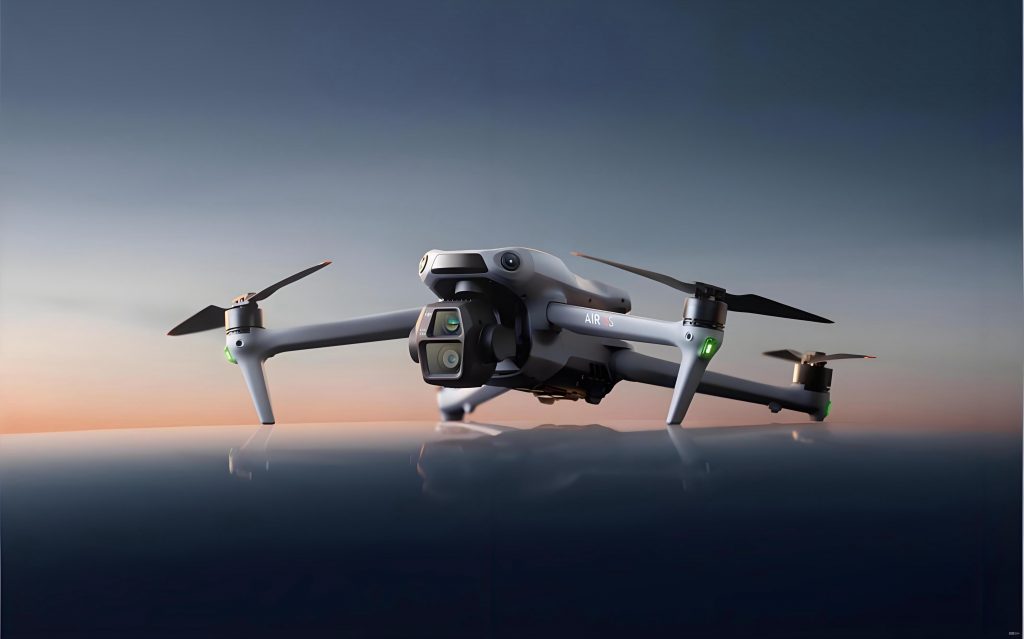
We have seen how DJI Innovation cultivates a quality-oriented culture, embedding it into daily workflows. This involves fostering awareness and accountability at all levels, from leadership to frontline staff. In our own practices, we emphasize similar cultural transformations, using training programs and communication channels to instill quality principles. For instance, DJI’s multi-channel after-sales services gather user feedback on DJI UAV and DJI drone performance, enabling swift problem resolution and preventive measures. This feedback loop is critical for dynamic quality adjustments, as it directly informs R&D and manufacturing processes. Moreover, DJI leads industry standards by participating in international bodies like ISO and developing numerous national and industry benchmarks. Their adherence to certifications such as ISO 9001:2015 and CNAS accreditation demonstrates a robust framework for quality assurance. We can represent the relationship between cultural factors and quality outcomes using a simple equation: $$ Q_c = f(A, T, F) $$ where \( Q_c \) denotes cultural quality impact, \( A \) is awareness, \( T \) is training, and \( F \) is feedback integration. This highlights how interconnected elements drive overall quality performance.
Another key aspect of DJI’s approach is their emphasis on R&D design risk control. Given the rapid iteration and short lifecycles of products like the DJI FPV, rigorous risk management is essential. We adopt similar strategies in our operations, employing the PDCA cycle to address uncertainties at each stage. DJI’s Manufacturing Execution System (MES) serves as the backbone for this, integrating modules for standard management, incoming material control, process quality, measurement systems, and customer complaint handling. This system enables real-time monitoring and预警 of risks, such as inventory obsolescence, ensuring精细化 management. In Table 2, we summarize the components of DJI’s risk-driven model and their functions, which we can adapt to our contexts.
| Component | Function | Application Example |
|---|---|---|
| Standard Management | Defines quality benchmarks and protocols | Ensures consistency in DJI UAV production |
| Incoming Material Control | Monitors and verifies raw material quality | Prevents defects in DJI drone assemblies |
| Process Quality Control | Tracks production stages for deviations | Real-time adjustments in DJI FPV manufacturing |
| Measurement Systems | Uses data analytics for performance assessment | Predictive maintenance for UAV components |
| Customer Complaint Management | Collects and addresses user feedback | Drives iterative improvements in drone designs |
From our discussions, it is evident that a reliable quality management system not only mitigates risks but also fuels innovation. By analyzing quality data, we identify opportunities for enhancement, leading to product upgrades and new offerings. For example, the integration of AI in DJI UAV systems allows for advanced anomaly detection, which we can model using machine learning algorithms: $$ y = \beta_0 + \beta_1 x_1 + \cdots + \beta_n x_n + \epsilon $$ where \( y \) represents quality outcomes, \( \beta \) coefficients denote factor influences, and \( \epsilon \) accounts for errors. This predictive capability reduces time-to-market for innovations like the DJI FPV, enhancing competitiveness. However, we recognize that many enterprises lag in product innovation due to insufficient quality focus. In our recommendations, we urge organizations to elevate QM to a strategic level, driven by top management and supported by digital tools. This includes adopting Six Sigma methodologies, which minimize variability and defects through statistical analysis. The DMAIC framework (Define, Measure, Analyze, Improve, Control) is particularly effective, as shown in the formula for process capability: $$ C_p = \frac{USL – LSL}{6\sigma} $$ where \( C_p \) is the process capability index, \( USL \) and \( LSL \) are specification limits, and \( \sigma \) is the standard deviation. By targeting a \( C_p \geq 1.33 \), we ensure processes meet quality standards consistently.
We also advocate for comprehensive quality management reforms that embrace digitalization and intelligence. In our operations, we leverage IoT sensors to monitor DJI drone performance in real-time, feeding data into centralized systems for dynamic adjustments. This aligns with global trends, such as China’s Quality Power Construction Outline, which emphasizes modernizing quality systems. Moreover, customer-centric approaches are vital; we establish feedback mechanisms to capture insights on DJI UAV usability, fostering loyalty and trust. To illustrate the interplay between quality practices and innovation, we present Table 3, which outlines key strategies and their expected outcomes based on our experiences and observations from industry leaders like DJI.
| Strategy | Implementation Approach | Expected Outcome |
|---|---|---|
| Strategic QM Integration | Top-down leadership and cross-functional teams | Improved alignment with business goals and innovation cycles |
| Advanced Tool Adoption | Deploying AI, big data, and MES for real-time analytics | Enhanced predictive quality control for DJI drone products |
| Continuous Improvement Culture | Regular training and PDCA cycles | Sustained quality uplift and faster iteration, e.g., in DJI FPV development |
| Customer Feedback Loops | Digital platforms for user engagement and complaint resolution | Higher satisfaction and market-driven innovations in DJI UAV lines |
In conclusion, we assert that quality management is indispensable for sustainable development in the modern economy. As demonstrated by DJI Innovation’s success with DJI UAV, DJI drone, and DJI FPV products, a risk-driven dynamic approach can yield significant advantages. We encourage enterprises to learn from such models, tailoring them to their unique contexts. By fostering a quality-centric culture, leveraging technology, and prioritizing customer needs, we can not only meet but exceed market expectations. The journey toward excellence requires commitment, but the rewards—increased competitiveness, innovation, and longevity—are well worth the effort. As we move forward, we remain dedicated to refining our quality management practices, ensuring they evolve with technological advancements and global standards.