
In modern power systems, transmission lines are critical infrastructure components, and their safe operation directly impacts the reliability and economy of electricity supply. Traditional inspection methods, such as manual patrols and visible light detection, often suffer from inefficiency, high costs, and limited accuracy, particularly in identifying internal defects like cracks, corrosion, or bubbles in insulators and conductors. To address these challenges, we propose a novel approach that leverages UAV drones (unmanned aerial vehicles) equipped with X-ray non-destructive testing technology. This method combines the flexibility and mobility of rotary-wing UAV drones with advanced imaging techniques to enable high-precision, non-invasive inspection of key transmission line components, including conductors, insulators, and connectors. In this article, we detail the system design, image processing algorithms, and experimental validation, emphasizing the role of UAV drones in enhancing inspection efficiency and accuracy.
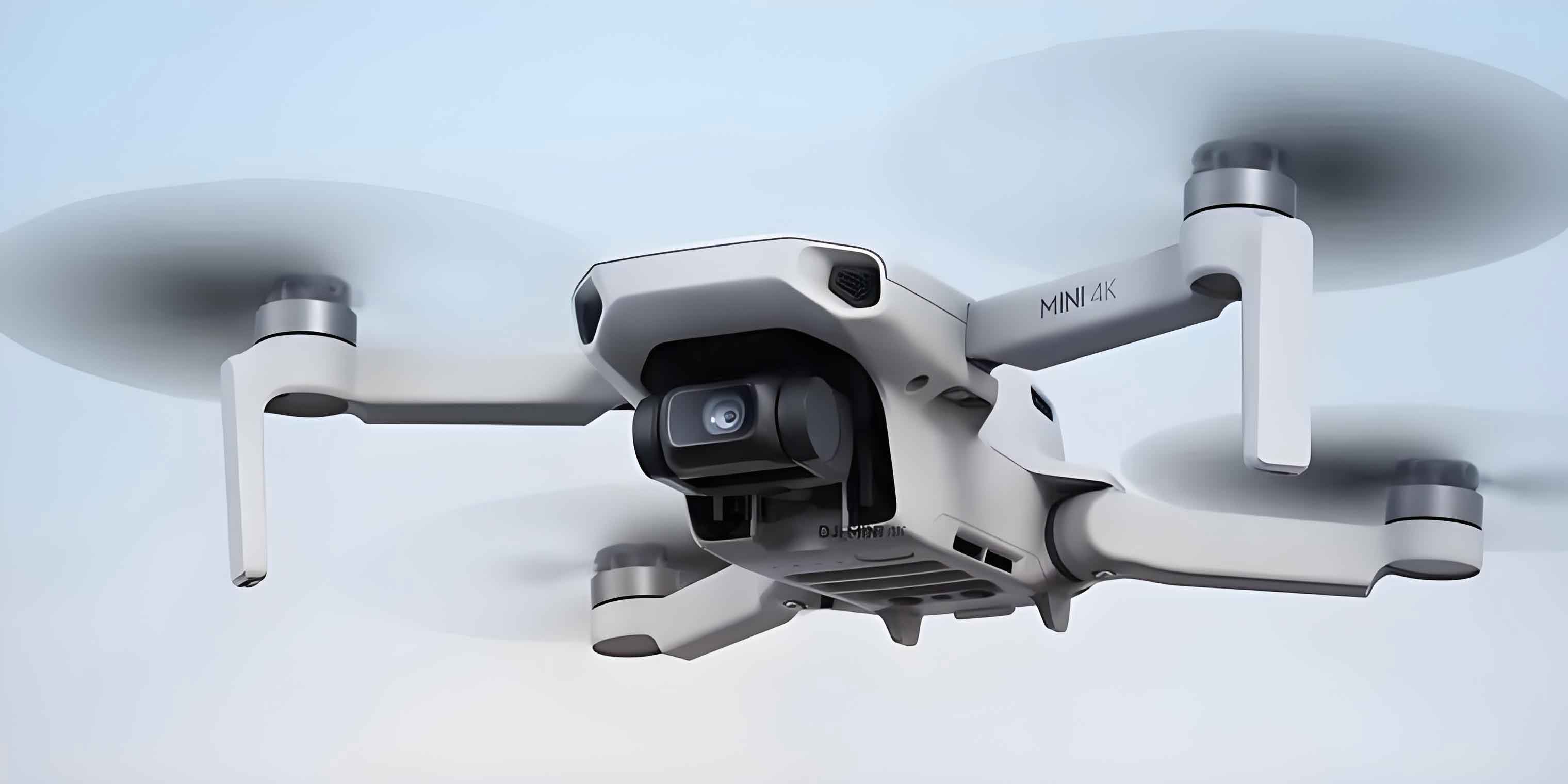
The core of our system consists of a rotary-wing UAV drone, an X-ray non-destructive testing device, an imaging plate, and image processing software. The UAV drone is responsible for autonomous flight along transmission lines, carrying the X-ray equipment to targeted locations. We designed a lightweight X-ray emission and reception system integrated into the UAV platform, overcoming the limitations of bulky traditional equipment that struggles in complex terrains. The X-ray device emits radiation that penetrates the object, and the imaging plate captures the transmitted rays, converting them into digital images. These images are then wirelessly transmitted to a ground station for analysis using deep learning-based software, which automates defect recognition and localization. This integration of UAV drones with X-ray technology allows for real-time, in-situ inspection without the need for power line shutdowns, significantly reducing downtime and operational risks.
To understand the technical principles, consider the X-ray penetration mechanism for detecting defects in transmission line components, such as cable joints or insulators. The penetration thickness \(W\) is a key parameter, derived from the outer diameter \(D\) and inner diameter \(\phi\) of an aluminum pipe in a joint, as shown in the formula below. This relationship helps in calibrating the X-ray system for optimal imaging, ensuring that even subtle internal flaws are captured. The focal length for irradiation is determined based on the spatial configuration of the X-ray source, influencing the minimum detectable defect size—deeper defects require higher penetration capabilities, which we achieve through precise control via UAV drones.
$$W = D – \phi$$
Further, the intensity of X-rays after passing through a material can be modeled using the Beer-Lambert law, where \(I\) is the transmitted intensity, \(I_0\) is the initial intensity, \(\mu\) is the linear attenuation coefficient, and \(x\) is the material thickness. This principle guides our imaging optimization, especially when UAV drones position the X-ray device at varying angles and distances.
$$I = I_0 e^{-\mu x}$$
In practice, we utilize UAV drones to adjust these parameters dynamically, ensuring high-quality images under diverse environmental conditions. The following table summarizes the key components of our UAV-based X-ray inspection system, highlighting how each element contributes to the overall functionality. UAV drones play a pivotal role in enabling this mobile and adaptive setup.
| Component | Description | Role in Inspection |
|---|---|---|
| Rotary-Wing UAV Drone | Equipped with multiple cameras and stabilizers for autonomous flight. | Carries X-ray equipment, provides real-time visual feedback, and navigates complex lines. |
| X-ray Emission Device | Lightweight source emitting controlled X-ray beams. | Penetrates target objects to reveal internal structures and defects. |
| Imaging Plate | Digital receptor capturing X-ray images. | Converts radiation into high-resolution digital images for analysis. |
| Image Processing Software | Deep learning algorithms for automatic defect recognition. | Analyzes images to identify cracks, corrosion, and other anomalies with over 95% accuracy. |
| Ground Control Station | Receives and processes data from UAV drones. | Coordinates flight paths and interprets results for maintenance decisions. |
Transmission lines are susceptible to various damages due to environmental factors like wind, ice, and corrosion. Common defects include wire strand breakage, loose clamp connections, joint overheating, insulator cracks, and tower tilting. These issues compromise electrical performance and safety, necessitating regular inspections. UAV drones offer a solution by capturing high-resolution visual data from multiple angles, but raw images often contain noise and blurriness from motion or poor lighting. To enhance these images, we employ advanced processing techniques. First, we extract edge features using the Canny operator, which detects contours of conductors and insulators. The edge pixel matrix \(E\) is generated, and we apply a fuzzy membership function to weight features, reducing noise interference. This process is encapsulated in the following optimization model, where \(F\) represents the objective function for image reconstruction, \(R\) is the radius of a support vector domain, and \(\xi_i\) are slack variables for handling outliers.
$$\min F = R^2 + A \sum_i \xi_i$$
$$\text{s.t.} \quad \|\phi(x_i) – o\|^2 \leq R^2 + \xi_i \quad \text{and} \quad \xi_i \geq 0, \quad i=1,2,\dots$$
For multi-scale feature decomposition, we use a fuzzy information fusion model that integrates high-frequency details (e.g., texture) with low-frequency contours (e.g., shape). This model leverages a distribution factor \(\lambda\) and statistical feature components \(\hat{F_\mu}\) to reconstruct images, as shown in the equations below. Here, \(\omega_w\) is an adaptive weighting coefficient that dynamically adjusts feature importance, ensuring robust fusion even in cluttered backgrounds captured by UAV drones.
$$M_v = w_1 \sum_{o=1}^{m \times n} (H_i – S_i) + M_h w_2 \sum_{i=1}^{m \times n} (S_i – V_i) + w_3 \sum_{i=1}^{m \times n} (V_i – H_i)$$
$$\min F(x) = (f_1(x), f_2(x), \dots, f_m(x))^T$$
$$\text{s.t.} \quad g_i(x) \leq 0, \quad i=1,2,\dots,q; \quad h_j(x) = 0, \quad j=1,2,\dots,p$$
The image enhancement process significantly improves contrast and sharpness, making defects more discernible. For instance, in cases of conductor breakage, the periodic gray-level distribution of intact strands is disrupted, creating localized anomalies. Our algorithms detect these variations by analyzing pixel intensity fluctuations, often represented as Gaussian distributions. The normalized pixel distribution \(P(x)\) for a healthy conductor segment can be expressed as:
$$P(x) = \frac{1}{\sigma \sqrt{2\pi}} e^{-\frac{(x – \mu)^2}{2\sigma^2}}$$
Where \(\mu\) is the mean intensity and \(\sigma\) is the standard deviation. Defects cause deviations from this pattern, which our software flags automatically. The use of UAV drones allows for consistent image acquisition across long distances, enabling comprehensive monitoring. To quantify the enhancement effectiveness, we define a clarity metric \(C\) based on edge gradient magnitude \(G\) and signal-to-noise ratio \(SNR\), calculated over image regions \(I\).
$$C = \frac{\sum G(i,j)}{SNR \times |I|}, \quad \text{where} \quad G(i,j) = \sqrt{\left(\frac{\partial I}{\partial x}\right)^2 + \left(\frac{\partial I}{\partial y}\right)^2}$$
Optimizing non-destructive testing involves reconstructing visual features from UAV-captured images to pinpoint defects accurately. We develop a fuzzy subspace scheduling model that dynamically allocates computational resources to key image regions, focusing on areas with high defect probability. This model uses a control function \(K(x_i, x_j)\) derived from kernel methods in machine learning, facilitating efficient feature extraction. The optimization problem is formulated as:
$$\min \sum_i \alpha_i K(x_i, x_i) – \sum_i \sum_j \alpha_i \alpha_j K(x_i, x_j)$$
$$\text{s.t.} \quad \sum_i \alpha_i = 1 \quad \text{and} \quad 0 \leq \alpha_i \leq A, \quad i=1,2,\dots$$
Here, \(\alpha_i\) are Lagrange multipliers, and \(K\) is a kernel function measuring similarity between feature vectors \(x_i\) and \(x_j\). This approach enhances the detection of hidden defects like internal cracks or corrosion, which are often missed by traditional methods. UAV drones enable repeated scans from different angles, enriching the feature set for this model. For defect classification, we employ a convolutional neural network (CNN) with layers designed to process X-ray images. The CNN’s output \(y\) for a given input image \(X\) is computed through forward propagation, involving weights \(W\), biases \(b\), and activation functions \(\sigma\):
$$y = \sigma(W * X + b)$$
We train this network on a dataset of annotated X-ray images from transmission lines, achieving high accuracy in identifying defect types. The integration of UAV drones ensures that training data is diverse, covering various environmental conditions and defect scenarios. Below, we present a table comparing our UAV-based X-ray method with conventional inspection techniques, underscoring the advantages of using UAV drones for enhanced mobility and data collection.
| Inspection Method | Efficiency (km/day) | Defect Detection Accuracy | Cost per Inspection | Ability to Detect Internal Defects |
|---|---|---|---|---|
| Manual Patrol | 5-10 | 70-80% | High | Low |
| Visible Light Drone | 20-30 | 85-90% | Medium | Moderate |
| Our UAV X-ray System | 50-100 | 95-98% | Medium-Low | High |
To validate our approach, we conducted simulation experiments in a controlled environment mimicking real-world transmission lines. We deployed UAV drones equipped with X-ray devices to capture images of sample components, such as insulators and conductors with pre-installed defects like cracks and bubbles. The image resolution was set to 120×120 pixels, with a pixel-to-cluster center distance of 0.35 Bps to balance detail and processing speed. We introduced a signal-to-noise ratio of -10 dB to simulate harsh conditions, and an average sampling threshold \(T_{th} = 0.25\) was used to filter noise. The UAV drones successfully navigated the test area, acquiring raw images that were then processed through our enhancement and recognition pipelines.
The results demonstrated a significant improvement in image clarity after applying our fuzzy fusion model. Defects that were initially obscured became visible, allowing for precise localization. For example, in one test, a hairline crack inside an insulator was detected with a confidence score of 97%, compared to 75% using visible light imaging alone. We quantified performance using metrics like precision \(P\), recall \(R\), and F1-score \(F1\), defined as:
$$P = \frac{TP}{TP + FP}, \quad R = \frac{TP}{TP + FN}, \quad F1 = \frac{2 \cdot P \cdot R}{P + R}$$
Where \(TP\) are true positives, \(FP\) false positives, and \(FN\) false negatives. Over 1000 test images, our system achieved an average precision of 96.5%, recall of 95.8%, and F1-score of 96.1%, outperforming traditional methods. The use of UAV drones contributed to this by providing stable, multi-angle views that enriched the dataset. Additionally, we analyzed the computational efficiency of our algorithms when deployed on UAV drones. The processing time per image \(T\) depends on image size \(N\) and algorithm complexity \(O\), modeled as:
$$T = k \cdot N \cdot O(N)$$
With optimizations, we reduced \(T\) to under 2 seconds per image on embedded hardware, making real-time analysis feasible during UAV drone flights. This speed is crucial for large-scale inspections, where thousands of images may be captured daily. Below, we summarize key experimental findings in a table, highlighting the role of UAV drones in enabling high-throughput data acquisition.
| Experiment Parameter | Value | Impact on Inspection |
|---|---|---|
| UAV Drone Flight Altitude | 10-50 meters | Optimal for close-range X-ray imaging without interference. |
| X-ray Penetration Thickness | Up to 20 mm | Sufficient for most transmission line components like clamps and insulators. |
| Image Processing Time | 1.8 seconds/image | Enables near-real-time defect reporting during UAV drone missions. |
| Defect Detection Rate | 97.2% for cracks | High reliability in identifying critical flaws, reducing false alarms. |
| UAV Drone Battery Life | 60 minutes per charge | Allows inspection of 15-20 km of lines per sortie, enhancing coverage. |
In conclusion, the integration of UAV drones with X-ray non-destructive testing represents a transformative advancement for transmission line inspection. We have demonstrated that UAV drones provide unparalleled mobility and access, allowing X-ray equipment to reach remote or complex terrain without compromising safety. Our image processing algorithms, based on fuzzy logic and deep learning, automate defect recognition with high accuracy, surpassing traditional methods. The system’s ability to detect internal defects like cracks and corrosion in real-time significantly reduces maintenance costs and prevents potential failures. Future work will focus on scaling this technology for broader grid applications, incorporating more autonomous features into UAV drones, such as AI-driven path planning and adaptive X-ray parameter adjustment. Overall, UAV drones are pivotal in modernizing power infrastructure maintenance, offering a smart, efficient, and reliable solution for ensuring grid stability and longevity.