
As modern agriculture evolves, the role of crop spraying drones has become increasingly pivotal. These spraying UAVs represent a transformative technological asset, enabling farmers to perform tasks such as seeding, fertilization, and pesticide application with remarkable precision. Additionally, they facilitate real-time monitoring of crop conditions, thereby enhancing agricultural productivity. The adoption of crop spraying drones not only reduces labor demands but also safeguards crop health, leading to improved yields. To further advance modern farming practices, continuous research and development are essential to fully harness the potential of these spraying UAVs. This article delves into the current applications, challenges, and future prospects of crop spraying drones in agriculture, emphasizing their innovative contributions.
The integration of technology into agriculture is a driving force behind its modernization. By replacing traditional management approaches with advanced tools like crop spraying drones, farmers can achieve higher efficiency and quality in production. These spraying UAVs address critical issues such as labor shortages and low productivity, particularly in hazardous tasks, thereby protecting farmers’ health. The use of crop spraying drones aligns with the demands of contemporary agriculture, conserving resources like water and human effort while lowering overall costs and promoting sustainable practices.
Advantages of Crop Spraying Drones in Modern Agriculture
Crop spraying drones offer numerous benefits that make them indispensable in today’s farming. Their simplicity of operation stands out; with advancements in information technology, these spraying UAVs have become highly intuitive. Typically compact in size, they can maneuver in diverse environments, allowing for easy takeoff, landing, and flight adjustments. Farmers can master their use after minimal training, and the low-altitude flight capability enables real-time observation and modification of operations. Parameters such as flight path and height can be customized to enhance accuracy. For instance, during pesticide application, users can control chemical concentration and distribution based on field conditions. The built-in GPS and remote control features allow for pre-programmed routes and continuous feedback, enabling farmers to assess performance and optimize outcomes.
Safety and efficiency are hallmarks of crop spraying drones. They significantly boost productivity by addressing pest and disease outbreaks promptly. In agriculture, such issues are inevitable and can devastate crops if not managed swiftly. Crop spraying drones enable targeted interventions; farmers identify specific pests and select appropriate chemicals, which the drones apply precisely to affected areas. However, considerations like battery life and payload capacity are crucial, as most spraying UAVs have flight durations of 10–30 minutes. The spraying width typically ranges from 4 to 8 meters, with optimal distances of 1–2 meters from crops. This method minimizes human exposure to harmful chemicals, enhancing safety.
Cost-effectiveness is another key advantage. Manual spraying often leads to overuse of chemicals, whereas crop spraying drones ensure precise application, reducing waste and expenses. This precision mitigates environmental pollution and residue concerns, aligning with eco-friendly practices. By conserving water and agrochemicals, these spraying UAVs contribute to more sustainable and economical farming.
| Aspect | Traditional Methods | Crop Spraying Drones |
|---|---|---|
| Operation Simplicity | Requires extensive manual labor and training | User-friendly with minimal training needed |
| Safety | High risk of chemical exposure | Minimized human contact with chemicals |
| Efficiency | Slow, covering small areas per hour | Fast, e.g., 2 hectares per hour |
| Cost | Higher due to labor and resource waste | Lower through precise resource use |
| Environmental Impact | Potential for overuse and pollution | Reduced chemical runoff and residue |
To quantify the efficiency of crop spraying drones, consider the spraying rate formula: $$ E = \frac{A}{t} $$ where \( E \) is the efficiency in hectares per hour, \( A \) is the area covered, and \( t \) is the time in hours. For a typical spraying UAV, if \( A = 2 \) hectares and \( t = 1 \) hour, then \( E = 2 \) ha/h. This demonstrates the superior performance compared to manual methods.
Challenges in the Application of Crop Spraying Drones
Despite their benefits, crop spraying drones face several obstacles. Technologically, their functionality remains limited. For example, in pest control, different species require specific treatments and application standards. While spraying UAVs excel at uniform distribution, they struggle with highly targeted spraying, such as applying chemicals to individual plants, which may still necessitate manual intervention. This limitation highlights the need for ongoing innovation in drone capabilities.
Promotion and awareness are also significant hurdles. Many farmers have limited knowledge of crop spraying drones, leading to low adoption rates. Companies often rely on simplistic marketing strategies, failing to convey the full advantages of these spraying UAVs. Moreover, operating a crop spraying drone demands skill; without proper training, users may employ incorrect techniques, resulting in frequent malfunctions and prolonged downtime. Such negative experiences erode trust and impede broader acceptance, creating a cycle that hinders推广 efforts.
Another issue is the lack of standardized protocols. Inconsistent application rates for fertilizers and pesticides can lead to suboptimal results. For instance, the effectiveness of a spraying UAV depends on factors like airflow and droplet dispersion, which vary with environmental conditions. Without clear guidelines, farmers may misuse these tools, reducing their efficacy and potentially harming crops.
Applications of Crop Spraying Drones in Modern Agriculture
Crop spraying drones are versatile tools that enhance various agricultural processes. In seeding, they employ intelligent dispersal systems to plant seeds uniformly. Farmers simply set the flight path and spacing parameters, and the drone executes the task autonomously. This approach not only saves labor but also increases sowing accuracy, contributing to higher germination rates and overall yield.
For chemical applications, crop spraying drones are used to spray liquid fertilizers and pesticides. During flight, they distribute these substances evenly across fields, ensuring that crops receive essential nutrients and protection. Traditional methods, like manual spraying, are slower and less precise; for example, a spraying UAV can fertilize 2 hectares in just one hour, whereas manual efforts might take much longer. In pest management, the precision of crop spraying drones prevents over-application, reducing the risk of chemical residues that could harm human health and the environment.
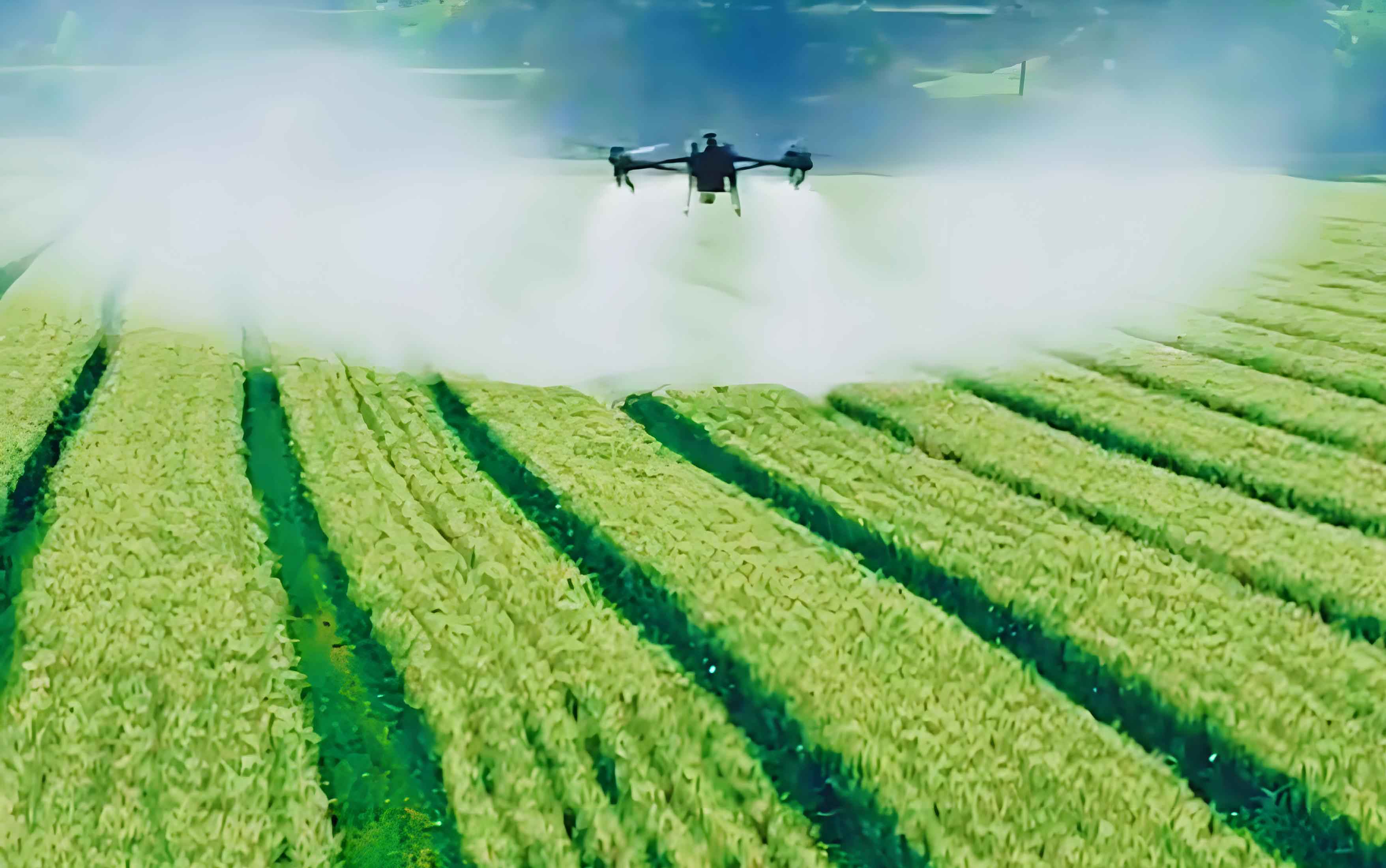
Monitoring crop health is another critical application. Crop spraying drones equipped with sensors can assess soil quality, moisture levels, and nutrient content, providing data to optimize farming practices. They also evaluate vegetation indices like canopy cover and chlorophyll concentration, helping farmers detect stress or disease early. Additionally, in disaster management, spraying UAVs use aerial imaging to survey areas affected by floods, droughts, or pests, enabling rapid response and damage control.
The monitoring capability can be expressed mathematically. For instance, the Normalized Difference Vegetation Index (NDVI) is calculated as: $$ \text{NDVI} = \frac{\text{NIR} – \text{Red}}{\text{NIR} + \text{Red}} $$ where NIR is near-infrared reflectance and Red is red light reflectance. This index, derived from drone sensors, indicates plant health and guides interventions.
Optimization Strategies for Crop Spraying Drones
To maximize the benefits of crop spraying drones, several strategies must be implemented. First, establishing robust management systems is crucial. Regulatory bodies should enforce quality controls to prevent substandard products from entering the market. Simultaneously, awareness campaigns and training programs can educate farmers on the advantages of spraying UAVs, fostering wider adoption and proper usage.
Second, increasing research and development efforts is essential. As a nascent technology, crop spraying drones require continuous improvement. Investments in funding and expertise can enhance their control systems, intelligence, and reliability. Key areas include boosting flight speed, payload capacity, and simplifying operations to minimize the need for frequent landings. Customized designs for different agricultural needs will further solidify their role.
Third, a collaborative promotion model can drive acceptance. Governments and businesses should offer subsidies to lower purchase costs, making spraying UAVs more accessible. Demonstrations at agricultural sites allow farmers to witness their efficacy firsthand, building confidence and stimulating demand. This hands-on approach contrasts with theoretical宣传, making the technology more relatable.
| Strategy | Description | Expected Outcome |
|---|---|---|
| Management Systems | Implement quality controls and training | Higher product reliability and user trust |
| Research and Development | Enhance drone capabilities and intelligence | Improved performance and adaptability |
| Collaborative Promotion | Subsidies and field demonstrations | Increased adoption rates |
| Staff Training | Provide hands-on instruction and resources | Reduced operational errors |
| Standardized Protocols | Develop clear application guidelines | Consistent and effective results |
Fourth, improving operator competence is vital. Since crop spraying drones are novel to many, comprehensive training is necessary. Partnerships between authorities and manufacturers can deliver practical sessions in the field, ensuring farmers grasp proper techniques. Tailored methods, such as instructional videos or on-site support, accommodate varying skill levels, reducing故障 rates and extending equipment lifespan.
Fifth, setting standardized chemical application norms will enhance effectiveness. Without clear guidelines, the performance of spraying UAVs can be erratic. By defining dosage rates for different pesticides and considering factors like airflow dynamics, farmers can achieve more predictable outcomes. This scientific approach not only optimizes resource use but also bolsters trust in crop spraying drones.
Future Prospects of Crop Spraying Drones
The future of crop spraying drones holds promise but also requires addressing current limitations. Battery life remains a constraint; short flight times interrupt operations and reduce efficiency. Similarly, limited payload capacity forces frequent refills, increasing downtime. Environmental factors, such as adverse weather, can ground these spraying UAVs, highlighting the need for better resilience. To overcome these challenges, focused innovation in power systems and structural design is imperative. For example, improving battery technology could extend flight durations, while lightweight materials might increase payload without compromising agility.
Industrialization of crop spraying drones is another forward-looking aspect. Policies that foster collaboration between sectors can streamline production and distribution, creating a robust supply chain. This产业化 approach will make spraying UAVs more affordable and accessible, accelerating their integration into mainstream agriculture. Moreover, as sustainability gains emphasis, crop spraying drones must adhere to eco-friendly principles, such as minimizing chemical runoff and energy consumption.
The potential for growth is substantial. With ongoing advancements, crop spraying drones could revolutionize precision agriculture. For instance, integrating AI and machine learning could enable autonomous decision-making, where spraying UAVs adjust operations based on real-time data. The economic impact can be modeled using a cost-benefit analysis: $$ \text{Net Benefit} = \text{Increased Yield} – (\text{Drone Cost} + \text{Operating Expenses}) $$ where drone cost includes purchase and maintenance, and operating expenses cover chemicals and energy. As technology matures, this net benefit is expected to rise, justifying further investment.
Conclusion
In summary, crop spraying drones are transformative tools in modern agriculture, elevating productivity through innovative applications like seeding, spraying, and monitoring. Their advantages in simplicity, safety, and cost-efficiency make them invaluable, yet challenges in technology, promotion, and standardization persist. By implementing strategies such as enhanced management, research, and training, we can unlock the full potential of these spraying UAVs. The future hinges on overcoming limitations in battery life and payload, while fostering industrialization. As we continue to refine crop spraying drones, they will undoubtedly play a central role in achieving sustainable, intelligent, and high-yielding farming systems, ensuring food security and environmental stewardship for generations to come.