
As a leading force in the China FPV industry, we are thrilled to unveil groundbreaking advancements that redefine the capabilities of FPV drones and first person view systems. These innovations stem from our commitment to enhancing real-time aerial imaging and racing experiences, pushing the boundaries of what’s possible in the world of first person view technology. The China FPV market has seen exponential growth, driven by the demand for high-performance components that deliver low latency, high resolution, and reliable transmission. In this article, we delve into the technical details of recent developments, utilizing tables and mathematical models to illustrate their impact on FPV drone operations and first person view applications.
The evolution of first person view systems in China FPV has been marked by significant improvements in digital transmission and monitoring tools. For instance, the introduction of advanced digital transmission units has set new standards for clarity and responsiveness in FPV drone feeds. These systems leverage cutting-edge encoding and sensor technologies to minimize latency while maximizing distance and image quality. Similarly, enhanced electronic viewfinders provide filmmakers and drone operators with precise, professional-grade monitoring solutions. Throughout this discussion, we will emphasize how these contributions from the China FPV sector are shaping the future of first person view experiences, making them more immersive and accessible than ever before.
One of the most exciting developments in the China FPV landscape is the launch of a new series of digital transmission devices designed specifically for FPV drones. These units excel in delivering high-definition video with minimal delay, which is crucial for first person view racing and cinematography. The core of this innovation lies in the integration of sophisticated sensors and transmission protocols that support high frame rates and extensive range. For example, the standard unit features a compact design weighing only 8.2 grams, making it ideal for lightweight FPV drone setups. Its ability to capture 4K video at 60 frames per second ensures that pilots enjoy a crisp, detailed first person view, while the transmission system maintains 1080p resolution at 100fps for smooth real-time feeds.
To better understand the specifications of these transmission units, let’s examine the following table, which compares key features of the standard and pro versions. This comparison highlights the advancements in sensor size, video capabilities, and transmission performance that are central to the China FPV ecosystem.
| Feature | Standard Transmission Unit | Pro Transmission Unit |
|---|---|---|
| Weight | 8.2 g | Approx. 9.5 g (estimated based on enhanced components) |
| Image Sensor Size | 1/2 inch | 1/1.3 inch |
| Video Recording Resolution | 4K at 60fps | 4K at 120fps |
| Transmission Resolution | 1080p at 100fps | 1080p at 100fps (with enhanced stability) |
| Minimum Latency (in Race Mode) | 15 ms | 15 ms or lower (optimized for responsiveness) |
| Maximum Transmission Distance | Up to 10 km (under ideal conditions) | Up to 15 km (with dual-antenna design) |
| Color Processing | Standard H.265 encoding | 10-bit D-Log M with wide color gamut |
| Field of View | Standard wide angle | 155° ultra-wide angle |
| Simultaneous Aircraft Support | Up to 8 units | Up to 8 units (with improved frequency selection) |
The transmission latency in these China FPV systems can be modeled mathematically to understand its components. In first person view applications, latency is critical for responsive control, and it can be broken down into processing delay, transmission delay, and display delay. For the race mode, the total latency \( L \) is given by the sum of these components: $$ L = t_p + t_t + t_d $$ where \( t_p \) is the processing time for video encoding, \( t_t \) is the transmission time over the air, and \( t_d \) is the display delay. In optimal conditions, this sums to as low as 15 ms, which is achieved through efficient H.265 encoding and high-speed data handling. This low latency is a game-changer for FPV drone pilots, as it allows for quicker reactions and a more seamless first person view experience.
Another important aspect is the transmission distance, which depends on factors like signal power, environmental interference, and antenna design. For the pro unit, the maximum distance \( d_{\text{max}} \) can be approximated using the Friis transmission equation, which relates the power received to the power transmitted: $$ d_{\text{max}} = \sqrt{\frac{P_t G_t G_r \lambda^2}{(4\pi)^2 P_r}} $$ where \( P_t \) is the transmitted power, \( G_t \) and \( G_r \) are the gains of the transmitting and receiving antennas, \( \lambda \) is the wavelength, and \( P_r \) is the minimum receivable power. With dual antennas and automatic frequency selection, the pro unit achieves up to 15 km, ensuring reliable first person view feeds even in challenging environments for FPV drones.
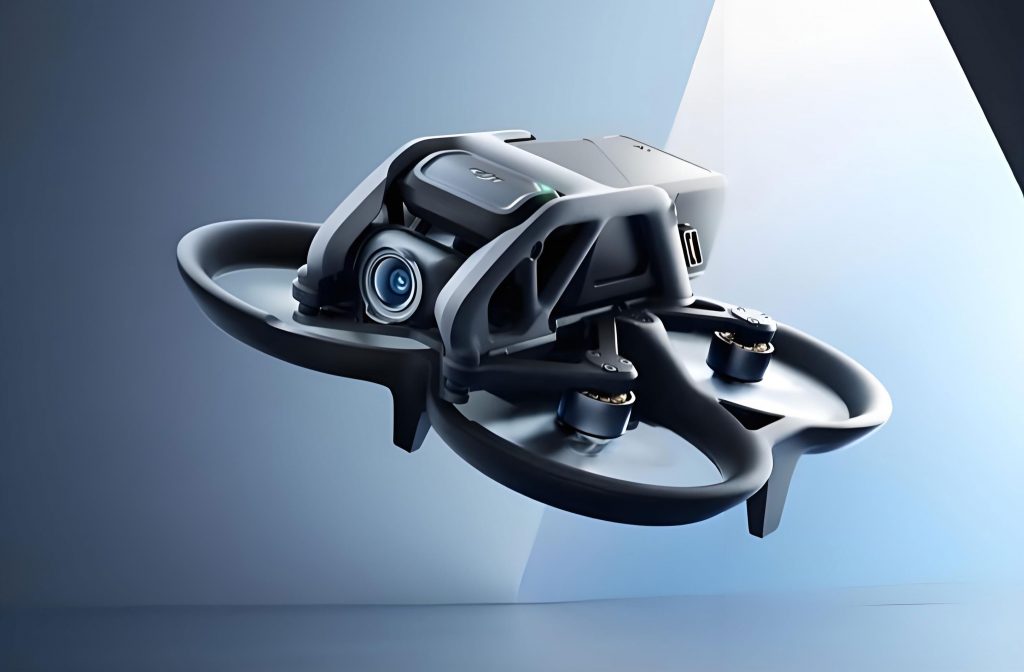
In addition to transmission systems, the China FPV industry has made strides in monitoring technology with the introduction of a high-performance electronic viewfinder. This device is compatible with a wide range of cameras via HDMI, offering filmmakers and drone operators a versatile tool for accurate first person view monitoring. It features a full HD Micro-OLED display with advanced optical design, ensuring that images are sharp and colors are true to life. The inclusion of professional functions like waveform displays and focus peaking empowers users to achieve precise results in their FPV drone projects, reinforcing the importance of reliable first person view tools in creative workflows.
The specifications of this electronic viewfinder are summarized in the table below, highlighting its key features that benefit the China FPV community. From display quality to connectivity options, this device is engineered to meet the demands of modern first person view applications.
| Feature | Description |
|---|---|
| Display Type | Full HD 0.7″ Micro-OLED |
| Input Interface | HDMI (full-size) |
| Output Interface | HDMI loop-out for multi-monitor setups |
| Diopter Adjustment Range | -6D to +2D (accommodating -600 to +200 vision) |
| Color Processing | 10-bit channel for accurate color reproduction |
| Monitoring Functions | Waveform, peak focusing, histogram, false color, metadata display |
| Compatibility | Works with most HDMI-enabled cameras and recorders |
The color accuracy in this viewfinder can be described using color space models, which are essential for first person view applications where true-to-life imagery is paramount. For instance, the 10-bit processing allows for a wider range of colors, which can be represented in a standard RGB color space. The transformation from camera sensor data to display output involves matrix operations, such as: $$ \begin{bmatrix} R_{\text{out}} \\ G_{\text{out}} \\ B_{\text{out}} \end{bmatrix} = M \cdot \begin{bmatrix} R_{\text{in}} \\ G_{\text{in}} \\ B_{\text{in}} \end{bmatrix} + \begin{bmatrix} O_R \\ O_G \\ O_B \end{bmatrix} $$ where \( M \) is a 3×3 color correction matrix, and \( O \) represents offsets for calibration. This ensures that the first person view feed from an FPV drone maintains consistency and fidelity, which is crucial for professional filming in the China FPV sector.
Furthermore, the integration of these transmission and monitoring systems into FPV drones has opened up new possibilities for first person view racing and aerial photography. In China FPV, the emphasis on low latency and high resolution has led to the development of specialized modes, such as the race mode that supports multiple aircraft simultaneously. This is particularly beneficial for competitive events, where pilots rely on real-time feedback to navigate complex courses. The ability to handle up to eight units without significant interference demonstrates the robustness of these systems, making them a preferred choice for first person view enthusiasts worldwide.
To quantify the performance gains, we can analyze the data rate requirements for high-frame-rate transmission in FPV drones. Using the Shannon-Hartley theorem, the channel capacity \( C \) in bits per second is given by: $$ C = B \log_2(1 + \frac{S}{N}) $$ where \( B \) is the bandwidth, \( S \) is the signal power, and \( N \) is the noise power. For 1080p video at 100fps, the data rate must be sufficient to avoid compression artifacts, and the H.265 encoding used in these China FPV devices efficiently balances quality and bandwidth. This results in a smooth first person view experience, even at long distances, which is essential for FPV drone operations in diverse environments.
Looking ahead, the China FPV industry continues to innovate, with research focused on reducing latency further and enhancing image quality for first person view systems. Emerging technologies like AI-based compression and adaptive frequency hopping are being explored to address the challenges of interference and bandwidth limitations. As these developments unfold, they will undoubtedly shape the next generation of FPV drones, making first person view more immersive and accessible. The collaboration between hardware manufacturers and software developers in China FPV is key to driving this progress, ensuring that pilots and filmmakers have the tools they need to push creative boundaries.
In conclusion, the advancements in transmission and monitoring technologies highlighted in this article represent a significant leap forward for the China FPV community. By leveraging detailed tables and mathematical models, we have illustrated how these innovations enhance the first person view experience for FPV drone users. From low-latency video feeds to professional-grade viewfinders, these contributions underscore the leadership of China FPV in the global market. As we continue to refine these systems, the future of first person view flying looks brighter than ever, with endless possibilities for exploration and expression through FPV drones.