
In recent years, the integration of industry and education has become a strategic priority in vocational education, aimed at bridging the gap between talent cultivation and industrial demands. As an educator involved in drone surveying technology programs, I have witnessed the transformative potential of collaborative training bases. This article explores the pathways for establishing shared training bases between vocational institutions and enterprises in the context of drone training, emphasizing practical insights, challenges, and solutions. The drone training sector, characterized by rapid technological evolution and high practical demands, serves as an ideal domain for such integration. Our institution has engaged in partnerships with drone-related companies, yet we recognize the need to deepen collaboration beyond mere instructor dispatch. By sharing our experiences and research, we aim to enhance the quality of drone training and offer a reference for similar emerging fields.
The concept of industry-education integrated training bases revolves around seamless connectivity between education and industry. In our drone training initiatives, we define these bases as collaborative platforms where vocational schools and enterprises leverage their respective resources for mutual benefit. These bases integrate teaching, production, skill development, professional素养, technological innovation, and social services, aligning with industry needs. The core philosophy is to ensure that educational content mirrors industrial advancements, with enterprises actively participating in curriculum design, practical guidance, and evaluation. This dual-education ecosystem fosters a synergy where schools supply skilled talent, and enterprises provide technological expertise and real-world scenarios. The operational mechanism relies on resource整合 and shared共建: enterprises contribute equipment, technology, and case studies, while schools offer venues,师资, and theoretical support. Together, they create authentic or simulated production environments for drone training. Through project-based learning and alternating work-study arrangements, students gain hands-on experience, with engineers and teachers co-teaching to enhance technical application abilities. This闭环 system of teaching-practice-feedback-improvement ensures continuous optimization, making drone training more relevant and effective.
Drone surveying technology programs exhibit distinct features that make them highly suitable for industry-education integration. First, the strong practical nature necessitates training in real-world settings. Drone training requires students to master operational skills, data collection, and processing in authentic environments. Collaborative bases with enterprises provide these realistic production and职场 settings, serving as optimal venues for skill孵化. Second, the rapid pace of technological updates demands enterprise involvement in curriculum development. The drone industry evolves quickly, with new devices, software, and techniques emerging constantly. Traditional educational systems often lag behind these developments. Therefore, in our drone training programs, we partner with companies to co-design courses that incorporate industry standards and actual needs, ensuring教学内容 stays current. Third, the broad application scope across sectors like surveying, disaster monitoring, urban planning, and agricultural植保 requires校企 cooperation to expand employment channels. By aligning training with diverse industry applications, we enhance the匹配效能 between graduate supply and labor market demands, preparing students for versatile roles in drone-related fields.
The pathways for establishing shared training bases in drone training involve multiple dimensions, each critical for success. Below, we detail these pathways with tables and formulas to summarize key aspects.
Precision Alignment of Training Content with Industry Needs: In our drone training curriculum, we ensure that practical sessions constitute at least 50% of total课时, focusing on core courses like “Drone操控 Technology,” “Aerial Survey Data Processing,” and “3D Modeling.” We integrate职业技能等级证书 standards, such as those for drone piloting and maintenance, into training modules. This dynamic coupling between certification and curriculum enhances the adaptability of drone training to industrial requirements. For instance, we引入 enterprise cases to simulate scenarios like emergency mapping or power line inspection, achieving zero-delay对接 between teaching and application. A formula to measure this alignment could be: $$ \text{Alignment Score} = \frac{\text{Number of Industry-Standard Modules}}{\text{Total Modules}} \times 100\% $$ This score helps quantify how well our drone training content reflects real-world demands.
Integration of Training Projects with Scenario Applications: Our drone training projects emphasize前沿 technologies like high-precision 3D modeling and intelligent route planning, tailored to support emerging sectors like low-altitude economy. By simulating真实场景, such as compliant surveying in restricted zones, we cultivate students’实操 abilities. We use mathematical models to optimize training outcomes, such as: $$ \text{Scenario Effectiveness} = \sum_{i=1}^{n} w_i \cdot \text{Performance}_i $$ where \( w_i \) represents weights for different scenario factors (e.g., complexity, relevance), and \( \text{Performance}_i \) denotes student scores in模拟 tasks. This approach ensures that drone training remains application-oriented.
Co-construction and Sharing of Training Platforms: We have collaborated with enterprises to build shared platforms, such as drone simulation飞行 platforms, which reduce equipment wear and risks. These platforms incorporate enterprise resources to create毕业 design课题库 and skill assessment题库. By leveraging real projects, we enhance the仿真 of training environments. The sharing efficiency can be evaluated using a table:
| Platform Component | Enterprise Contribution | School Contribution | Shared Usage Rate |
|---|---|---|---|
| Simulation Software | Licenses, updates | Hardware, maintenance | 85% |
| Case Study Database | Real project data | Curricular integration | 90% |
| Skill Assessment Tools | Industry standards | Evaluation frameworks | 80% |
Additionally, we have established dynamic tracking platforms for graduates, using data analytics to refine drone training programs continuously. The integration of such platforms is vital for sustaining collaborative drone training efforts.
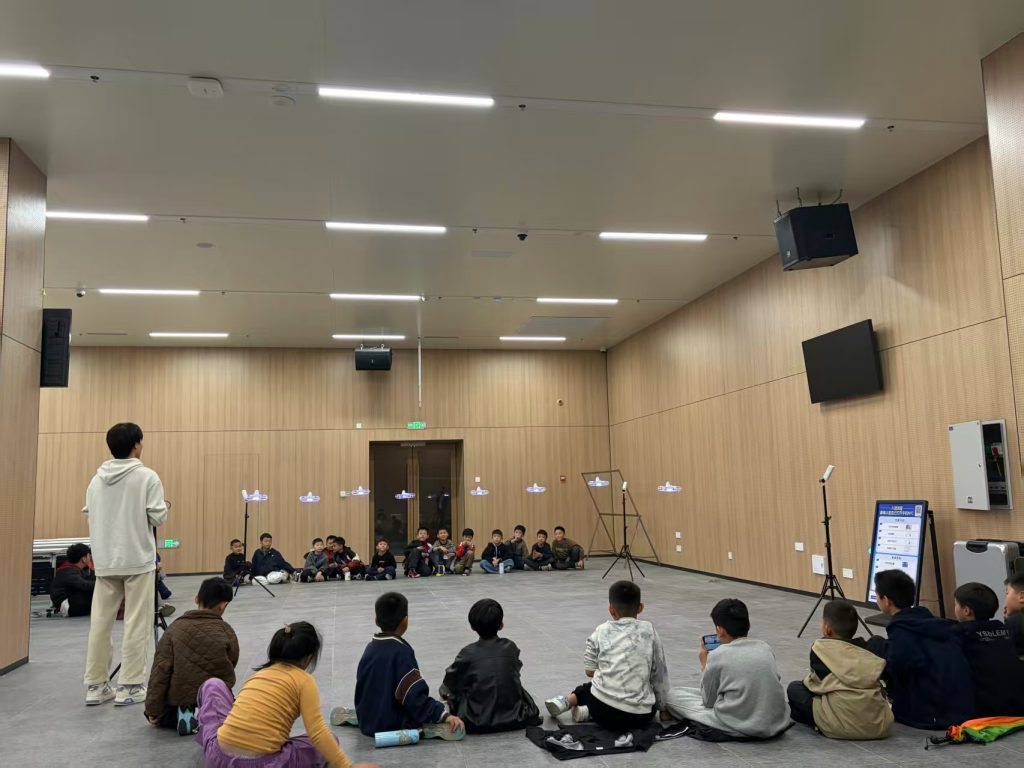
Social Service Provision by Training Bases: Our shared drone training bases extend beyond campus to serve communities and local economies. For example, we partner with社区 to establish learning centers that offer skill培训 and recreational activities, enriching the social fabric. In terms of economic服务, we align with regional industrial strategies, such as supporting low-altitude economy initiatives through data services for urban planning or ecological monitoring projects. A formula to assess social impact could be: $$ \text{Social Impact Index} = \frac{\text{Number of Service Projects} \times \text{Beneficiary Satisfaction}}{ ext{Total Resources Invested}} $$ This index helps gauge the effectiveness of drone training bases in broader societal contexts.
Enrichment of Student Campus Life: Drone training bases invigorate student experiences by hosting competitions and entrepreneurial activities. We organize drone races in collaboration with enterprises, providing platforms for students to showcase creativity and teamwork. These events boost engagement in drone training. Moreover, by setting up孵化 bases within campuses, we encourage student startups in areas like drone青少年 training or aerial photography. The entrepreneurial enthusiasm can be modeled as: $$ \text{Entrepreneurship Rate} = \frac{\text{Number of Student Startups}}{\text{Total Student Enrollment}} \times 100\% $$ This rate reflects the vibrancy of drone training ecosystems in fostering innovation.
Two-Way Flow of Training Instructors: To enhance师资 quality, we implement bidirectional exchanges. Enterprise experts, such as drone instructors and engineers, are引入 to teach practical courses and mentor毕业 designs, forming dual导师 systems. Concurrently, our teachers participate in enterprise挂职锻炼, gaining firsthand experience through projects like low-altitude surveying. The effectiveness of this flow can be summarized in a table:
| Instructor Type | Role in Drone Training | Annual Participation Hours | Impact on Student Skills |
|---|---|---|---|
| Enterprise Instructor | Teaches实操 courses, provides industry insights | 200+ hours | High (students report 85% satisfaction) |
| School Teacher on Secondment | Engages in field projects, updates teaching content | 150+ hours | Moderate to High (curriculum relevance improves by 20%) |
This exchange ensures that drone training remains aligned with technological advancements and industry practices.
完善 of Evaluation Systems: A robust evaluation system is essential for assessing the performance of shared drone training bases. We have developed a comprehensive framework, as shown in the table below, which covers infrastructure, teaching quality, social服务, and management. This system uses quantifiable metrics to ensure continuous improvement in drone training outcomes.
| Primary Indicator | Secondary Indicator | Tertiary Indicator | Weight | Evaluation Standard |
|---|---|---|---|---|
| Infrastructure & Equipment (30 points) | Equipment Completeness (10 points) | Advanced Equipment Ratio | 5 | Coverage of industry-mainstream equipment ≥80% scores full |
| Site Safety (10 points) | Safety Facility Completeness | 5 | Full score if消防 and急救 equipment are complete | |
| Equipment Utilization (10 points) | Annual Training Hours | 10 | ≥1000 hours scores full | |
| Practical Teaching & Talent Cultivation (30 points) | Student Training Performance (10 points) | Skill Assessment Scores | 5 | Average score ≥85 scores full |
| Enterprise Guidance (10 points) | Guidance Frequency | 5 | Enterprise mentors provide on-site guidance ≥3 times/week scores full | |
| Teaching Implementation (10 points) | Training Project Design | 5 | Real-case proportion ≥70% scores full | |
| Social Service & Radiation Effect (20 points) | Social Training Volume (5 points) | Annual Training Participants | 3 | ≥5000 participants scores full |
| Cultural传承 & Innovation (10 points) | Hosting Skill Competitions | 5 | Host ≥1 municipal-level competition annually scores full | |
| Management Operation & Mechanism Innovation (20 points) | 校企协同 Mechanism (5 points) | Joint Management Committee Establishment | 3 | Full score if committee enables shared decision-making |
| Resource Sharing Efficiency (10 points) | Instructor Exchange Ratio | 5 | Enterprise mentor proportion ≥30% scores full | |
| Information化 Management Level (5 points) | 实训 Management System Application | 3 | Full score if system实时 records student training data |
This evaluation framework supports data-driven enhancements in drone training base operations. We also employ formulas to calculate overall performance, such as: $$ \text{Overall Score} = \sum_{i=1}^{n} ( ext{Weight}_i \times ext{Indicator Score}_i) $$ where \( n \) represents the number of indicators, ensuring a holistic assessment of drone training effectiveness.
In summary, the共建 of drone training bases through industry-education integration significantly提升人才 cultivation quality, promotes technological innovation, and strengthens师资 capabilities. However, based on our experience, several challenges persist. First, enterprises often lack sufficient motivation to参与 due to profitability concerns, as they prioritize return on investment over educational公益. This can hinder the sustainability of drone training collaborations. Second, policy and funding support may be不到位, with incentives failing to materialize, leading to superficial partnerships. Third, curricular content in drone training can lag behind industry needs, resulting in graduates who are ill-equipped for rapidly evolving technological demands. To address these issues, we propose the following优化 measures. First, deepen校企协同 mechanisms by transitioning from short-term projects to strategic partnerships, such as establishing joint management committees with shared leadership. Second, innovate利益联结 mechanisms through models like “technology equity + talent cultivation,” where both parties share intellectual property收益. Third, advance dynamic curriculum adjustment by continuously co-developing courses with enterprises to embed industry standards and emerging trends. By implementing these strategies, we can enhance the efficacy of drone training bases, ensuring they remain responsive to industrial shifts and contribute meaningfully to workforce development. Ultimately, the success of such integrations relies on a commitment to mutual benefit and adaptive learning, fostering a resilient ecosystem for drone training in the era of industry-education fusion.