
Mine disasters create complex subterranean environments where conventional search methods become ineffective. We propose a novel path planning approach using an Improved Jellyfish Search (IJS) algorithm to enhance the efficiency of Unmanned Aerial Vehicles in navigating these challenging spaces. Our method integrates three strategic enhancements to the original Jellyfish Search (JS) algorithm: Logistic chaotic mapping for population initialization, Gaussian mutation for solution refinement, and Lévy flight dynamics for position updating.
The mathematical foundation of our approach begins with Logistic chaotic initialization, which generates uniformly distributed solutions across the search space. For a jellyfish individual at position \(x_{ij}\) in dimension \(j\), the chaotic update is expressed as:
$$x_{ij} = \tau_{ij} + R_{ij}(2\eta_{ij} – 1)$$
where \(\tau_{ij}\) represents the nutrient source center, \(R_{ij}\) is the disturbance radius, and \(\eta_{ij}\) is the chaotic sequence factor derived from:
$$\eta_{k+1} = \mu\eta_k(1-\eta_k)$$
with control parameter \(\mu = 4\). Gaussian mutation then refines solutions through:
$$X_i^* = X_i + G(\alpha)$$
where \(G(\alpha)\) is the Gaussian distribution function:
$$G(\alpha) = \frac{1}{\sqrt{2\pi\sigma^2}}e^{-\frac{\alpha^2}{2\sigma^2}}$$
Lévy flight dynamics enhance position updates during global and local search phases:
$$X_i(t+1) = X_i(t) + \theta \cdot s$$
where step size \(s\) follows Lévy distribution:
$$s = \frac{u}{|v|^{1/\beta}}, \quad \beta=1.5$$
The complete IJS workflow integrates these components as follows:
| Algorithm Phase | Key Operations | Mathematical Representation |
|---|---|---|
| Initialization | Logistic chaotic mapping | \(x_{ij} = \tau_{ij} + R_{ij}(2\eta_{ij} – 1)\) |
| Global Search | Ocean current following | \(\overrightarrow{direction} = X^* – \beta \cdot rand \cdot \mu\) |
| Local Search | Active/passive motion with Lévy flight | \(X_i(t+1) = X_i(t) + \theta \cdot s\) |
| Mutation | Gaussian refinement | \(X_i^* = X_i + \frac{1}{\sqrt{2\pi}}e^{-\alpha^2/2}\) |
We evaluated our drone technology using two simulated mine environments with different obstacle densities. The comparative results demonstrate significant advantages of IJS over established algorithms:
| Algorithm | Time (s) | Path Length | Turns | Improvement over IJS |
|---|---|---|---|---|
| GA | 4.16 | 43.94 | 19 | -72.23% time, -2.67% length |
| PSO | 3.41 | 44.53 | 20 | -66.11% time, -3.95% length |
| JS | 3.96 | 43.36 | 14 | -70.87% time, -1.36% length |
| IJS | 1.15 | 42.77 | 10 | Baseline |
| Algorithm | Time (s) | Path Length | Turns | Improvement over IJS |
|---|---|---|---|---|
| GA | 5.17 | 55.70 | 26 | -62.5% time, -2.67% length |
| PSO | 4.37 | 55.70 | 27 | -55.6% time, -3.95% length |
| JS | 4.54 | 51.46 | 24 | -57.3% time, +3.88% length |
| IJS | 1.94 | 53.46 | 22 | Baseline |
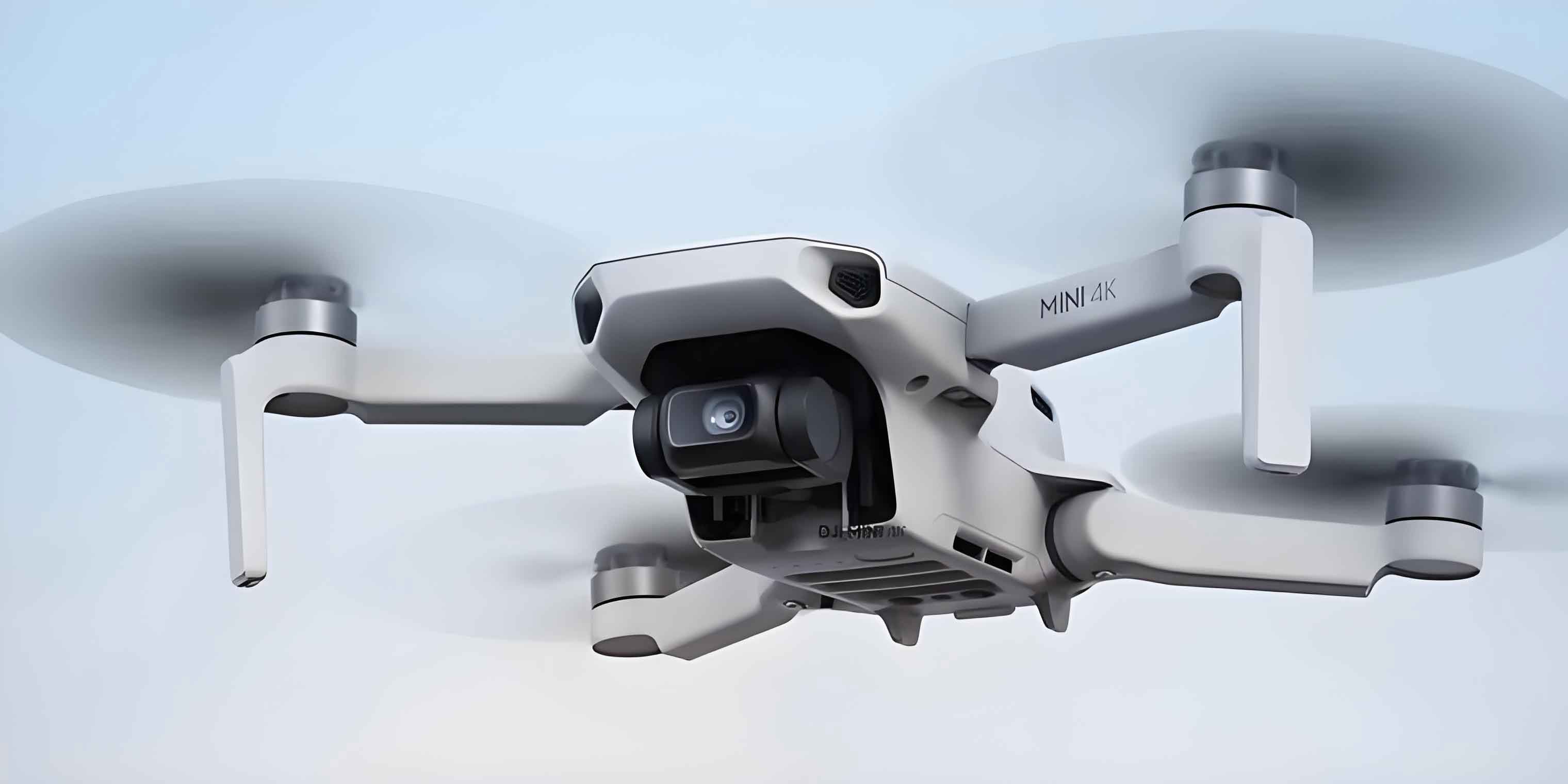
Physical validation used a customized Unmanned Aerial Vehicle platform equipped with RealSense D435i depth sensors and Pixhawk 6C flight controllers operating in a constrained indoor environment replicating mine conditions. The experimental results confirmed the simulation findings:
| Algorithm | Time (s) | Path Length (m) | Turns |
|---|---|---|---|
| GA | 53.45 | 29.41 | 15 |
| PSO | 50.77 | 28.77 | 13 |
| JS | 43.25 | 28.74 | 12 |
| IJS | 20.96 | 26.58 | 9 |
The convergence characteristics of each algorithm reveal fundamental performance differences. The IJS algorithm demonstrates rapid initial convergence with stable refinement, while standard JS exhibits premature convergence tendencies:
$$\text{Convergence Rate} = \frac{||f_{\text{best}}(t) – f_{\text{opt}}||}{||f_{\text{initial}} – f_{\text{opt}}||} \cdot e^{-\lambda t}$$
where \(\lambda_{\text{IJS}} = 0.32\) versus \(\lambda_{\text{JS}} = 0.21\) at 500 iterations. This drone technology advancement enables safer navigation through complex mine environments by maintaining minimum clearance from obstacles:
$$\text{Safety Margin} = \min_{\forall k} \left( \sqrt{(x_k – x_{\text{UAV}})^2 + (y_k – y_{\text{UAV}})^2} \right) > \delta_{\text{threshold}}$$
Our research establishes that integrating chaotic initialization, Gaussian mutation, and Lévy flight dynamics creates a robust path planning framework for Unmanned Aerial Vehicles operating in constrained environments. The IJS algorithm reduces computational load while generating safer, more efficient flight paths compared to established methods, significantly advancing drone technology applications in mine rescue scenarios.