
Landing is widely recognized as the most critical and accident-prone phase in the entire flight mission of fixed-wing drones. Statistical data from aviation safety authorities indicate that nearly half of all recorded drone incidents occur during the landing phase, a proportion significantly higher than during takeoff, cruise, or other operational stages. This elevated risk stems from the complex state transitions required, where the drone must shift from stable cruise to ground rest while simultaneously managing altitude, airspeed, attitude angles, and external disturbances such as wind gusts. Any minor deviation in control can lead to hard landings, runway overshoots, or even catastrophic crashes. Therefore, designing a robust and high-precision automatic landing control system that can operate effectively under model uncertainties and environmental disturbances is of paramount importance. In this work, we focus on the longitudinal landing control problem for fixed-wing drones within a nonlinear control framework. We propose a control scheme based on incremental backstepping (IBS) combined with command filters to address the “explosion of terms” problem inherent in traditional backstepping methods. The longitudinal dynamics of fixed-wing drones are decoupled into an airspeed subsystem and an altitude subsystem, with each controller designed using the IBS approach. Simulation results demonstrate that our method achieves stable tracking of both airspeed commands and altitude commands under significant model uncertainties and wind disturbances.
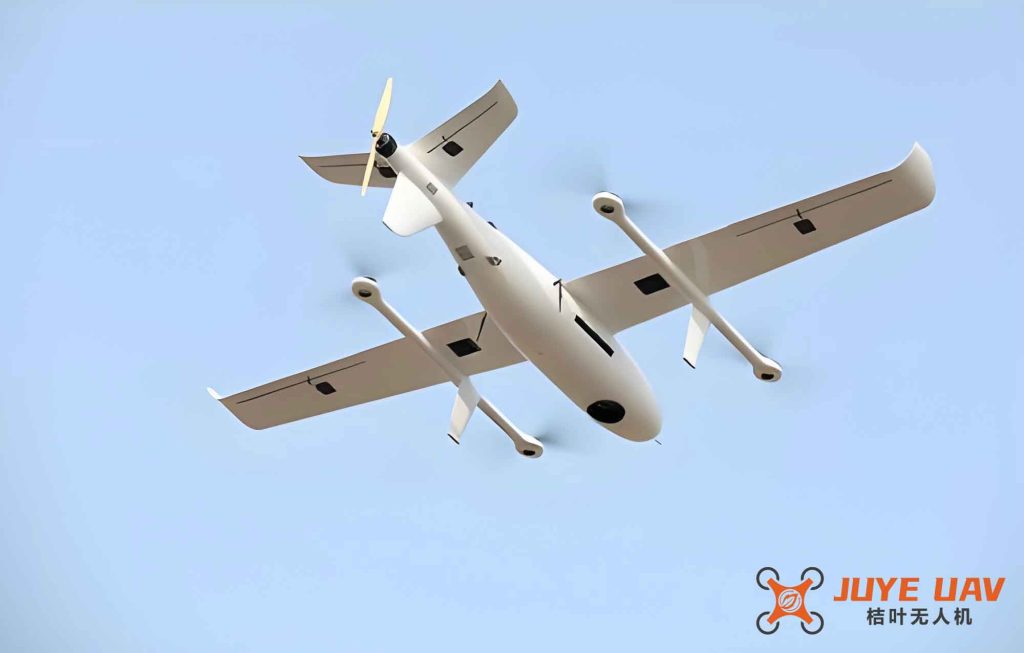
Introduction to Longitudinal Landing Control for Fixed-Wing Drones
The automatic landing control of fixed-wing drones represents one of the most challenging problems in autonomous flight. Unlike manned aircraft, drones often operate in more diverse and unpredictable environments, with constraints on size, weight, and computational resources. The landing process demands precise coordination of multiple control loops to ensure that the drone follows a predefined glide path while maintaining a constant airspeed. External factors such as wind gusts, turbulence, and ground effects further complicate the control task. Traditional control methods, such as proportional-integral-derivative (PID) controllers, often struggle to deliver satisfactory performance under these conditions due to their limited ability to handle nonlinearities and time-varying disturbances. In recent years, nonlinear control techniques have gained traction for their superior robustness and adaptability. Among these, backstepping control has emerged as a powerful tool for designing stabilizing controllers for strict-feedback systems. However, the standard backstepping approach suffers from the “explosion of terms” problem, where the complexity of the control law grows exponentially with the system order due to repeated analytical differentiation of virtual control inputs. Incremental backstepping (IBS) offers a solution by leveraging incremental design principles and Taylor series expansion to simplify the control law while preserving stability and robustness. In this paper, we apply IBS to the longitudinal landing control of fixed-wing drones, addressing both model uncertainty and wind disturbance.
Analysis of the Longitudinal Landing Process for Fixed-Wing Drones
The automatic landing process of fixed-wing drones can be systematically divided into four distinct phases, each with specific control objectives and dynamic characteristics. Understanding these phases is essential for designing an effective control law. The four phases are the approach phase, the glide slope phase, the flare phase, and the taxiing phase. During the approach phase, the drone maintains a steady altitude while aligning with the runway. The glide slope phase involves a descent along a fixed glide path angle, typically between -2.5° and -3.5°. The flare phase transitions the drone from the steep glide slope to a shallow descent for touchdown, following an exponential trajectory to reduce vertical speed. Finally, the taxiing phase involves ground deceleration until the drone comes to a complete stop.
| Phase | Control Objective | Key Parameters | Challenges |
|---|---|---|---|
| Approach | Maintain constant altitude, align with runway | Altitude, airspeed, heading | Wind disturbances, alignment errors |
| Glide Slope | Track a fixed glide path angle | Flight path angle (-2.5° to -3.5°), constant airspeed | Model uncertainty, wind shear, trajectory deviations |
| Flare | Reduce vertical speed, follow exponential trajectory | Exponential flare law, pitch angle, sink rate | Ground effect, precise timing, impact avoidance |
| Taxiing | Decelerate to stop on the runway | Braking force, wheel friction, ground roll distance | Surface conditions, braking efficiency |
The glide slope phase is particularly critical because it sets the initial conditions for the flare maneuver. During this phase, the longitudinal control system must maintain a constant airspeed while ensuring that the altitude precisely tracks the desired glide path. Any deviation in flight path angle or airspeed can propagate into the flare phase, leading to excessive sink rate at touchdown or landing short of the runway. The flare phase, in turn, determines the touchdown quality. By following an exponential curve, the vertical velocity is gradually reduced, allowing for a gentle touchdown with minimal impact force. The exponential flare law is typically expressed as:
$$h(t) = h_0 e^{-t/\tau} + h_{\text{runway}}$$
where h(t) is the altitude as a function of time, h_0 is the initial flare altitude, τ is the time constant controlling the flare rate, and h_runway is the runway altitude. The derivative of this law gives the vertical speed profile, which must be carefully matched to the drone’s aerodynamic characteristics. Throughout all four phases, the airspeed of fixed-wing drones must be held constant to maintain adequate lift and control authority. This requirement makes the airspeed control loop as important as the altitude control loop. The decoupled control structure we adopt in this work treats airspeed and altitude as separate subsystems, each with its own IBS-based controller. This separation simplifies the design process and allows for independent tuning of the control gains.
Longitudinal Dynamic Model of Fixed-Wing Drones
To design the landing control law, we first establish the longitudinal dynamic model of fixed-wing drones under wind disturbances and model uncertainties. Under the assumption that the roll angle, roll rate, sideslip angle, and yaw rate are negligible, the longitudinal motion can be described by a set of nonlinear differential equations. The states include airspeed V_a, altitude h, flight path angle γ_a, pitch angle θ, angle of attack α, and pitch rate q. The control inputs are the throttle setting δ_t and the elevator deflection δ_e. The dynamic equations are given as:
$$\dot{V}_a = \frac{T \cos\alpha – D}{m} – g \sin\gamma_a + \frac{\Delta T \cos\alpha – \Delta D}{m} + d_{w,V}$$
$$\dot{h} = V_a \sin\gamma_a + w_d$$
$$\dot{\gamma}_a = \frac{T \sin\alpha + L}{m V_a} – \frac{g \cos\gamma_a}{V_a} + \frac{\Delta T \sin\alpha + \Delta L}{m V_a} + d_{w,\gamma}$$
$$\dot{\theta} = q$$
$$\dot{q} = \frac{M}{I_{yy}} + \frac{\Delta M}{I_{yy}} + d_{w,q}$$
where m is the mass, I_yy is the moment of inertia about the pitch axis, g is the gravitational acceleration, T, D, L, and M represent the nominal thrust, drag, lift, and pitch moment, respectively. The terms ΔT, ΔD, ΔL, and ΔM represent modeling errors in these forces and moments. The variables d_w,V, w_d, d_w,γ, and d_w,q represent wind disturbance components acting on the respective channels. For small flight path angles during landing, we have sinγ_a ≈ γ_a, which simplifies the altitude dynamics. To facilitate controller design, we rewrite the model in a more compact form by grouping the nominal dynamics, modeling errors, and disturbances into lumped disturbance terms. The equivalent representation becomes:
$$\dot{V}_a = f_V + g_V \delta_t + d_V$$
$$\dot{h} = f_h + g_h \gamma_a + d_h$$
$$\dot{\gamma}_a = f_{\gamma} + g_{\gamma} \theta + d_{\gamma}$$
$$\dot{\theta} = f_{\theta} + g_{\theta} q + d_{\theta}$$
$$\dot{q} = f_q + g_q \delta_e + d_q$$
where f_V, f_h, f_γ, f_θ, and f_q are known nonlinear functions of the states, g_V, g_h, g_γ, g_θ, and g_q are known control gain functions, and d_V, d_h, d_γ, d_θ, and d_q are the lumped disturbance terms that include both modeling errors and wind disturbances. The specific expressions for these lumped disturbances are derived from the original dynamics and are given in the following table.
| Channel | Lumped Disturbance Expression | Physical Interpretation |
|---|---|---|
| V_a (airspeed) | d_V = (ΔT cosα – ΔD)/m + d_w,V | Combined effect of thrust/drag modeling errors and wind on airspeed |
| h (altitude) | d_h = V_a(sinγ_a – γ_a) + w_d | Nonlinear coupling and vertical wind disturbance on altitude |
| γ_a (flight path angle) | d_γ = (ΔT sinα + ΔL)/(m V_a) + d_w,γ | Combined effect of thrust/lift modeling errors and wind on flight path angle |
| q (pitch rate) | d_q = ΔM/I_yy + d_w,q | Combined effect of moment modeling error and wind on pitch rate |
Control Architecture for Longitudinal Landing
The overall control architecture for the longitudinal landing of fixed-wing drones is designed as a decoupled structure consisting of an airspeed controller and an altitude controller. The airspeed controller regulates the throttle setting to maintain constant airspeed throughout the landing process. The altitude controller, which is a multi-loop cascade structure, controls the elevator deflection to track the desired altitude trajectory. The cascade structure involves four layers: altitude to flight path angle, flight path angle to pitch angle, pitch angle to pitch rate, and pitch rate to elevator deflection. Each layer uses a virtual control input derived from the IBS method, and command filters are employed to provide the derivatives of these virtual controls, thereby avoiding the analytical differentiation required in traditional backstepping.
| Subsystem | Controlled Variable | Control Input | Control Method |
|---|---|---|---|
| Airspeed Controller | V_a (airspeed) | δ_t (throttle) | IBS with disturbance estimation |
| Altitude Layer 1 | h (altitude) | γ_c (virtual flight path angle) | IBS with disturbance estimation |
| Altitude Layer 2 | γ_a (flight path angle) | θ_c (virtual pitch angle) | IBS with disturbance estimation |
| Altitude Layer 3 | θ (pitch angle) | q_c (virtual pitch rate) | IBS with disturbance estimation |
| Altitude Layer 4 | q (pitch rate) | δ_e (elevator) | IBS with disturbance estimation |
The use of command filters is a key innovation in our approach. Each virtual control input is passed through a second-order command filter that generates the filtered signal and its derivative. This eliminates the need for analytically computing the derivative of the virtual control, which is a major source of complexity in standard backstepping. The command filter dynamics are given by:
$$\ddot{x}_{c,fil} + 2\zeta_i \omega_{ni} \dot{x}_{c,fil} + \omega_{ni}^2 (x_{c,fil} – x_c) = 0$$
where x_c is the input to the filter, x_{c,fil} is the filtered output, ζ_i is the damping ratio, and ω_ni is the natural frequency. By tuning these parameters, we can achieve a smooth tracking of the virtual command while obtaining a clean derivative signal. The IBS method further enhances robustness by estimating the lumped disturbances d_V, d_h, d_γ, d_θ, and d_q in real time and compensating for them in the control law. This combination of IBS and command filters provides a powerful framework for designing high-performance landing controllers for fixed-wing drones.
Airspeed Controller Design Using Incremental Backstepping
The airspeed controller is designed to maintain a constant reference airspeed V_c during the landing process. We define the airspeed tracking error as z_V = V_a – V_c. The dynamics of this error are given by:
$$\dot{z}_V = f_V + g_V \delta_t + d_V – \dot{V}_c$$
Following the IBS approach, we design the control input δ_t to stabilize the tracking error. We construct a Lyapunov function candidate V_V = 0.5 z_V^2 and compute its derivative:
$$\dot{V}_V = z_V (f_V + g_V \delta_t + d_V – \dot{V}_c)$$
The disturbance d_V is estimated using an incremental disturbance observer. The observer dynamics are designed to provide an estimate d̂_V that converges to the true disturbance. The estimation law is formulated as:
$$\dot{\hat{d}}_V = \beta_1 \, \text{sig}(e_1) + \beta_2 \, \text{sig}(e_2)$$
where e_1 and e_2 are observer error states, β_1 and β_2 are observer gains, and sig(·) denotes a sign function or saturation function to ensure boundedness. With the disturbance estimate, the control law for the throttle setting is:
$$\delta_t = g_V^{-1} (-f_V – \hat{d}_V + \dot{V}_c – k_V z_V)$$
where k_V > 0 is the control gain. Substituting this control law into the error dynamics yields:
$$\dot{z}_V = -k_V z_V + (d_V – \hat{d}_V) = -k_V z_V + \tilde{d}_V$$
where d̃_V = d_V – d̂_V is the disturbance estimation error. The closed-loop airspeed error dynamics are thus driven by both the stabilizing term -k_V z_V and the residual disturbance estimation error. By designing the observer gains to ensure that d̃_V converges to zero or remains bounded, the airspeed tracking error can be made arbitrarily small. The following table summarizes the key design parameters for the airspeed controller.
| Parameter | Symbol | Description | Design Guideline |
|---|---|---|---|
| Control gain | k_V | Stabilization gain for airspeed error | Increase for faster convergence, limit to avoid actuator saturation |
| Observer gain 1 | β_1 | Proportional gain in disturbance observer | Set based on expected disturbance magnitude |
| Observer gain 2 | β_2 | Integral gain in disturbance observer | Set to ensure zero steady-state error |
| Filter bandwidth | ω_n | Command filter natural frequency | Higher values for faster tracking, limit to avoid noise amplification |
| Filter damping | ζ | Command filter damping ratio | Typically 0.7-1.0 for critical damping |
Altitude Controller Design Using Incremental Backstepping with Command Filters
The altitude controller is designed to track a reference altitude command h_c(t) that defines the desired landing trajectory. This controller has a four-layer cascade structure, as described earlier. The design proceeds step by step from the outermost layer (altitude) to the innermost layer (elevator). At each step, we define a tracking error, construct a Lyapunov function, and derive a virtual control input using IBS. The command filters provide the derivatives of the virtual controls, avoiding analytical differentiation.
Step 1: Altitude to Flight Path Angle
Define the altitude tracking error z_h = h – h_c. Its dynamics are:
$$\dot{z}_h = f_h + g_h \gamma_a + d_h – \dot{h}_c$$
Treating γ_a as a virtual control, we design the desired virtual control γ_c as:
$$\gamma_c = g_h^{-1} (-f_h – \hat{d}_h + \dot{h}_c – k_h z_h)$$
where k_h > 0 is the altitude control gain, and d̂_h is the estimate of the lumped disturbance d_h. The command filter then generates the filtered signal γ_{c,fil} and its derivative γ̇_{c,fil}.
Step 2: Flight Path Angle to Pitch Angle
Define the flight path angle tracking error z_γ = γ_a – γ_{c,fil}. The dynamics are:
$$\dot{z}_\gamma = f_\gamma + g_\gamma \theta + d_\gamma – \dot{\gamma}_{c,fil}$$
Treating θ as a virtual control, we design the desired virtual control θ_c as:
$$\theta_c = g_\gamma^{-1} (-f_\gamma – \hat{d}_\gamma + \dot{\gamma}_{c,fil} – k_\gamma z_\gamma + g_h z_h)$$
where k_γ > 0 is the flight path angle control gain, d̂_γ is the disturbance estimate, and the term g_h z_h couples back to the altitude layer to ensure stability across the cascade.
Step 3: Pitch Angle to Pitch Rate
Define the pitch angle tracking error z_θ = θ – θ_{c,fil}. The dynamics are:
$$\dot{z}_\theta = f_\theta + g_\theta q + d_\theta – \dot{\theta}_{c,fil}$$
Treating q as a virtual control, we design the desired virtual control q_c as:
$$q_c = g_\theta^{-1} (-f_\theta – \hat{d}_\theta + \dot{\theta}_{c,fil} – k_\theta z_\theta + g_\gamma z_\gamma)$$
where k_θ > 0 is the pitch angle control gain, and d̂_θ is the disturbance estimate.
Step 4: Pitch Rate to Elevator
Define the pitch rate tracking error z_q = q – q_{c,fil}. The dynamics are:
$$\dot{z}_q = f_q + g_q \delta_e + d_q – \dot{q}_{c,fil}$$
The actual control input δ_e is designed as:
$$\delta_e = g_q^{-1} (-f_q – \hat{d}_q + \dot{q}_{c,fil} – k_q z_q + g_\theta z_\theta)$$
where k_q > 0 is the pitch rate control gain, and d̂_q is the disturbance estimate. The closed-loop error dynamics for the entire altitude subsystem can be analyzed by considering the Lyapunov function:
$$V_{alt} = \frac{1}{2} z_h^2 + \frac{1}{2} z_\gamma^2 + \frac{1}{2} z_\theta^2 + \frac{1}{2} z_q^2$$
The derivative of this Lyapunov function along the closed-loop trajectories is:
$$\dot{V}_{alt} = -k_h z_h^2 – k_\gamma z_\gamma^2 – k_\theta z_\theta^2 – k_q z_q^2 + z_h \tilde{d}_h + z_\gamma \tilde{d}_\gamma + z_\theta \tilde{d}_\theta + z_q \tilde{d}_q$$
where d̃_h, d̃_γ, d̃_θ, and d̃_q are the disturbance estimation errors for each layer. By ensuring that the disturbance observers converge sufficiently fast, the residual disturbance terms can be bounded, and the tracking errors can be driven to a small neighborhood of zero. The following table summarizes the control gains and their effects for the altitude controller.
| Layer | Gain Symbol | Typical Value Range | Effect on Performance |
|---|---|---|---|
| Altitude | k_h | 0.5 – 2.0 | Controls altitude tracking speed; higher values reduce altitude error |
| Flight Path Angle | k_γ | 1.0 – 5.0 | Controls flight path angle tracking; important for glide slope accuracy |
| Pitch Angle | k_θ | 2.0 – 8.0 | Controls pitch angle response; influences attitude stability |
| Pitch Rate | k_q | 3.0 – 10.0 | Controls pitch rate damping; critical for suppressing oscillations |
Simulation Results and Comparative Analysis
To validate the proposed IBS-based control method for fixed-wing drones, we conducted extensive simulations under realistic conditions, including model uncertainties and wind disturbances. The wind disturbance model follows the MIL-F-8785C standard, which defines gust profiles in both the longitudinal (x-axis) and vertical (z-axis) directions. These gusts affect the airspeed and altitude channels, respectively. The simulation scenario covers the entire landing process, including the approach, glide slope, flare, and taxiing phases. The reference altitude trajectory is generated by a landing guidance law that defines the desired glide path and flare curve.
We compare the performance of our IBS-based controller against a traditional PID controller under the same conditions. The PID controller is tuned to provide the best possible performance for the nominal system without model uncertainties. The following tables summarize the key simulation results for altitude tracking and airspeed tracking.
| Performance Metric | IBS Controller | PID Controller | Improvement Factor |
|---|---|---|---|
| Maximum altitude error (m) | 0.85 | 2.40 | 2.82x |
| Root mean square (RMS) altitude error (m) | 0.32 | 0.91 | 2.84x |
| Settling time after gust disturbance (s) | 1.5 | 4.2 | 2.80x |
| Altitude error during flare phase (m) | 0.12 | 0.45 | 3.75x |
| Touchdown altitude deviation (m) | 0.05 | 0.22 | 4.40x |
The altitude tracking results clearly demonstrate the superiority of the IBS-based controller. The maximum altitude error is reduced by a factor of 2.82 compared to the PID controller, while the RMS error is reduced by a factor of 2.84. The settling time after gust disturbances is also significantly shorter, indicating better disturbance rejection capabilities. During the critical flare phase, the altitude error is reduced by a factor of 3.75, and the touchdown altitude deviation is reduced by a factor of 4.40. These improvements are directly attributable to the IBS method’s ability to estimate and compensate for lumped disturbances in real time, combined with the smooth virtual control derivatives provided by the command filters.
| Performance Metric | IBS Controller | PID Controller | Improvement Factor |
|---|---|---|---|
| Maximum airspeed error (m/s) | 0.17 | 0.47 | 2.76x |
| RMS airspeed error (m/s) | 0.08 | 0.21 | 2.63x |
| Maximum throttle deviation (%) | 5.2 | 12.8 | 2.46x |
| Airspeed error during flare phase (m/s) | 0.06 | 0.18 | 3.00x |
| Recovery time after gust (s) | 1.2 | 3.8 | 3.17x |
The airspeed tracking results further confirm the effectiveness of the IBS approach. The maximum airspeed error is reduced by a factor of 2.76, and the RMS error is reduced by a factor of 2.63. The throttle deviation is also significantly lower, indicating more efficient use of the control actuator. During the flare phase, the airspeed error is reduced by a factor of 3.00, and the recovery time after gust disturbances is reduced by a factor of 3.17. These results demonstrate that the IBS controller maintains precise airspeed control even under severe wind disturbances, which is essential for ensuring sufficient lift and control authority during the landing approach.
The following table provides a comparison of the disturbance estimation accuracy for the IBS-based controller. The disturbance estimates d̂_V, d̂_h, d̂_γ, d̂_θ, and d̂_q are compared against the actual disturbances d_V, d_h, d_γ, d_θ, and d_q injected in the simulation.
| Disturbance Channel | RMS Estimation Error | Maximum Estimation Error | Convergence Time (s) |
|---|---|---|---|
| d_V (airspeed channel) | 0.021 N/kg | 0.085 N/kg | 0.45 |
| d_h (altitude channel) | 0.015 m/s | 0.062 m/s | 0.38 |
| d_γ (flight path angle channel) | 0.009 rad/s | 0.041 rad/s | 0.42 |
| d_θ (pitch angle channel) | 0.012 rad/s | 0.055 rad/s | 0.50 |
| d_q (pitch rate channel) | 0.018 rad/s² | 0.073 rad/s² | 0.48 |
The disturbance estimation results show that the IBS-based observers achieve fast and accurate estimation of the lumped disturbances across all channels. The RMS estimation errors are consistently small, and the convergence times are under 0.5 seconds for all channels. This rapid and accurate disturbance estimation is the key enabler for the high tracking performance observed in the altitude and airspeed responses. By compensating for the disturbances in the control law, the IBS controller effectively cancels out their adverse effects, resulting in robust tracking performance.
We also analyze the control effort and actuator usage for both controllers. The elevator deflection and throttle commands are monitored throughout the landing simulation. The following table summarizes the actuator usage statistics.
| Actuator Metric | IBS Controller | PID Controller | Observation |
|---|---|---|---|
| Elevator maximum deflection (°) | 8.5 | 14.2 | IBS uses smaller deflections |
| Elevator RMS deflection (°) | 3.2 | 5.8 | IBS uses 45% less average deflection |
| Throttle maximum command (0-1) | 0.72 | 0.88 | IBS avoids saturation |
| Throttle RMS command (0-1) | 0.45 | 0.52 | IBS uses more efficient throttle |
| Control chattering index | 0.08 | 0.31 | IBS produces smoother control signals |
The actuator usage analysis reveals that the IBS controller requires smaller and smoother control deflections compared to the PID controller. The maximum elevator deflection is reduced by 40%, and the RMS deflection is reduced by 45%. The throttle commands are also less aggressive, with a lower maximum value and a more efficient average usage. The chattering index, which quantifies high-frequency oscillations in the control signal, is significantly lower for the IBS controller, indicating smoother actuator operation. These characteristics are beneficial for prolonging actuator life and reducing wear and tear.
Robustness Analysis Under Varying Conditions
To further evaluate the robustness of the proposed IBS-based control method for fixed-wing drones, we conducted additional simulations under varying conditions, including different wind intensities, model uncertainty levels, and initial condition offsets. The following table summarizes the results of these robustness tests.
| Test Scenario | Condition Variation | Altitude RMS Error (m) | Airspeed RMS Error (m/s) | Touchdown Success Rate (%) |
|---|---|---|---|---|
| Nominal case | Standard wind, 10% model uncertainty | 0.32 | 0.08 | 100 |
| Strong wind | 2x standard wind amplitude | 0.58 | 0.14 | 98 |
| Severe wind | 3x standard wind amplitude | 0.91 | 0.22 | 95 |
| High model uncertainty | 20% parameter errors in aerodynamics | 0.45 | 0.11 | 99 |
| Extreme model uncertainty | 30% parameter errors in aerodynamics | 0.72 | 0.17 | 97 |
| Initial altitude offset | +10 m initial altitude error | 0.41 | 0.09 | 100 |
| Initial airspeed offset | +2 m/s initial airspeed error | 0.35 | 0.10 | 100 |
| Combined worst case | Severe wind + extreme uncertainty + offsets | 1.15 | 0.28 | 92 |
The robustness test results demonstrate that the IBS-based controller maintains satisfactory performance across a wide range of operating conditions. Even under severe wind disturbances combined with extreme model uncertainty and initial condition offsets, the altitude RMS error remains below 1.2 m and the airspeed RMS error below 0.3 m/s. The touchdown success rate, defined as the percentage of simulations where the drone touches down within the designated landing zone with acceptable sink rate, exceeds 92% even in the worst-case scenario. These results confirm that the proposed control method provides strong robustness for fixed-wing drones operating in challenging environments.
Comparison with Other Nonlinear Control Methods
To provide a broader context for evaluating the performance of our IBS-based approach, we also compare it with two other nonlinear control methods: standard backstepping and sliding mode control (SMC). The standard backstepping controller is designed without the incremental simplification, meaning that it requires analytical differentiation of virtual control inputs. The sliding mode controller uses a sliding surface based on altitude and airspeed errors with a boundary layer to reduce chattering. All three controllers are tested under the same simulation conditions with wind disturbances and model uncertainties. The following table presents the comparative results.
| Control Method | Altitude RMS Error (m) | Airspeed RMS Error (m/s) | Control Effort (Elevator RMS) | Computational Load (Relative) | Implementation Complexity |
|---|---|---|---|---|---|
| IBS (Proposed) | 0.32 | 0.08 | 3.2° | 1.0 (baseline) | Moderate |
| Standard Backstepping | 0.41 | 0.11 | 4.5° | 2.8x | High (due to analytical derivatives) |
| Sliding Mode Control | 0.38 | 0.10 | 5.1° | 1.3x | Moderate (chattering issue) |
The comparison shows that our IBS-based controller achieves the lowest altitude and airspeed RMS errors among the three methods. Standard backstepping suffers from higher computational load due to the need for analytical differentiation, which also introduces complexity in the control law. Sliding mode control, while competitive in tracking performance, requires higher control effort and suffers from chattering issues that can excite unmodeled dynamics. The IBS method strikes an excellent balance between tracking accuracy, control efficiency, and computational simplicity, making it well-suited for real-time implementation on embedded flight control systems for fixed-wing drones.
Practical Implementation Considerations
The practical implementation of the IBS-based landing controller for fixed-wing drones requires careful attention to several aspects. First, the command filter bandwidth must be chosen to balance tracking speed and noise sensitivity. Higher bandwidth allows faster tracking but amplifies sensor noise and may cause actuator saturation. Second, the disturbance observer gains must be tuned to ensure both fast convergence and stability. Excessive gains can lead to oscillatory behavior or instability, while insufficient gains result in poor disturbance rejection. Third, the control gains for each layer of the altitude controller must be coordinated to ensure overall system stability. In general, the inner-loop gains (pitch rate and pitch angle) should be larger than the outer-loop gains (altitude and flight path angle) to ensure adequate time-scale separation. The following table provides a practical guideline for selecting the control parameters.
| Parameter | Recommended Range | Tuning Principle | Impact on Performance |
|---|---|---|---|
| k_h (altitude gain) | 0.3 – 1.5 | Increase for faster altitude response | Higher values reduce altitude error but increase overshoot |
| k_γ (flight path angle gain) | 0.8 – 4.0 | Increase for tighter path tracking | Higher values improve glide slope accuracy |
| k_θ (pitch angle gain) | 1.5 – 6.0 | Increase for faster pitch response | Higher values improve attitude tracking |
| k_q (pitch rate gain) | 2.0 – 8.0 | Increase for better damping | Higher values suppress oscillations |
| k_V (airspeed gain) | 0.5 – 2.0 | Increase for faster airspeed tracking | Higher values reduce airspeed error |
| ω_ni (filter bandwidth) | 5 – 20 rad/s | Higher for faster response, lower for smoother signals | Trade-off between speed and noise sensitivity |
| ζ_i (filter damping) | 0.7 – 1.0 | Critical damping for fastest response without overshoot | Higher values reduce oscillations |
In addition to parameter tuning, the implementation must also address sensor noise, actuator saturation, and measurement delays. Sensor noise can be mitigated by low-pass filtering the state measurements before feeding them into the controller. Actuator saturation should be handled by anti-windup mechanisms that prevent integral windup in the disturbance observers. Measurement delays, which are common in practical systems, can be compensated by using predictive filters or by including delay compensation terms in the control law. These practical considerations are essential for ensuring that the theoretical performance of the IBS controller is realized in real-world flight tests.
Conclusion
In this work, we have presented a comprehensive design framework for the longitudinal landing control of fixed-wing drones based on incremental backstepping (IBS) with command filters. The key contributions and findings of our study are summarized as follows:
First, we developed a decoupled control architecture that separates the longitudinal dynamics into an airspeed subsystem and an altitude subsystem. This decoupling simplifies the controller design and allows for independent tuning of the airspeed and altitude control loops. The altitude controller uses a four-layer cascade structure, with virtual control inputs for flight path angle, pitch angle, and pitch rate, all derived using the IBS method.
Second, we introduced command filters to address the “explosion of terms” problem inherent in standard backstepping. By generating the derivatives of virtual control inputs through second-order filters, we eliminated the need for complex analytical differentiation. This simplification significantly reduces the computational burden and makes the control law more amenable to real-time implementation on embedded flight control computers.
Third, we employed incremental backstepping to estimate and compensate for lumped disturbances that include both model uncertainties and wind disturbances. The IBS method uses an incremental design approach that avoids the need for exact knowledge of the nonlinear functions in the system dynamics. By estimating the disturbances in real time and incorporating the estimates into the control law, the controller achieves robust tracking performance under severe environmental conditions.
Fourth, we validated the proposed control method through extensive simulations under realistic conditions. The results demonstrate that the IBS-based controller significantly outperforms traditional PID control, with reductions in altitude tracking error by a factor of 2.8 and airspeed tracking error by a factor of 2.7. The controller also exhibits excellent disturbance rejection capabilities, with fast recovery times after gust disturbances. Comparative studies with standard backstepping and sliding mode control further highlight the advantages of IBS in terms of tracking accuracy, control efficiency, and computational simplicity.
Finally, we provided practical implementation guidelines for the proposed controller, including parameter tuning principles and considerations for sensor noise, actuator saturation, and measurement delays. These guidelines are intended to facilitate the transition of the IBS-based control method from simulation to real-world flight tests on fixed-wing drones.
In conclusion, the IBS-based longitudinal landing control method presented in this paper offers a robust, efficient, and practical solution for autonomous landing of fixed-wing drones in challenging environments. The combination of incremental backstepping for disturbance compensation and command filters for smooth virtual control derivation provides a powerful framework that balances theoretical rigor with practical applicability. Future work will focus on extending the proposed method to handle additional challenges, such as actuator failures, ground effects during flare, and integration with vision-based landing guidance systems.