
In the development of modern military drone systems, the command and control (C2) system serves as the operational core, determining overall combat effectiveness. However, current human-machine interaction (HMI) designs often remain technology-centric and passive, with interfaces cluttered by displays, controls, and parameters that force operators to adapt rather than intuit. From our perspective as designers and researchers, we recognize that a shift toward human-centered design is essential. This paper outlines a comprehensive HMI design process tailored for military drone C2 systems, drawing from our practical experiences and iterative refinements. We emphasize a workflow that captures multi-faceted needs, prioritizes operator efficiency, and reduces cognitive load, ensuring that military drone operations are both effective and sustainable.
Human-centered design (HCD) is a philosophy that places human needs, capabilities, and behaviors at the forefront of system development. For military drone applications, this means designing interfaces and interactions that align with operators’ physiological and psychological factors, rather than forcing adaptation to technological constraints. HCD integrates scientific principles with user requirements, focusing on the interplay between humans, machines, and the environment. In military drone contexts, where mission success hinges on rapid decision-making and precise control, HCD can enhance situational awareness, reduce errors, and improve overall performance. Our approach builds on this foundation, structuring the HMI design process to systematically address operator needs from inception to deployment.
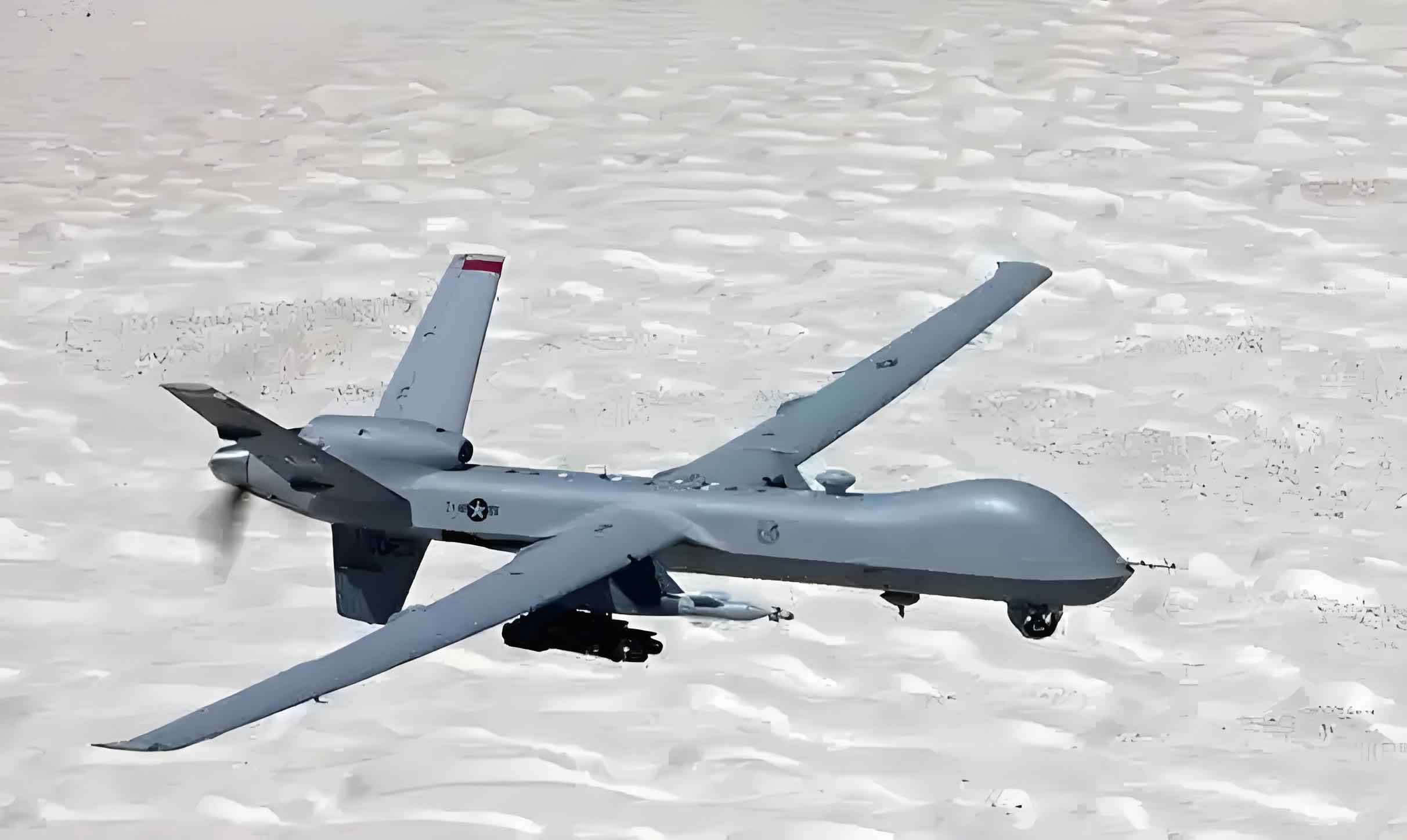
The HMI design process for military drone C2 systems involves several interconnected stages, each contributing to a cohesive and operator-friendly interface. We have organized these into a streamlined workflow, as summarized in Table 1, which outlines the key phases and their objectives. This process is iterative, with feedback loops enabling continuous improvement based on validation results.
| Phase | Key Activities | Outputs |
|---|---|---|
| Requirement Capture | Contextual research, product analysis, user interviews, surveys | Comprehensive HMI requirement document |
| Requirement Analysis | Requirement identification, system goal definition, workflow analysis | Functional baseline and task descriptions |
| Conceptual Design | Interaction framework, mode design, information design, sketching | Conceptual models and initial blueprints |
| Preliminary Design | Function allocation, task analysis, job design | Task sequences and operator assignments |
| Detailed Design | Display/control design, console/seat design, layout, software interface | Detailed interface specifications |
| Interactive Prototyping | Prototype selection, granularity choice, tool usage, prototyping | Functional or visual prototypes for testing |
| Static Evaluation | Assessment of static interfaces using HFE principles | Heuristic evaluation reports |
| Dynamic Evaluation | Operational testing with live operators, performance metrics | Usability feedback and improvement suggestions |
| Optimization Design | Iterative refinement based on evaluation results | Finalized HMI design for implementation |
In the requirement capture phase, we focus on gathering implicit and explicit needs from diverse sources. For military drone systems, this involves contextual studies of operational environments, analysis of existing C2 products, interviews with pilots and commanders, and surveys of stakeholders. We document findings to create a holistic HMI requirement set, ensuring that design decisions are rooted in real-world scenarios. For instance, in a recent military drone project, we identified that operators needed quick access to sensor data while managing multiple drones, leading to a requirement for customizable displays. This phase is critical for avoiding the “stacking” of controls and displays that plague traditional systems.
Requirement analysis translates captured needs into actionable design goals. We identify system objectives, such as minimizing response time or enhancing threat detection, and decompose them into specific tasks. Workflow analysis helps map out operator activities, from drone launch to mission completion. Using functional analysis, we create a function tree that breaks down high-level capabilities into sub-functions. For example, a military drone’s surveillance function might include sub-functions like image capture, data transmission, and target tracking. This phase establishes a functional baseline, guiding subsequent design steps.
Conceptual design involves creating the overall vision for the HMI. We develop interaction frameworks that define how operators engage with the military drone system, such as activity-based or object-oriented interactions. Information design specifies data types exchanged between human and machine, including input commands (e.g., waypoint entries) and output feedback (e.g., telemetry displays). Sketching allows us to visualize ideas rapidly; for instance, we might draft interface layouts that prioritize critical alerts for military drone operations. This phase fosters creativity while ensuring alignment with HCD principles.
Preliminary design addresses function allocation between humans and automation. We use criteria like human proficiency and machine reliability to assign tasks. For military drones, functions requiring judgment (e.g., target identification) are often allocated to operators, while repetitive tasks (e.g., data logging) are automated. Task analysis then breaks assigned functions into manageable units, producing task sequences and operator role definitions. We determine the number of operators needed and distribute tasks accordingly, as shown in Table 2, which summarizes a sample task allocation for a military drone C2 system.
| Task | Allocated to | Rationale |
|---|---|---|
| Drone navigation control | Human operator | Requires situational awareness and adaptability |
| Sensor data processing | Automated system | High-speed computation, low error rate |
| Threat assessment | Human-machine collaboration | Combines human intuition with machine analysis |
| Communication relay | Automated system | Standardized protocols, minimal intervention |
Detailed design fleshes out the HMI components. Display design selects visual and auditory channels to present information effectively; for military drones, we might use head-up displays (HUDs) for real-time flight data. Control design chooses input devices, such as joysticks or touchscreens, based on operator ergonomics. Console and seat designs are tailored to prolonged missions, incorporating adjustable features for comfort. Layout and workspace design optimize the physical arrangement to reduce fatigue. Software interface design involves styling, color schemes, and element placement—principles we apply to ensure consistency across military drone interfaces. For example, we use red for high-priority alerts and blue for normal status updates.
Interactive prototyping brings designs to life for testing. We select prototype types (e.g., wireframes, functional software) based on project constraints and choose tools like Adobe XD or Simulink. Prototypes range from low-fidelity sketches to high-fidelity simulations that mimic military drone operations. This phase allows early feedback, reducing development risks. In one case, we created a clickable prototype for a military drone C2 interface, enabling operators to test workflow efficiency before hardware integration.
Static evaluation assesses interface elements without live interaction. We employ human factors engineering (HFE) principles, such as the sequence principle (grouping related items) and importance principle (highlighting critical data). Methods like the improved Analytic Hierarchy Process (AHP) help quantify design quality. For instance, we use AHP to weight interface attributes (e.g., readability, responsiveness) based on operator surveys. The weight calculation for attribute $$i$$ is given by:
$$ w_i = \frac{\sum_{j=1}^n a_{ij}}{\sum_{i=1}^n \sum_{j=1}^n a_{ij}} $$
where $$a_{ij}$$ represents the pairwise comparison score. Similarly, Cronbach’s alpha coefficient assesses reliability:
$$ \alpha = \frac{k}{k-1} \left(1 – \frac{\sum_{i=1}^k \sigma_i^2}{\sigma_T^2}\right) $$
where $$k$$ is the number of items, $$\sigma_i^2$$ is the variance of item $$i$$, and $$\sigma_T^2$$ is the total variance. These metrics ensure that our military drone interfaces are both usable and reliable.
Dynamic evaluation involves real operator testing in simulated or live environments. We measure performance indicators like task completion time, error rates, and cognitive load through physiological sensors (e.g., eye-tracking, heart rate monitors). For military drone systems, we often conduct mission scenarios to evaluate situational awareness. Fuzzy comprehensive evaluation models synthesize multiple metrics into a single score. Let $$U = \{u_1, u_2, \dots, u_m\}$$ be the factor set (e.g., usability, efficiency), and $$V = \{v_1, v_2, \dots, v_n\}$$ be the evaluation set (e.g., poor, fair, good). The membership function $$R$$ maps factors to evaluations, and the overall evaluation $$B$$ is computed as:
$$ B = W \cdot R $$
where $$W$$ is the weight vector. This approach helps us identify areas for improvement in military drone HMI designs.
Optimization design iteratively refines the HMI based on evaluation feedback. We prioritize changes that enhance operator performance, such as simplifying control sequences or improving alert visibility. This phase closes the loop, ensuring that the final design meets both functional and human-centric goals for military drone operations.
Throughout this process, we emphasize the importance of integrating HCD into every stage. For military drone systems, where stakes are high, a well-designed HMI can mean the difference between mission success and failure. Our process not only addresses current challenges but also adapts to evolving technologies like artificial intelligence and augmented reality. By continuously validating designs with operators, we create interfaces that are intuitive, efficient, and resilient. In future work, we plan to explore adaptive interfaces that personalize interactions based on operator expertise, further enhancing the effectiveness of military drone C2 systems. Ultimately, this HMI design process serves as a blueprint for developing human-friendly technologies in complex operational domains.