
In the daily inspection and maintenance of power transmission and distribution lines, UAV drones have been widely adopted due to their high efficiency, low cost, and extensive coverage. However, the operational environment for these UAV drones is often complex, involving high-voltage electromagnetic interference, strong wind disturbances, rugged terrain, and sudden mechanical failures. These factors can lead to crashes, control failures, and mission interruptions, resulting in equipment damage, economic losses, and safety hazards. Therefore, to address the fall risks of UAV drones in such environments, we have conducted research on human-machine collaborative control strategies and technical improvements, aiming to enhance the safety, stability, and mission completion quality of UAV drones. This article presents a multi-level anti-fall control strategy based on human-machine collaboration, which integrates intelligent drone control with ground operator intervention to form a closed-loop safety mechanism.
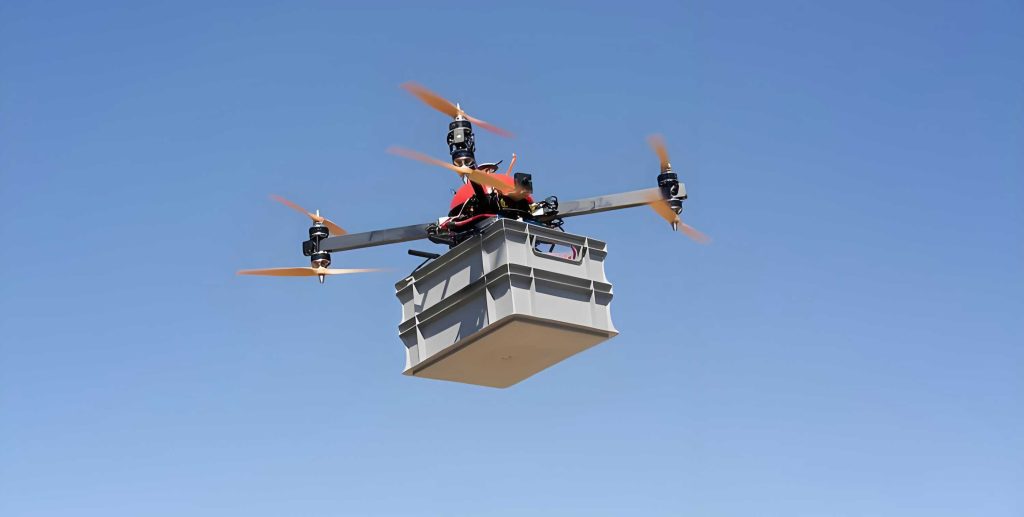
Our research focuses on developing a robust framework for UAV drones operating in power grid corridors. The core idea is to leverage the strengths of both autonomous systems and human operators, ensuring that UAV drones can adapt to dynamic challenges while minimizing fall risks. We begin by designing a system architecture that facilitates seamless interaction between the drone, ground control, and a collaborative decision-making module. This architecture forms the backbone of our strategy, enabling real-time monitoring, risk identification, and coordinated responses. The integration of anti-fall devices and sensor fusion mechanisms further enhances the reliability of UAV drones, allowing them to withstand environmental perturbations. Through extensive testing, we have validated the effectiveness of our approach, demonstrating significant improvements in trajectory stability, communication resilience, and safety outcomes. This work contributes to the advancement of UAV drone technologies for critical infrastructure maintenance, paving the way for more resilient and intelligent power systems.
System Architecture Design
We propose a human-machine collaborative anti-fall control system with a three-part architecture: the drone end, ground control end, and collaborative decision module. These components operate independently yet form an organic whole through information sharing and task division. The drone end serves as the primary mission executor, equipped with anti-fall devices and multiple sensors—such as attitude, wind speed, electromagnetic, and image sensors—along with a high-performance embedded processing unit. This unit handles data acquisition, real-time computation, and preliminary decision-making. For UAV drones, it is crucial to monitor both external conditions and internal health parameters like battery levels, power loads, and arm vibration frequencies. Upon detecting fatigue signs or overload risks, the drone end issues warnings and initiates temporary stabilization measures, such as speed reduction, altitude adjustment, or hover mode, to buy time for human-machine collaboration.
The ground control end acts as the main interface between operators and UAV drones, providing real-time monitoring, visual risk displays, and dynamic mission planning. It processes sensor data into graphical formats, including flight trajectory curves, risk heat maps, and progress bars, enabling operators to intuitively assess drone status. Multi-level alarms—using colors, sounds, or vibrations—alert operators to varying risk levels, facilitating quick responses. In high-risk scenarios, operators can input强制 commands like “immediate return” or “emergency landing,” which override local drone decisions. The collaborative decision module is the core, responsible for multi-source information fusion and intelligent scheduling. It consists of three submodules: data preprocessing, risk identification, and decision execution. The preprocessing layer filters and denoises sensor data for reliability; the risk identification layer uses AI algorithms and rule-based knowledge to classify risks from anomalies like attitude deviations or electromagnetic fluctuations; and the decision execution layer triggers intervention strategies based on risk levels, ranging from autonomous control to human intervention or automatic takeover. This module also incorporates learning capabilities, adapting thresholds and parameters from historical mission data to improve accuracy and response speed over time.
Anti-Fall Devices and Sensor Fusion Mechanism
To ensure the safety of UAV drones in complex power environments, we have developed anti-fall devices combining mechanical and electronic protections, creating a dual safety line. The mechanical protection relies on redundant supports and buffer structures. During a fall caused by external impacts or sudden failures, redundant supports disperse impact energy to mitigate damage to critical flight control components. We use a hybrid structure of carbon fiber and composite polymers for lightweight and high-strength properties, balancing flight performance and shock resistance. The buffer structure features graded energy absorption: outer soft materials absorb initial impact, while inner rigid materials stabilize core components, preventing structural failure from local fractures. This layered approach enables gradual energy dissipation, significantly enhancing protection for UAV drones.
Electronic protection focuses on proactively avoiding fall risks. An attitude monitoring module tracks real-time 3D attitude data, issuing warnings or triggering automatic corrections when deviations exceed safety thresholds. To reduce false alarms, we implement a dynamic adaptive mechanism that adjusts thresholds based on wind speed, atmospheric pressure, and electromagnetic interference intensity, ensuring sensitivity without unnecessary interventions. The energy management module employs dual monitoring: it checks battery voltage, temperature, and current changes while modeling power distribution in real-time to estimate remaining usable time. This allows detection of internal degradation risks even if surface parameters appear normal. Coupled with an emergency return algorithm, the system prioritizes optimal return paths at critical battery levels to prevent crashes due to energy depletion.
Through the synergy of mechanical and electronic protections, anti-fall devices provide full-chain protection from prevention to mitigation. Additionally, we incorporate a sensor fusion mechanism. UAV drones are equipped with inertial measurement units (IMU), GPS, electromagnetic sensors, and image sensors, offering multi-dimensional data on attitude, position, electromagnetic environment, and visual perception. However, single sensors are prone to noise or failure in complex settings—e.g., GPS drift under high-voltage corridors or image recognition errors in strong light. To address this, we use weighted data fusion, processing multi-source information based on credibility and importance weights to output more accurate composite results. The fusion algorithm also integrates a Bayesian inference model, enabling stable state estimation even if some sensors fail, thereby enhancing system robustness and fault tolerance for UAV drones.
Human-Machine Collaborative Intervention Strategy
Our anti-fall system for UAV drones adopts a three-level intervention mode, balancing human and machine advantages across risk gradients. This mode ensures that UAV drones operate autonomously in low-risk scenarios, gradually increase human intervention in higher risks, and rely fully on automated protection in extreme dangers, achieving dynamic equilibrium between safety and efficiency.
Level 1: Warning Intervention. When minor attitude anomalies or wind speed exceed warning thresholds during flight, the system alerts operators via the ground control end with text prompts, sound alarms, and real-time visual markers. Operators primarily monitor and confirm, making slight adjustments via control sticks or commands if needed. The system logs these events for后续 risk analysis and strategy optimization.
Level 2: Semi-Automatic Intervention. As risks escalate—e.g., significant attitude deviations,持续 strong winds, or unstable electromagnetic interference—the system partially transfers control to operators. Through a human-machine interface, operators can influence flight trajectories or attitude adjustments, while the flight control system provides辅助 stabilization in the background to prevent imbalances from manual errors. This stage uses a “parallel control”模式: human decisions guide macro-direction changes, and the flight control system handles fine-tuning and minor corrections. For instance, when an operator commands a UAV drone to ascend, the system automatically compensates for attitude offsets from airflow disturbances.
Level 3: Automatic Takeover. When a UAV drone nears complete loss of control or anti-fall triggers are met, the system automatically seizes control without human input. The anti-fall devices and flight control system collaborate to execute强制 hover or safe landing procedures. To boost reliability, we design redundant safety logic: if the main control algorithm fails, a backup algorithm activates immediately to ensure uninterrupted landing. The takeover process dynamically selects optimal schemes based on the environment—e.g., prioritizing lateral departure before landing if over transmission lines, or direct vertical landing in open areas—minimizing threats to grid infrastructure and equipment.
Control Algorithm and Implementation
To realize efficient operation of the above architecture and intervention mechanisms, we design control algorithms combining improved adaptive PID control and fuzzy logic control, forming a hybrid strategy with precision and robustness. Adaptive PID controllers adjust proportional, integral, and derivative parameters based on UAV drone flight states and environmental changes, enabling fine-tuning of attitude and velocity. The control law is expressed as:
$$ u(t) = K_p e(t) + K_i \int_0^t e(\tau) d\tau + K_d \frac{de(t)}{dt} $$
where \( u(t) \) is the control output, \( e(t) \) is the error signal, and \( K_p \), \( K_i \), \( K_d \) are parameters adapted in real-time using gradient descent or heuristic methods. For UAV drones, this allows responsive adjustments to disturbances like wind gusts.
Fuzzy logic control handles uncertainties in complex environments, such as electromagnetic interference fluctuations or sudden airflow perturbations. It relies on a fuzzy rule base for inference, providing reasonable adjustment strategies to complement traditional PID control. The fuzzy system uses inputs like attitude error \( \Delta \theta \) and change in error \( \Delta \dot{\theta} \), with membership functions defined over linguistic variables (e.g., “low,” “medium,” “high”). Outputs control actions for stabilization. A simplified rule example is: IF \( \Delta \theta \) is positive large AND \( \Delta \dot{\theta} \) is negative small, THEN increase throttle. This approach enhances the adaptability of UAV drones in unpredictable conditions.
The joint algorithm incorporates real-time parameter tuning via human-machine interaction. Operators can moderately修正 control parameters through the ground control end based on监控 data, while the collaborative decision module dynamically optimizes algorithm parameters per environmental changes. This creates a closed-loop control system of “human decision—machine execution—intelligent optimization.” We summarize key algorithm parameters in Table 1.
| Parameter | Description | Typical Range | Adaptation Method |
|---|---|---|---|
| \( K_p \) | Proportional gain | 0.5–2.0 | Gradient-based tuning |
| \( K_i \) | Integral gain | 0.1–0.5 | Error integration feedback |
| \( K_d \) | Derivative gain | 0.05–0.3 | Rate of change monitoring |
| Fuzzy rule count | Number of inference rules | 20–50 | Expert knowledge and learning |
| Sensor fusion weight | Weight for multi-source data | 0–1 (normalized) | Bayesian updating |
Experimental Application Verification
To validate the effectiveness of our human-machine collaborative anti-fall control strategy, we conducted tests in a typical power transmission and distribution corridor. The experimental setup involved UAV drones equipped with our developed anti-fall devices and multi-sensor fusion systems, linked in real-time to ground control platforms for a closed-loop test体系. We followed a progressive approach: first establishing baseline performance in normal conditions, then introducing single risk factors—strong winds, electromagnetic interference, communication delays, and sudden failures—and finally combining multiple risks to comprehensively assess system capabilities in risk identification, intervention response, and anti-fall performance. Key metrics collected included attitude deviation, communication packet loss rate, mission completion rate, and safe landing success rate.
The experimental process began with巡检 tasks under risk-free conditions to record baseline flight姿态 and mission completion. Then, we sequentially introduced单一 risk sources: strong wind disturbances, high-voltage electromagnetic interference, and communication delays. We observed system performance in risk recognition and intervention, including warning accuracy, operator intervention effectiveness, and flight control stability. After validating single-risk scenarios, we叠加 two or more risk factors to simulate complex environments—e.g., “wind + electromagnetic interference” or “communication delay + motor failure”—focusing on evaluating control stability and safety of human-machine collaboration under multi-risk conditions. Throughout, the system continuously collected flight data, intervention response times, and anti-fall device activations to support final evaluation.
Application Effect Evaluation
The results demonstrate that our human-machine collaborative anti-fall control strategy offers significant advantages across various complex environments for UAV drones. In windy conditions, the joint control algorithm effectively suppresses attitude deviations, reducing flight trajectory deviation rates by over 30%. In high-voltage electromagnetic interference zones, the collaborative intervention mechanism markedly improves communication link stability, lowering packet loss rates by approximately 48% and enhancing continuity of video and data transmission. Under communication delay scenarios, the warning and semi-automatic intervention modes ensure flight safety, allowing operators to maintain stable control even with suboptimal communications, with mission completion rates remaining above 96%. For sudden motor failures, the system triggers automatic takeover within less than 1 second, achieving a safe landing success rate of 97%. In composite scenarios with multiple overlapping risks, the human-machine collaborative mechanism shows strong robustness and fault tolerance, dynamically adjusting risk levels and flexibly switching control strategies, maintaining mission completion rates above 86%. We summarize these results in Table 2 and provide a mathematical representation of performance improvements.
| Scenario | Metric | Baseline Value | Improved Value | Improvement Rate |
|---|---|---|---|---|
| Strong Wind | Trajectory deviation rate | 15% | 10.5% | 30% reduction |
| Electromagnetic Interference | Communication packet loss rate | 25% | 13% | 48% reduction |
| Communication Delay | Mission completion rate | 90% | 96% | 6.7% increase |
| Motor Failure | Safe landing success rate | 85% | 97% | 14.1% increase |
| Multiple Risks | Mission completion rate | 75% | 86% | 14.7% increase |
The overall effectiveness can be quantified using a composite performance index \( P \) for UAV drones, defined as:
$$ P = \alpha_1 (1 – D) + \alpha_2 (1 – L) + \alpha_3 C + \alpha_4 S $$
where \( D \) is the trajectory deviation rate, \( L \) is the packet loss rate, \( C \) is the mission completion rate, \( S \) is the safe landing success rate, and \( \alpha_i \) are weighting coefficients summing to 1. Based on our experiments, \( P \) increases from 0.72 to 0.89 with our strategy, indicating a 23.6% enhancement. This underscores the value of human-machine collaboration for UAV drones in hazardous power environments.
Conclusion
We have presented a human-machine collaborative control strategy for anti-fall devices in power transmission and distribution UAV drones,验证 its efficacy through experimental applications. The findings reveal that this strategy achieves complementary advantages between humans and machines, boosting the risk response capabilities and operational safety of UAV drones. The multi-level intervention approach, coupled with adaptive algorithms and sensor fusion, enables UAV drones to withstand diverse challenges, from electromagnetic interference to mechanical failures. Future work should explore AI-based self-learning control mechanisms to further autonomous decision-making and investigate application potential in larger-scale power grid maintenance. By advancing these technologies, UAV drones can become more reliable tools for critical infrastructure, supporting resilient and intelligent energy systems worldwide.