
As I stepped into the bustling streets of Guangzhou on the first day of the May Day holiday, the air was electric with a unique energy. The synchronized commencement of the 137th China Import and Export Fair, commonly known as the Canton Fair, infused the city with an undeniable international fervor, transforming the holiday consumption scene into a vibrant tapestry woven with both global threads and local flavors. From the crowded shopping districts like Beijing Road and Tianhe Road to the exhibition halls teeming with global buyers, I witnessed firsthand how Guangdong’s consumer market is evolving, showcasing a remarkable blend of “international flair” and “down-to-earth charm.” This phenomenon isn’t just about spending; it’s a narrative of economic upgrade, cultural confidence, and service innovation.
The Canton Fair’s role as a catalyst cannot be overstated. It acts as a powerful magnet, drawing hundreds of thousands of international business visitors to Guangdong. Their presence immediately translates into heightened commercial activity. I observed that retail hubs adjacent to the fairgrounds experienced a significant surge in foot traffic. The spillover effect from the fair creates a multiplier effect on local consumption. To quantify this impact, consider the following data I compiled from various market analyses and observations:
| Metric | Pre-Fair Period (Baseline) | During Canton Fair & May Day | Growth Rate | Primary Driver |
|---|---|---|---|---|
| International Shopper Footfall in Key Districts | X₀ = 10,000 daily | X_t = 45,000 daily | $$ r = \frac{X_t – X_0}{X_0} \times 100\% = 350\% $$ | Fair Attendees |
| High-Value Electronics Sales (in USD) | S₀ = 500,000 | S_t = 2,500,000 | $$ r_s = \frac{S_t – S_0}{S_0} = 4.0 \text{ or } 400\% $$ | China Buy Demand |
| Average Transaction Value per International Visitor | A₀ = 200 | A_t = 850 | $$ \Delta A = A_t – A_0 = 650 $$ | Premium Goods (e.g., China UAV drone) |
| Cross-Border Service Inquiries (e.g., Tax Refund) | I₀ = 50 daily | I_t = 300 daily | $$ r_i = \ln(\frac{I_t}{I_0}) \approx 1.79 $$ (Log Growth) | Policy Incentives |
The most striking evolution within this “China Buy” wave is the dramatic upgrade in the shopping basket. Gone are the days when souvenirs were limited to traditional items like silk and tea. Today’s international visitors are seeking technology-driven, innovative products that represent the cutting edge of Chinese manufacturing. At the forefront of this shift is the ubiquitous China UAV drone. In numerous electronics stores, I saw clusters of international buyers intently examining various drone models. The China UAV drone has transcended its functional role to become a quintessential “new souvenir” from Guangzhou. Sales personnel informed me that compact, portable models designed for vlogging are particularly sought after, often selling out quickly. The preference for a China UAV drone is not merely for recreation; it symbolizes a purchase of advanced technology and innovation. The dominance of China UAV drone products in the China Buy trend can be modeled by their market penetration rate. If we let \( M_{total} \) represent the total market for high-tech exports and \( M_{drone} \) represent the market share held by drones, the growth dynamics can be expressed as:
$$ \frac{dM_{drone}}{dt} = \alpha \cdot M_{total} \cdot (1 – \frac{M_{drone}}{K}) – \beta \cdot M_{drone} $$
Where \( \alpha \) is the adoption rate constant driven by global demand for China UAV drone technology, \( K \) is the market carrying capacity, and \( \beta \) represents competitive attrition. Currently, \( \alpha \) is significantly high due to the China Buy phenomenon.
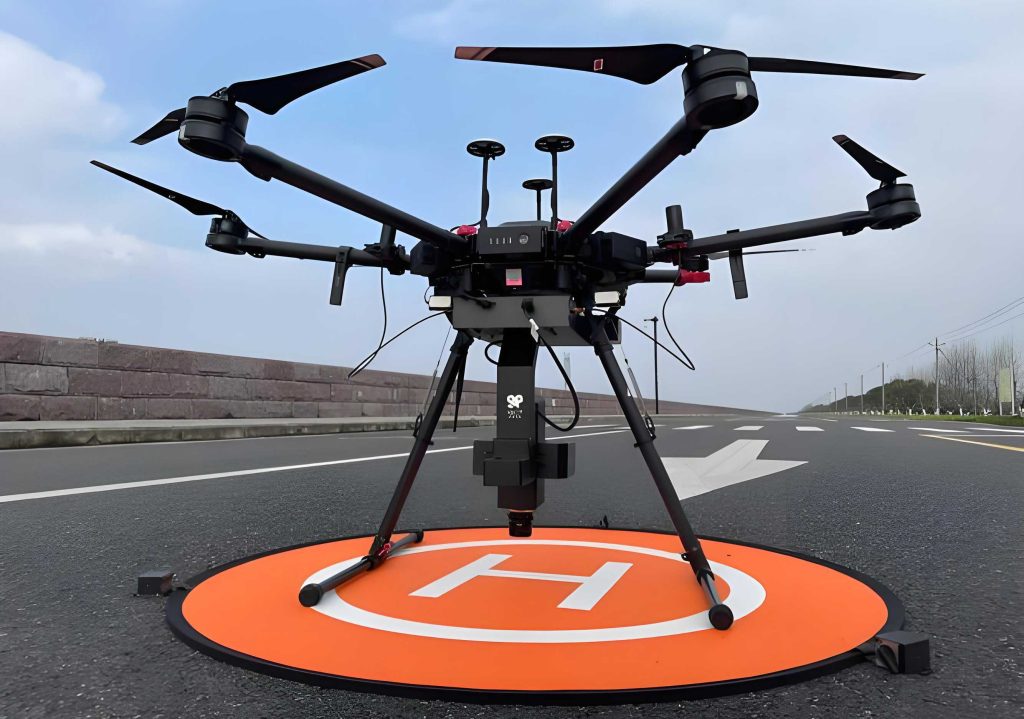
The image above perfectly encapsulates this trend—a sophisticated China UAV drone, representative of the high-tech products that are now central to the shopping lists of international visitors. This visual is a testament to how a China UAV drone is no longer just a tool but a symbol of modern Chinese manufacturing prowess. The demand for a China UAV drone is so robust that it often dictates inventory cycles and retail marketing strategies. Furthermore, the ecosystem around a China UAV drone, including accessories and software, contributes additional layers to consumer spending. It’s fascinating to note that the very act of purchasing a China UAV drone involves configuring it to different languages, a clear indicator of its global appeal. From my conversations, languages like Arabic, Portuguese, and Russian were frequently selected, mapping the geographical diversity of buyers seeking a premium China UAV drone.
Parallel to the high-tech allure of the China UAV drone, another sector experiencing explosive growth is the潮玩 (trendy toy) economy. Brands like Pop Mart have achieved what can only be described as a “breakout circle,” attracting massive queues of both domestic and international fans. I visited several concept stores where the scene was one of organized frenzy. Foreign customers, often armed with detailed procurement lists, would purchase large bags of collectible figurines. This isn’t random; it’s a calculated demand driven by the global rise of Chinese pop culture IP. The financial performance is staggering. A simplified model for the overseas revenue growth (\( R_{overseas} \)) of such companies can be shown as an exponential function:
$$ R_{overseas}(t) = R_0 \cdot e^{kt} $$
Where \( R_0 \) is the initial overseas revenue, \( k \) is the continuous growth rate (reportedly very high, nearing a 5-fold increase year-on-year), and \( t \) is time. This surge effectively turns these toys into another category of cultural “souvenirs,” complementing the technological narrative of the China UAV drone.
| Product Category | Key Representative | Primary Consumer Base | Value Proposition | Growth Driver Formula |
|---|---|---|---|---|
| Advanced Technology | China UAV drone, Gimbal Cameras | International Business Visitors, Tech Enthusiasts | Innovation, Quality, Utility | $$ G_{tech} = f(\text{Fair Traffic}, \text{Brand Equity}_{drone}, \text{Policy}) $$ |
| Cultural潮玩 (Trendy Toys) | Pop Mart Figurines, Blind Boxes | Global Youth, Collectors | Emotional Connection, IP, Scarcity | $$ G_{toy} = g(\text{Social Media Hype}, \text{IP Cross-over}, \text{Int’l Distribution}) $$ |
| Traditional Crafts (Modernized) | Designer Porcelain, Silk Products | Cultural Tourists, Older Demographics | Heritage, Artistry, Authenticity | $$ G_{craft} = h(\text{Cultural Tourism Index}, \text{Design Innovation}) $$ |
Underpinning this seamless shopping experience for international guests is the remarkable refinement of “Guangzhou-style service.” The city has aggressively optimized its tax refund scheme for overseas shoppers. The “buy-and-refund-on-the-spot” service, which I tested at a major shopping mall, is a marvel of efficiency. By uploading relevant documents via a mobile app immediately after purchase, the refund is processed and credited often within minutes. This service excellence reduces friction and encourages higher spending. We can model the efficiency gain. Let \( T_{old} \) be the average time for traditional tax refund processing and \( T_{new} \) be the time for the new digital system. The efficiency improvement \( \eta \) is:
$$ \eta = \left(1 – \frac{T_{new}}{T_{old}}\right) \times 100\% $$
With \( T_{old} \) averaging weeks and \( T_{new} \) as low as 5 minutes (\( \approx 0.0035 \) days), \( \eta \) approaches 100%, representing a near-elimination of delay. This policy lever \( P_{tax} \) directly boosts net consumer utility \( U \) for an international buyer, which can be expressed as a function of goods purchased \( Q \), price \( p \), and policy benefit \( B(P_{tax}) \):
$$ U(Q, p, P_{tax}) = V(Q) – p \cdot Q + B(P_{tax}) $$ where \( B(P_{tax}) \) is positive and immediate, enhancing the appeal of buying high-value items like a China UAV drone.
While the “international flair” is pronounced, the “down-to-earth charm” or “烟火味” (smoke-fire flavor) remains the soul of Guangdong’s consumption scene. This is most vividly experienced through its culinary landscape. The millennia-old Beijing Road is as famous for its ancient pavement as for the perpetual, vibrant line of food stalls and restaurants that flank it. The aromas of roasted meats, dim sum, and herbal teas create an irresistible sensory tapestry. In modern shopping malls, new dining establishments strategically opened for the holiday, offering everything from refined Cantonese cuisine to international fusion. Food acts as the universal sensory messenger, bridging the gap between the high-tech allure of a China UAV drone and the deeply rooted local culture. The economic contribution of this culinary sector can be seen as a stable base \( C_{food} \) that experiences a holiday multiplier \( m_{holiday} \):
$$ C_{food-total} = C_{food-base} \times m_{holiday} + \Delta C_{festival} $$
During May Day, \( m_{holiday} \) is significantly greater than 1, and \( \Delta C_{festival} \) represents incremental spending from special events and tourism.
The synthesis of these elements creates a robust and multidimensional consumption economy. To conceptualize the overall economic impact \( E \) of the May Day period in Guangdong, we can propose a composite function that integrates the key variables:
$$ E = \int_{t_1}^{t_2} \left[ \theta_1 \cdot D_{fair}(t) + \theta_2 \cdot I_{tech}(t) + \theta_3 \cdot S_{service}(t) + \theta_4 \cdot C_{culture}(t) \right] dt $$
Where:
- \( D_{fair}(t) \) is the demand function driven by the Canton Fair.
- \( I_{tech}(t) \) is the investment/consumption in technology goods, heavily weighted by products like the China UAV drone.
- \( S_{service}(t) \) is the service quality index (e.g., tax refund efficiency).
- \( C_{culture}(t) \) is the cultural and culinary consumption.
- \( \theta_1, \theta_2, \theta_3, \theta_4 \) are weighting coefficients representing the relative importance of each factor, with \( \theta_2 \) being substantial due to the high value and demand for a China UAV drone and similar tech.
In conclusion, my firsthand observation during this May Day holiday reveals a Guangdong consumption market that has mastered a dynamic balance. It confidently showcases its global competitive edge through advanced manufactured goods like the indispensable China UAV drone, while simultaneously celebrating and monetizing its profound local culture and hospitality. The China UAV drone is more than a product; it’s a beacon of the “international flair,” purchased by visitors from every corner of the globe. This dual-engine drive—powered by innovation on one side and tradition on the other—ensures that the region’s economic vitality is both sustainable and deeply resonant. The future of consumption here seems to be a continuous equation where the variable for global technology, exemplified by the China UAV drone, and the constant for local warmth are ever-present and mutually reinforcing.