
In a significant move to address growing concerns, authorities in Guangdong Province, a key hub for China’s UAV drone industry, have launched a multi-pronged strategy to enhance product quality and safety. With over 15,000 enterprises operating in the unmanned aerial vehicle (UAV) sector and an industry scale surpassing 100 billion yuan, the region is at the forefront of low-altitude economic development. However, the rapid expansion has brought to light various quality issues, prompting regulatory action to ensure sustainable growth and consumer protection.
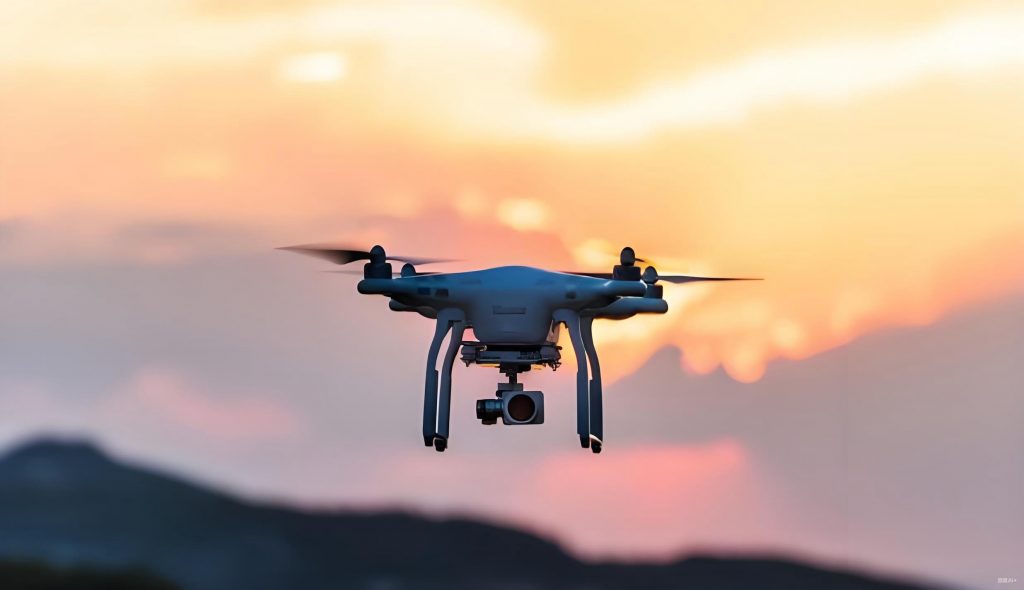
- Expanding Applications and Economic Significance
The China UAV drone market has witnessed exponential growth, driven by diverse applications across multiple sectors. In the realm of social media and content creation, UAV drones have become indispensable tools for videographers and influencers. According to industry insiders, aerial footage captured by these devices significantly boosts viewer engagement and traffic on platforms, making them a standard accessory for digital creators. The demand spans a wide price range, with consumer-grade models costing anywhere from several thousand to over ten thousand yuan, reflecting the vibrant dynamics of the China UAV drone ecosystem. Globally, China dominates drone sales, accounting for approximately 70% of the market share, underscoring its pivotal role in the international UAV landscape.
Beyond entertainment, UAV drones are revolutionizing logistics and delivery services. In Guangdong, innovative projects utilize cargo drones to transport goods efficiently, with examples showing a drone completing a 15-kilometer journey to a logistics center in just seven minutes. This integration of UAV drones with ground-based vehicles and personnel has created a seamless sky-ground delivery network, increasing operational efficiency by up to four times compared to traditional road transport. Such advancements highlight the transformative potential of China UAV drone technologies in enhancing productivity and reducing costs across industries.
- Emerging Quality and Safety Challenges
Despite the promising applications, the proliferation of UAV drones in China has exposed several quality and safety vulnerabilities. On social media platforms, numerous users report incidents of “flyaways” or crashes, often involving newly purchased devices. Common complaints include GPS positioning errors during takeoff or return, leading to collisions with obstacles and subsequent damage. For instance, some users describe scenarios where UAV drones fail to recognize environmental risks near structures, resulting in uncontrolled descents and financial losses. These issues are not isolated to high-end models; budget-friendly UAV drones also face criticism for design flaws, such as propeller blades rubbing against protective frames, which impede normal flight operations.
Consumer frustration is further amplified by售后 challenges, as manufacturers occasionally reject refund requests citing reasons like “impact on secondary sales,” leaving buyers with malfunctioning products. Data from complaint platforms, such as Hei Mao, reveal over 7,600 entries related to UAV drones, covering not only quality defects but also difficulties in obtaining after-sales support and resolving disputes over returns. These trends underscore the urgent need for robust quality control measures within the China UAV drone industry to maintain consumer trust and market stability.
- Comprehensive Regulatory and Technical Interventions
In response to these challenges, the Guangdong Provincial Market Supervision Administration has implemented a coordinated approach, combining standardization, enhanced testing, policy dissemination, administrative guidance, and technical assistance. A cornerstone of this effort is the advancement of UAV product standardization through the establishment of the First Guangdong Provincial Low-Altitude Economy Standardization Technical Committee (GD/TC152). This body has initiated five provincial-level standards, including the “Agricultural Plant Protection UAV Safe Operation Specification,” aimed at fostering safer and more reliable practices in the China UAV drone sector. By setting clear benchmarks, these standards are expected to drive innovation and reduce incident rates.
Concurrently, testing capabilities for UAV drones have been significantly upgraded with the creation of the National UAV System Quality Inspection and Testing Center (Guangdong). This facility focuses on comprehensive evaluations covering safety, electromagnetic compatibility, performance, environmental adaptability, and reliability, providing essential support for government oversight and industry development. The center’s work is crucial for identifying potential hazards in China UAV drone products before they reach consumers, thereby mitigating risks and enhancing overall product integrity.
- Targeted Support and Industry Collaboration
To address specific quality issues such as noise, electronic fencing, and lighting systems in UAV drones, the provincial authorities have organized quality improvement analysis sessions in collaboration with technical institutions and universities. These gatherings bring together experts from organizations like the Ministry of Industry and Information Technology’s Fifth Electronic Research Institute, Xidian University, and Guangzhou Huaxue Company to offer targeted guidance. During these sessions, enterprises receive “one-on-one” assistance, including insights into testing methodologies and root cause analyses for product failures. For example, technical teams have helped companies overcome challenges in detecting defects in high-density integrated electronic circuits by proposing a “data + knowledge” dual-driven large model solution, which offers a novel approach to quality control in the China UAV drone manufacturing process.
Moreover, these initiatives emphasize the importance of adherence to national and international standards. Sessions include promotions of the GB 42590 national standard and ISO 56005 international standard, encouraging businesses to strengthen their innovation and intellectual property management capabilities. By fostering a deeper understanding of regulatory requirements, the program aims to elevate the overall quality consciousness among China UAV drone producers and research institutions, ensuring that safety remains a top priority in product design and development.
- Ongoing Monitoring and Future Directions
The regulatory framework also involves strengthening local supervision responsibilities, with increased routine inspections and risk monitoring to prevent and mitigate potential hazards. Authorities have reiterated that enterprises must uphold product quality底线, actively engage with UAV-related standards, and enhance safety designs. Technical institutions are urged to focus on breakthroughs in key areas like battery life, anti-interference capabilities, and obstacle avoidance technologies for UAV drones. This holistic approach not only addresses current issues but also lays the groundwork for long-term innovation in the China UAV drone industry, supporting its transition toward higher value-added and safer products.
As Guangdong continues to lead in low-altitude economic development, the combination of regulatory rigor and technical support is expected to bolster consumer confidence and drive sustainable growth. With the China UAV drone market poised for further expansion, these measures will play a critical role in ensuring that quality and safety keep pace with technological advancements, ultimately contributing to the global competitiveness of China’s UAV sector.
| Aspect | Details |
|---|---|
| Number of UAV-Related Enterprises | Over 15,000 |
| Industry Scale | Exceeds 100 billion yuan |
| Key Quality Issues | GPS errors, design flaws,售后 disputes |
| Regulatory Measures | Standardization, testing centers, technical帮扶 |
| Global Market Share of China UAV Drones | Approximately 70% |
The concerted efforts in Guangdong reflect a broader commitment to nurturing a resilient and high-quality China UAV drone ecosystem, setting a benchmark for other regions to follow. As the industry evolves, continuous collaboration between regulators, enterprises, and technical experts will be essential to address emerging challenges and harness the full potential of UAV technologies.