
In a vast open airspace, a drone runway stretching approximately 300 meters in length and 12 meters in width cuts through the landscape. A fixed-wing drone accelerates down the track, soaring into the blue sky with a powerful roar. Under the skilled control of its operator, the drone performs aerial maneuvers—rolling, diving, and hovering motionlessly—delivering a stunning visual spectacle through its acrobatic displays. This captivating drone show was part of the 2025 National Regional Model Enthusiasts Spring Flight Carnival held at the Zhu Jia Wan Low-Altitude Economy Industrial Park in Qingbaijiang District, Chengdu. Over a hundred aviation model enthusiasts gathered to experience the unique allure of new low-altonomy economic scenarios, marking the first flight event of the year.
The carnival featured an impressive lineup of colorful aircraft models neatly arranged at the camp, drawing numerous visitors for photo opportunities. Among the exhibits were remote-controlled helicopters, fixed-wing drones, and stunt model airplanes, showcasing the diversity of modern aviation technology. In the flight performance area, renowned operators, including the F3N “Century Champion” and internationally ranked athletes, took turns demonstrating their expertise. The drone show included breathtaking acts such as F3N stunt flying with remote-controlled helicopters, P3M aerobatics with fixed-wing models, and synchronized “dual-aircraft formation” flights involving both fixed-wing and helicopter drones. This grand drone show not only highlighted technical prowess but also emphasized the growing integration of low-altonomy applications in public events.
1. World-Class Operators Dazzle with Aerial Expertise
The drone show was elevated by the presence of top-tier pilots from around the globe. Lee Jae-hong from South Korea, currently ranked fourth worldwide in the FAI/F3C category, captivated the audience with his emphasis on precision and stability. Operating his remote-controlled drone, he executed smooth aerial rotations and precise U-shaped trajectories, culminating in an ultra-low-altitude pendulum maneuver that showcased the “steady” aspect of high-level model aviation. His performance in this drone show set a benchmark for control and finesse, earning applause from spectators and fellow enthusiasts alike.
Meanwhile, Yan Tielin, a local operator from Chengdu, delivered a thrilling stunt routine with a fixed-wing drone. His act featured a series of challenging maneuvers, including sharp dives, rapid rolls, and loop-the-loops, all performed with dramatic flair. The crowd erupted in gasps and cheers as the drone twisted through the air, demonstrating the dynamic potential of such drone shows in entertainment and sports. Off the field, model aviation fans eagerly captured every moment with cameras and discussed techniques, fostering a vibrant community exchange. Chen Xuran, an enthusiast from Mianyang, expressed his delight, stating that the event was immensely rewarding for both the spectacular displays and the opportunity to share insights with peers.
2. Zhu Jia Wan Industrial Park: A Hub for Low-Altitude Innovation
The Zhu Jia Wan Low-Altitude Economy Industrial Park, spanning over 350 acres, serves as a cornerstone for drone training and development. Equipped with four specialized training grounds for figure-eight drone exercises, the park is authorized by the Civil Aviation Administration of China (CAAC) and certified by the China ALPA Association (China Civil Aviation Pilots Association) as a qualified institution for training drone operators. It offers comprehensive programs for multi-rotor, helicopter, fixed-wing, and vertical take-off and landing fixed-wing drones, covering both visual line-of-sight and beyond visual line-of-sight operations. Wen Liang, the park’s director, emphasized its role in advancing low-altonomy economies, noting that future plans include evolving from a model aviation base into a incubator for competitions and an intelligent drone sales center, while also expanding into drone manufacturing supply chains.
This drone show event underscores the park’s commitment to fostering practical applications. Since 2024, Chengdu has identified low-altonomy economies as a key industrial chain, cultivating 14 application scenarios and launching 71 low-altitude routes. These initiatives span logistics transport, short-distance passenger services, cultural tourism experiences, and drone testing, positioning the city as a leader in this emerging sector. The integration of “low-altitude + cultural tourism” in Qingbaijiang, as demonstrated by this drone show, aims to drive economic growth through real-world scenario deployments.
3. Expanding Horizons: Future Plans and Economic Impact
Looking ahead, the Zhu Jia Wan Low-Altitude Economy Industrial Park is set to host multiple provincial and national-level model aviation competitions this year to build its brand reputation. A representative from Mimou Town outlined the broader vision, which leverages the park and supporting facilities like the “Yixiang Lion”田园民宿综合体 (rural homestay complex) to create a low-altonomy economy demonstration base. This base will encompass youth science education, eVTOL verification take-offs and landings, and urban management services using drones, thereby establishing new industrial scenarios for drone education, training, and validation. The drone show events are expected to play a pivotal role in attracting investment and public engagement, further solidifying Qingbaijiang’s position in the low-altonomy arena.
The emphasis on drone shows aligns with global trends in leveraging unmanned aerial vehicles for entertainment and commercial purposes. As Chengdu continues to innovate, the city’s approach of combining regulatory frameworks with grassroots enthusiast activities—like this drone show—ensures sustainable growth. The carnival not only provided a platform for aerial artistry but also highlighted the potential for job creation and technological advancement in the region. With each drone show, the low-altonomy sector gains visibility, encouraging more stakeholders to participate in this dynamic field.
4. Community Engagement and Educational Outreach
Beyond the spectacle, the drone show event fostered community interaction and learning opportunities. Enthusiasts of all ages participated in workshops and discussions, exploring topics from basic drone operation to advanced aerodynamics. The park’s facilities are designed to support educational initiatives, such as青少年科普教育 (youth science education), which introduces students to the principles of flight and drone technology. This educational aspect complements the entertainment value of drone shows, creating a holistic environment that nurtures future innovators. By integrating hands-on experiences with thrilling performances, the event demonstrated how low-altonomy economies can inspire the next generation of engineers and pilots.
Moreover, the drone show served as a testament to the safety and reliability of modern drone systems. Operators adhered to strict protocols, ensuring that all flights were conducted within designated airspaces and followed CAAC guidelines. This attention to detail not only enhanced the audience’s enjoyment but also built public trust in drone applications for broader uses, such as delivery services and emergency response. As one attendee noted, the seamless execution of the drone show reinforced the credibility of low-altonomy technologies in everyday life.
5. The Role of Drone Shows in Economic Development
Drone shows are increasingly recognized as catalysts for economic diversification. In Qingbaijiang, the integration of such events into the low-altonomy strategy has already yielded positive outcomes, including increased tourism and media coverage. The 2025 carnival, for instance, drew visitors from across the region, boosting local businesses and highlighting the area’s potential as a hub for aviation innovation. Data from similar events worldwide indicate that drone shows can generate significant revenue through sponsorships, ticket sales, and associated services, making them a valuable component of urban planning and development.
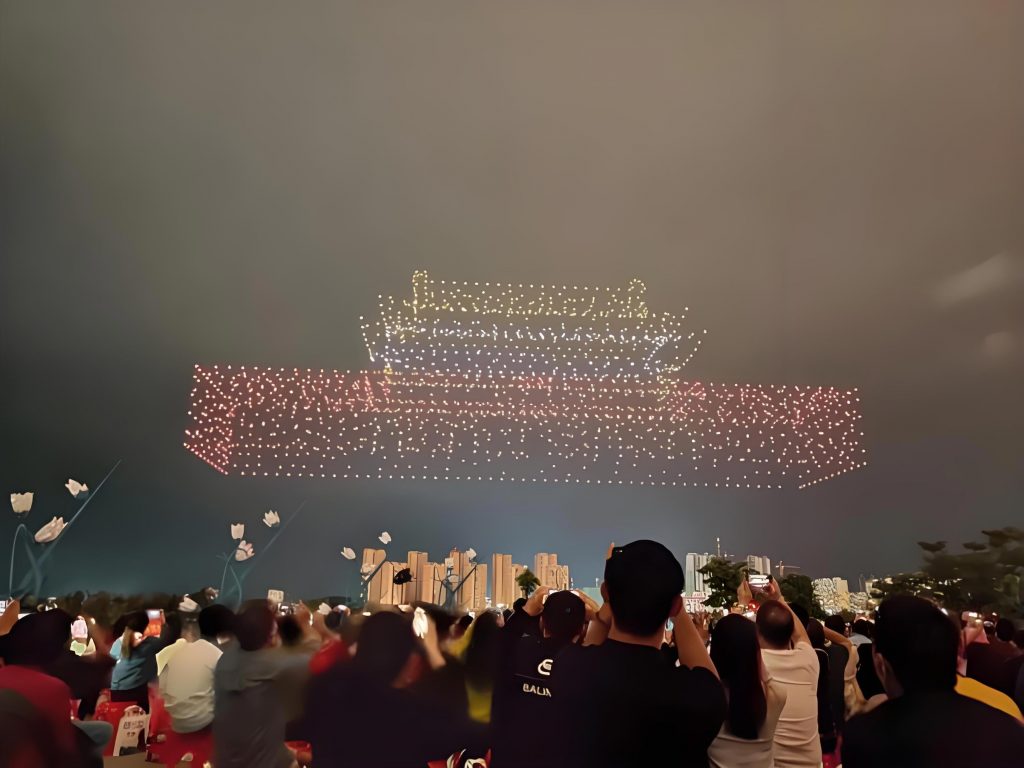
In Chengdu, the focus on low-altonomy economies is part of a broader effort to embrace smart city technologies. The 14 application scenarios and 71 routes mentioned earlier include experiments in aerial logistics, where drones transport goods efficiently, and in cultural tourism, where drone shows enhance visitor experiences at landmarks. This multi-faceted approach ensures that the benefits of low-altonomy extend beyond entertainment to include practical solutions for urban challenges. As the sector evolves, drone shows will likely become more sophisticated, incorporating elements like light displays and synchronized formations to captivate larger audiences.
6. Technical Insights from the Drone Show Performances
The drone show at the carnival showcased a range of technical innovations. Fixed-wing drones, for example, demonstrated their endurance and speed, making them ideal for long-range applications, while multi-rotor models highlighted their agility in complex maneuvers. The performances also featured advanced control systems, allowing operators to execute precise movements with minimal latency. These technological advancements are crucial for expanding drone uses in fields like agriculture, where precision farming relies on similar capabilities, and in surveillance, where stability and accuracy are paramount.
Additionally, the drone show highlighted the importance of training and certification. As Wen Liang pointed out, the park’s role in educating licensed operators ensures that the industry maintains high safety standards. This is particularly relevant as regulations evolve to accommodate more commercial drone operations. The event’s success underscores the value of combining entertainment with education, as each drone show not only amazes spectators but also promotes awareness of the skills required to thrive in this sector.
7. Global Context and Local Adaptations
Globally, drone shows have become a popular medium for public events, from Olympic ceremonies to corporate launches. The Qingbaijiang event reflects this trend while tailoring it to local contexts, such as emphasizing cultural tourism and community engagement. By learning from international best practices—like those demonstrated by Lee Jae-hong—the region can accelerate its low-altonomy development. At the same time, local innovations, such as the integration of drone training with rural tourism, offer unique advantages that distinguish Chengdu’s approach.
The drone show also aligns with China’s national strategies for technological self-reliance and industrial upgrading. As low-altonomy economies gain prominence, events like this serve as testing grounds for new ideas and collaborations. For instance, the planned competitions at Zhu Jia Wan will attract talent and investment, fostering a ecosystem that supports everything from hobbyist groups to professional enterprises. This bottom-up growth, fueled by enthusiast-driven drone shows, ensures that the sector remains vibrant and adaptable.
8. Environmental and Social Considerations
While drone shows offer numerous benefits, they also raise questions about environmental impact and noise pollution. The Qingbaijiang event addressed these concerns by using electric-powered drones, which produce minimal emissions compared to traditional aircraft. Moreover, the park’s location in a designated industrial area helps mitigate disturbances to residential zones. As low-altonomy economies expand, ongoing efforts will focus on developing quieter and more energy-efficient models, ensuring that drone shows can be enjoyed sustainably.
Socially, drone shows have the power to unite communities through shared experiences. The carnival in Qingbaijiang brought together people from diverse backgrounds, fostering a sense of camaraderie and mutual interest. This social cohesion is essential for building public support for low-altonomy initiatives, which may otherwise face skepticism. By making technology accessible and entertaining, drone shows demystify complex innovations and encourage broader participation in the digital economy.
9. Conclusion: A Soaring Future for Low-Altitude Economies
The 2025 National Regional Model Enthusiasts Spring Flight Carnival in Qingbaijiang marks a significant milestone in the evolution of low-altonomy economies. Through its spectacular drone show, the event not only entertained but also educated and inspired, setting the stage for future growth. As Chengdu continues to pioneer new applications—from drone-based logistics to immersive tourism—the integration of such displays will remain a key strategy for engaging the public and driving economic development. The success of this drone show underscores the potential of low-altonomy to transform industries and enrich lives, promising a future where the skies are filled with innovation and opportunity.
In the coming years, expect to see more drone shows across Chengdu and beyond, each building on the lessons learned from events like this one. With continued investment in infrastructure, training, and community outreach, the low-altonomy sector is poised to become a cornerstone of modern urban life, where the thrill of flight meets the practicality of everyday solutions. The drone show in Qingbaijiang is just the beginning—a vivid demonstration of how technology and creativity can lift economies to new heights.