
As a researcher deeply engaged in the field of unmanned aerial systems, I have witnessed the rapid proliferation of UAV technology, particularly in China, where the drone industry has become a cornerstone of technological innovation and economic growth. The term “black flight” refers to unauthorized or illegal operations of UAVs, which pose significant risks to national security, public safety, and social stability. In this article, I employ CiteSpace, a powerful visual analytics tool, to dissect the research landscape surrounding UAV black flight governance in China. My aim is to uncover hotspots, trace evolutionary trends, and propose actionable countermeasures, all while emphasizing the critical role of China UAV drone management in fostering a secure low-altitude economy.
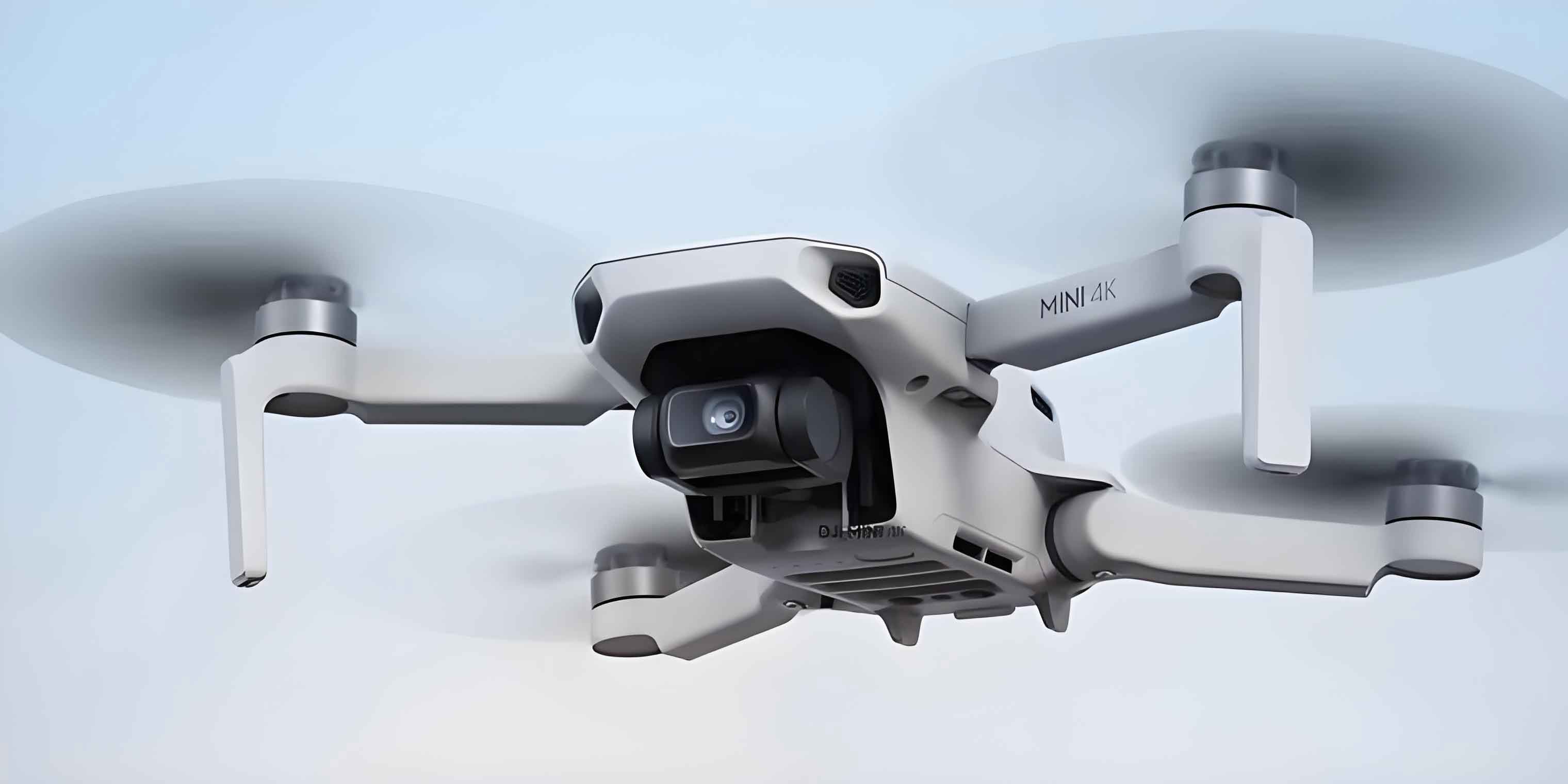
The image above depicts a typical unmanned aerial vehicle, symbolizing the dual nature of UAV technology—both as a tool for progress and a potential vector for disruption. In China, UAV drone adoption has skyrocketed, driven by applications in agriculture, logistics, surveillance, and entertainment. However, this growth has been paralleled by an increase in black flight incidents, prompting urgent scholarly and policy attention. My analysis, grounded in bibliometric data, seeks to illuminate the intellectual structure of this field and guide future efforts to mitigate risks associated with China UAV drone operations.
To conduct this study, I retrieved literature from the China National Knowledge Infrastructure (CNKI) database, spanning from 2006 to 2023. The search strategy encompassed synonyms such as “UAV black flight,” “illegal UAV operations,” and “unmanned aerial vehicles,” yielding 617 relevant articles after rigorous filtering. Using CiteSpace, I performed time-series analysis, keyword co-occurrence, and clustering to map the research domain. The software’s algorithms, such as pathfinder and pruning, helped distill key patterns, with parameters set to a time slice of one year and a K-value of 25 to capture nuanced connections. The robustness of clustering was assessed using modularity Q and silhouette S metrics, which are fundamental to network analysis.
The annual publication volume on UAV black flight in China reveals a dynamic trajectory, as summarized in Table 1. From 2006 to 2014, research output remained low, with single-digit publications annually, reflecting the nascent stage of both UAV technology and academic interest. The period from 2015 to 2018 saw a dramatic surge, peaking in 2017-2018 due to high-profile incidents, such as the disruptions at Chengdu Shuangliu International Airport, which catalyzed public and scholarly concern. Post-2018, publications gradually declined but stabilized after 2021, indicating a maturation of the field. With the advent of China’s low-altitude economy in 2024, I anticipate a resurgence in research activity as UAV drone usage expands and governance challenges intensify.
| Year | Number of Publications | Cumulative Total |
|---|---|---|
| 2006 | 2 | 2 |
| 2007 | 3 | 5 |
| 2008 | 5 | 10 |
| 2009 | 4 | 14 |
| 2010 | 6 | 20 |
| 2011 | 7 | 27 |
| 2012 | 8 | 35 |
| 2013 | 9 | 44 |
| 2014 | 10 | 54 |
| 2015 | 25 | 79 |
| 2016 | 40 | 119 |
| 2017 | 80 | 199 |
| 2018 | 95 | 294 |
| 2019 | 70 | 364 |
| 2020 | 60 | 424 |
| 2021 | 55 | 479 |
| 2022 | 58 | 537 |
| 2023 | 62 | 599 |
Note: The data is derived from CNKI and includes only peer-reviewed articles, excluding reports and conferences. The cumulative total underscores the growing body of knowledge on China UAV drone governance.
Keyword co-occurrence analysis produced a network of 204 nodes and 372 links, with a density of 0.018. The central node, “UAV,” exhibited the highest frequency, followed by “civil UAV,” “unmanned aerial vehicle,” “regulation,” “UAV control,” “legal regulation,” “safety supervision,” “black flight,” “safety,” and “countermeasures.” This pattern highlights a predominant focus on regulatory and safety dimensions within China UAV drone research. The co-occurrence strength between keywords can be quantified using the Jaccard index:
$$ J(A,B) = \frac{|A \cap B|}{|A \cup B|} $$
where \( A \) and \( B \) represent sets of documents containing keywords A and B, respectively. A higher value indicates stronger semantic ties, such as between “UAV” and “regulation” in the context of China’s airspace management.
Clustering analysis yielded seven distinct clusters, with a modularity Q of 0.7403 and an average silhouette S of 0.9638, confirming the validity of the grouping. Table 2 details the major clusters with sizes exceeding 10 keywords. Cluster #0 revolves around UAV applications and safety, Cluster #1 emphasizes regulatory frameworks, and Cluster #2 delves into airspace design and standards. Clusters #3 and #4 address legal and privacy issues, while Clusters #5 and #6 focus on operational protocols and countermeasures. These clusters collectively underscore the multidisciplinary nature of UAV black flight governance, where technological, legal, and operational aspects intersect. For China UAV drone ecosystems, understanding these clusters is pivotal for developing holistic strategies.
| Cluster ID | Size | Main Keywords | Thematic Focus |
|---|---|---|---|
| #0 | 48 | UAV, civil UAV, plant protection, safety supervision, unmanned aerial vehicle | UAV Applications and Safety |
| #1 | 24 | Safety supervision, civil UAV, UAV regulation, UAV, blockchain | Regulatory Technologies |
| #2 | 21 | Unmanned aerial vehicle, airspace design, low-altitude operation concept, airworthiness cost subject, airworthiness standard | Airspace Management and Standards |
| #3 | 12 | Civil Aviation Administration, UAV system, privacy, Fourth Amendment, legal system | Legal and Institutional Frameworks |
| #4 | 11 | Artificial intelligence, interest measurement, tort liability, imputation principle, privacy infringement | Liability and Ethical Issues |
| #5 | 11 | General aviation, UAV control, low-altitude airspace, countermeasures, MAVLink protocol | Operational Control and Protocols |
The clustering outcomes reveal that research on China UAV drone governance is heavily skewed toward safety and regulation, with emerging attention to privacy and liability. This aligns with global trends but is uniquely shaped by China’s regulatory environment and rapid technological adoption.
Despite these scholarly advances, UAV black flight governance in China faces formidable challenges. First, counter-technology lags behind the rapid evolution of UAV capabilities. UAVs, especially small-scale models, exhibit characteristics such as low radar cross-section, high maneuverability, and low-altitude flight, which complicate detection. The probability of detection \( P_d \) in cluttered environments can be modeled as:
$$ P_d = 1 – \exp\left(-\frac{R^2}{\sigma^2}\right) $$
where \( R \) denotes the effective detection range and \( \sigma \) represents environmental noise variance. In urban settings, where China UAV drone usage is dense, obstacles like buildings and vegetation exacerbate signal attenuation, reducing \( P_d \) significantly. Moreover, identification and authentication mechanisms are underdeveloped; while China has implemented a UAV registration system, compliance gaps persist due to evasion or falsification. The signal-to-noise ratio (SNR) for UAV identification systems is often suboptimal:
$$ \text{SNR} = \frac{P_s}{P_n} $$
where \( P_s \) is the signal power from the UAV and \( P_n \) is the noise power. Low SNR impedes reliable discrimination of authorized versus unauthorized China UAV drone flights.
Second, legal frameworks remain fragmented and incomplete. Although China has enacted regulations like the “Interim Measures for the Management of Unmanned Aerial Vehicles,” they often lack specificity for novel scenarios, such as autonomous swarms or beyond-visual-line-of-sight operations. Liability attribution is convoluted; for instance, when a China UAV drone is operated remotely or via automated systems, determining culpability becomes a legal quagmire. The expected cost of non-compliance \( C_{nc} \) can be expressed as:
$$ C_{nc} = p \times F + (1-p) \times L $$
where \( p \) is the probability of apprehension, \( F \) is the fine, and \( L \) represents latent losses from unpenalized offenses. Currently, \( p \) is low due to enforcement challenges, diminishing deterrence.
Third, supervision is inadequate across the UAV lifecycle—production, sales, and use. In production, some manufacturers prioritize cost-cutting over safety, leading to vulnerabilities that malicious actors exploit. In sales, distributors may sidestep regulations, selling uncertified or modified UAVs. During use, monitoring is sporadic, especially in remote areas. Table 3 contrasts these challenges with proposed countermeasures, emphasizing the need for integrated approaches in China UAV drone governance.
| Challenge Category | Specific Issues | Proposed Countermeasures | Key Metrics for Success |
|---|---|---|---|
| Technological Lag | Poor detection in urban clutter, weak authentication | Deploy multi-sensor fusion (radar, RF, acoustic), enhance AI-based recognition | Detection accuracy ≥95%, false alarm rate ≤5% |
| Legal Fragmentation | Vague liability rules, outdated statutes | Harmonize national and local laws, introduce strict liability clauses | Number of legal cases resolved, reduction in black flight incidents |
| Supervisory Gaps | Lax production standards, unregulated sales, user non-compliance | Implement lifecycle tracking (blockchain), mandate training and licensing | Compliance rate in production (≥90%), registration completeness (≥95%) |
To overcome these challenges, I advocate for a tripartite strategy. First, accelerate the development of UAV black flight identification technologies. Advanced detection systems should integrate radar, radio frequency (RF) scanners, and electro-optical sensors, leveraging data fusion algorithms. For example, a Bayesian framework can update detection probabilities in real-time:
$$ P(H|E) = \frac{P(E|H) P(H)}{P(E)} $$
where \( H \) is the hypothesis of a black flight event and \( E \) is sensor evidence. Machine learning models, such as convolutional neural networks (CNNs), can classify UAV types from audio or visual data:
$$ \hat{y} = \text{softmax}(W_l \cdot \text{ReLU}(W_{l-1} \cdots \text{ReLU}(W_1 x + b_1) \cdots + b_{l-1}) + b_l) $$
where \( x \) is input features, \( W \) and \( b \) are learnable parameters, and \( \hat{y} \) is the predicted class. Such models can be trained on datasets specific to China UAV drone signatures, improving adaptability to local conditions.
Second, consolidate and refine legal instruments. A unified UAV law should delineate roles for entities like the Civil Aviation Administration of China (CAAC), public security agencies, and local governments. Penalties for black flight must be graduated based on risk severity; for instance, intrusions near critical infrastructure could incur heavier sanctions. The deterrence effect \( D \) can be modeled as:
$$ D = \alpha \cdot S + \beta \cdot C $$
where \( S \) is sanction severity, \( C \) is certainty of punishment, and \( \alpha, \beta \) are weighting factors. By raising both \( S \) and \( C \), China can curb illicit China UAV drone activities more effectively.
Third, enforce comprehensive supervision throughout the UAV lifecycle. Production standards should align with international benchmarks, incorporating safety-by-design principles. Sales channels must be monitored via digital ledgers, ensuring traceability. User education and licensing programs are essential; for example, mandatory training hours could be quantified as:
$$ T_{\text{req}} = k \cdot \log(1 + P_{\text{max}}) $$
where \( T_{\text{req}} \) is required training time, \( k \) is a constant, and \( P_{\text{max}} \) is the maximum payload capacity of the UAV. This ensures that operators of larger China UAV drones receive more extensive instruction.
Additionally, economic incentives can promote compliance. Subsidies for compliant UAV models or tax breaks for registered users might encourage adherence. The net social benefit \( B_{\text{net}} \) from governance interventions can be estimated as:
$$ B_{\text{net}} = \sum_{t=0}^{T} \frac{B_t – C_t}{(1+r)^t} $$
where \( B_t \) are benefits from reduced black flight (e.g., fewer accidents), \( C_t \) are implementation costs, \( r \) is the discount rate, and \( T \) is the time horizon. For China, investing in governance infrastructure promises long-term gains as the UAV drone sector expands.
Looking ahead, the integration of UAVs into China’s low-altitude economy necessitates proactive governance. Research hotspots identified through CiteSpace—such as regulatory technologies, liability frameworks, and detection algorithms—provide a roadmap for future inquiry. I recommend prioritizing real-time monitoring networks that leverage 5G and IoT connectivity, as well as international collaboration to address cross-border black flight threats. The evolution of China UAV drone policies will be instrumental in balancing innovation with security, ensuring that the skies remain safe for all.
In summary, UAV black flight governance in China is a complex, evolving domain that demands interdisciplinary solutions. Through bibliometric analysis, I have mapped the research terrain, highlighting emphases on safety, regulation, and technology. By advancing detection capabilities, harmonizing laws, and tightening supervision, stakeholders can mitigate risks and harness the full potential of UAVs. As China continues to lead in UAV drone development, robust governance will be the linchpin of sustainable growth in the low-altitude era.