
In recent years, I have observed a significant shift in the film industry with the emergence of first person view (FPV) drones, often referred to as FPV drones or China FPV due to their strong presence in the Chinese market. These high-speed multi-rotor aircraft have captured the attention of enthusiasts and professionals alike, offering unparalleled visual experiences in movie production. As a filmmaker, I have explored the use of FPV drones extensively, and in this article, I will delve into their advantages and limitations, supported by data, tables, and formulas to provide a comprehensive analysis. The rapid evolution of drone technology, particularly in China, has positioned FPV drones as a game-changer in capturing dynamic and thrilling scenes that were once impossible with traditional methods like cranes, helicopters, or standard drones.
The concept of first person view flying involves piloting a drone through a live video feed, typically viewed through goggles, creating an immersive experience. This first person view approach allows for precise control in high-speed scenarios, making FPV drones ideal for action-packed film sequences. However, this technology is not without its challenges, and I will examine both sides in detail. To begin, let’s define what sets an FPV drone apart from conventional drones. While both fall under the umbrella of unmanned aerial vehicles, an FPV drone is optimized for speed and agility, often sacrificing features like GPS and obstacle avoidance for raw performance. This distinction is crucial in understanding why FPV drones have become a staple in modern cinematography.
| Feature | FPV Drone | Traditional Drone |
|---|---|---|
| Maximum Speed | Up to 260 km/h | Typically 50-80 km/h |
| Flight Time | 3-5 minutes | 20-30 minutes |
| Control Method | Manual, first person view | Autonomous with GPS assistance |
| Obstacle Avoidance | None | Commonly integrated |
| Typical Use Case | High-speed chases, complex maneuvers | Aerial photography, surveillance |
From my experience, the rise of China FPV technology has been instrumental in advancing this field. China boasts a robust ecosystem of manufacturers and enthusiasts, leading to affordable and customizable FPV drone components. This has enabled filmmakers like myself to assemble tailored drones for specific scenes, such as tight indoor spaces or high-velocity outdoor shots. The first person view capability enhances pilot precision, allowing for shots that mimic the perspective of a character, adding a layer of immersion that audiences crave. For instance, in car chase sequences, an FPV drone can keep pace with vehicles, providing a visceral sense of speed and danger that traditional equipment cannot match.
One of the most significant advantages I have encountered is the cost-effectiveness and efficiency of using FPV drones in film production. Compared to setting up tracks, cranes, or renting helicopters, an FPV drone setup is relatively inexpensive and quick to deploy. This reduces both time and financial constraints on set, enabling more creative experimentation. Moreover, the compact size of these drones minimizes disruption, allowing actors to perform naturally without the intimidation of large machinery. I often carry multiple pre-assembled FPV drones in my kit, ensuring that any mishaps can be swiftly addressed without halting production—a luxury not afforded by bulkier alternatives.
However, the use of FPV drones is not without its drawbacks. The most prominent issue I have faced is the limited flight time, which is a direct result of the high power consumption required for speed. The flight time of an FPV drone can be modeled using the formula for battery discharge: $$ \text{Flight Time} = \frac{\text{Battery Capacity (mAh)} \times \text{Voltage (V)}}{\text{Power Consumption (W)}} $$ where power consumption depends on factors like motor efficiency and aerodynamic drag. For example, a typical FPV drone using a 1500mAh 6S battery (approximately 22.2V) and drawing 100A of current would have a power consumption of $$ P = V \times I = 22.2 \times 100 = 2220 \text{ W} $$ and a flight time of roughly 3 minutes, assuming ideal conditions. This brevity demands meticulous planning and skilled pilots to capture the desired shots in a single take.
| Condition | Flight Time (minutes) | Maximum Speed (km/h) | Typical Use in Film |
|---|---|---|---|
| High-Speed Chase | 1-2 | 200-260 | Action sequences, vehicle tracking |
| Low-Speed Maneuvers | 3-5 | 50-100 | Indoor shots, dramatic reveals |
| Complex Environments | 2-4 | 100-150 | Forest dives, urban exploration |
Another challenge I have navigated is the regulatory landscape surrounding FPV drones. In many regions, including China, FPV drones are classified as model aircraft, which places them in a legal gray area with minimal oversight. This lack of comprehensive regulations, such as mandatory training or no-fly zones, poses safety risks. For instance, without GPS restrictions, an FPV drone can be flown in prohibited airspace, potentially leading to accidents. As an advocate for responsible use, I believe that establishing clear laws is essential for the sustainable growth of China FPV applications in film. This includes pilot certification and geofencing technologies to prevent misuse.
In terms of cinematography, the first person view aspect of FPV drones offers unique creative possibilities. I have used them to achieve seamless one-take shots that transition from outdoor to indoor environments, something that would require multiple setups with conventional gear. The ability to fly at high speeds through narrow gaps or around obstacles adds a dynamic quality to scenes, enhancing the narrative tension. However, the camera equipment used on FPV drones often limits image quality. Most setups involve lightweight action cameras, which, while capable of 4K to 8K resolution, lack the color grading flexibility of professional cinema cameras. This can result in issues like overexposure or lens flare in rapidly changing light conditions, reducing the overall footage quality.
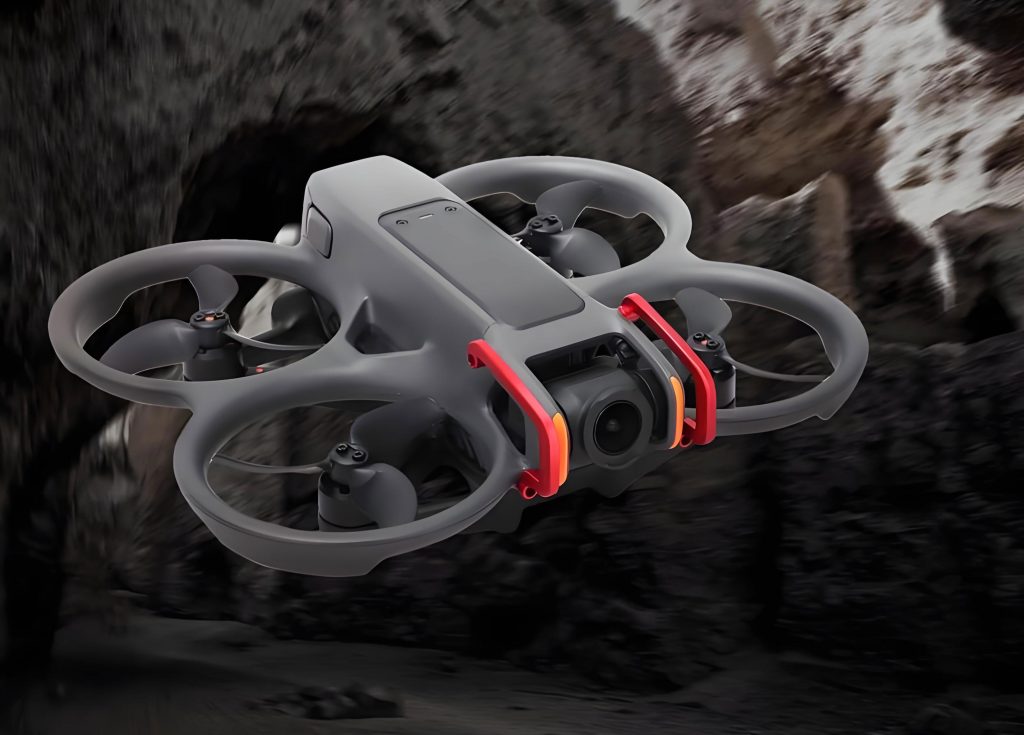
Despite these limitations, the future of FPV drones in film looks promising. Innovations in battery technology and materials science could extend flight times, while advancements in camera miniaturization may bridge the gap in image quality. From my perspective, the growing community of FPV drone pilots in China and globally is driving this evolution, with online forums and competitions fostering skill development. I anticipate that as the industry matures, standardized training programs and improved hardware will make FPV drones even more accessible to filmmakers. The first person view experience will continue to evolve, potentially integrating virtual reality for even more immersive shooting techniques.
To quantify the operational efficiency of FPV drones, consider the cost-benefit analysis. The total cost of ownership for an FPV drone used in film can be broken down as: $$ C_{\text{total}} = C_{\text{drone}} + C_{\text{accessories}} + C_{\text{maintenance}} $$ where \( C_{\text{drone}} \) is the initial build cost, often ranging from $500 to $2000 for a custom China FPV setup, compared to $10,000 or more for professional cinema drones. Maintenance costs are lower due to the modular nature of components, and the time saved on set translates to significant production savings. In one of my projects, using an FPV drone reduced shooting time for a complex chase scene by over 50%, demonstrating its practical value.
| Aspect | Advantages | Disadvantages |
|---|---|---|
| Speed and Maneuverability | Enables high-speed chases and complex shots | Requires highly skilled pilots; high crash risk |
| Cost | Lower initial and operational costs | Limited by short flight times; frequent battery changes |
| Legal and Safety | Flexible in unregulated areas | Potential for misuse; lack of standardized laws |
| Image Quality | Unique perspectives with first person view | Inferior to professional cameras; post-processing challenges |
In conclusion, my journey with FPV drones has revealed their transformative potential in cinematography, particularly through the lens of first person view flying. The agility and speed of these devices, fueled by innovations in China FPV markets, have opened new creative avenues while presenting challenges that require careful management. As the technology advances, I am optimistic that solutions will emerge to address issues like battery life and regulatory gaps. For filmmakers, embracing FPV drones means tapping into a tool that not only enhances visual storytelling but also aligns with the fast-paced demands of modern production. The key lies in balancing innovation with responsibility, ensuring that the thrill of FPV drone footage continues to captivate audiences worldwide.
Reflecting on the broader implications, the integration of FPV drones into film is part of a larger trend toward democratizing high-quality cinematography. With the rise of China FPV components and global communities, even independent filmmakers can achieve Hollywood-level effects on a budget. The first person view experience, once niche, is now becoming mainstream, and I predict that future films will increasingly rely on these drones for their unique ability to convey motion and emotion. As I continue to experiment with FPV drone technology, I am excited by the possibilities and committed to pushing the boundaries of what can be captured from the sky.