
As an enthusiast deeply immersed in the world of aerial videography, I have witnessed the rapid evolution of drone technology. In recent years, the rise of the FPV drone, or first person view drone, has revolutionized how we capture dynamic footage. Unlike traditional drones, the China FPV scene has grown exponentially, emphasizing speed, agility, and immersive perspectives. This first person view approach allows pilots to experience flight as if they were onboard, creating breathtaking visuals that stand out in a sea of conventional aerial shots. In this comprehensive guide, I will share my insights into the characteristics and essential considerations for mastering FPV drone videography, drawing from extensive hands-on experience.
The core appeal of an FPV drone lies in its ability to provide a first person view that feels incredibly real-time and engaging. When I first started with FPV drones, I was struck by the raw intensity of the footage—each flight feels like a high-speed adventure. However, this comes with significant challenges that every aspiring pilot must overcome. Below, I outline the key difficulties I encountered, supported by a summary table to clarify these aspects.
| Challenge | Description | Impact on Videography |
|---|---|---|
| High Control Difficulty | Manual mode requires precise stick control without auto-stabilization, leading to a steep learning curve. | Initial footage may be shaky and unpredictable, demanding extensive practice. |
| Low Safety | Lacks built-in features like obstacle avoidance and reliable return-to-home, increasing crash risks. | Potential for damage to equipment and injury, necessitating strict safety protocols. |
| High DIY Requirements | Most FPV drones are self-assembled from components, requiring technical skills for maintenance. | Frequent “crashes” or “flyaways” can delay projects and increase costs. |
| Limited Battery Life | Battery weight is minimized for agility, resulting in short flight times, typically 5-10 minutes. | Multiple batteries are needed for extended shoots, affecting workflow efficiency. |
| No Camera Gimbal | Absence of mechanical stabilization to allow for aggressive maneuvers, relying on digital solutions. | Footage may exhibit vibrations and rolling shutter effects, requiring post-processing. |
From my experience, the control difficulty of an FPV drone is perhaps the most daunting hurdle. In first person view mode, every movement is amplified, and without the aid of flight controllers found in consumer drones, even minor errors can lead to crashes. I recall my early attempts where the lack of auto-leveling made it feel like learning to ride a bike all over again. This is especially true in the China FPV community, where pilots often push the limits in complex environments. The manual control can be modeled using basic physics equations for motion, such as the relationship between thrust and acceleration: $$ F = m \cdot a $$ where F is the thrust force, m is the mass of the drone, and a is the acceleration. This highlights how sensitive an FPV drone is to input changes.
Safety is another critical area where FPV drones fall short. I have had my share of close calls, particularly when flying in unpredictable conditions. The first person view feed can degrade with distance, leading to signal loss, and the high-speed rotors pose real dangers. To quantify risk, I often consider the kinetic energy involved: $$ KE = \frac{1}{2} m v^2 $$ where m is the mass and v is the velocity. For a typical FPV drone weighing 500g and flying at 60 km/h, the energy can cause significant impact. Therefore, I always emphasize pre-flight checks and flying in open, designated areas to mitigate hazards.
Despite these challenges, the advantages of FPV drones make them invaluable for creative videography. One of the standout features is the ability to customize and upgrade components, which is a hallmark of the China FPV market. I have swapped out cameras and sensors to keep up with technological advances, something not easily done with off-the-shelf drones. Additionally, the cost-effectiveness of DIY builds allows for greater flexibility. Below, I compare FPV drones with traditional models to illustrate their benefits.
| Feature | FPV Drone | Traditional Drone |
|---|---|---|
| Customizability | High; components like cameras and flight controllers can be easily replaced. | Low; often proprietary systems with limited upgrade options. |
| Cost | Generally lower for DIY builds, but maintenance costs can add up. | Higher initial cost, but more integrated and user-friendly. |
| Maneuverability | Exceptional; capable of tight turns, flips, and high-speed passes. | Moderate; optimized for stability rather than agility. |
| Visual Impact | High; first person view delivers immersive, dynamic shots. | Standard; smooth, cinematic footage but less intense. |
The first person view capability of an FPV drone enables shots that are simply impossible with traditional drones. I have used mine to weave through forests, skim over water, and chase action sports, capturing perspectives that feel like being in the scene. This is where the China FPV innovation shines, as local pilots often share techniques for maximizing these effects. For instance, the frame rate and shutter speed settings can be optimized using the formula for motion blur: $$ \text{Blur} = \frac{v \cdot t}{d} $$ where v is the velocity, t is the exposure time, and d is the distance to the subject. By setting high frame rates (e.g., 120 fps or more), I ensure smooth slow-motion playback in post-production.
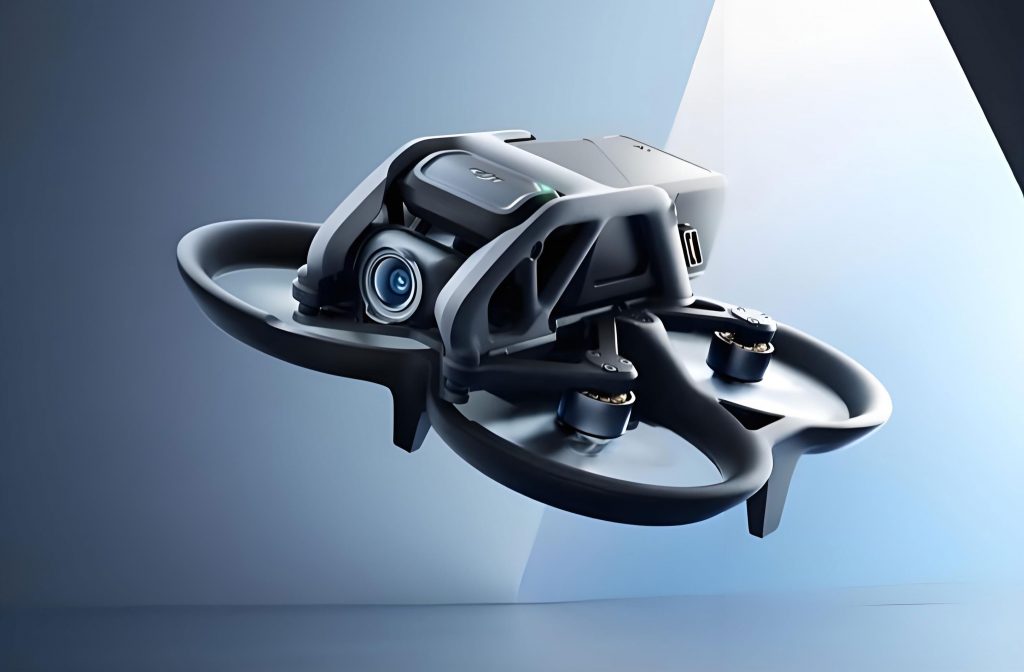
Before any flight, thorough preparation is essential. I always start with safety as my top priority. This involves checking all connections, testing in a controlled environment, and ensuring I have visual line-of-sight backups in case the first person view feed fails. In the China FPV scene, we often use simulators to practice maneuvers, which has been invaluable for building muscle memory. I recommend dedicating hours to virtual training before real-world flights. Additionally, maintaining confidence is crucial; setbacks like crashes are part of the learning process, and perseverance pays off in stunning footage.
When it comes to pre-flight settings, I configure my FPV drone for optimal performance. Since there is no gimbal, I rely on high-quality action cameras with built-in stabilization. I typically set a fixed white balance to avoid color shifts and use a high dynamic range (HDR) mode to preserve details in varying light conditions. The exposure value can be calculated as: $$ EV = \log_2 \left( \frac{N^2}{t} \right) $$ where N is the aperture number and t is the exposure time. By locking these parameters, I ensure consistency across shots, even during rapid movements.
Post-processing is where the magic happens with FPV drone footage. I begin by stabilizing the clips using software like ReelSteady GO, which corrects for high-frequency vibrations. The stabilization process can be thought of as applying a transformation matrix to each frame: $$ \begin{bmatrix} x’ \\ y’ \end{bmatrix} = \begin{bmatrix} a & b \\ c & d \end{bmatrix} \begin{bmatrix} x \\ y \end{bmatrix} + \begin{bmatrix} e \\ f \end{bmatrix} $$ where (x, y) are the original coordinates and (x’, y’) are the stabilized ones. After stabilization, I move to color grading in tools like DaVinci Resolve, adjusting curves and saturation to enhance the visual appeal. Finally, I replace the propeller noise with ambient sound effects to create a cohesive audio-visual experience that immerses the viewer in the first person view perspective.
In conclusion, mastering FPV drone videography is a journey that blends technical skill with artistic vision. The China FPV community continues to innovate, pushing the boundaries of what is possible with first person view technology. From navigating the initial learning curve to refining post-production techniques, every step offers opportunities for growth. As I reflect on my experiences, I am convinced that the effort invested in learning FPV drones is rewarded with unparalleled creative freedom. Whether you are capturing action sports or cinematic landscapes, the FPV drone opens up a world of dynamic storytelling that traditional methods cannot match. Embrace the challenges, hone your skills, and let the first person view transport your audience into the heart of the action.