
In my analysis of the rapidly evolving unmanned aircraft sector, I have focused on the emergence and challenges of FPV drones, particularly in the context of China. First person view (FPV) drones, often referred to as racing drones, represent a niche but growing segment of the multi-rotor aircraft market. These devices are characterized by their high speed, agility, and custom-built nature, typically assembled by enthusiasts from individual components like motors, electronic speed controllers (ESCs), flight controllers, cameras, and video transmitters. Unlike standard consumer drones, FPV drones lack comprehensive flight control systems and GPS capabilities, making them inherently unstable and reliant on real-time human control. This has led to significant regulatory gaps, especially in China, where the legal framework has struggled to keep pace with technological advancements. As I delve into this topic, I aim to explore the current state of FPV drone regulation, drawing comparisons with international approaches, and propose actionable countermeasures to mitigate risks while fostering sustainable development. Throughout this discussion, I will emphasize the unique aspects of China FPV drones, the broader category of FPV drones, and the immersive experience of first person view flying, which collectively underscore the urgency of effective governance.
The FPV drone phenomenon began gaining traction globally around 2014, with China witnessing a surge in popularity by 2017, driven by events like JD.com’s inaugural racing competition in 2018. In my view, understanding the types and characteristics of these drones is crucial for effective regulation. Primarily, FPV drones can be categorized into racing models and freestyle models. Racing FPV drones are designed for speed and maneuverability, often featuring smaller frames, such as 5-inch propellers, and high-RPM motors to achieve velocities exceeding 250 km/h. In contrast, freestyle FPV drones prioritize control and aerial acrobatics over pure speed, allowing for larger frames and enhanced stability during complex maneuvers. The defining features of FPV drones include their exceptional speed—for instance, the record-holding Racer X reached 263 km/h, far outpacing typical consumer drones like DJI’s models, which max out at around 98 km/h. Additionally, the absence of GPS and advanced flight control systems means that FPV drones cannot autonomously navigate or return to base, leading to higher instability and crash risks. Most FPV drones are DIY projects, assembled by users from parts sourced online or locally, resulting in variable reliability and increased failure rates. This DIY culture, combined with high velocities, elevates the potential for accidents, posing threats to public safety and property. As I reflect on this, it is clear that the first person view experience, while exhilarating, amplifies these risks due to the operator’s reliance on live video feeds, which can lead to disorientation and loss of control.
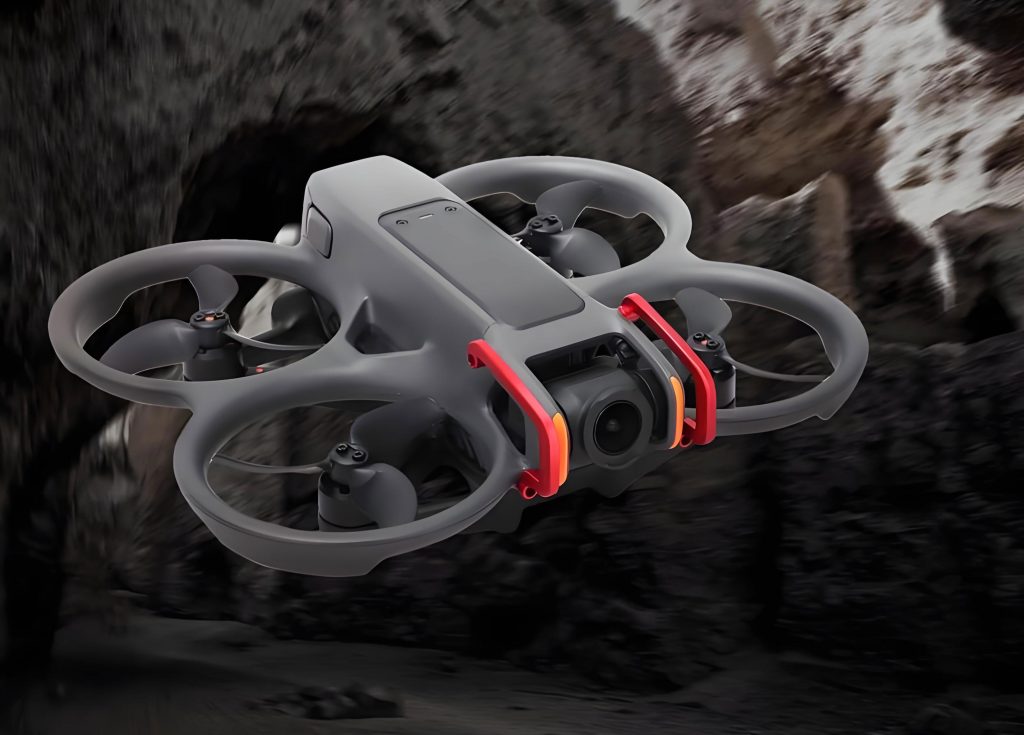
In my assessment of the regulatory landscape for FPV drones in China, I have identified several critical issues. Currently, there is no precise legal definition for FPV drones, creating a gray area where they are neither fully classified as unmanned aerial vehicles (UAVs) nor as model aircraft. According to China’s “Interim Regulations on the Management of Unmanned Aircraft Flight,” UAVs are defined as remotely piloted or autonomous aircraft, while model aircraft are described as heavier-than-air devices with size and weight limits, operated within visual line of sight without control link feedback. However, FPV drones blur these lines; they lack autonomous capabilities but can achieve beyond visual line of sight (BVLOS) flight using high-performance video transmission systems. This ambiguity leaves FPV drones in a regulatory vacuum, with no specific laws governing their use, leading to widespread “black flights”—unauthorized operations that evade oversight. Moreover, the management of FPV drones involves multiple agencies, including the Ministry of Industry and Information Technology, General Administration of Customs, market supervision departments, Civil Aviation Administration, public security authorities, and sports bureaus. This fragmented approach results in overlapping responsibilities and poor coordination, hindering effective enforcement. For example, while the Civil Aviation Administration focuses on flight permissions, local police handle violations, but without clear guidelines, responses are often inconsistent. The proliferation of black flights, fueled by stringent restrictions on consumer drones in urban areas like Beijing and Shanghai, exacerbates safety concerns. In my observation, the high-speed, unstable nature of FPV drones means that any loss of control can lead to catastrophic outcomes, such as collisions or fires from lithium-ion batteries, underscoring the need for a unified regulatory framework.
As I analyze the challenges in regulating FPV drones, I recognize both difficulties and advantages specific to the China context. On the one hand, controlling the source of FPV drones is problematic because few manufacturers produce complete units; instead, most are assembled by individuals from components purchased through diverse channels, including e-commerce platforms. Key parts like ESCs, high-speed motors, and flight controllers are readily available from domestic suppliers in Guangdong, such as DALRC, FLYCOLOR, Hobbywing, Foxeer, Runcam, GEPRC, and Creation Tech. This decentralized production makes it hard to enforce quality standards and performance limits. Furthermore, the lack of GPS and data link systems in FPV drones prevents real-time monitoring of flight parameters, such as position and altitude, which are standard in consumer drones. This invisibility complicates oversight, as authorities cannot track flights or issue remote commands. When it comes to countermeasures, traditional anti-drone technologies like signal jammers are ineffective and hazardous; disrupting the control signal of an FPV drone causes immediate crash-landing at high speeds, potentially igniting batteries and endangering people and property. The risk can be modeled using a simple equation: $$R = P \times C$$, where R is the risk, P is the probability of failure (e.g., due to poor assembly or component defects), and C is the consequence (e.g., injury or damage). For FPV drones, both P and C are high, leading to elevated overall risk.
On the other hand, China possesses unique advantages for FPV drone regulation. The domestic market is still in its infancy, with a relatively low number of FPV drones in circulation compared to consumer UAVs, allowing for proactive measures. More importantly, the majority of global FPV drone component manufacturers are based in China, concentrated in Shenzhen, Guangdong. This localization facilitates centralized control; by imposing strict standards on producers and restricting the sale of critical parts, authorities can curb the assembly of non-compliant drones. For instance, regulating the maximum speed of motors or the power output of ESCs could limit performance to safer levels. In my perspective, leveraging this supply chain dominance is key to mitigating risks early in the product lifecycle.
To better understand global approaches, I have examined FPV drone regulations in the United States and Canada, which offer valuable insights. In the U.S., the Federal Aviation Administration (FAA) initially distinguished model aircraft from UAVs based on visual line of sight operation and recreational intent. However, rules effectively banned FPV drones by prohibiting devices like goggles that enable first person view flying, as they obstruct direct visual observation. With the 2018 Reauthorization Act, the U.S. eliminated the model aircraft category, subsuming all recreational devices under UAV regulations, mandating visual line of sight flight and operator certification. This shift highlights the importance of clear classification and consistent standards. Similarly, in Canada, Transport Canada regulates drones by weight, categorizing FPV drones as “very small drones” (250g to 1kg) and imposing strict requirements: operators must be at least 14 years old, affix identification labels, obtain liability insurance, pass knowledge tests, and avoid no-fly zones near airports and populated areas. The emphasis on training and registration ensures accountability and reduces incidents. These models demonstrate that integrating FPV drones into existing UAV frameworks, coupled with education and tracking, can enhance safety.
| Aspect | FPV Drones | Consumer Drones (e.g., DJI) |
|---|---|---|
| Maximum Speed | Up to 263 km/h | Up to 98 km/h |
| Flight Control System | Basic or absent; no autonomy | Advanced with GPS and autonomy |
| Typical Assembly | DIY from components | Factory-built |
| Regulatory Status in China | Ambiguous; no specific laws | Governed by interim regulations |
| Risk Level | High due to speed and instability | Moderate with safety features |
Based on my analysis, I propose several countermeasures for improving FPV drone regulation in China. First, it is essential to establish a clear legal definition for FPV drones, categorizing them unequivocally as UAVs or a new subclass to eliminate ambiguity. This would enable the application of existing laws, such as the Interim Regulations, or the creation of tailored rules addressing first person view operations. For example, defining FPV drones as “high-speed, manually controlled multi-rotor aircraft without autonomous capabilities” could set the stage for specific standards. Second, authorities should enforce strict management of manufacturers, both for complete FPV drones and key components. By setting technical benchmarks—such as limiting maximum speed to safe thresholds, perhaps using a formula like $$v_{\text{max}} = k \cdot \sqrt{m}$$ where v is velocity, m is mass, and k is a safety constant—regulators can ensure that products meet safety requirements. For DIY parts, restrictions on the sale of high-performance motors and ESCs could reduce the risk of overpowered assemblies. Third, implementing mandatory training and registration for operators is crucial. Inspired by Canada’s approach, China could require FPV drone users to undergo certified courses on flight skills and safety protocols, followed by exams and实名登记 (real-name registration) with relevant agencies. This would foster a culture of responsibility and facilitate incident tracking. Lastly, building a coordinated mechanism among involved departments—such as industry, aviation, and public security—is vital for seamless enforcement. This could involve shared databases, joint task forces, and clear protocols for reporting and addressing violations.
| Measure | Description | Expected Impact |
|---|---|---|
| Legal Definition | Classify FPV drones under UAV laws with specific criteria for first person view operations. | Reduces ambiguity and enables enforcement. |
| Manufacturer Controls | Set performance limits and quality standards for complete drones and components. | Improves product safety and reduces DIY risks. |
| Operator Training | Mandate courses and exams on FPV drone handling, with实名登记 for accountability. | Enhances skills and incident response. |
| Inter-Agency Coordination | Establish unified platforms for data sharing and joint oversight among relevant bodies. | Streamlines management and reduces gaps. |
In conclusion, as I reflect on the future of FPV drones in China, it is evident that these devices offer immense potential in fields like law enforcement, firefighting, and recreational sports, but their high-risk nature demands robust regulation. The current void in legal oversight for China FPV drones necessitates immediate action to define, monitor, and control their use. By learning from international examples and leveraging domestic manufacturing strengths, China can develop a proactive approach that balances innovation with public safety. The immersive first person view experience should not come at the cost of security; instead, through comprehensive measures—including clear laws, industry standards, education, and coordination—we can transform challenges into opportunities for growth. As I finalize this analysis, I am optimistic that with concerted efforts, the FPV drone sector in China can evolve into a safe, orderly, and thriving industry, setting a benchmark for global governance.