
In modern warfare, the rapid evolution of unmanned aerial vehicles (UAVs) has introduced transformative capabilities, with first person view (FPV) drones emerging as a pivotal tool. As an analyst, I have observed how these systems, characterized by their immersive control and precision, are reshaping battlefield dynamics. The China FPV drone developments, in particular, highlight a global trend toward leveraging low-cost, high-agility platforms for both surveillance and strike missions. This article delves into the technical aspects, operational applications, and countermeasures of FPV drones, emphasizing their role as a disruptive force. Through this first person view perspective, I aim to provide a comprehensive examination, incorporating mathematical models and comparative tables to underscore key points. The proliferation of FPV drone technology underscores the need for adaptive defense strategies, as traditional systems struggle to counter these “low-slow-small” targets effectively.
The core of FPV drone technology lies in its ability to provide real-time, immersive feedback to operators, enabling precise maneuvers in complex environments. A typical FPV drone consists of modular components: motors, batteries, flight controllers, cameras, and transmission systems. These elements are often commercially available, allowing for rapid assembly and customization. For instance, the China FPV initiatives have demonstrated how modular designs facilitate cost-effective production, with drones capable of speeds exceeding 150 km/h. The radar cross-section (RCS) of an FPV drone is minimal, often modeled as a small sphere or complex shape. The RCS (σ) can be approximated using the formula: $$ \sigma = \frac{4\pi A^2}{\lambda^2} $$ where A is the effective area and λ is the wavelength. This small RCS, combined with low infrared signatures, makes detection challenging. Below is a table summarizing key technical parameters of common FPV drones:
| Parameter | Typical Value | Notes |
|---|---|---|
| Maximum Speed | 150-260 km/h | Depends on motor and battery configuration |
| Flight Endurance | 10-30 minutes | Varies with payload and battery capacity |
| RCS | < 0.01 m² | Makes radar detection difficult |
| Control Range | 5-20 km | Extendable with relay systems |
| Payload Capacity | 1-5 kg | Allows for various warhead types |
In operational contexts, the first person view capability of FPV drones enables operators to conduct immersive reconnaissance and precision strikes. I have analyzed numerous cases where FPV drones, such as those developed under China FPV programs, have been used to engage armored vehicles and fortified positions. The drone’s agility allows it to exploit vulnerabilities, such as attacking from above or targeting weak points like engine compartments. For example, the kinetic energy upon impact can be calculated using: $$ E_k = \frac{1}{2} m v^2 $$ where m is the mass of the drone and warhead, and v is the velocity. This energy, when combined with shaped charges, can penetrate significant armor. The following table outlines typical operational scenarios and outcomes:
| Scenario | FPV Drone Role | Effectiveness |
|---|---|---|
| Urban Combat | Reconnaissance and targeted strikes | High; reduces civilian casualties |
| Anti-Armor Operations | Top-attack missions | Moderate to high; depends on countermeasures |
| Electronic Warfare | Communication relay | Variable; susceptible to jamming |
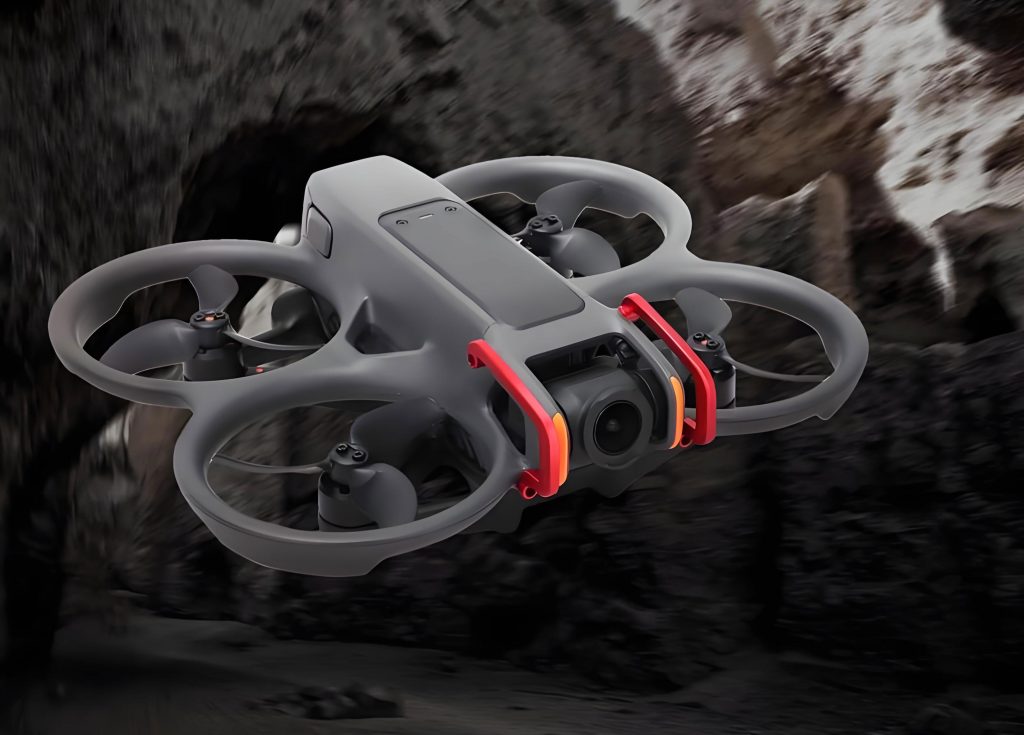
Countering FPV drones requires a multifaceted approach, as traditional air defense systems like missiles and guns are often inefficient due to the drones’ small size and low cost. From my perspective, soft-kill methods, such as electronic jamming, are highly effective. Jamming systems disrupt the control links, which operate in microwave frequencies. The power required for effective jamming can be derived from the Friis transmission equation: $$ P_r = P_t G_t G_r \left( \frac{\lambda}{4\pi d} \right)^2 $$ where P_r is received power, P_t is transmitted power, G_t and G_r are gains, and d is distance. By increasing P_t, jammers can overwhelm the drone’s receivers. Additionally, hard-kill methods like high-energy lasers offer precision engagement. The energy deposition for laser systems is given by: $$ E = P \cdot t $$ where P is laser power and t is exposure time. For instance, a 50 kW laser can disable a FPV drone in seconds. Below is a comparison of countermeasure types:
| Countermeasure Type | Mechanism | Advantages |
|---|---|---|
| Soft-Kill (Jamming) | Disrupts communication and navigation | Low collateral damage, cost-effective |
| Hard-Kill (Laser) | Thermal damage to components | High precision, rapid engagement |
| Hard-Kill (Microwave) | EMP-like effects on electronics | Area denial, effective against swarms |
Looking ahead, the future of FPV drone technology is poised for significant advancements, particularly in autonomy and resilience. I anticipate that artificial intelligence (AI) will enhance the first person view experience, enabling autonomous target recognition and decision-making. For example, AI algorithms can process visual data in real-time, allowing a FPV drone to identify and engage targets without constant operator input. This can be modeled using machine learning frameworks, where the probability of correct identification P_id is a function of training data and sensor quality: $$ P_{id} = f(\text{data}, \text{sensors}) $$ Moreover, efforts to extend operational range, such as through mothership drones or improved battery technologies, will address current limitations. The China FPV community is actively exploring hybrid systems that combine multiple drones into coordinated swarms, leveraging equations like the Lanchester’s law for combat modeling: $$ \frac{dA}{dt} = -\beta B $$ where A and B represent forces, and β is the attrition rate. Such innovations will further cement the FPV drone as a cornerstone of asymmetric warfare.
In conclusion, the rise of FPV drones represents a paradigm shift in military operations, offering unmatched versatility and cost-efficiency. Through this first person view analysis, I have highlighted how these systems exploit technological simplicity to achieve complex objectives. The ongoing developments in China FPV and global programs underscore the need for continuous adaptation in defense strategies. As FPV drone capabilities evolve, integrating AI and extending ranges, they will undoubtedly play an even more critical role in future conflicts. This examination, supported by mathematical models and comparative tables, provides a foundation for understanding and countering these formidable assets.