
In recent years, I have observed a significant shift in the film industry with the emergence of first person view (FPV) drone technology as a transformative tool for cinematography. As an enthusiast and researcher in this field, I believe that FPV drone cinematography represents a subgenre derived from traditional aerial photography, emphasizing a dynamic, immersive perspective that redefines visual storytelling. Unlike conventional drones that focus on stable, panoramic shots, FPV drones offer a first person view experience, where the camera becomes an extension of the operator’s senses, enabling high-speed, flexible movements through complex environments. This technology integrates the camera directly with the drone’s frame, allowing for synchronized flight angles that capture fluid, uninterrupted motion. In this article, I explore the applications, aesthetic characteristics, challenges, and implications of FPV drone cinematography, with a particular focus on its role in enhancing immersive visual experiences in film. I will use tables and formulas to summarize key aspects, ensuring a comprehensive analysis that underscores the importance of terms like China FPV, FPV drone, and first person view in shaping modern cinematic practices.
The concept of FPV drone cinematography revolves around the use of first person view systems, where operators wear video goggles to receive real-time footage from the drone’s camera, creating a sense of remote presence. This setup typically includes onboard components like cameras and transmitters, paired with ground stations for control. I have found that this configuration allows for unparalleled freedom in filming, as the drone can maneuver beyond the operator’s line of sight, capturing scenes in ways previously impossible with traditional equipment. For instance, in action films and documentaries, FPV drones have been employed to track fast-moving subjects, such as cars in chase sequences, providing a visceral, first person view that draws viewers into the action. The rise of China FPV initiatives has further propelled this technology, with local developers contributing to advancements in drone design and application. As I delve into the specifics, it becomes clear that FPV drone cinematography is not just a technical novelty but a paradigm shift in how we perceive and create moving images.
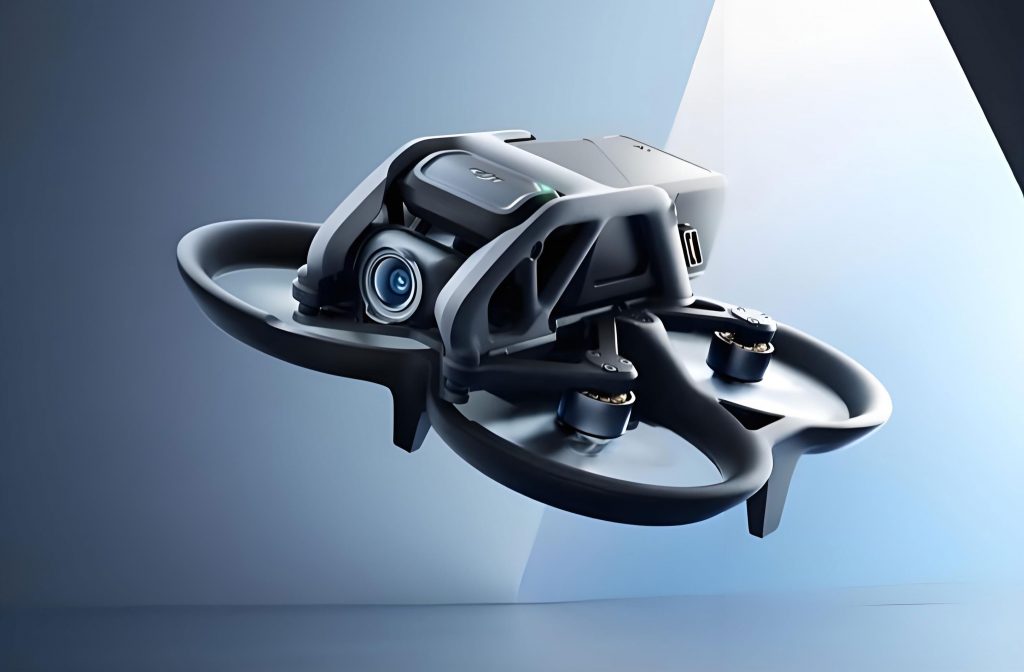
To better understand the applications of FPV drone cinematography, I have categorized the common types of FPV drones based on their specifications and uses. The table below summarizes these categories, highlighting variations in rotor size, wingspan, purpose, speed, and endurance. This classification helps illustrate how different FPV drones are tailored for specific filming needs, from high-speed racing to intricate aerial maneuvers in cinematic productions. In my analysis, I note that China FPV models often emphasize cost-effectiveness and innovation, making them popular in global markets.
| Rotor Size (inch) | Wingspan (mm) | Purpose | Speed (km/h) | Endurance (min) |
|---|---|---|---|---|
| 1.5″–2″ | 50–100 | Indoor racing/freestyle | 80 | 2–5 |
| 2.5″ | 100–140 | Freestyle/aerial photography | 100 | 3–8 |
| 3″ | 140–180 | Freestyle/aerial photography | 120 | 3–10 |
| 5″ | 200–220 | Racing/freestyle/aerial photography | 200 | 3–10 |
| 6″–7″ | 250–500 | Long-range/aerial photography | 150 | 10–15 |
| 8″+ | 600+ | X-Class racing | 150 | 2–5 |
In terms of application, FPV drone cinematography has been integrated into various film genres, particularly in action-packed sequences where speed and agility are paramount. I have observed that movies like “Ambulance” and “Red Notice” utilize FPV drones to capture dynamic chases and complex stunts, offering a first person view that enhances the narrative’s intensity. The use of compact professional cameras, such as the Red Komodo, on heavy-lift drones like Cinelifters, has enabled high-quality imagery that meets the demands of modern high-resolution formats. This evolution signifies a move toward more industrialized and professional FPV drone workflows, driven by advancements in China FPV technology. As I explore these applications, it is evident that FPV drone cinematography not only expands creative possibilities but also addresses practical considerations, such as cost efficiency and production speed, compared to traditional methods like helicopter shots or CGI.
Moving to the aesthetic characteristics of FPV drone cinematography, I identify two core elements: flow and traversal. Flow refers to the dynamic visual experience created by the drone’s movement, which I describe as a form of kinetic aesthetics. This involves high-speed motions, such as spirals, dives, and rapid transitions, that produce a continuous, fluid imagery. From a theoretical perspective, I relate this to the concept of movement-image, as discussed by philosophers like Gilles Deleuze, where the camera’s motion intertwines with the subject’s movement to create a unified perceptual experience. To quantify this, I propose a formula for the visual flow intensity $I_f$, which can be expressed as:
$$ I_f = \frac{v \times a}{d} $$
where $v$ is the velocity of the FPV drone, $a$ is the angular change in perspective, and $d$ is the distance from the subject. This formula highlights how increased speed and flexibility in first person view shots amplify the immersive quality, making viewers feel as though they are part of the action. In practice, I have seen that FPV drone sequences in films often maintain a rhythmic continuity, avoiding disruptive edits to preserve the illusion of seamless motion. This approach aligns with the idea that movement is a duration, not just a series of positions, and it enhances the emotional impact of scenes, such as car chases or aerial acrobatics.
The second aesthetic characteristic, traversal, involves the drone’s ability to navigate through立体 spaces, evoking a sensory and embodied experience for the audience. I argue that this first person view perspective creates a virtual presence, where viewers feel as if they are flying alongside the drone, traversing environments like narrow alleys or dense forests. This sensation is rooted in the concept of embodied telepresence, where the technology extends the operator’s and viewer’s sensory-motor systems. To model this, I use a formula for the traversal immersion index $T_i$, defined as:
$$ T_i = k \times \left( \frac{s}{t} + \frac{\Delta \theta}{r} \right) $$
where $s$ is the spatial complexity of the path, $t$ is the time taken, $\Delta \theta$ is the change in orientation angles, $r$ is the stability factor, and $k$ is a constant related to individual perceptual sensitivity. This formula illustrates how rapid changes in direction and speed, combined with unstable compositions like Dutch angles, contribute to a dizzying, yet engaging, aesthetic. In my analysis, I note that FPV drone cinematography often induces a kinesthetic response, similar to virtual reality, but without the need for additional hardware for viewers. This makes it a powerful tool for creating spectacle-driven narratives, where the experience of movement overshadows traditional storytelling elements. However, I caution that overuse can lead to visual fatigue, emphasizing the need for balanced application in films.
Despite its advantages, FPV drone cinematography faces several limitations, primarily related to technical operations and experiential impacts. From a technical standpoint, I have encountered challenges in piloting FPV drones due to their high maneuverability and the need for precise control. Operating these devices requires specialized skills, as even minor errors can result in costly damages, especially when using professional cinema cameras. The lack of gimbals in many FPV setups means that the camera’s stability depends entirely on the drone’s flight, increasing the risk of shaky footage. To address this, I propose a reliability score $R_s$ for FPV operations, given by:
$$ R_s = \frac{C_p \times E_f}{D_r} $$
where $C_p$ is the operator’s proficiency, $E_f$ is the equipment’s fault tolerance, and $D_r$ is the environmental difficulty. This formula underscores the importance of training and advanced technology in mitigating risks. Additionally, the short battery life of FPV drones, typically ranging from 2 to 15 minutes, limits filming duration, necessitating careful planning and multiple takes. In terms of experience, the intense first person view imagery can sometimes overwhelm audiences, leading to disorientation if not integrated thoughtfully into the narrative. I have observed that in films where FPV drone shots are used sparingly, they enhance immersion, but excessive use can detract from story coherence, reducing the overall impact.
The significance of FPV drone cinematography lies in its ability to create spectacular visual experiences that prioritize sensory engagement over narrative depth. I argue that this technology represents a shift toward what I call “experience-driven cinema,” where the first person view perspective allows viewers to participate virtually in the film’s world. This aligns with broader trends in visual culture, where奇观 and immersion are valued as key components of entertainment. In the context of China FPV developments, I see potential for growth in local film industries, as affordable and innovative drones enable more filmmakers to experiment with this technique. However, I emphasize that technology should serve artistic expression, not dominate it. By using FPV drone cinematography judiciously, directors can amplify emotional moments and action sequences without sacrificing storytelling integrity.
In conclusion, as I reflect on the evolution of FPV drone cinematography, I am optimistic about its future in film production. This first person view approach has revolutionized how we capture and perceive motion, offering a unique blend of speed, flexibility, and immersion that enriches cinematic language. The contributions from China FPV sectors are particularly noteworthy, driving accessibility and innovation in this field. Nonetheless, I acknowledge the challenges in operator training and technical limitations, which require ongoing research and development. Moving forward, I believe that FPV drone technology will continue to evolve, integrating with advancements in AI and sensor technology to further enhance its capabilities. Ultimately, the key to success lies in balancing technological prowess with artistic vision, ensuring that FPV drone cinematography remains a valuable tool for creating compelling, immersive stories in the ever-changing landscape of film.