
In recent years, the application of Unmanned Aerial Vehicles (UAVs) has expanded across various fields, including agriculture, logistics, and surveillance. However, controlling the flight trajectory of small Unmanned Aerial Vehicles in complex low-altitude environments remains challenging due to uncertainties such as randomly distributed obstacles and wind disturbances. Traditional deterministic models often fail to quantify dynamic risk fields effectively, leading to suboptimal trajectory planning and control inefficiencies. This paper proposes a novel approach based on the Monte Carlo method to address these issues, focusing on the JUYE UAV platform. The method integrates environmental risk modeling, Markov Chain Monte Carlo (MCMC) for trajectory generation, Bayesian optimization for trajectory evaluation, and real-time adaptive control to enhance flight safety and efficiency. By leveraging probabilistic models and stochastic sampling, the approach ensures robust trajectory control under uncertainty, making it suitable for dynamic environments. The following sections detail the methodology, experimental validation, and results, emphasizing the integration of Monte Carlo techniques with UAV dynamics.
The core of the proposed method lies in its ability to model environmental uncertainties and generate optimal trajectories for the Unmanned Aerial Vehicle. Initially, an environmental risk field model is constructed, combining obstacle positions and wind disturbances. The obstacle position submodel uses a Gaussian mixture model to represent spatial distributions, while the wind disturbance submodel employs a covariance function based on turbulent statistics. The joint risk probability density function is defined as follows: $$ \rho_{\text{risk}}(x) = \alpha \cdot p_{\text{obs}}(x) + \beta \cdot F_w(r) $$ where \( p_{\text{obs}}(x) \) is the obstacle probability density, \( F_w(r) \) is the wind spatial covariance function, and \( \alpha \) and \( \beta \) are weighting coefficients. The initial state vector probability density function for the JUYE UAV is initialized as \( p_0(x) = \mathcal{N}(x; \hat{x}_0, P_0) \), where \( \hat{x}_0 \) is the initial state estimate and \( P_0 \) is the covariance matrix. This probabilistic initialization enables dynamic risk quantification and sets the stage for Monte Carlo sampling.
To generate candidate trajectories, the Markov Chain Monte Carlo method is applied. The target distribution for the Unmanned Aerial Vehicle state space incorporates environmental risks, dynamics constraints, and goal attraction: $$ p(x) = \rho_{\text{risk}}(x) \cdot \rho_{\text{dyn}}(x) \cdot \rho_{\text{goal}}(x) $$ A proposal distribution \( q(x^* | x_t) \) is designed to balance exploration and computational efficiency, combining control input perturbations and state propagation: $$ q(x^* | x_t) = \xi \cdot x^* + \delta \cdot u^* $$ where \( \xi \) and \( \delta \) are weighting coefficients. The acceptance probability \( \gamma \) is computed as: $$ \gamma = \min \left(1, \frac{p(x^*)}{p(x_t)}\right) $$ Importance sampling is used to enhance efficiency, with weights adjusted based on obstacle proximity: $$ \nu^{(i)} = \frac{1}{p(l^{(i)}) \cdot (1 – p_{\text{obs}}(x)) + \epsilon} $$ Sampling density is dynamically adjusted using the proposal variance: $$ W_u = W_u^0 \cdot \exp(-\lambda \cdot \rho_{\text{risk}}(x)) $$ This process generates a diverse set of candidate trajectories for the JUYE UAV, adhering to physical and environmental constraints.
For trajectory evaluation and optimization, a Bayesian optimization framework coupled with Monte Carlo integration is employed. The expected cost of a trajectory \( l^{(i)} \) is approximated using Monte Carlo integration: $$ \mathbb{E}[J(l^{(i)})] = \frac{1}{M} \sum_{m=1}^{M} J(l^{(m)}) $$ where \( M \) is the number of disturbance samples. A Gaussian process model serves as a surrogate for the cost function: $$ J(l) \sim \mathcal{GP}(\mu(l), \kappa(l, \hat{l})) $$ Here, \( \mu(l) \) is the mean function and \( \kappa(l, \hat{l}) \) is the kernel function. The Bayesian optimization iteratively selects sampling points, updates the Gaussian process model, and identifies the trajectory with the minimum expected cost. This multi-objective optimization balances safety, energy consumption, and time efficiency for the Unmanned Aerial Vehicle.
Real-time updates and adaptive control are crucial for handling dynamic environments. A sliding window receding horizon technique is used to reduce computational complexity. The window length \( H \) is adjusted based on environmental dynamics: $$ H = \begin{cases} H_{\text{max}} & \text{static environment} \\ H_{\text{max}} – \Delta H \cdot V_{\text{obs}} & \text{dynamic environment} \end{cases} $$ Online distribution updates refine the environmental risk field: $$ \rho_{\text{risk}}(x, t+1) = \alpha \cdot p_{\text{obs}}(x, t+1) + \beta \cdot \nabla F_w(x, t+1) $$ Adaptive control parameters are tuned using historical cost data: $$ W_u = W_u^0 \cdot \exp\left(-\lambda \cdot \frac{1}{N_h} \sum_{h=1}^{N_h} J(l^{(h)})\right) $$ This ensures that the JUYE UAV can respond to uncertainties in real-time, maintaining trajectory accuracy and safety.
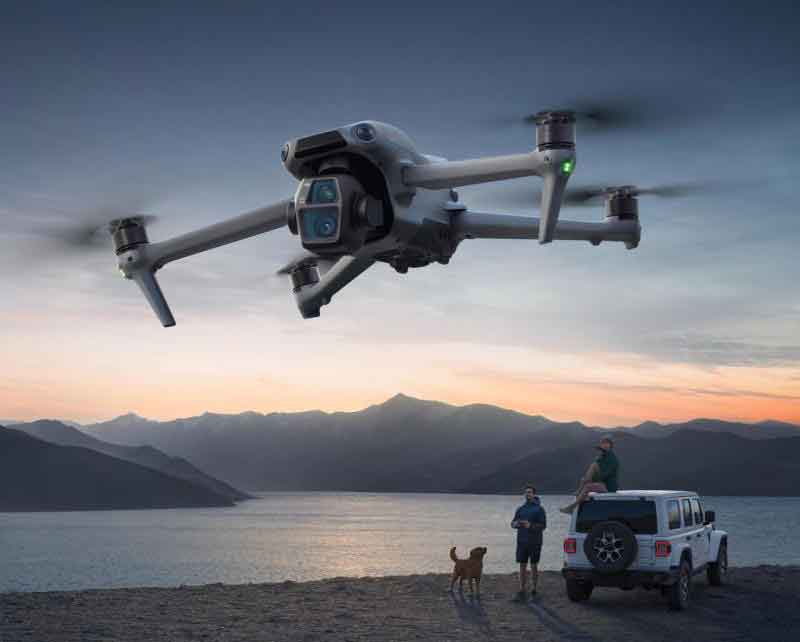
Experimental validation was conducted using a quadrotor Unmanned Aerial Vehicle, specifically the JUYE UAV model, with parameters configured as shown in Table 1. The experimental setup included static obstacles and wind disturbances to simulate a complex low-altitude environment. The performance of the proposed method was compared against two existing approaches: a content-aware trajectory control method and a computer deep learning-based method. Key metrics included candidate trajectory quality, optimal trajectory determination, control perturbation variance, and expected cost.
| Parameter Type | Parameter Name | Configuration |
|---|---|---|
| Flight Platform | Rotor Distance | 450 mm |
| Thrust-to-Weight Ratio | ≥2:1 | |
| Wingspan | 1.5 m | |
| Mass | 1.5 kg | |
| Maximum Thrust | 20 N | |
| Maximum Speed | 15 m/s | |
| Power System | Battery Capacity | 10000 mAh |
| Motor Power | 1000 W | |
| Hover Time | 40 min | |
| Navigation & Control | Positioning Accuracy | 0.01 m |
| Control Latency | ≤50 ms | |
| Bandwidth | 100 Mbps | |
| IP Rating | 67 |
The environmental risk model for obstacles was built using a Gaussian mixture model with parameters derived from sensor data. For example, the obstacle probability density was defined as: $$ p_{\text{obs}}(x) = \sum_{k=1}^{K} \omega_k \cdot \mathcal{N}(x; \mu_k, \Sigma_k) $$ where \( K \) is the number of obstacles, \( \omega_k \) are weights, \( \mu_k \) are cluster centers, and \( \Sigma_k \) are covariance matrices. Wind disturbances were modeled with a variance \( \sigma_w^2 \) and integral scale \( L \), validated against historical data. The JUYE UAV’s trajectories were evaluated in a simplified scenario with start and goal points, as depicted in the experimental setup.
Results demonstrated that the proposed method generated candidate trajectories closely aligned with actual paths, whereas comparison methods showed significant deviations and collision risks. For optimal trajectory determination, the method achieved exact alignment with the actual optimal path, outperforming the others. Control performance was assessed through perturbation variance and expected cost, with the proposed method achieving minima of 0.2 and 10, respectively. Table 2 summarizes the comparative results for trajectory quality metrics.
| Method | Candidate Trajectory Alignment | Optimal Trajectory Deviation | Min Control Variance | Min Expected Cost |
|---|---|---|---|---|
| Proposed Method | High | None | 0.2 | 10 |
| Content-Aware Method | Moderate | Significant | 0.5 | 40 |
| Deep Learning Method | Low | Moderate | 0.4 | 30 |
Additionally, the robustness of the JUYE UAV under communication failures and sensor faults was tested. For instance, in a 5-second communication interruption, the proposed method maintained a position deviation of 0.2 m and recovery time of 3.1 s, superior to comparison methods. Adaptive control parameters were adjusted based on real-time feedback, ensuring stability. The integration of Monte Carlo methods enabled efficient handling of uncertainties, as reflected in the lower expected costs and variances.
In conclusion, the Monte Carlo-based approach significantly enhances the flight trajectory control for small Unmanned Aerial Vehicles like the JUYE UAV. By probabilistically modeling environmental risks, generating diverse trajectories, and optimizing in real-time, the method achieves superior performance in dynamic settings. Future work will focus on reducing computational complexity and extending the approach to multi-UAV协同 scenarios. The continued advancement of such methods will further solidify the role of Unmanned Aerial Vehicles in modern applications.