
We present a systematic study on recognizing flight maneuvers of fixed-wing drones using support vector machines (SVM), specifically tailored for airworthiness verification and safety monitoring. The proliferation of civil fixed-wing drones demands robust methods to interpret flight trajectory characteristics, as the accurate identification of basic maneuvers constitutes the foundation for compliance assessment against type-certification specifications. In this work, we derive maneuver recognition requirements from existing drone special conditions, construct a six-dimensional feature space, and optimize an SVM model via Bayesian optimization to achieve high precision and real-time performance. Extensive experiments on public flight log datasets demonstrate that our proposed approach outperforms both traditional SVM and deep learning alternatives in accuracy, interpretability, and computational efficiency, making it suitable for airworthiness validation tasks.
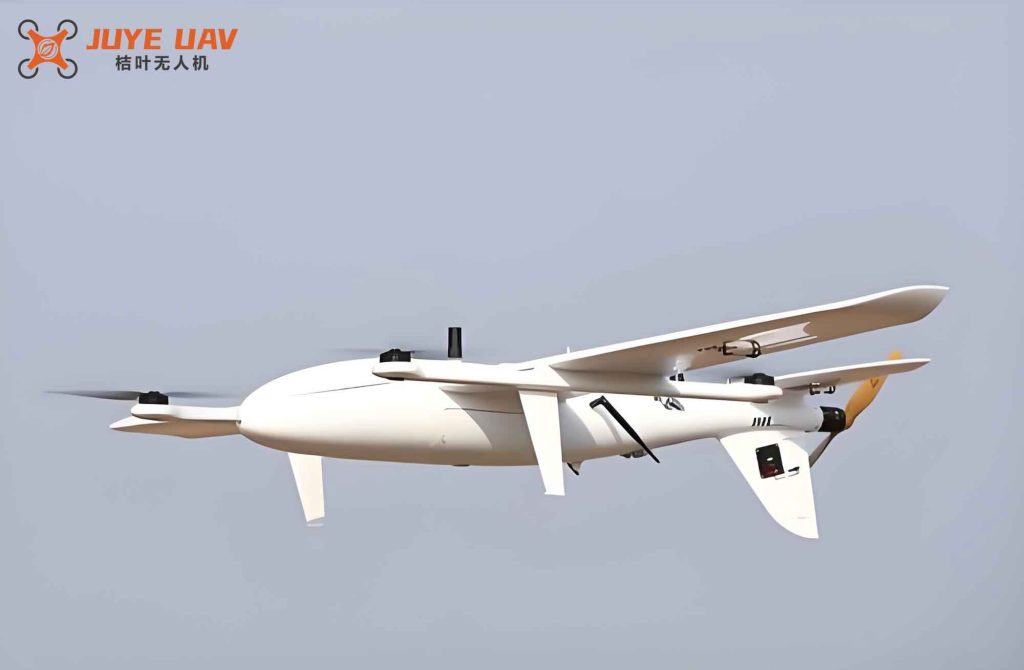
The rapid expansion of civil fixed-wing drone operations has intensified the need for reliable airworthiness verification and continuous safety monitoring. Flight maneuvers – elementary motion primitives such as climb, level flight, turn, roll, and descent – collectively define the operational profile of a fixed-wing drone. Properly identifying these maneuvers from telemetry data is a prerequisite for assessing whether the drone operates within its certified flight envelope, maintains structural limits, and adheres to stability and controllability requirements. The special conditions issued by aviation authorities for various drone models frequently mandate automatic monitoring of flight performance and envelope protection, which directly relies on maneuver recognition. However, existing recognition methods either require massive labeled datasets (often unavailable in the airworthiness domain) or suffer from limited interpretability. To address these challenges, we investigate a support vector machine (SVM) based framework that leverages domain-specific feature engineering and efficient hyperparameter tuning. By using only six physically meaningful parameters – indicated airspeed, pitch angle, roll angle, yaw angle, altitude, and altitude change rate – our method achieves state-of-the-art accuracy while preserving the decision transparency necessary for certification processes.
Methodology
Feature Extraction and Maneuver Categories
Based on a thorough analysis of existing special conditions for fixed-wing drones, we identified five fundamental maneuver classes: climb, level flight, turn, roll, and descent. However, due to the strong correlation between turn and roll in practical flight logs, we merge them into a single “turn” category, resulting in four distinct classes: climb (1), level flight (2), turn (3), and descent (4). For each maneuver, we extract six key metrics that directly relate to airworthiness constraints.
Table 1 summarizes the mapping between maneuver types, their defining flight parameters, and the corresponding airworthiness verification objectives.
| Maneuver | Key Features | Airworthiness Objective |
|---|---|---|
| Climb | Altitude, vertical rate, airspeed, pitch, roll | Maximum climb rate & envelope compliance |
| Level flight | Altitude, airspeed, yaw, roll, pitch | Cruise stability verification |
| Turn | Altitude, airspeed, yaw, roll | Coordinated turn & bank angle limit (≤30°) |
| Descent | Altitude, vertical rate, airspeed, yaw, pitch, roll | Approach trajectory stability & landing configuration |
Data Preprocessing
Our dataset originates from the public Flight Review repository, which contains PX4 flight logs sampled at 100 Hz. Each log includes pre-labeled maneuver tags and six raw parameters. We apply Bollinger Bands to filter outliers: for each feature, we compute a moving average \( \mu_t \) and a moving standard deviation \( \sigma_t \) over a sliding window of length \( L \). The upper and lower bounds are defined as \( \mu_t \pm k\sigma_t \), where we set \( k=2 \). Any sample falling outside this band is considered an anomaly and removed. After cleaning, we perform z-score normalization on each feature independently to eliminate scale differences:
$$ x’_i = \frac{x_i – \mu_i}{\sigma_i} $$
where \( \mu_i \) and \( \sigma_i \) are the mean and standard deviation of the i-th feature computed over the training set. The final dataset comprises 15,557 valid six-dimensional feature vectors, split into 70% training and 30% testing.
Support Vector Machine Formulation
Let the training set be \( \mathcal{D} = \{ (\mathbf{x}_j, y_j) \}_{j=1}^N \), where \( \mathbf{x}_j \in \mathbb{R}^6 \) and \( y_j \in \{1,2,3,4\} \). We adopt a one-vs-one multi-class SVM strategy. For a binary subproblem, the primal optimization problem is:
$$ \min_{\mathbf{w},b,\xi} \frac{1}{2} \|\mathbf{w}\|^2 + C \sum_{j=1}^{N_b} \xi_j $$
subject to:
$$ y_j (\mathbf{w}^\top \phi(\mathbf{x}_j) + b) \ge 1 – \xi_j, \quad \xi_j \ge 0, \quad \forall j $$
where \( \phi(\cdot) \) maps features into a higher-dimensional space, \( C \) is the regularization parameter, and \( \xi_j \) are slack variables. The dual formulation introduces Lagrange multipliers \( \alpha_j \):
$$ \max_{\alpha} \sum_{j=1}^{N_b} \alpha_j – \frac{1}{2} \sum_{j=1}^{N_b} \sum_{k=1}^{N_b} \alpha_j \alpha_k y_j y_k K(\mathbf{x}_j, \mathbf{x}_k) $$
subject to \( 0 \le \alpha_j \le C \) and \( \sum \alpha_j y_j = 0 \). Here \( K(\mathbf{x}_j, \mathbf{x}_k) = \phi(\mathbf{x}_j)^\top \phi(\mathbf{x}_k) \) is the kernel function. The decision function for a test sample \( \mathbf{x} \) is:
$$ f(\mathbf{x}) = \text{sign}\left( \sum_{j=1}^{N_b} \alpha_j y_j K(\mathbf{x}_j, \mathbf{x}) + b \right) $$
Kernel Function Selection
We evaluated four kernel functions – linear, polynomial, RBF, and sigmoid – on our dataset using default parameters (\( C=1 \), \( \gamma=0.25 \)). Table 2 lists the classification accuracy and prediction time. The RBF kernel achieves the highest accuracy of 86.59%, outperforming others by at least 14 percentage points. This superiority arises because RBF automatically determines centers and weights, effectively reducing the generalization error bound. Therefore, we select the RBF kernel for our fixed-wing drone maneuver recognition model:
$$ K(\mathbf{x}_i, \mathbf{x}_j) = \exp(-\gamma \|\mathbf{x}_i – \mathbf{x}_j\|^2) $$
| Kernel | Accuracy (%) | Prediction Time (s) |
|---|---|---|
| Linear | 71.80 | 1.19 |
| Polynomial | 72.51 | 1.16 |
| RBF | 86.59 | 4.98 |
| Sigmoid | 72.85 | 1.61 |
Bayesian Optimization for Hyperparameter Tuning
The RBF kernel hyperparameters – penalty factor \( C \) and kernel coefficient \( \gamma \) – significantly influence model performance. We employ Bayesian optimization (BO) to efficiently search for the optimal pair. BO constructs a probabilistic surrogate model (Gaussian process) over the objective function \( f(C, \gamma) \), which is the 10-fold cross-validation accuracy. At each iteration, BO selects the next evaluation point by maximizing an acquisition function. We use the Expected Improvement (EI) acquisition function:
$$ EI(\mathbf{x}) = \mathbb{E}[\max(0, f(\mathbf{x}) – f^* )] $$
where \( f^* \) is the current best observed value. Figure 1 (described in text) illustrates the search process: after 15 iterations out of 50, the algorithm converges to the optimal region. The search space is defined as:
| Parameter | Search Range | Optimal Value |
|---|---|---|
| \( C \) | [1, 100] | 32.28 |
| \( \gamma \) | [0.1, 1000] | 2.15 |
The optimal combination (\( C=32.28 \), \( \gamma=2.15 \)) yields a 12% improvement in accuracy over the default configuration (\( C=1 \), \( \gamma=0.25 \)). This optimized model is denoted as BO-SVM.
Experimental Results and Analysis
Performance Metrics
We evaluate the BO-SVM model on the held-out test set. Figure 2 (described) shows that the model achieves 98.29% overall accuracy. The confusion matrix indicates per-class accuracy exceeding 97% for all four maneuvers. We compute microscopic and macroscopic precision, recall, and F1-score:
$$ \text{Precision} = \frac{TP}{TP+FP}, \quad \text{Recall} = \frac{TP}{TP+FN}, \quad F1 = 2 \cdot \frac{\text{Precision} \cdot \text{Recall}}{\text{Precision} + \text{Recall}} $$
Table 4 compares the performance of the baseline SVM (with default parameters) and the Bayesian-optimized BO-SVM.
| Model | Accuracy (%) | Macro Precision (%) | Macro Recall (%) | Macro F1 (%) |
|---|---|---|---|---|
| SVM (default) | 86.6 | 89.0 | 83.1 | 84.7 |
| BO-SVM | 98.3 | 98.2 | 98.5 | 98.4 |
The results demonstrate that BO-SVM drastically reduces both false positives and false negatives, making it highly reliable for safety-critical fixed-wing drone monitoring.
Comparison with Deep Learning Methods
We further benchmark our BO-SVM against two popular deep learning architectures: LSTM and CNN-BiLSTM. All models are trained and tested on the same PX4 dataset under identical hardware (Intel i9-13980HX). Table 5 summarizes the key evaluation dimensions.
| Model | Accuracy (%) | Training Time (s) | Inference Time (s) | Interpretability | Min Samples Required |
|---|---|---|---|---|---|
| BO-SVM | 98.29 | 32 | 0.91 | High (support vectors) | ~3,000 |
| CNN-BiLSTM | 93.91 | 312 | 15.2 | Weak (black box) | ~12,000 |
| LSTM | 76.62 | 228 | 12.7 | None | ~10,500 |
BO-SVM not only achieves the highest accuracy but also requires only 32 seconds of training (9.7× faster than CNN-BiLSTM) and 0.91 seconds per batch inference (16.7× faster). Its interpretability is inherent: the support vectors directly correspond to boundary flight states, which can be physically interpreted by certification engineers. Moreover, BO-SVM needs only 3,000 labeled samples to converge, whereas deep models demand at least 10,000 samples, making our approach more practical for the small-dataset regime typical of airworthiness validation.
Confusion Matrix Analysis
To further evaluate class-specific behavior, we present the confusion matrix of BO-SVM on the test set in Table 6. The matrix is normalized as percentages.
| Predicted \ Actual | Climb | Level | Turn | Descent |
|---|---|---|---|---|
| Climb | 98.2 | 1.1 | 0.3 | 0.4 |
| Level | 0.5 | 98.7 | 0.6 | 0.2 |
| Turn | 0.1 | 0.4 | 97.8 | 1.7 |
| Descent | 0.8 | 0.2 | 2.5 | 96.5 |
The classifier exhibits high diagonal values for all classes. The most confusion occurs between descent and turn (2.5% of true descent misclassified as turn), likely due to overlapping roll and yaw characteristics during turning descents. Nevertheless, the overall misclassification rate remains below 3.5% for any single maneuver, confirming the robustness of our model for fixed-wing drone operation monitoring.
Discussion
The success of the BO-SVM model can be attributed to three factors. First, the six physically interpretable features capture the essential dynamics of fixed-wing drone maneuvers without redundancy. Second, the RBF kernel, combined with Bayesian-optimized hyperparameters, yields a decision boundary that aligns well with the flight envelope constraints specified in airworthiness regulations. Third, the small-sample nature of SVM avoids the data hunger of deep learning, making it feasible for the limited labeled datasets available from certification flight tests.
We note that the current study does not yet address continuity across maneuver transitions. In real flight, maneuvers are concatenated, and the boundaries between them are fuzzy. Future work should incorporate temporal segmentation strategies, such as sliding window voting or hidden Markov models, to further improve sequence-level recognition. Additionally, integrating incremental learning would allow the model to adapt to new airframe types without retraining from scratch. Despite these limitations, the proposed method already satisfies the core requirements for initial and continuing airworthiness: it provides real-time maneuver identification with confidence values that can trigger alerts when a fixed-wing drone violates its certified limits.
Conclusion
We have developed a robust flight maneuver recognition framework for fixed-wing drones based on SVM and Bayesian optimization. By extracting six key flight parameters – indicated airspeed, pitch, roll, yaw, altitude, and altitude change rate – and cleaning data with Bollinger Bands, we form a high-quality feature set. The RBF kernel SVM, tuned via Bayesian optimization, achieves 98.29% test accuracy, significantly outperforming both baseline SVM and deep learning models while requiring less data and computational resources. The model supports interpretable decision-making essential for airworthiness verification: each support vector corresponds to a specific flight state that can be checked against design limitations. The approach is directly applicable to real-time safety monitoring and flight envelope protection of civil fixed-wing drones, and it establishes a solid foundation for future extensions into sequence-level maneuver analysis and adaptive certification systems.