
Quadcopters, as a type of multi-rotor unmanned aerial vehicle (UAV), have gained widespread application in scenarios such as aerial photography, surveying, security, and inspection due to their simple structure, vertical take-off and landing, and autonomous hovering capabilities. However, quadcopters are nonlinear systems with strongly coupled and underactuated dynamic characteristics, posing significant challenges to flight control system design. Additionally, their small size and lightweight make them sensitive to complex internal and external disturbances, which can severely impact control performance. Therefore, the design of high-performance quadcopter flight control systems has become a focal point of research worldwide.
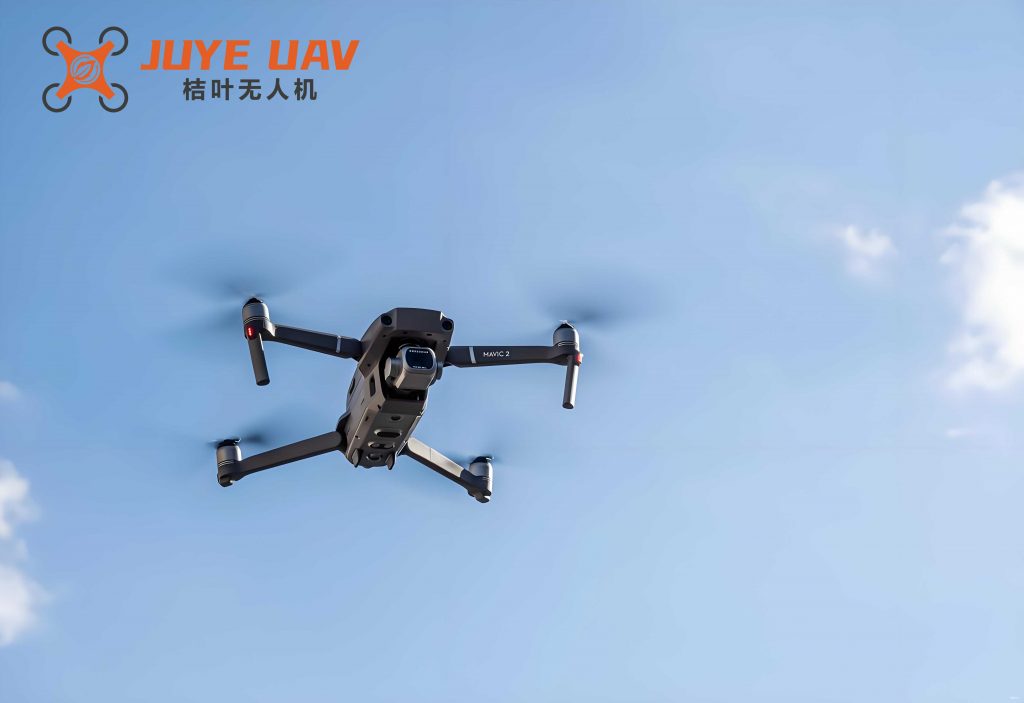
Traditional PID control struggles to achieve satisfactory performance for quadcopters due to their strong nonlinearity and coupling. To address these challenges, we propose a fixed-time command-filtered control strategy based on adaptive radial basis function (RBF) neural networks for quadcopter attitude tracking under external disturbances and model uncertainties. This approach ensures rapid and accurate tracking of desired attitudes while compensating for uncertainties and disturbances.
Problem Formulation and System Model
The quadcopter’s attitude dynamics and kinematics, considering external disturbances and model uncertainties, can be described using Newton-Euler equations. Let the inertial frame be denoted as $O_eX_eY_eZ_e$ and the body-fixed frame as $O_bX_bY_bZ_b$. The nonlinear model is given by:
$$ \dot{\boldsymbol{\Theta}} = \mathbf{B}\boldsymbol{\sigma} $$
$$ \dot{\boldsymbol{\sigma}} = \mathbf{J}^{-1}(-\boldsymbol{\sigma} \times \mathbf{J}\boldsymbol{\sigma} + \mathbf{u} + \mathbf{F}(\mathbf{x}_2) + \mathbf{d}) $$
where $\boldsymbol{\Theta} = [\phi, \theta, \psi]^T$ represents the Euler angles (roll, pitch, yaw), $\boldsymbol{\sigma} = [\omega_x, \omega_y, \omega_z]^T$ is the angular velocity vector, $\mathbf{J} = \text{diag}(J_{xx}, J_{yy}, J_{zz})$ is the inertia matrix, $\mathbf{u} = [\tau_x, \tau_y, \tau_z]^T$ is the control torque, $\mathbf{d} = [d_x, d_y, d_z]^T$ denotes external disturbances, and $\mathbf{F}(\mathbf{x}_2)$ represents model uncertainties. The matrix $\mathbf{B}$ is defined as:
$$ \mathbf{B} = \begin{bmatrix}
1 & \sin\phi \tan\theta & \cos\phi \tan\theta \\
0 & \cos\phi & -\sin\phi \\
0 & \sin\phi/\cos\theta & \cos\phi/\cos\theta
\end{bmatrix} $$
Defining $\mathbf{x}_1 = \boldsymbol{\Theta}$ and $\mathbf{x}_2 = \boldsymbol{\sigma}$, the system can be rewritten as:
$$ \dot{\mathbf{x}}_1 = \mathbf{B}\mathbf{x}_2 $$
$$ \dot{\mathbf{x}}_2 = \mathbf{J}^{-1}(-\mathbf{x}_2 \times \mathbf{J}\mathbf{x}_2 + \mathbf{u} + \mathbf{F}(\mathbf{x}_2) + \mathbf{d}) $$
$$ \mathbf{y} = \mathbf{x}_1 $$
The control objective is to design a fixed-time command-filtered controller using adaptive neural networks to ensure that the quadcopter’s attitude tracking errors converge to a small neighborhood of the origin within a fixed time, despite external disturbances and model uncertainties.
Assumptions and Preliminaries
We make the following assumptions for controller design and stability analysis:
- Assumption 1: External disturbances are bounded, satisfying $\|\mathbf{d}\| \leq R_1$, where $R_1$ is a positive constant.
- Assumption 2: The roll angle $\phi$ and pitch angle $\theta$ vary within $(-\pi/2, \pi/2)$.
- Assumption 3: All system states are measurable, and the desired attitude $\mathbf{y}_r$ and its derivatives $\dot{\mathbf{y}}_r$, $\ddot{\mathbf{y}}_r$ are bounded.
Key lemmas used in our analysis include:
- Lemma 4 (RBF Neural Network): Any continuous function $f_m(\mathbf{F}): \mathbb{R}^n \rightarrow \mathbb{R}$ can be approximated as $f_m(\mathbf{F}) = \hat{\mathbf{W}}^T \mathbf{h}(\mathbf{F}) + \epsilon$, where $\hat{\mathbf{W}}$ is the estimated weight vector, $\mathbf{h}(\mathbf{F})$ is the basis function, and $\epsilon$ is the approximation error.
- Lemma 5 (Hyperbolic Tangent Bound): For any $x \in \mathbb{R}$ and $\varkappa > 0$, $0 \leq |x| – x \tanh(x/\varkappa) \leq \varkappa\zeta$, where $\zeta \approx 0.2785$.
- Lemma 8 (Fixed-Time Stability): If a Lyapunov function $V(\mathbf{x})$ satisfies $\dot{V}(\mathbf{x}) \leq -\alpha V^\gamma(\mathbf{x}) – \beta V^\mu(\mathbf{x}) + \delta$, with $\alpha, \beta, \delta > 0$, $0 < \gamma < 1$, $\mu > 1$, then the system is fixed-time stable.
Fixed-Time Command Filter Design
To avoid the “explosion of complexity” in traditional backstepping control, we propose a fixed-time command filter based on the hyperbolic tangent function:
$$ \dot{\hat{\xi}}(t) = -\aleph \cdot \tanh\left(\frac{\hat{\xi}(t) – \xi(t)}{\kappa}\right) – \alpha (\hat{\xi}(t) – \xi(t))^3 $$
where $\aleph > 0$, $\kappa > 0$, $\alpha > 0$, and $\xi(t)$ is the input signal. This filter ensures that the estimation error $\hat{\xi}(t) – \xi(t)$ converges to zero within a fixed time $T_0$, defined as:
$$ T_0 = \frac{2}{\aleph(1-\varsigma)} + \frac{2}{\alpha \aleph^2(4\varsigma – 1)} $$
with $0 < \varsigma < 1$ and $4\varsigma – 1 > 0$. The filter output $\hat{\xi}(t)$ is bounded and satisfies $\|\hat{\xi}(t)\| \leq \iota_1 / \sqrt{\mu_1}$, where $\mu_1 = \alpha \aleph^4 – 9\alpha \aleph^2 \varpi > 0$ and $\varpi > 0$.
Adaptive Neural Network Controller Design
We employ an adaptive RBF neural network to approximate model uncertainties and a disturbance observer to estimate external disturbances. The control design follows a backstepping procedure with two steps:
Step 1: Attitude Angle Tracking
Define the tracking error as $\mathbf{s}_1 = \mathbf{y} – \mathbf{y}_r$. Using the command filter, we obtain the filtered virtual control law $\boldsymbol{\upsilon}_{2,c}$ and its derivative $\dot{\boldsymbol{\upsilon}}_{2,c}$. The compensation signal $\mathbf{z}_1$ is designed as:
$$ \dot{\mathbf{z}}_1 = \mathbf{B}\mathbf{z}_2 + \boldsymbol{\eta}_1 – \dot{\mathbf{y}}_r – \pi_1 \mathbf{z}_1 – l_1 \tanh\left(\frac{\mathbf{z}_1}{\Xi_{z1}}\right) $$
The intermediate control signal $\boldsymbol{\eta}_1$ is chosen as:
$$ \boldsymbol{\eta}_1 = \mathbf{B}^{-1}\left(-k_{11}\mathbf{e}_1 – k_{12}\mathbf{e}_1^3 + \dot{\mathbf{y}}_r – \pi_1 \mathbf{z}_1 – l_1 \tanh\left(\frac{\mathbf{z}_1}{\Xi_{z1}}\right)\right) $$
where $\mathbf{e}_1 = \mathbf{s}_1 – \mathbf{z}_1$ is the compensated tracking error.
Step 2: Angular Velocity Control
Define the angular velocity error as $\mathbf{s}_2 = \mathbf{x}_2 – \boldsymbol{\upsilon}_{2,c}$. The RBF neural network approximates the uncertain nonlinearities:
$$ \mathbf{F}(\mathbf{x}_2) + \mathbf{d} = \mathbf{W}^{*T} \mathbf{S}(\mathbf{s}_2) + \boldsymbol{\varepsilon} $$
where $\mathbf{W}^*$ is the ideal weight vector, $\mathbf{S}(\mathbf{s}_2)$ is the basis function, and $\boldsymbol{\varepsilon}$ is the approximation error. The adaptive law for updating the neural network weights is:
$$ \dot{\hat{\mathbf{W}}} = \beta_2 (\mathbf{e}_2 \mathbf{S}(\mathbf{s}_2) – \tau_2 \hat{\mathbf{W}} – p_2 \hat{\mathbf{W}}^3) $$
The disturbance observer is designed as:
$$ \dot{\mathbf{h}}_2 = -\lambda_2 \mathbf{h}_2 – \lambda_2 \mathbf{x}_2 + \mathbf{J}^{-1}(-\mathbf{x}_2 \times \mathbf{J}\mathbf{x}_2 + \mathbf{u}) + \hat{\mathbf{W}}^T \mathbf{S}(\mathbf{s}_2) $$
$$ \hat{\mathbf{d}} = \mathbf{h}_2 + \lambda_2 \mathbf{x}_2 $$
The actual control law is derived as:
$$ \mathbf{u} = \mathbf{J}\left(-k_{21}\mathbf{e}_2 – k_{22}\mathbf{e}_2^3 + \dot{\boldsymbol{\upsilon}}_{2,c} – \mathbf{J}^{-1}(\mathbf{x}_2 \times \mathbf{J}\mathbf{x}_2) – \hat{\mathbf{W}}^T \mathbf{S}(\mathbf{s}_2) – \hat{\mathbf{d}}\right) $$
Stability Analysis
Consider the Lyapunov function candidate:
$$ V(t) = \frac{1}{2}\mathbf{e}_1^T\mathbf{e}_1 + \frac{1}{2}\mathbf{e}_2^T\mathbf{e}_2 + \frac{1}{2\beta_2}\tilde{\mathbf{W}}^T\tilde{\mathbf{W}} + \frac{1}{2}\boldsymbol{\chi}^T\boldsymbol{\chi} + \frac{1}{2}\tilde{\mathbf{d}}^T\tilde{\mathbf{d}} $$
where $\tilde{\mathbf{W}} = \mathbf{W}^* – \hat{\mathbf{W}}$, $\boldsymbol{\chi}$ is the prediction error, and $\tilde{\mathbf{d}} = \mathbf{d} – \hat{\mathbf{d}}$. Using the inequalities from the lemmas, we can show that:
$$ \dot{V}(t) \leq -\mu_1 V^{\gamma_1}(t) – \mu_2 V^{\gamma_2}(t) + \rho $$
where $\mu_1, \mu_2 > 0$, $0 < \gamma_1 < 1$, $\gamma_2 > 1$, and $\rho$ is a positive constant. According to Lemma 8, the system is fixed-time stable, and the settling time $T_s$ is bounded by:
$$ T_s \leq \frac{1}{\mu_1(1-\gamma_1)} + \frac{1}{\mu_2(\gamma_2-1)} $$
Simulation Results and Analysis
We validate the proposed control strategy through numerical simulations. The quadcopter parameters are: mass $m = 1.4$ kg, inertia matrix $\mathbf{J} = \text{diag}(0.0211, 0.0219, 0.0366)$ N·m, and gravitational acceleration $g = 9.8$ m/s². The desired attitude is $\mathbf{y}_r = [3\sin t, 3\sin t, 3\sin t]^T$, and the initial attitude is $\boldsymbol{\Theta}_0 = [10^\circ, 8^\circ, 6^\circ]^T$.
Nominal Case Without Disturbances
In the absence of disturbances and uncertainties, the proposed fixed-time control strategy is compared with traditional fractional-order fixed-time control. The following table summarizes the key parameters used in the simulation:
| Parameter | Value | Description |
|---|---|---|
| $\aleph$ | 1 | Filter gain |
| $\kappa$ | 1 | Filter parameter |
| $\alpha$ | 3 | Filter exponent |
| $k_{11}, k_{21}$ | 5 | Control gains |
| $k_{12}, k_{22}$ | 0.5 | Control gains |
| $\Xi_{e1}, \Xi_{e2}$ | 0.1 | Error bounds |
The proposed filter based on the hyperbolic tangent function avoids singularity and chattering issues present in traditional fixed-time filters. The attitude tracking errors converge rapidly with minimal overshoot and reduced control effort.
Case With External Disturbances and Model Uncertainties
We introduce external disturbances $\mathbf{d} = [\cos t, \cos t, \cos t]^T$ and model uncertainties $\mathbf{F}(\mathbf{x}_2) = [3\sin t, 3\sin t, 3\sin t]^T$. The RBF neural network and disturbance observer effectively estimate and compensate for these perturbations. The following table shows the neural network parameters:
| Parameter | Value | Description |
|---|---|---|
| $\beta_2$ | 1 | Adaptive gain |
| $\tau_2$ | 1 | Weight decay |
| $p_2$ | 1 | Cubic term coefficient |
| $\Xi_{\chi}$ | 0.1 | Prediction error bound |
The simulation results demonstrate that the quadcopter’s attitude tracking errors converge to within a 5% error band in 0.86 seconds, despite the presence of disturbances and uncertainties. The control inputs remain within reasonable limits, ensuring practical implementability.
Conclusion
In this work, we have developed a fixed-time command-filtered control strategy based on adaptive RBF neural networks for quadcopter attitude tracking. The key contributions include:
- Designing a novel fixed-time command filter using hyperbolic tangent functions to avoid singularity and chattering.
- Employing an adaptive neural network to approximate model uncertainties and a disturbance observer to estimate external disturbances.
- Establishing fixed-time stability via Lyapunov theory, ensuring convergence within a predefined time independent of initial conditions.
Simulation results confirm the effectiveness of the proposed method in achieving accurate and robust attitude control for quadcopters under various operating conditions. Future work will focus on experimental validation and extension to trajectory tracking applications.