
The accelerating pace of urbanization has led to a significant increase in fire incidents within complex environments such as high-rise buildings, underground spaces, and chemical industrial parks. In my experience at the grassroots level, traditional firefighting and rescue methods often reveal considerable limitations during critical phases like situational reconnaissance and emergency response. The inherent risks of extreme heat, toxic smoke, and structural collapse frequently prevent personnel from accessing the core of a disaster zone, hindering rapid and informed decision-making. It is within this challenging context that fire UAVs (Unmanned Aerial Vehicles) have emerged as a transformative force. Their superior mobility, flexible vantage points, and ability to penetrate hazardous areas offer a powerful solution to augment the capabilities of frontline fire stations. While the application of drone technology in the fire service is evolving from singular functions to multi-scenario integration, practical deployment at the grassroots level continues to face hurdles related to technical adaptability, operational protocols, and systemic integration. This article, drawn from a practitioner’s viewpoint, explores the application pathways for fire UAVs in grassroots firefighting, analyzes prevailing challenges, and proposes actionable optimization strategies, aiming to contribute to the intelligent and efficient advancement of frontline emergency response.
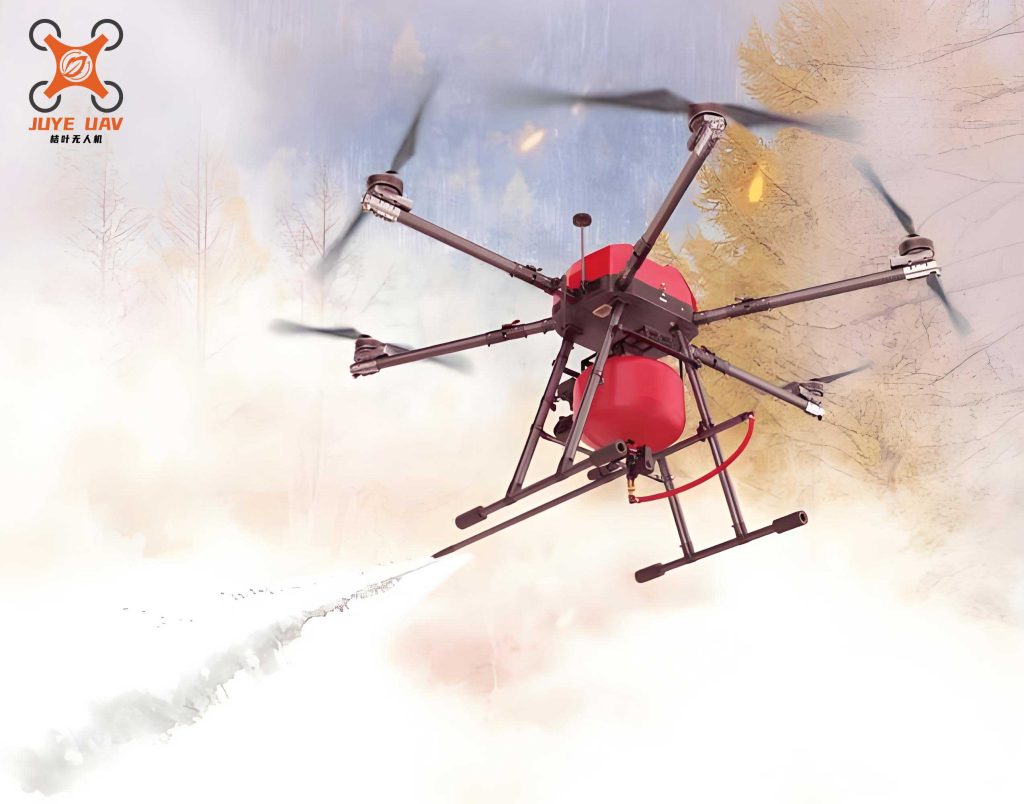
The initial fire scene assessment is where the fire UAV demonstrates immediate and unparalleled value. In dynamic and obscured environments, I have observed that drones can swiftly bypass physical barriers to conduct close-range, comprehensive surveys of the fire source. Equipped with specialized payloads, they gather crucial data inaccessible to ground teams. For instance, thermal imaging cameras penetrate dense smoke to locate trapped individuals based on heat signatures, while multi-spectral gas analyzers detect and map the concentration of dangerous gases like carbon monoxide (CO) and methane (CH₄). The integration of real-time 3D modeling technology further enhances reconnaissance efficacy. As the fire UAV flies a programmed path, it automatically generates detailed models and structural damage assessment maps, providing command centers with actionable, visual intelligence. This method of stereoscopic information collection drastically reduces response time and, most importantly, mitigates the risk of exposing firefighters to unknown dangers. In complex fires involving chemical plants or tall structures, the vertical take-off and landing (VTOL) capability of multi-rotor fire UAVs allows for multi-angle observation of fire spread patterns, significantly improving the accuracy of situational awareness.
Dynamic fire monitoring and early warning represent another critical technological breakthrough enabled by fire UAVs. By establishing pre-set flight paths, a network of drones can work collaboratively to continuously track the rate and direction of flame propagation. Onboard infrared sensors are capable of identifying hidden hot spots invisible to the naked eye. When this data is fused with Geographic Information System (GIS) layers, it automatically highlights high-risk zones, offering dynamic data support for strategic adjustments at the command post. In large-scale wildfire scenarios, fire UAVs equipped with high-definition optical and thermal cameras can operate for extended periods, providing live feeds of the fire front’s advancement. Coupled with edge computing, they can rapidly identify dangerous shifts in fire behavior caused by sudden wind changes. This all-weather, persistent surveillance capability allows forces to pre-emptively assess the risk of spotting and establish firebreaks proactively. Compared to traditional watchtower-based monitoring, the spatial coverage and data refresh rate of a fire UAV network provide a distinct advantage, particularly during nighttime operations or under adverse weather conditions where conventional methods falter.
The deployment of fire UAVs has also pioneered new pathways for delivering critical rescue supplies. When internal pathways are blocked by debris or compromised by the risk of secondary explosions, reaching trapped victims becomes exceedingly difficult for rescue teams. In such scenarios, I have seen fire UAVs carry lightweight essential equipment—such as emergency breathing apparatus, first-aid kits, or even two-way radios—and perform precision hover-and-delivery maneuvers to specified windows or balconies. For high-rise building fires, specially designed delivery capsules can withstand a degree of thermal updraft and turbulence to ensure a stable trajectory. Some modified fire UAV platforms are even capable of deploying and tensioning lightweight ropes or cables, establishing potential emergency egress routes for survivors. This point-to-point delivery mode transcends the spatial limitations of ground-based apparatus. Compared to the deployment of aerial ladder platforms, the rapid launch capability of a fire UAV—often ready for flight within minutes of alarm—makes it uniquely suited for complex terrains like the narrow streets of older urban districts where large vehicles cannot access.
Furthermore, fire UAVs play a vital role in ensuring robust emergency communication and illumination. Fires can damage local communication infrastructure and create significant electromagnetic interference. In response, fire UAVs equipped with aerial relay communication modules can be rapidly deployed to establish a temporary, resilient network, restoring voice and data links between the command post and frontline personnel. A formation of such drones can create an adaptive “cell tower in the sky,” intelligently adjusting its coverage to follow the incident’s evolution. For nighttime operations, fire UAVs integrated with high-lumen searchlights can form a mobile illumination matrix. The intensity and angle of this lighting can be controlled remotely to eliminate shadows and blind spots associated with traditional ground-based lighting vehicles. Moreover, fire UAVs fitted with laser projection systems can project visible safety egress paths or directional indicators onto the ground or through smoke, guiding disoriented occupants to safety. This layered support system enhances overall operational coordination and, through technological innovation, addresses functional gaps in conventional equipment, proving indispensable under extreme conditions of power and network failure.
However, the integration of fire UAVs at the grassroots level is not without significant challenges, which I have encountered firsthand. These hurdles span technical, logistical, human, and regulatory domains.
Technical Limitations
The practical utility of fire UAVs is often constrained by several persistent technical shortcomings. Limited flight endurance directly impacts mission continuity. During large-scale, protracted incidents, the frequent need to return for battery swaps can interrupt critical monitoring, potentially missing crucial developments. The lack of high-temperature and corrosion-resistant materials in airframes and electronics is a major concern, especially in industrial fires where corrosive gases can degrade components, leading to system failures. Sensor reliability in extreme conditions is another issue; for example, thermal imagers can misinterpret intense steam plumes as active fire sources within thick smoke. Furthermore, the lack of standardized data interfaces between equipment from different manufacturers creates “information silos,” hindering real-time data sharing and collaborative 3D modeling when multiple units respond to the same incident. These interconnected technical bottlenecks sometimes force crews to rely on traditional, riskier reconnaissance methods, undermining the transformative potential of the technology. The operational effectiveness \( E \) of a fire UAV in such conditions can be conceptually modeled as a function of multiple limiting factors:
$$
E = \eta \cdot \int_{0}^{T} \left[ \frac{S(t) \cdot R(t)}{P(t) + \epsilon} \right] dt
$$
Where \( \eta \) represents system integration efficiency (hindered by non-standard interfaces), \( T \) is the total required mission time, \( S(t) \) is sensor reliability (which degrades in heat/smoke), \( R(t) \) is communication link robustness, \( P(t) \) is power availability (a function of battery life), and \( \epsilon \) represents other environmental interference. Maximizing \( E \) requires addressing each variable in the equation.
| Challenge Category | Specific Manifestation | Impact on Operations |
|---|---|---|
| Endurance & Power | Short battery life (typically 25-40 mins under load); lack of quick-swap or in-field charging solutions. | Frequent mission interruptions; reduced area coverage during extended incidents. |
| Environmental Resilience | Airframe and sensor vulnerability to extreme heat, smoke particulates, and corrosive chemicals. | Risk of catastrophic failure in aggressive fire environments; shortened equipment lifespan. |
| Sensor Accuracy | False positives/negatives in thermal imaging due to steam or reflective surfaces; gas sensor drift. | Misallocation of suppression resources; incorrect hazard assessment. |
| Data Interoperability | Proprietary data formats and communication protocols across different UAV brands. | Inability to fuse data from multiple sources; impedes coordinated multi-unit response. |
| Payload & Performance | Trade-off between payload capacity (for better sensors/equipment) and flight time/agility. | Limits the complexity of missions (e.g., heavy payloads for extinguishing agents). |
Equipment Maintenance and Logistics
Sustaining a state of operational readiness requires a robust maintenance and logistics framework, which is often lacking at the grassroots level. The motors and propellers of a fire UAV experience accelerated wear in dusty, sooty environments. Without access to specialized diagnostic tools like vibration analyzers, maintenance often relies on subjective judgment, introducing safety risks. The supply chain for certified parts can be fragmented, and incompatibilities between batches of the same model can complicate emergency repairs. Improper storage, such as keeping lithium batteries in non-climate-controlled vehicle bays, leads to rapid capacity degradation. In remote areas, the absence of authorized service centers means faulty equipment must be shipped out for repair, creating extended gaps in operational capability. There is also a pronounced skills gap; maintenance personnel’s knowledge may not keep pace with technological advancements, leading to improper repair techniques that increase the risk of non-combat failures.
Operator Proficiency and Training
The effectiveness of any fire UAV system is ultimately dependent on the skill of its operator. At the grassroots level, firefighters are already burdened with mastering a wide array of traditional skills (e.g., forcible entry, hose management, technical rescue). Adding the demands of sophisticated flight operations, airspace management, data analysis, and payload control creates a significant training burden. Existing simulator training often fails to replicate the complex electromagnetic interference, intense thermal updrafts, and poor visibility of a real fireground. Training curricula frequently focus disproportionately on basic flight controls, neglecting advanced applications like 3D model interpretation, multi-spectral data analysis, and coordinated multi-drone tactics. Without a standardized certification and proficiency assessment system, there is a wide variance in competency levels between operators and stations, leading to inconsistent outcomes and increased potential for operational errors during high-stress missions.
Regulatory and Airspace Integration Hurdles
Perhaps one of the most systemic challenges is the conflict between existing airspace management regulations and the imperative needs of emergency response. The standard process for obtaining low-altitude flight authorization often involves multi-agency coordination, which can introduce critical delays during the initial, golden hour of a fire response. In urban settings, the control signals for fire UAVs can interfere with, or be interfered by, public communication networks, and current regulations seldom grant priority spectrum access for emergency services. The lack of standardized protocols for multi-drone operations from different responding agencies raises the risk of in-air collisions, especially in the congested airspace around a high-rise fire. Furthermore, when units respond across jurisdictional boundaries, incompatible air traffic management systems can cause communication delays and confusion. The often-rigid establishment of temporary flight restriction (TFR) zones can inadvertently hinder a fire UAV’s ability to conduct vital close-range inspection of critical areas.
To elevate the application level of fire UAVs in grassroots fire stations, a multi-faceted and systemic strategy is required, targeting the aforementioned challenges.
Advancing Technological Innovation
Enhancing the core performance of fire UAVs necessitates a dedicated, application-driven research and development agenda. This involves close collaboration between industry, academia, and fire service end-users. Development should focus on creating airframes from advanced, heat-resistant composites and optimizing aerodynamic designs for stability in turbulent, fire-driven winds. Sensor suites must evolve towards multi-source data fusion, combining inputs from visual, thermal, and multi-spectral sensors with onboard AI processing to reduce false alarms and provide more contextual awareness. A critical priority is the industry-wide adoption of standardized data and communication protocols to ensure seamless interoperability. To tackle the endurance bottleneck, research into rapid battery-swapping mechanisms, hybrid power systems, and even wireless in-field charging should be accelerated. Establishing dedicated testing facilities that can simulate extreme fire phenomena (e.g., flashover, fire whirls) is essential for validating robustness. The goal is to create a differentiated product matrix, allowing stations to select and configure fire UAV platforms based on their specific risk profile (e.g., wildland-urban interface vs. industrial complex). The potential improvement in area coverage \( A_{cov} \) from a networked fleet of \( n \) improved fire UAVs can be expressed as:
$$
A_{cov}(t) = \sum_{i=1}^{n} \left( v_i \cdot t_{on,i} \cdot w_i \right)
$$
where \( v_i \) is the effective scan speed of the i-th fire UAV, \( t_{on,i} \) is its on-station time (greatly extended by better batteries/power systems), and \( w_i \) is the effective scan width of its sensor package (enhanced by fused sensors). R&D directly aims to maximize \( v \), \( t_{on} \), and \( w \).
Establishing a Comprehensive Maintenance Management System
A holistic, life-cycle support network is key to maintaining high equipment availability. This involves creating tiered maintenance protocols—from pre-flight checklists and post-mission cleaning to scheduled deep inspections—supported by clear, visual guides. Regional maintenance hubs should be established at the provincial or state level, stocked with specialized test equipment and a robust inventory of critical parts, capable of providing emergency support within a few hours. Implementing a digital health monitoring platform that analyzes flight data logs to predict motor wear or battery degradation enables proactive, preventive maintenance. A standardized parts sourcing and traceability system is also vital. At the station level, investments must be made in proper storage infrastructure like explosion-proof charging cabinets and temperature-controlled lockers. Finally, a mechanism for cross-jurisdictional equipment sharing and technical support during major incidents can optimize resource utilization.
| Strategic Pillar | Core Objectives | Key Actions & Outcomes |
|---|---|---|
| Technology Development | Increase endurance, resilience, and intelligence of fire UAV systems. | Develop high-temp composites; promote sensor fusion & AI; standardize data interfaces; explore alternative power (fuel cells, tethering). |
| Maintenance & Logistics | Achieve >90% operational readiness rate; minimize repair downtime. | Establish regional service hubs; implement predictive maintenance via IoT data; create standardized parts supply chain; mandate proper storage facilities. |
| Personnel Training & Certification | Create a standardized, tiered competency framework for fire UAV operators. | Integrate fire UAV ops into national fire service qualification standards; develop advanced simulators with realistic fireground physics; establish recurrent proficiency checks and tactical exercise programs. |
| Regulatory & Policy Adaptation | Create a permissive but safe regulatory environment for emergency fire UAV use. | Advocate for pre-approved emergency flight corridors and automatic airspace deconfliction upon dispatch; secure protected radio spectrum for public safety UAS; develop inter-agency multi-drone coordination protocols. |
Strengthening Professional Operator Training
Building a structured, progressive training ecosystem is fundamental to unlocking the full tactical potential of fire UAVs. Operator certification should be integrated into the national fire service professional qualification system, with clear benchmarks for Basic, Advanced, and Tactical Commander levels. Basic training covers safe flight and simple reconnaissance. Advanced training incorporates mission planning, 3D modeling, and data analysis. The tactical level focuses on multi-drone swarm coordination, integration into incident command, and complex decision-making under stress. Investment in high-fidelity simulators that replicate fireground physics—thermal plumes, GPS-denied environments, signal interference—is crucial for safe, effective skill acquisition. A cadre of specialized instructor pilots should be developed to provide mentorship and standardize training delivery across regions. Regular, scenario-based exercises that involve both drone operators and ground crews are essential for building effective teamwork. The proficiency \( P_{op} \) of an operator can be modeled as a function of training quality and experience:
$$
P_{op}(t) = P_0 + \alpha \int_{0}^{t} T(\tau) d\tau + \beta \cdot \log(1 + E(t))
$$
Here, \( P_0 \) is base competency, \( T(\tau) \) represents the quality and intensity of ongoing training, \( E(t) \) is the accumulated field experience (in relevant missions), and \( \alpha \), \( \beta \) are coefficients denoting the relative importance of training vs. experience. A robust training system maximizes \( T(\tau) \) efficiently.
Promoting Supportive Regulations and Policies
Optimizing the operational environment requires proactive engagement with aviation authorities to develop regulations that balance safety with emergency operational needs. Key initiatives include establishing pre-coordinated, “green channel” airspace activation procedures that allow immediate fire UAV launch upon confirmation of a major incident. Advocacy is needed to secure dedicated, protected radio spectrum for public safety UAS to ensure reliable control and data links. Developing and mandating national-level technical standards for multi-agency drone coordination, including common traffic management (UTM) interfaces and deconfliction protocols, is critical. Furthermore, regulatory frameworks should encourage or require manufacturers to embed geo-awareness and safety features (like automated collision avoidance tied to national UTM systems) into fire UAV platforms from the design stage. The goal is to create a regulatory ecosystem that minimizes administrative friction during emergencies while upholding the highest standards of airspace safety.
In conclusion, the integration of fire UAVs into grassroots fire and rescue operations is fundamentally altering traditional paradigms of situational awareness and emergency intervention. These systems provide critical capabilities for accessing and assessing hazardous environments that are beyond the reach of human responders. From my perspective, while challenges related to technology, sustainment, training, and regulation are real and present, they are not insurmountable. The future trajectory points toward fire UAVs with greater endurance, increased payload capacity, heightened levels of autonomy, and deeper intelligence through AI integration. As these technological advancements converge with more sophisticated operator training and supportive policy frameworks, the fire UAV will transition from a valuable support tool to a core component of the modern firefighting arsenal. Its continued evolution promises to significantly enhance the safety, efficiency, and effectiveness of frontline fire stations, providing a decisive technological edge in protecting communities and saving lives.