
In recent years, China UAV drone technology has seen rapid advancements, with quadrotor unmanned aerial vehicles (UAVs) becoming pivotal in applications such as surveillance, delivery, and agricultural monitoring. However, these drones often operate in dynamic and harsh environments, where actuator faults—such as propeller damage or motor efficiency loss—can lead to system instability or crashes. This paper addresses the critical challenge of finite-time trajectory tracking control for China UAV drones under simultaneous actuator gain failures and bias faults. We propose a novel Finite-Time Adaptive Sliding Mode Fault-Tolerant Control (FT-ASMFTC) scheme, which integrates fast terminal sliding mode control with a certainty equivalence adaptive mechanism. Our approach ensures robust stability and precise tracking within a prescribed time, even in the presence of compound faults, enhancing the reliability of China UAV drone operations.
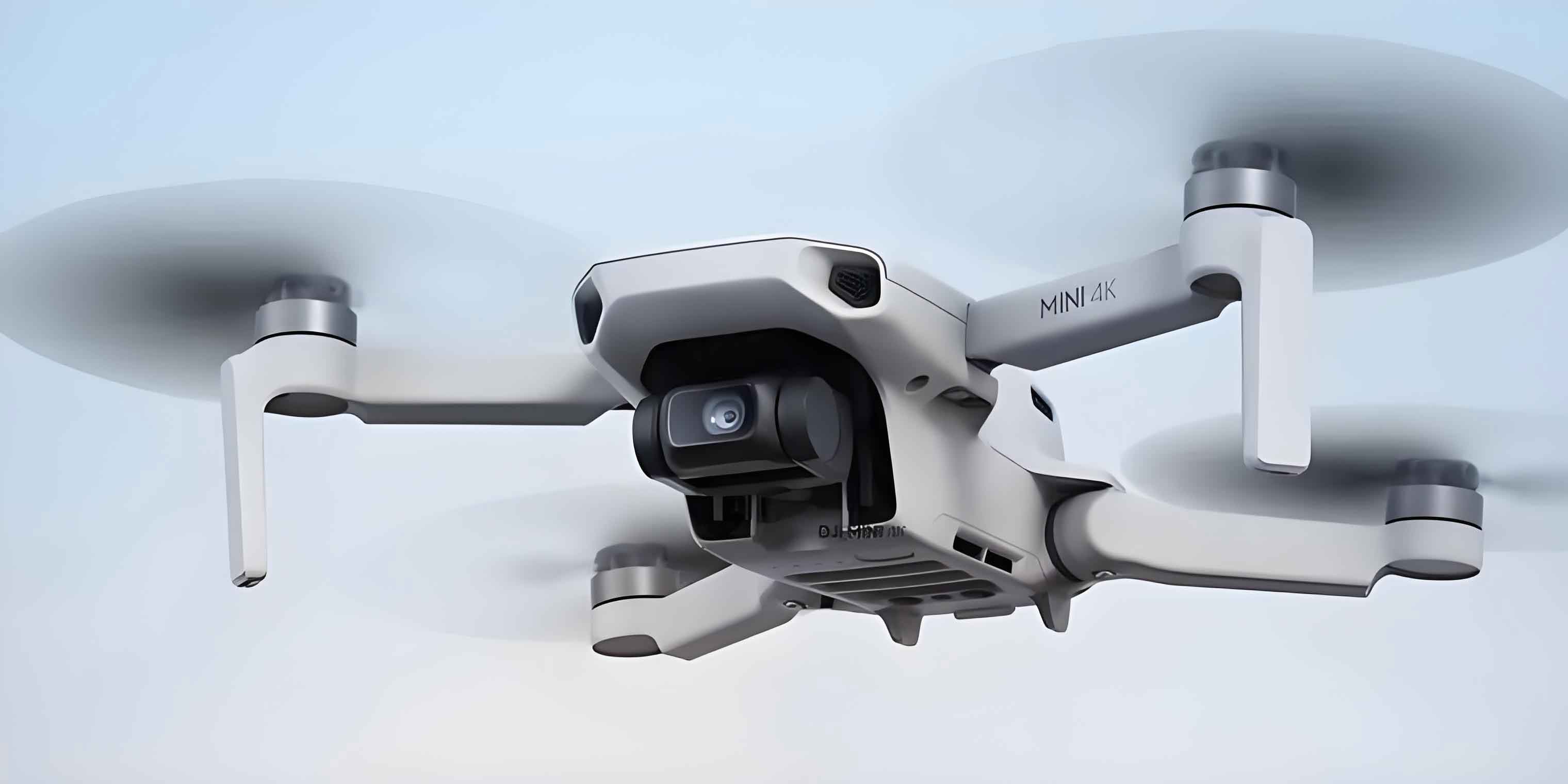
The proliferation of China UAV drone systems has revolutionized various sectors, but their safety remains a concern due to potential actuator faults. These faults can arise from factors like blade erosion, motor wear, or external impacts, causing partial power loss or biased control inputs. Traditional fault-tolerant methods often rely on precise fault identification or exhibit slow convergence, which may not suffice for time-sensitive missions. Our work leverages adaptive control to estimate fault parameters online without prior knowledge, combined with sliding mode techniques for finite-time convergence. This synergy offers a resilient solution for China UAV drone fleets, ensuring continuous operation despite faults.
To frame the problem, we first establish the dynamics of a quadrotor China UAV drone. The system is modeled under standard assumptions: the drone is a rigid body with uniform mass distribution, and its center of gravity coincides with the geometric center. The kinematics and dynamics are derived in inertial and body frames. Let $\eta_t = [x, y, z]^T$ denote the position in the inertial frame, and $\eta_r = [\phi, \theta, \psi]^T$ represent the attitude angles (roll, pitch, yaw). The dynamics are given by:
$$
\begin{aligned}
\ddot{\eta}_t &= \frac{1}{m} \left( f_z R e_3 – f_{r} z \right) – g e_3, \\
\ddot{\eta}_r &= W_f^{-1} \left( I_r^{-1} \left( \tau_r – f_{r} z \right) \right),
\end{aligned}
$$
where $m$ is the mass, $g$ is gravity, $R$ is the rotation matrix, $f_z$ is the total thrust, $\tau_r$ are the moments, $I_r$ is the inertia matrix, and $W_f$ is a transformation matrix. The terms $f_{r}$ and $z$ account for aerodynamic drag and disturbances. This model forms the basis for control design in China UAV drone applications.
Actuator faults are modeled to include both efficiency loss and additive biases. For each actuator $i$ (with $i=1,2,3,4$ for the four rotors), the actual output $\tau_{t,i}$ is:
$$
\tau_{t,i} = \sigma_i u_t + u_{st},
$$
where $u_t$ is the controller output, $\sigma_i$ (with $0 \leq \sigma_i \leq 1$) represents the efficiency factor, and $u_{st}$ is an unknown additive fault. Cases include: $\sigma_i = 1, u_{st} = 0$ (healthy); $\sigma_i = 1, u_{st} \neq 0$ (bias fault); $0 < \sigma_i < 1, u_{st} = 0$ (partial loss); and $\sigma_i = 0, u_{st} \neq 0$ (stuck fault). For China UAV drones, such compound faults can occur due to environmental wear or manufacturing defects, necessitating robust control strategies.
The overall fault-augmented dynamics for the China UAV drone become:
$$
\begin{aligned}
\ddot{\eta}_t &= \frac{1}{m} \left( f_z R e_3 – f_{r} z \right) – g e_3 + \frac{1}{m} \sigma u_{sz}, \\
\ddot{\eta}_r &= W_f^{-1} \left( I_r^{-1} \left( \mu_s u_r + u_{sr} – f_{r} z \right) \right),
\end{aligned}
$$
where $\sigma$ and $\mu_s$ are diagonal matrices of efficiency factors, and $u_{sz}, u_{sr}$ are additive faults. This formulation captures simultaneous gain and bias faults, common in real-world China UAV drone scenarios.
Our FT-ASMFTC method employs a hierarchical dual-loop structure. The outer loop handles position tracking, converting desired positions $x_d, y_d, z_d$ into attitude commands $\phi_d, \theta_d$, while the inner loop manages attitude control with adaptive fault compensation. For the altitude $z$-subsystem, we design a fast terminal sliding surface:
$$
s_z = \dot{e}_z + a_z e_z + b_z e_z^{n_z/m_z},
$$
where $e_z = z_d – z$, $a_z > 0$, $b_z > 0$, and $n_z, m_z$ are positive odd integers with $m_z > n_z$. This surface ensures finite-time convergence. To mitigate chattering, we use a hyperbolic tangent function in the reaching law:
$$
\dot{s}_z = -k_{1z} s_z – k_{2z} \tanh\left(\frac{s_z}{\gamma}\right),
$$
with $k_{1z}, k_{2z} > 0$ and $\gamma > 0$. The control law for thrust $u_z$ is derived as:
$$
u_z = \frac{m}{\cos \phi \cos \theta} \left( \hat{\beta}_z \left( \ddot{z}_d + a_z \dot{e}_z + b_z \frac{n_z}{m_z} e_z^{n_z/m_z – 1} \dot{e}_z + \frac{k_3}{m} \dot{z} + g \right) + \hat{u}_{sz} \right),
$$
where $\hat{\beta}_z = 1/\hat{\sigma}_1$ and $\hat{u}_{sz}$ are adaptive estimates. The adaptive laws are:
$$
\begin{aligned}
\dot{\hat{\beta}}_z &= -\lambda_{1z} s_z \left( \ddot{z}_d + a_z \dot{e}_z + b_z \frac{n_z}{m_z} e_z^{n_z/m_z – 1} \dot{e}_z + \frac{k_3}{m} \dot{z} + g \right), \\
\dot{\hat{u}}_{sz} &= -\lambda_{2z} s_z,
\end{aligned}
$$
with $\lambda_{1z}, \lambda_{2z} > 0$. These laws update only when $s_z \neq 0$, preventing parameter drift. For horizontal position $(x, y)$-subsystems, similar sliding surfaces and controls are designed, yielding virtual controls $u_x, u_y$ that generate desired attitudes:
$$
\phi_d = \arcsin\left( u_x \sin \psi_d – u_y \cos \psi_d \right), \quad \theta_d = \arcsin\left( \frac{u_x \cos \psi_d + u_y \sin \psi_d}{\cos \phi_d} \right).
$$
This decoupling simplifies control for China UAV drones under faults.
For the attitude subsystem, define the error $\Theta_e = \eta_{r,d} – \eta_r$. The sliding surface is:
$$
s_r = \dot{\Theta}_e + a_r \Theta_e + b_r \Theta_e^{n_r/m_r},
$$
with $a_r > 0$, $b_r > 0$, and $m_r > n_r$. The reaching law uses:
$$
\dot{s}_r = -K_{1r} s_r – K_{2r} \tanh\left(\frac{s_r}{\gamma}\right),
$$
where $K_{1r}, K_{2r}$ are positive diagonal matrices. The control law for moments $u_r$ is:
$$
u_r = \hat{\mu}_s^{-1} \left( I_r \left( W_f \left( \ddot{\eta}_{r,d} + a_r \dot{\Theta}_e + b_r \frac{n_r}{m_r} \Theta_e^{n_r/m_r – 1} \dot{\Theta}_e \right) + f_{r} z \right) + \hat{u}_{sr} \right),
$$
with adaptive laws:
$$
\begin{aligned}
\dot{\hat{\mu}}_s &= -\Gamma_1 F G, \\
\dot{\hat{u}}_{sr} &= -\Gamma_2 F I,
\end{aligned}
$$
where $F = \text{diag}(s_r)$, and $\Gamma_1, \Gamma_2$ are positive definite matrices. These adaptations enable real-time fault compensation for China UAV drones.
Stability is proven via Lyapunov theory. For the $z$-subsystem, consider the Lyapunov function:
$$
V_z = \frac{1}{2} s_z^2 + \frac{1}{2 \lambda_{1z}} \tilde{\beta}_z^2 + \frac{1}{2 \lambda_{2z}} \tilde{u}_{sz}^2,
$$
where $\tilde{\beta}_z = \beta_z – \hat{\beta}_z$ and $\tilde{u}_{sz} = u_{sz} – \hat{u}_{sz}$. Its derivative yields:
$$
\dot{V}_z \leq -c_z V_z – d_z V_z^{1/2},
$$
with $c_z, d_z > 0$. By Lemma 1 (finite-time stability), the system converges within time $T_z \leq \frac{2}{c_z} \ln\left( \frac{c_z V_z(0)^{1/2} + d_z}{d_z} \right)$. Similarly, for the attitude subsystem, with $V_r = \frac{1}{2} s_r^T s_r + \frac{1}{2} \text{tr}(\tilde{\mu}_s \Gamma_1^{-1} \tilde{\mu}_s^T) + \frac{1}{2} \tilde{u}_{sr}^T \Gamma_2^{-1} \tilde{u}_{sr}$, we obtain $\dot{V}_r \leq -c_r V_r – d_r V_r^{1/2}$, ensuring finite-time convergence. This guarantees that China UAV drone states reach equilibrium despite faults.
To validate FT-ASMFTC, we compare it with Robust Global Fast Terminal Sliding Mode Control (RGFTSMC) and Asymptotical Adaptive Control (AAC) via simulations. Parameters for a typical China UAV drone are: mass $m = 2 \, \text{kg}$, arm length $l = 0.2 \, \text{m}$, inertia $I_x = I_y = 1.25 \, \text{kg} \cdot \text{m}^2$, $I_z = 2.5 \, \text{kg} \cdot \text{m}^2$, and drag coefficients $k_1 = k_2 = k_3 = 0.01$, $k_4 = k_5 = k_6 = 0.012$. The reference trajectory is a helical path: $x_d = \sin(\pi t)$, $y_d = \cos(\pi t)$, $z_d = t$, $\psi_d = 3$. Faults are injected as per Eqs. (35)-(37): single actuator loss at 5 s, multiple losses at 10 s, combined loss and bias at 15 s, and multiple faults at 20 s.
The controller parameters are summarized in Table 1, optimized for China UAV drone dynamics.
| Parameter | Value | Parameter | Value |
|---|---|---|---|
| $a_h$ | 1 | $k_{1h}$ | 7 |
| $a_r$ | [15,15,15] | $k_{2h}$ | 0.1 |
| $b_h$ | 1.5 | $K_{1r}$ | diag(60,60,60) |
| $b_r$ | [13,13,13] | $K_{2r}$ | diag(0.1,0.1,0.1) |
| $m_h$ | 15 | $\lambda_{1z}$ | 0.08 |
| $m_r$ | 15 | $\lambda_{2z}$ | 1 |
| $n_h$ | 13 | $\Gamma_1$ | diag(0.05,0.05,0.05) |
| $n_r$ | 1 | $\Gamma_2$ | I |
Simulation results demonstrate the efficacy of FT-ASMFTC for China UAV drones. Position tracking errors under FT-ASMFTC remain within ±0.1 m for $x$ and $z$, and ±0.03 m for $y$, converging rapidly after faults. In contrast, AAC shows larger deviations, and RGFTSMC exhibits oscillations. Attitude tracking errors with FT-ASMFTC are below 3° for roll and under 0.2° for pitch and yaw, outperforming both comparators. The finite-time convergence is evident, with settling times shorter than 2 seconds post-fault.
Table 2 compares settling times for roll angle error $\Theta_\phi$ after fault occurrences, highlighting FT-ASMFTC’s speed.
| Control Method | 5 s Fault | 10 s Fault | 15 s Fault | 20 s Fault |
|---|---|---|---|---|
| FT-ASMFTC | 0.1 s | 1.5 s | 0.2 s | 0.2 s |
| RGFTSMC | 0.9 s | 1.6 s | 2.0 s | 3.5 s |
| AAC | 0.3 s | 1.7 s | 1.9 s | 4.0 s |
Further, we evaluate performance using the Integral of Time multiplied by Absolute Error (ITAE) metric. Table 3 shows ITAE values for attitude errors across fault times, confirming FT-ASMFTC’s superiority for China UAV drones.
| Metric | Control | 5 s | 10 s | 15 s | 20 s |
|---|---|---|---|---|---|
| ITAE_$\Theta_\phi$ | FT-ASMFTC | 0.0317 | 0.1402 | 0.1939 | 0.2150 |
| RGFTSMC | 0.4226 | 0.8423 | 1.8150 | 4.0980 | |
| AAC | 0.6100 | 1.0240 | 1.8620 | 3.2460 | |
| ITAE_$\Theta_\theta$ | FT-ASMFTC | 0.0332 | 0.1626 | 0.2151 | 0.3651 |
| RGFTSMC | 0.7939 | 1.6280 | 2.7290 | 5.0200 | |
| AAC | 1.0220 | 1.7840 | 2.9920 | 5.5960 | |
| ITAE_$\Theta_\psi$ | FT-ASMFTC | 0.0240 | 0.0524 | 0.0922 | 0.1141 |
| RGFTSMC | 0.0332 | 0.0800 | 0.1456 | 0.2294 | |
| AAC | 0.0500 | 0.1111 | 0.1967 | 0.3029 |
Actuator fault estimates are plotted in Fig. 8, showing adaptive laws tracking fault variations closely. For instance, $\hat{\sigma}_1$ follows the true $\sigma_1$ during loss faults, and $\hat{u}_{sz}$ approximates bias faults. Although small errors persist due to sliding surface constraints, the control system compensates effectively without exact knowledge, a key advantage for China UAV drone deployments in uncertain environments.
To test limits, we increase rotor 1 loss fault linearly from 5 s. At 12 s, the fault reaches 76% efficiency loss, causing other rotors to saturate at 2000 rpm. The position response shows a transient jump but stabilizes, indicating FT-ASMFTC handles up to 76% single actuator loss for China UAV drones. Beyond this, performance degrades, suggesting a practical bound.
In conclusion, our FT-ASMFTC scheme offers a robust solution for China UAV drone fault-tolerant control. By integrating adaptive estimation with finite-time sliding mode control, it ensures rapid convergence and high precision under compound actuator faults. The method eliminates need for fault priori, reduces chattering via hyperbolic tangent functions, and proves stability through Lyapunov analysis. Simulations validate its superiority over RGFTSMC and AAC in terms of settling time, ITAE, and tracking accuracy. Future work will extend this to multi-drone formations and real-world flight tests, further enhancing the resilience of China UAV drone systems. This research underscores the potential of advanced control theories in safeguarding autonomous aerial platforms, contributing to the growing ecosystem of China UAV drone technology.
The advancements in China UAV drone controls are pivotal for national security and economic growth. As these drones become more integrated into daily operations, fault-tolerant strategies like FT-ASMFTC will play a crucial role in ensuring reliability. We anticipate that our approach will inspire further innovations in adaptive control for aerial robotics, solidifying China’s leadership in UAV technology. The continuous improvement of such systems will enable more complex missions, from disaster response to precision agriculture, all while maintaining safety standards.
Ultimately, the fusion of control theory with practical engineering drives progress in China UAV drone capabilities. Our work demonstrates that finite-time adaptive mechanisms can overcome actuator faults, paving the way for more autonomous and resilient fleets. As research evolves, we expect to see broader adoption of these methods in commercial and defense sectors, reinforcing the importance of robust control in the era of smart aviation.