
In modern civilian and military operations, the unmanned aerial vehicle (UAV) has become an indispensable platform for reconnaissance, emergency communication, environmental monitoring, and disaster response. However, the increasing reliance on unmanned aerial vehicle networks also introduces severe cybersecurity challenges. Traditional centralized intrusion detection systems require uploading all traffic data to a central server, which is impractical in highly dynamic and resource-constrained flying ad-hoc networks (FANETs). Federated learning offers a privacy-preserving alternative, but the high mobility of unmanned aerial vehicle nodes causes Doppler shifts that degrade the physical layer transmission quality. Moreover, the non-independent and identically distributed (non-IID) data distribution across UAVs hinders global model convergence. In multi-task collaborative scenarios, the limited communication resources are further strained, aggravating these problems.
In this work, I systematically study federated-learning-based intrusion detection for high-speed unmanned aerial vehicle networks. My contributions are twofold. First, I propose a joint optimization framework that mitigates the negative impact of Doppler shifts on federated learning. Second, I design a two-layer multi-task federated learning framework for post-disaster emergency scenarios, enabling efficient multi-task collaboration under strict communication constraints.
The remainder of this paper is organized as follows. In Section 1, I describe the system model and the Doppler-aware MIMO-OFDM communication model. In Section 2, I present the personalized federated learning framework and its convergence analysis. In Section 3, I introduce the PVBO algorithm for joint optimization of power, velocity, and resource blocks. In Section 4, I extend the framework to multi-task federated learning and propose the TLO algorithm. In Section 5, I report experimental results and provide a comprehensive discussion.
1. Communication System Model for High-Speed Unmanned Aerial Vehicle Networks
I consider a cellular-connected unmanned aerial vehicle network where multiple multi-antenna UAVs transmit short-packet data to a single-antenna base station (BS) over a MIMO-OFDM system. The BS employs orthogonal frequency division multiplexing (OFDM) and multiple-input multiple-output (MIMO) techniques to support concurrent transmissions. Let $U$ denote the number of UAVs, $N_T$ the number of transmit antennas at UAV side, and $N_R$ the number of receive antennas at the BS. The total system bandwidth is divided into $N$ orthogonal subcarriers, and each UAV occupies one resource block.
The received signal at the BS for subcarrier $k$ can be expressed as:
$$
Y(k) = Z_R^H(k) H(k) Z_S^H(k) \sqrt{P_i} X(k) + I(k) + n(k),
$$
where $Z_R(k)$ and $Z_S(k)$ are the receive and transmit beamforming matrices, $H(k)$ is the channel frequency response matrix for the $k$-th subcarrier, $X(k)$ is the transmitted signal vector, $P_i$ is the transmit power of UAV $i$, $I(k)$ is the inter-carrier interference (ICI) caused by Doppler shifts, and $n(k)$ is additive white Gaussian noise with variance $N_0$.
Due to the high mobility of unmanned aerial vehicle nodes, the channel changes rapidly. The maximum Doppler shift is given by
$$
f_d = \frac{V_s}{\lambda_c},
$$
where $V_s$ is the UAV speed and $\lambda_c$ is the carrier wavelength. The Doppler shift destroys the orthogonality of OFDM subcarriers, resulting in ICI. The ICI power on subcarrier $k$ is derived as
$$
\mathbb{E}\bigl[|I_i(k)|^2\bigr] = N_T E_0 \sum_{p=0}^{L-1} \sum_{l=1, l \neq k}^{N-1} \|Z_R^H(k)\|^2 \frac{\sigma_p^2}{N^2} \|Z_S^H(k)\|^2 \Bigl\{ N + 2 \sum_{m=1}^{N-1} (N-m) J_0(2\pi m f_d T_s) \cos\!\Bigl(\frac{2\pi l m}{N}\Bigr) \Bigr\},
$$
where $J_0(\cdot)$ is the zero-order Bessel function, $\sigma_p^2$ is the power of the $p$-th path, $T_s$ is the symbol duration, and $E_0 = \mathbb{E}[|X_j(l)|^2]$ is the average symbol energy.
I model the channel as a Rician fading channel with Rician factor $K$. The channel matrix is written as
$$
H(k) = \sqrt{\frac{K}{K+1}} H_u(k) + \sqrt{\frac{1}{K+1}} H_f(k),
$$
where $H_u(k)$ is the deterministic line-of-sight component and $H_f(k)$ is the scattered component. The estimation error of $H_f(k)$ is incorporated as
$$
H_f(k) = \hat{H}_f(k) + e\Omega,
$$
where $\Omega$ is a complex Gaussian matrix with zero mean and unit variance, and $e$ is the channel estimation error metric. After singular value decomposition and signal detection, the virtual noise power is obtained as
$$
\mathbb{E}\{N(k)N^H(k)\} = \Bigl( \frac{e^2 P_i N_T E_0}{K+1} + N_T E_0 \beta + N_0 \Bigr) I_{N_T},
$$
where $\beta$ is the ICI coefficient. Consequently, the signal-to-interference-plus-noise ratio (SINR) for the $i$-th user on subcarrier $k$ is
$$
\gamma_i(k) = \frac{E_0 \lambda_i}{\frac{e^2 P_i N_T E_0}{K+1} + N_T E_0 \beta + N_0},
$$
where $\lambda_i$ is the singular value of the channel matrix. To simplify, I use the average SINR
$$
\gamma = \Bigl( \frac{1}{N_R} \sum_{j=1}^{N_R} \lambda_j \Bigr) \frac{E_0}{\frac{e^2 P_i N_T E_0}{K+1} + N_T E_0 \beta + N_0}.
$$
1.1 Packet Loss Rate over Rician Channels
Given the SINR $\gamma$, the probability density function of the Rician channel is
$$
p(\gamma) = \frac{K+1}{\bar{\gamma}} \exp\Bigl(-K – \frac{(K+1)\gamma}{\bar{\gamma}}\Bigr) I_0\Bigl(2\sqrt{\frac{K(K+1)\gamma}{\bar{\gamma}}}\Bigr),
$$
where $I_0(\cdot)$ is the modified Bessel function of the first kind and order zero. The average packet loss rate is the expectation of the bit error rate function $f(\gamma)$ over the channel distribution:
$$
P_{ave}(\gamma) = \int_0^\infty f(\gamma) p(\gamma) d\gamma.
$$
For analytical tractability, I adopt the following upper bound approximation:
$$
P_{ave}(\gamma) \leq 1 – \exp\Bigl(-\frac{w_0}{\gamma(K+1)}\Bigr),
$$
where $w_0 = \int_0^\infty f(\gamma) d\gamma$ is a constant determined by the modulation scheme. I denote the packet loss rate for UAV $i$ as $q_i = P_{ave}(\gamma)$. The base station uses cyclic redundancy check (CRC) to verify the integrity of received local models. Let $S(w_i)=1$ indicate that the local model from UAV $i$ is correctly received, and $S(w_i)=0$ otherwise. Thus,
$$
q_i = 1 – \Pr[S(w_i)=1].
$$
1.2 Energy Consumption Model for Unmanned Aerial Vehicle
Each unmanned aerial vehicle consumes energy for three purposes: local model training, local model transmission, and flight. The total energy consumption of UAV $i$ in one local update round is given by
$$
e_i(r_i, P_i) = \varsigma w_i f^2 Z(w_i) + P_i \frac{l_i^U}{U(r_i, P_i)} + \frac{1}{2} C_D \rho A v^3,
$$
where $\varsigma$ is the chip energy coefficient, $f$ is the CPU frequency, $w_i$ is the number of CPU cycles per bit, $Z(w_i)$ is the computation task size, $l_i^U$ is the model size, $U(r_i,P_i)$ is the uplink data rate, $C_D$ is the drag coefficient, $\rho$ is the air density, $A$ is the frontal area, and $v$ is the UAV speed.
2. Personalized Federated Learning for Intrusion Detection in High-Speed Unmanned Aerial Vehicle Networks
To address the non-IID data distribution across UAVs, I adopt a personalized federated learning (PFL) framework. In this framework, each client maintains three models: a local version of the global model $w_i^{(t)}$, a local model $v_i^{(t)}$, and a personalized model $\tilde{v}_i^{(t)}$. The server solves the global objective
$$
\min_{w \in \mathbb{R}^d} \Bigl[ F(w) \triangleq \frac{1}{n} \sum_{i=1}^{n} \mathbb{E}_{\xi_i}[f_i(w, \xi_i)] \Bigr],
$$
where $n$ is the total number of clients. Each client also solves a local objective
$$
\min_{v \in \mathbb{R}^d} f_i(\alpha_i v + (1-\alpha_i) w^*),
$$
where $w^* = \arg\min_w F(w)$ is the optimal global model, and $\alpha_i \in [0,1]$ balances the local and global models.
During each communication round, the selected clients perform $\tau$ local updates:
$$
w_i^{(t)} = w_i^{(t-1)} – \eta_t \nabla f_i\bigl(w_i^{(t-1)}; \xi_i^t\bigr),
$$
$$
v_i^{(t)} = v_i^{(t-1)} – \eta_t \nabla f_i\bigl(v_i^{(t-1)}; \xi_i^t\bigr),
$$
$$
\tilde{v}_i^{(t)} = \alpha_i v_i^{(t)} + (1-\alpha_i) w_i^{(t)}.
$$
After local training, the selected clients upload their local global model versions to the BS, which performs the aggregation:
$$
w^{(t+1)} = \frac{1}{|U_t|} \sum_{j \in U_t} w_j^{(t)}.
$$
2.1 Impact of Communication Impairments on the Global Model
In the considered system, when the BS receives a corrupted local model, it discards that update. Therefore, the effective global model is
$$
w(P, V, B) = \frac{\sum_{i=1}^{U} K_i \xi_i w_i b_i S(w_i)}{\sum_{i=1}^{U} K_i \xi_i b_i S(w_i)},
$$
where $B = [b_1, b_2, \ldots, b_U]$ is the user selection vector, $b_i \in \{0,1\}$. The global model update can be written as
$$
w^{t+1} = w^t – \eta \bigl( \nabla F(w^t) – \varepsilon \bigr),
$$
where $\varepsilon$ represents the gap between the ideal gradient and the effectively aggregated gradient:
$$
\varepsilon = \nabla F(w^t) – \frac{ \sum_{i=1}^{U} b_i \sum_{k_j=1}^{k_i} \nabla f(w; \xi_i^{k_j}) S(w_i) }{ \sum_{i=1}^{U} K_i \xi_i S(w_i) b_i }.
$$
The objective is to minimize the training loss considering wireless network parameters. The joint optimization problem is formulated as
$$
\min_{P, V, B} \frac{1}{K} \sum_{i=1}^{U} \sum_{k_j=1}^{k_i} f\bigl( w(P, V, B); \xi_i^{k_j} \bigr)
$$
subject to
$$
v_{\min} \le v \le v_{\max}, \quad T_i^U \le T_{\max}, \quad e_i \le \xi_E, \quad \sum_{k=1}^{N} \|Z_s(k)\|^2 \le P_{\max}, \quad b_i \in \{0,1\}.
$$
2.2 Convergence Analysis under Non-convex Conditions
I analyze the expected convergence rate of the personalized federated learning algorithm in a non-convex setting. I make the following standard assumptions:
Assumption 1 (Lipschitz continuous gradient): There exists a finite constant $L < \infty$ such that
$$
\|\nabla f_i(w^{(t+1)}) – \nabla f_i(w^{(t)})\| \le L \|w^{(t+1)} – w^{(t)}\|.
$$
Assumption 2 (Bounded gradient): The expected squared norm of the gradient is bounded by $G^2$:
$$
\|\nabla F(w^t)\|^2 \le G^2.
$$
Under these assumptions, I derive the expected loss difference between the actual and the ideal model after $t$ rounds. The key result is stated in the following theorem.
Theorem 1: Let $\mathbb{E}[\cdot]$ denote the expectation over packet loss events. The gap between the expected loss at step $t+1$ and the optimal loss satisfies
$$
\mathbb{E}\bigl(F(w^{t+1}) – F(w^*)\bigr) \le A^t \mathbb{E}\bigl(F(w^0) – F(w^*)\bigr) + \zeta_1 \Bigl( \eta – \frac{(2K-1)G^2\eta^2}{2K} \Bigr) \Bigl[ \sum_{i=1}^{U} K_i \xi_i (1 – b_i + b_i q_i) \Bigr] \sum_{j=0}^{t-1} A^j,
$$
where
$$
A = \Bigl( \frac{G^2 \eta^2 L}{K} – 2\eta L + 2L G^2 \eta^2 \Bigr) \zeta_2 \sum_{i=1}^{U} k_i \xi_i (1 – b_i + b_i q_i) – G^2 \eta^2 L,
$$
and $\zeta_1, \zeta_2 > 0$ are constants dependent on the data distribution. The term $\sum_{i=1}^{U} K_i \xi_i (1 – b_i + b_i q_i)$ explicitly captures the effect of packet loss and client selection. As $q_i$ decreases, the gap shrinks and the convergence accelerates.
This theorem demonstrates that the communication impairments directly affect the convergence bound. Therefore, optimizing the transmit power, the UAV velocity, and the resource block assignment can reduce the packet loss rate and improve the training performance.
3. PVBO: Joint Optimization of Power, Velocity, and Resource Blocks
Based on the convergence analysis, I propose the PVBO algorithm (Power, Velocity, and Resource Block Joint Optimization). The original optimization problem is a mixed-integer nonlinear program (MINLP). To solve it efficiently, I decompose it into three subproblems and solve them iteratively.
3.1 Optimization of Transmit Power
The uplink data rate for UAV $i$ is
$$
s_i^U = \sum_{m=1}^{M} b_{i,t}^{(m)} B_U \log_2\!\Bigl( 1 + \Bigl( \frac{1}{N_R} \sum_{j=1}^{N_R} \lambda_j \Bigr) \frac{ P_i h_i }{ \frac{e^2 N_T P_i}{K+1} + N_T P_i \beta + N_0 } \Bigr),
$$
where $B_U$ is the bandwidth per resource block, $h_i$ is the channel gain. The transmission delay is
$$
T_i^U = \frac{\text{size}(w_i^{(t)})}{s_i^U}.
$$
The uplink energy consumption is
$$
E_i^U = P_i T_i^U.
$$
Taking the derivative of $E_i^U$ with respect to $P_i$, I find that the energy is monotonically increasing in $P_i$. Therefore, the optimal power is the minimum of the maximum allowable power and the power that satisfies the energy constraint:
$$
P_i^* = \min\{ P_i, \xi_E, P_{i,\max} \}.
$$
3.2 Optimization of UAV Velocity
The optimal velocity is obtained by minimizing a weighted combination of energy, packet loss, and task completion time:
$$
\min_v J(v) = \alpha \Bigl( E_{\text{train}} + E_{\text{trans}} + \frac{1}{2} C_D \rho A v^3 \Bigr) + \beta q_i + \gamma T,
$$
subject to $v \le v_{\max}$. Here $T = D/v$ is the time to reach the destination. Since $J(v)$ is continuously differentiable, I use gradient descent to update $v$ iteratively. The speed is clipped to the feasible range $[v_{\min}, v_{\max}]$.
3.3 Optimization of Resource Block Allocation
Given the optimal power and velocity, I formulate the resource block assignment as a mixed-integer linear program (MILP) that minimizes the total cost:
$$
\min_B \sum_{m=1}^{M} \sum_{i=1}^{U} \text{cost}_{i,m} b_i^m,
$$
where $\text{cost}_{i,m}$ is a weighted combination of bandwidth demand, channel gain, transmit power, UAV speed, and packet loss rate:
$$
\text{cost}_{i,m} = w_1 \frac{B_i}{C_m} + w_2 \frac{1}{H_{i,m}} + w_3 P_i^* + w_4 v_i^* + w_5 q_i.
$$
The weights $w_1,\ldots,w_5$ are tunable. I solve the MILP using an interior-point method. The iterative procedure of PVBO is summarized below.
| Step | Action |
|---|---|
| 1 | Initialize $P$ randomly, $V = (v_{\min}+v_{\max})/2$, $B$ randomly. |
| 2 | BS receives local models from selected UAVs. |
| 3 | Aggregate global model $w^{(t+1)} = \frac{1}{|U_t|}\sum_{i\in U_t} w_i^{(t)}$. |
| 4 | Compute optimal resource allocation $B^* = \arg\min_B \sum \text{cost}_{i,m} b_i^m$. |
| 5 | Broadcast updated global model to selected UAVs. |
| 6 | Each UAV updates local models using personalized federated learning. |
| 7 | UAV optimizes transmit power $P_i^*$ and velocity $V^*$. |
| 8 | Repeat until convergence. |
4. Multi-Task Federated Learning for High-Speed Unmanned Aerial Vehicle Networks
In post-disaster emergency response, a swarm of unmanned aerial vehicles often needs to simultaneously perform multiple tasks, such as fire detection, damage assessment, and network intrusion detection. These tasks have heterogeneous data distributions and objectives. To handle this, I design a two-layer multi-task federated learning framework. The first layer deals with strongly heterogeneous tasks, namely the emergency task (ET) and the security task (ST). The second layer handles multiple subtasks within the emergency task that are highly correlated.
The overall objective is to minimize the weighted sum of losses across tasks:
$$
\min_{w_i^{ET}, w_i^{ST}} \sum_{i=1}^{U} \frac{D_i}{D} \Bigl[ \beta_i f_i^{ST}(w_i^{ST}) + (1-\beta_i) f_i^{ET}(w_i^{ET}) \Bigr],
$$
where $\beta_i \in [0,1]$ is the dynamic task weight. The emergency loss is the average of the subtask losses:
$$
f^{ET}(w_i^{ET}) = \frac{1}{M} \sum_{m=1}^{M} f_m\bigl( w_t^{s,ET}, w_{m,t}^{u,ET} \bigr),
$$
where $w^{s,ET}$ is the shared feature extractor and $w^{u,ET}$ are the task-specific predictors.
The dynamic weight $\beta_i$ is updated according to the training progress and the channel quality:
$$
\beta_i(t) = \text{clip}\Bigl( \beta_i(t-1) + \eta_1 \frac{\Delta f_i^{ST}(t)}{f_i^{ST}(t-1)} + \eta_2 q_i, \beta_{\min}, \beta_{\max} \Bigr),
$$
where $\eta_1$ is the loss-change sensitivity, $\eta_2$ is the communication-state sensitivity, and $q_i$ is the packet loss rate.
4.1 Two-Layer Architecture
The first layer distinguishes between the security task (e.g., intrusion detection) and the emergency task (e.g., fire detection). The second layer further decomposes the emergency task into multiple subtasks that share the same input data but have different output heads. For example, on the FMNIST dataset, I define three subtasks: color recognition, rotation angle recognition, and digit recognition. Each subtask has its own prediction head while sharing the feature extractor.
During each round, the server optimally assigns subtasks to UAVs using a UAV-ET association matrix $\gamma_{m,n}^{t,ET} \in \{0,1\}$. The local update for the shared feature extractor and task-specific predictor are
$$
w_{m,n,t}^{s,ET} = w_{m,n,t-1}^{s,ET} – \eta_t \nabla F_s\bigl( w_{m,n,t-1}^{s,ET}; w_{m,n,t-1}^{u,ET} \bigr),
$$
$$
w_{m,n,t}^{u,ET} = w_{m,n,t-1}^{u,ET} – \eta_t \nabla F_u\bigl( w_{m,n,t-1}^{s,ET}; w_{m,n,t-1}^{u,ET} \bigr).
$$
If the emergency task is not further decomposed, the local updates follow the same personalized federated learning rule as in Section 2.
4.2 Impact of Communication on Multi-Task Federated Learning
In the multi-task setting, the parameters uploaded by each UAV include the security model $w^{ST}$, the shared emergency extractor $w^{s,ET}$, and the emergency task heads $\{w_m^{u,ET}\}$. Thus, the total uploaded parameter size is
$$
S_n = S^{ST} + M S_u^{ET} + S_s^{ET}.
$$
This linear growth in parameter counts amplifies the communication unreliability. The effective global model under packet loss becomes
$$
W(V, R, b) = \frac{ \sum_{i=1}^{N} D_i W_i S(W_i) }{ \sum_{i=1}^{N} D_i S(W_i) },
$$
where $R$ is the resource block allocation matrix and $b$ is the parameter selection vector. The global update is
$$
w^{t+1} = w^t – \eta \bigl( \beta_n \nabla F_n^{t,ET}(w_n^t) + (1-\beta_n) \nabla F_n^{t,ST}(w_n^t) – \varepsilon \bigr).
$$
The convergence gap can be expressed analogously to Theorem 1, with modified constants $\zeta_{1,\beta}$ and $\zeta_{2,\beta}$ that depend on the task weights. The detailed derivation follows the same footsteps as in the single-task case, and hence I omit the repetitive algebra.
5. TLO: Three-Layer Joint Optimization Algorithm
To tackle the multi-task problem, I propose the TLO (Three-Layer Joint Optimization) algorithm. The TLO algorithm integrates three levels of optimization: (i) the task-similarity-based merging of redundant parameters, (ii) the UAV velocity control, and (iii) the communication resource allocation.
5.1 Task Similarity and Parameter Selection
Instead of uploading all parameters, each UAV selects a subset based on task importance and channel state. Parameter selection is encoded by a vector $b = [b_{ST}, b_{s,ET}, b_{u,ET}]$ with $\sum b = 1$. The uploaded parameters are
$$
W = b_{ST} w^T_{ST} + b_{s,ET} w^T_{s,ET} + b_{u,ET} \{w_{m}^T\}_{m=1}^{M}.
$$
The selection vector is updated dynamically:
$$
b_{ST}(t) = \text{clip}\bigl( b_{\min}, b_{\max}, \beta_i(t) + \lambda q_i \bigr),
$$
$$
b_{s,ET}(t) = \alpha \bigl(1 – b_{ST}(t)\bigr),
$$
$$
b_{u,ET}(t) = (1-\alpha)\bigl(1 – b_{ST}(t)\bigr).
$$
To further reduce communication overhead, I introduce a task similarity metric to dynamically merge correlated tasks. The affinity of task $i$ towards task $j$ in round $t$ is
$$
\Phi_{i \to j}^t = 1 – \frac{ L_j\bigl( w_{j,t}^{s,ET}, G_{j,t}^{ET}, G_{i,t}^{ET} \bigr) }{ L_j\bigl( w_{j,t}^{s,ET}, G_{j,t}^{ET} \bigr) },
$$
where $G_{i,t}^{ET}$ is the gradient of task $i$. If $\Phi_{i \to j}^t$ exceeds a threshold $\delta_{\Phi}$, tasks $i$ and $j$ are merged in the next round and only one set of shared parameters is uploaded.
5.2 UAV Velocity Control
I design a joint optimization function for the UAV velocity that minimizes the weighted cost of packet loss, task completion time, and energy consumption:
$$
\min_v F(v) = \alpha_1 \sum_{i=1}^{N} D_i b_i (1 – r_i + r_i q_i) + \alpha_2 q_i + \alpha_3 T,
$$
where $T = d/v + t_i^{tr} + s/R(v) \cdot (1-q_i)$. Since the variable is one-dimensional, I solve this via iterative gradient descent and clip the result to the feasible speed range.
5.3 Resource Allocation with Training Progress Weight
Let $\mathcal{C}_k^t$ denote the set of merged task clusters in round $t$. Each cluster $k$ requires uploading $s_k$ bits. The effective spectral efficiency after velocity optimization is $\rho_k = \eta_k(v_t^*) \cdot \text{bits/s/Hz}$. To maximize the number of successfully aggregated tasks, I introduce a training progress weight $Q_k^t$ based on the recent performance improvement over the last $W$ rounds:
$$
Q_k^t = \frac{1}{W} \sum_{\tau = t-W+1}^{t} \bigl( L_k(\tau-1) – L_k(\tau) \bigr),
$$
where $L_k(\tau)$ is the loss of task cluster $k$ in round $\tau$. The optimization problem becomes
$$
\max_{v^*, R, b} y_k Q_k^t,
$$
subject to $\sum_k b_k < B_{\max}$, $\sum_k \tau_k < T_{up}$. I solve this using a greedy admission scheme based on the benefit density $\pi_k = Q_k^t s_k / \rho_k$. The cluster with the highest benefit density is admitted first, and the process continues until the bandwidth and timeout budgets are exhausted.
| Step | Action |
|---|---|
| 1 | Initialize parameters $T, U, M, \beta_0, \gamma^{ET}$. |
| 2 | BS receives gradient parameters from UAVs. |
| 3 | Aggregate gradients for each subtask. |
| 4 | Compute task similarities $\Phi_{i\to j}^t$ and merge similar tasks. |
| 5 | Select UAVs using UAV-ET association matrix. |
| 6 | Compute optimal resource allocation $B^*$ using progress weights. |
| 7 | Each UAV updates local models and uploads selected parameters. |
| 8 | Repeat until convergence. |
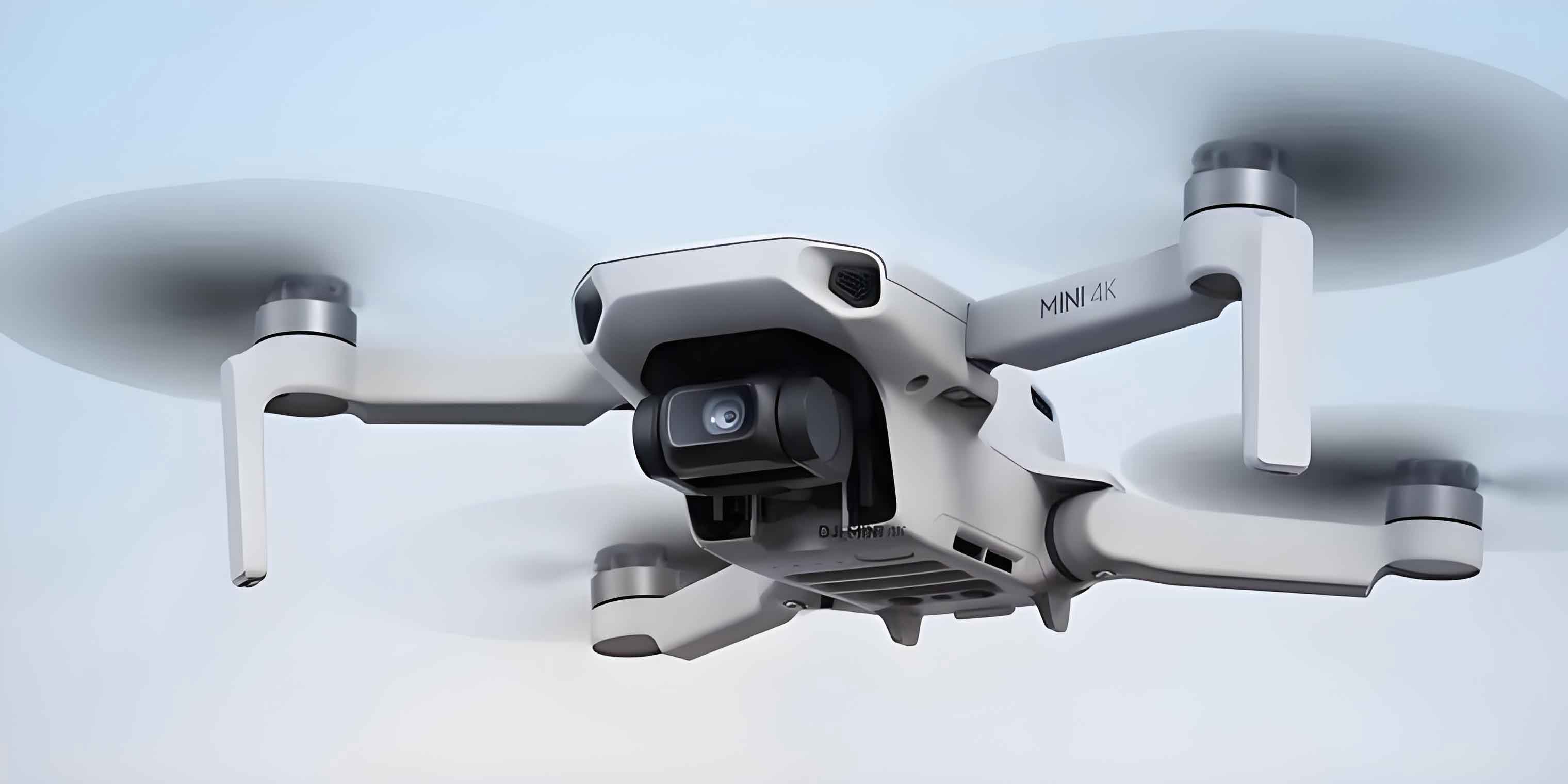
The following illustration provides an overview of the unmanned aerial vehicle system used in our work.
6. Experimental Results and Analysis
6.1 Experiment Setup
I perform simulations in Python 3.8 on an HP Pavilion Gaming Laptop with an Intel Core i7-8750H CPU and 16.0 GB RAM. The communication system parameters are listed in Table 1. The dataset CICIDS2017 is used for intrusion detection, while FMNIST and FLAME are used for emergency tasks.
| Parameter | Symbol | Value |
|---|---|---|
| Number of transmit antennas | $N_t$ | 4 |
| Number of receive antennas | $N_r$ | 4 |
| Channel bandwidth | $B$ | 1.92 MHz |
| Transmit power | $P$ | 20–35 dBm |
| Carrier frequency | $f_c$ | 2–5.8 GHz |
| Number of subcarriers | $N$ | 128 |
| Rician factor | $K$ | 6 dB |
Table 2 summarizes the main experiment parameters.
| Parameter | Value |
|---|---|
| Number of UAVs | 10–30 |
| UAV speed | 19–50 m/s |
| Number of resource blocks | 5 |
| Learning rate | 0.01 |
| Mini-batch size | 2–64 |
| Number of tasks (emergency) | 2–3 |
6.2 Intrusion Detection Accuracy
Figure 1 shows the intrusion detection accuracy over training rounds. The Baseline (ideal communication) achieves an accuracy of 94.24%. With the random benchmark, the accuracy drops to 83.09%. After applying PVBO, the accuracy improves to 90.91%. The best accuracies for Baseline, Random, and PVBO are 95.04%, 90.04%, and 93.12%, respectively. Over the last 150 rounds, the averages are 92.09%, 85.26%, and 89.79%. This demonstrates that PVBO effectively mitigates the adverse impact of Doppler-induced communication errors.
6.3 Convergence Speed Analysis
Table 3 reports the number of iterations required to reach convergence for different numbers of UAVs when the number of resource blocks is fixed to 4 and the mini-batch size is 16.
| Number of UAVs | Random | PVBO |
|---|---|---|
| 10 | 580 | 460 |
| 15 | 720 | 540 |
| 20 | 860 | 610 |
| 25 | 990 | 680 |
| 30 | 1120 | 740 |
PVBO achieves 20.15% to 46.50% faster convergence than the random strategy, especially when the number of UAVs is large.
6.4 Packet Loss Rate Reduction
In a setting with 10 UAVs and 5 resource blocks, I measure the number of successfully received packets for each UAV in a given communication round. Table 4 shows the results for two strategies.
| UAV ID | Random | PVBO |
|---|---|---|
| 0 | 71 | 93 |
| 1 | 65 | 91 |
| 2 | 78 | 95 |
| 3 | 69 | 90 |
| 4 | 73 | 92 |
| 5 | 66 | 89 |
| 6 | 80 | 96 |
| 7 | 72 | 94 |
| 8 | 70 | 92 |
| 9 | 68 | 91 |
PVBO significantly reduces the packet loss rate and also improves the stability across different UAVs.
6.5 Data Heterogeneity Robustness
I simulate different levels of data heterogeneity by adjusting a parameter that controls the distribution skew. Figure 2 (not shown here) indicates that PVBO consistently outperforms the random benchmark for all heterogeneity levels, including extreme non-IID settings.
7. Multi-task Experiments
7.1 Experimental Datasets
I use three datasets: CICIDS2017 for intrusion detection (security task), FMNIST for emergency subtasks (color recognition, rotation angle recognition, digit recognition), and FLAME for fire detection. The number of emergency subtasks is set to 2 or 3, and the number of UAVs is 10.
7.2 Intrusion Detection Accuracy under Multi-Task Setting
Table 5 compares the intrusion detection accuracy achieved by different algorithms in two configurations: (a) 2 tasks + intrusion detection (on FMNIST) and (b) 3 tasks + intrusion detection (on FMNIST).
| Algorithm | 2 tasks + IDS | 3 tasks + IDS |
|---|---|---|
| Baseline | 94.03% | 94.03% |
| TLO | 92.26% | 91.89% |
| PFL | 88.71% | 87.01% |
| MTFL | 86.43% | 80.15% |
| FedAvg | 76.81% | 75.28% |
TLO achieves the highest accuracy among the practical algorithms, with a gap of only 1.77% to 2.14% compared to the ideal Baseline. FedAvg performs the worst, showing that traditional federated aggregation is vulnerable to both communication impairment and task heterogeneity.
7.3 Task Completion Rate
I evaluate the accuracy of all tasks when three subtasks are trained concurrently with intrusion detection. Table 6 reports the accuracy for color recognition, rotation angle recognition, digit recognition, and intrusion detection.
| Algorithm | Color | Rotation | Digit | IDS |
|---|---|---|---|---|
| Baseline | 92.6% | 93.4% | 95.5% | 94.3% |
| TLO | 89.4% | 90.2% | 91.2% | 90.3% |
| MTFL | 83.4% | 82.3% | 84.6% | 80.1% |
| FedAvg | 77.5% | 78.6% | 79.3% | 75.2% |
TLO improves the intrusion detection accuracy by 15.1% over FedAvg, and by 10.2% over MTFL. For the three correlated subtasks, TLO also consistently outperforms MTFL and FedAvg, showing that the two-layer architecture with dynamic task weighting effectively balances the shared knowledge extraction and task-specific learning.
7.4 FLAME Dataset Experiment
I also test the proposed TLO algorithm using a combination of FLAME (fire detection) and CICIDS2017 (intrusion detection). The two tasks are strongly heterogeneous. Table 7 shows the final accuracies.
| Algorithm | Fire Detection | Intrusion Detection |
|---|---|---|
| Baseline | 95.2% | 94.1% |
| TLO | 91.8% | 90.7% |
| MTFL | 84.2% | 81.5% |
| FedAvg | 76.9% | 73.4% |
These results confirm that the dynamic task weight in the first layer effectively mitigates negative transfer between the two heterogeneous tasks, and the joint optimization of communication and learning further improves the overall performance.
7.5 Convergence Iterations in Multi-Task Scenario
Table 8 presents the number of iterations needed for convergence under different numbers of UAVs (from 10 to 30) with 5 resource blocks.
| Number of UAVs | FedAvg | MTFL | PFL | TLO |
|---|---|---|---|---|
| 10 | 470 | 420 | 400 | 350 |
| 15 | 580 | 440 | 420 | 365 |
| 20 | 570 | 430 | 410 | 355 |
| 25 | 575 | 435 | 435 | 360 |
| 30 | 600 | 440 | 425 | 370 |
TLO consistently requires the fewest iterations and exhibits the slowest growth as the number of UAVs increases, demonstrating its scalability and robustness.
8. Conclusion
In this paper, I have presented a comprehensive study of federated learning for intrusion detection in high-speed unmanned aerial vehicle networks. I first derived a detailed MIMO-OFDM communication model that captures the Doppler-induced inter-carrier interference, and I obtained closed-form expressions for the SINR and packet loss rate. Then, I introduced a personalized federated learning framework to handle non-IID data, and I derived the expected convergence rate under non-convex conditions. The analysis revealed that packet loss directly enlarges the convergence gap. Based on this insight, I proposed the PVBO algorithm that jointly optimizes transmit power, UAV velocity, and resource block allocation. Experimental results on the CICIDS2017 dataset demonstrated that PVBO improves the intrusion detection accuracy by an average of 4.53% and accelerates convergence by 20.15% to 46.50% over the random baseline.
I then extended the framework to multi-task scenarios by designing a two-layer multi-task federated learning architecture. The first layer dynamically weights the emergency task and the security task, while the second layer shares a feature extractor among similar subtasks. I further proposed the TLO algorithm that jointly optimizes UAV speed, communication resources, and task-specific parameter selection. Extensive experiments on FMNIST, CICIDS2017, and FLAME datasets showed that TLO achieves an intrusion detection accuracy of 90.3% in multi-task settings, significantly outperforming FedAvg and MTFL, and demonstrates excellent robustness to data heterogeneity. These results highlight the importance of communication-aware design and task-adaptive learning in realizing secure and efficient federated intrusion detection for high-speed unmanned aerial vehicle networks.
Future work will investigate more sophisticated dynamic environment models, including time-varying channel statistics and 3D UAV trajectories. I also plan to integrate multi-agent reinforcement learning for autonomous path planning of UAVs, and to explore multi-modal federated learning that fuses image, radar, and network flow data to further enhance situational awareness and security in complex operational environments.