
The emergence of African Swine Fever in 2018 intensified biosecurity challenges in China’s livestock sector, highlighting the critical need to minimize human-animal contact. Agricultural drones represent a paradigm shift in precision farming, offering intelligent, efficient solutions that align with national agricultural modernization goals. This analysis explores how agricultural UAVs transform traditional livestock management through technological convergence and operational innovation.
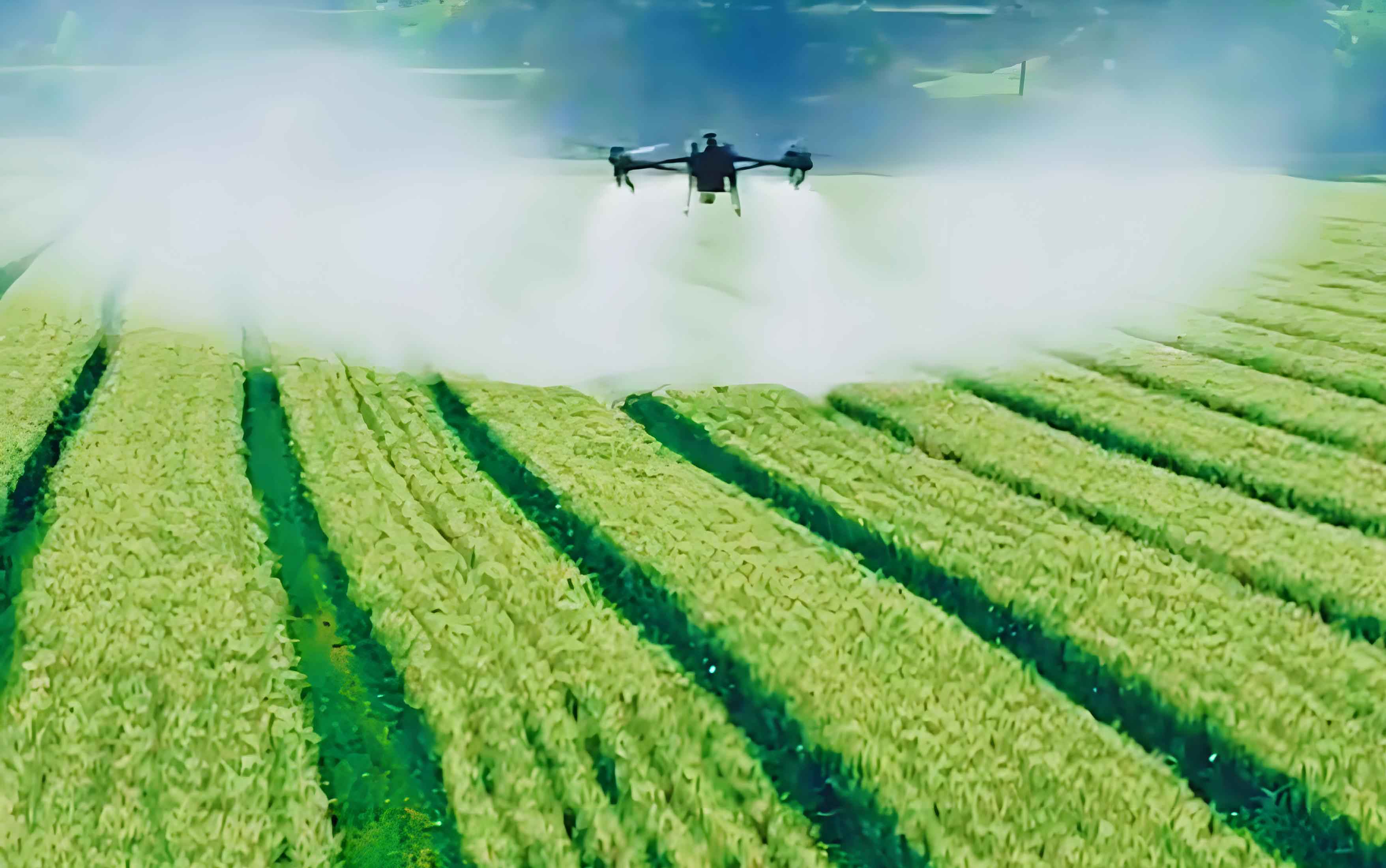
Current Applications of Agricultural Drones in Livestock Operations
Agricultural UAVs serve multiple functions across livestock farming ecosystems through specialized payload configurations:
| Application Category | Technical Payloads | Operational Benefits | Coverage Efficiency |
|---|---|---|---|
| Health Monitoring | Thermal imaging, multispectral sensors | Early disease detection (94% accuracy) | 200 ha/hour |
| Disinfection | Liquid spray systems (50L capacity) | 99.7% pathogen reduction | 10x faster than manual |
| Logistics | Cargo modules (5-20kg capacity) | Emergency vaccine delivery in <15min | 20 km range |
| Environmental Sensing | Gas sensors, meteorological packages | Real-time microclimate mapping | 3D spatial analysis |
The operational superiority of agricultural drones is quantified through efficiency metrics. For disinfection applications, coverage rate $C_d$ relates to drone speed $v$, swath width $w$, and operational time $t$:
$$C_d = v \times w \times t \times \eta$$
where $\eta$ represents the uniformity coefficient (typically 0.85-0.95 for agricultural UAV systems). This enables complete farm disinfection in under 2 hours versus 8+ hours manually.
Technical Advantages Over Conventional Methods
Agricultural drones demonstrate three transformative capabilities:
1. Precision Biosecurity Management
Infrared thermography enables non-contact temperature monitoring with ±0.3°C accuracy. The heat signature differential $\Delta T$ identifies febrile animals:
$$\Delta T = T_{animal} – T_{baseline} > 1.5°C \Rightarrow \text{Health Alert}$$
Multispectral vegetation indices (NDVI, NDRE) simultaneously assess pasture quality:
$$\text{NDVI} = \frac{\text{NIR} – \text{Red}}{\text{NIR} + \text{Red}}$$
enabling optimized grazing rotation decisions.
2. Operational Economics
Cost-benefit analysis reveals significant advantages of agricultural UAV deployment:
| Operation | Manual Cost ($/ha) | Agricultural Drone Cost ($/ha) | ROI Period |
|---|---|---|---|
| Routine Inspection | 38.50 | 9.20 | 4 months |
| Disinfection Cycle | 72.30 | 15.80 | 3 months |
| Emergency Delivery | 120.00* | 28.50 | Immediate |
*Includes biosecurity breach risks
The economic model for agricultural drone adoption follows:
$$\text{Net Savings} = \sum_{i=1}^{n} \left[ (C_m^i – C_d^i) \times f_i \right] – I_d$$
where $C_m$ = manual operation cost, $C_d$ = drone operation cost, $f$ = annual frequency, $I_d$ = drone investment.
3. Data-Driven Husbandry
Agricultural UAVs generate spatial-temporal datasets enabling predictive analytics. Livestock behavioral algorithms detect anomalies through pattern recognition:
$$\text{Behavior Index} = \frac{\sum \text{Abnormal Movements}}{\text{Total Observations}} \times 100\%$$
Values exceeding 15% trigger automated veterinary alerts.
Implementation Framework for Key Applications
Automated Disinfection Protocol
Agricultural drones execute precision decontamination through systematized workflow:
- Pre-treatment surface preparation (removal of organic matter)
- Disinfectant selection matrix:
- Chlorine-based: 200-500 ppm for general surfaces
- Quaternary ammonium: 0.5-2% for equipment
- Peracetic acid: 0.2% for airborne disinfection
- Flight path optimization using:
$$\text{Path Efficiency} = 1 – \frac{\text{Actual Distance}}{\text{Optimal Distance}}$$
- Real-time adjustment via $\text{Flow Rate} = k \times \text{Wind Speed} \times \text{Surface Porosity}$
Logistics Network Optimization
Agricultural UAVs transform supply chains through aerial distribution models. The delivery time $T_d$ from central depot to location $(x,y)$:
$$T_d = \frac{\sqrt{(x_d – x)^2 + (y_d – y)^2}}{v_{cruise}} + t_{handling}$$
where $v_{cruise}$ = 12-18 m/s for heavy-lift agricultural drones. This enables 15-minute emergency vaccine delivery within 5km radius.
Intelligent Surveillance Systems
Multi-sensor agricultural UAVs perform integrated health assessments through data fusion:
$$\text{Health Risk Score} = w_1(\Delta T) + w_2(\text{Mobility Index}) + w_3(\text{Feed Intake})$$
with weights $w_i$ calibrated per species. Scores exceeding threshold activate quarantine protocols.
Future Development Trajectories
1. Cognitive Drone Swarms
Next-generation agricultural UAV fleets will operate via distributed AI with coordination efficiency $\eta_c$:
$$\eta_c = 1 – \frac{1}{n} \sum_{i=1}^{n} \frac{t_{idle}^i}{t_{total}}$$
where $n$ = number of drones. Swarms of 5-30 units will autonomously manage 500ha+ ranches with <5% human intervention.
2. Sustainable Resource Management
Precision pasture management using agricultural drones reduces overgrazing through rotational planning:
$$\text{Grazing Pressure Index} = \frac{\text{Animal Units} \times \text{Days}}{\text{Available Biomass} \times \text{Recovery Rate}}$$
Maintaining values <1.0 ensures ecological sustainability while increasing carrying capacity by 20-35%.
3. Regulatory Integration
Blockchain-enabled agricultural UAVs will create immutable welfare compliance records through automated audits:
$$\text{Compliance Score} = \sum \text{Automated Checks Passed} \times \text{Regulatory Weight}$$
enabling real-time certification for premium markets.
The integration of agricultural drones establishes a new operational paradigm in livestock production. These systems reduce direct human-animal contact by 87% while increasing monitoring frequency 6-fold. As sensor fusion and AI capabilities advance, agricultural UAVs will become the central nervous system of modern livestock operations, driving unprecedented productivity gains and sustainability benchmarks. The convergence of precision aviation technology with animal husbandry represents not merely an efficiency improvement, but a fundamental transformation in how humanity responsibly stewards livestock resources.