
In modern applications, the quadrotor unmanned aerial vehicle (UAV) has gained significant attention due to its capabilities in vertical take-off, hovering, and agile maneuvering. These features make the quadrotor ideal for tasks such as surveillance, disaster response, and delivery services. However, the quadrotor is inherently an underactuated, nonlinear system that is highly susceptible to actuator failures and external disturbances during flight. These issues can severely compromise safety and performance, leading to unstable behavior or even crashes. Traditional control strategies, such as PID, often fall short in handling these challenges, especially when dealing with time-varying actuator faults and unknown environmental disturbances. Therefore, there is a pressing need for robust control methods that can ensure precise pose tracking under such adverse conditions.
This paper addresses the problem of pose tracking for a quadrotor subject to time-varying multiplicative actuator faults and time-varying external disturbances. We propose a novel composite fault-tolerant control strategy that combines a proportional-derivative (PD) controller for the position loop with an adaptive neural network and a fixed-time sliding mode observer (SMO) for the attitude loop. The radial basis function (RBF) neural network is employed to estimate and compensate for actuator faults in real-time, while the SMO is designed to reject external disturbances and reduce system chattering. The stability of the closed-loop system is rigorously analyzed using Lyapunov theory. Simulation results demonstrate that the proposed method outperforms traditional PID control in terms of convergence speed, tracking accuracy, and robustness.
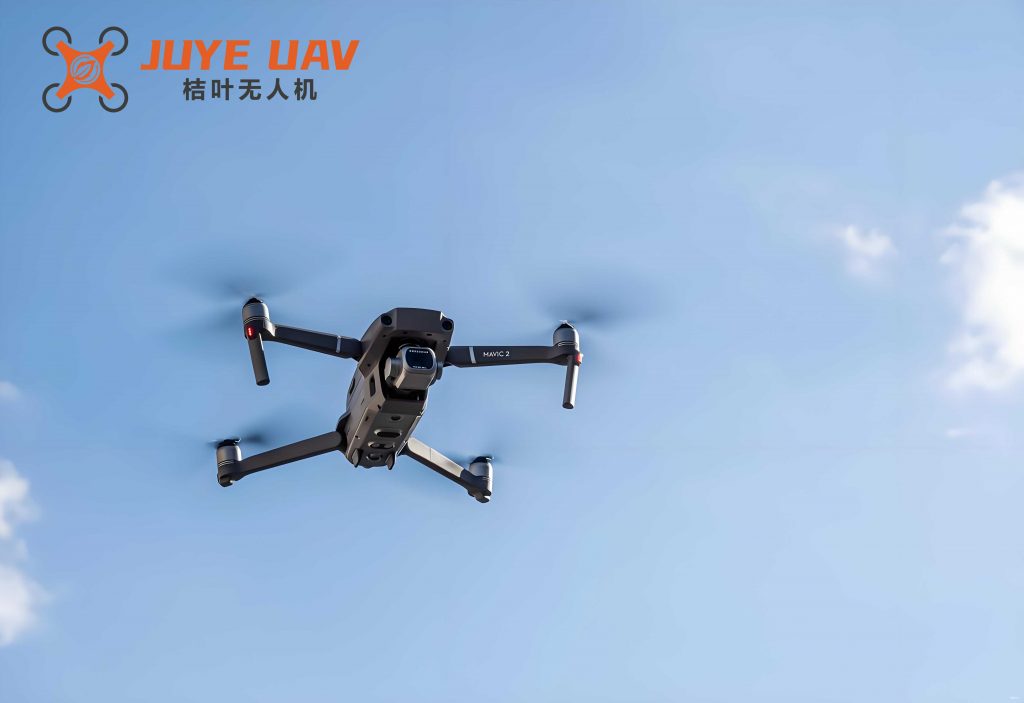
The quadrotor dynamics are derived from Newton-Euler principles, considering both inertial and body-fixed frames. The structural configuration of the quadrotor consists of four rotors arranged in a cross pattern, with each rotor generating thrust and torque. The rotation matrix transforming from the body frame to the inertial frame is given by:
$$ R = \begin{bmatrix}
\cos\theta \cos\psi & \sin\phi \sin\theta \cos\psi – \cos\phi \sin\psi & \cos\phi \sin\theta \cos\psi + \sin\phi \sin\psi \\
\cos\theta \sin\psi & \sin\phi \sin\theta \sin\psi + \cos\phi \cos\psi & \cos\phi \sin\theta \sin\psi – \sin\phi \cos\psi \\
-\sin\theta & \sin\phi \cos\theta & \cos\phi \cos\theta
\end{bmatrix} $$
where $\phi$, $\theta$, and $\psi$ represent the roll, pitch, and yaw angles, respectively. The dynamics of the quadrotor, incorporating actuator faults and disturbances, are expressed as:
$$ \begin{align*}
\dot{p}^E &= v^E \\
m \dot{v}^E &= -R Z_e F + m g Z_e – D_1 v^E \\
\dot{A}^B &= \omega^B \\
G \dot{\omega}^B &= C a_i U^B – D_2 \omega^B – r_d
\end{align*} $$
Here, $p^E = [x, y, z]^T$ denotes the position in the inertial frame, $v^E$ is the linear velocity, $A^B = [\phi, \theta, \psi]^T$ is the attitude vector, and $\omega^B$ is the angular velocity. The matrix $C = \text{diag}([d, d, y])$ represents the input gain, $D_1$ and $D_2$ are damping matrices, $G$ is the inertia matrix, $a_i(t) = \text{diag}([a_1, a_2, a_3])$ is the time-varying actuator fault factor, and $r_d$ is the external disturbance. The total thrust $F$ is computed as $F = \iota (\varpi_1^2 + \varpi_2^2 + \varpi_3^2 + \varpi_4^2)$, where $\varpi_i$ are the rotor speeds and $\iota$ is a constant.
The control design is decoupled into position and attitude loops based on differential flatness theory. For the position loop, a PD controller with acceleration feedforward is implemented to track desired trajectories. The control law is given by:
$$ F = \left[ m (g Z_e – \ddot{p}_d) – K_d \dot{e}_p^E – K_p e_p^E – D_1 v^E \right] R Z_e $$
where $e_p^E = p_d^E – p^E$ is the position tracking error, and $K_p$ and $K_d$ are positive diagonal gain matrices. The desired attitude angles $\phi_d$ and $\theta_d$ are derived from the position controller outputs and the desired yaw angle $\psi_d$ using:
$$ \begin{align*}
\phi_d &= \arcsin\left( \frac{m}{F} (F_{xx} \sin\psi_d – F_{yy} \cos\psi_d) \right) \\
\theta_d &= \arctan\left( \frac{1}{F_{zz}} (F_{xx} \cos\psi_d + F_{yy} \sin\psi_d) \right)
\end{align*} $$
where $F_{xx}$, $F_{yy}$, and $F_{zz}$ are virtual control inputs from the position loop.
In the attitude loop, a composite control strategy integrating RBF neural network and fixed-time SMO is developed. The RBF network approximates the time-varying actuator fault factor $a_i(t)$ online. The neural network model is defined as:
$$ a_i(t) = V_i^T H_j(x_A) + \varepsilon_i $$
with the radial basis function $H_j = \exp\left( -\frac{\|x_A – c_j\|^2}{2b_j^2} \right)$, where $x_A = A^B$ is the input, $V_i$ is the ideal weight vector, $c_j$ and $b_j$ are center and width parameters, and $\varepsilon_i$ is the approximation error. The estimated fault factor $\hat{a}_i(t)$ and weight update law are designed as:
$$ \begin{align*}
\hat{a}_i(t) &= \text{diag}\left( \hat{V}_1^T H_1(x_A), \hat{V}_2^T H_2(x_A), \hat{V}_3^T H_3(x_A) \right) \\
\dot{\hat{V}}_i &= \delta_i (G^{-1} C)_i H_j U^B e_{A2,i}
\end{align*} $$
where $\delta_i$ is a positive gain, and $e_{A2}$ is a sliding surface defined later. The fixed-time SMO estimates the external disturbance $r_d$ in real-time. Introducing an auxiliary variable $r(t)$, the observer is formulated as:
$$ \begin{align*}
k_1 &= f_1 \frac{e_1}{\|e_1\|} + f_2 e_1 \|e_1\|^{q-1} + k_2 \\
\dot{k}_2 &= f_3 \frac{e_1}{\|e_1\|} \\
\ddot{r}^B &= G^{-1} C a_i U^B – G^{-1} D_2 \omega^B – k_1 \\
\hat{r}_{d,i} &= G k_2
\end{align*} $$
where $e_1 = \dot{r}^B – \omega^B$, and $f_1$, $f_2$, $f_3$, $q$ are positive constants. This observer ensures that the estimated disturbance $\hat{r}_d$ converges to the actual $r_d$ within a fixed time.
The attitude tracking error $e_{A1} = A_d^B – A^B$ and a dynamic sliding surface $e_{A2}$ are defined as:
$$ e_{A2} = \dot{e}_{A1} + s_1 e_{A1} + s_2 \int_{t_1}^t e_{A1}(\tau) d\tau – s_1 e_{A1}(t_1) – \dot{e}_{A1}(t_1) $$
where $s_1$ and $s_2$ are positive gains. The attitude control torque $U^B$ is derived as:
$$ U^B = \frac{1}{C \hat{a}_i} \left( D_2 \dot{A}^B + G \ddot{A}_d^B + G s_1 \dot{e}_{A1} + G s_2 e_{A1} + G s_3 \text{sgn}(e_{A2}) – \hat{r}_d \right) $$
where $s_3$ is a positive gain. The closed-loop dynamics are analyzed using Lyapunov theory to prove stability and convergence.
Extensive simulations are conducted in MATLAB/Simulink to validate the proposed method. The quadrotor parameters are listed in Table 1, and controller gains are provided in Table 2. The desired trajectory is set as $p_d = \left[ \frac{\sin(\pi t)}{20}, -\frac{\sin(\pi t)}{20}, \frac{\sin(\pi t)}{20} \right]^T$ with $\psi_d = 0^\circ$. The time-varying disturbance is $r_d = 0.1 [\sin(t), \cos(t), \sin(0.2t)]$, and actuator faults are modeled as $a_1 = 0.2 e^{-0.4t} + 0.8$, $a_2 = 0.4 e^{-0.35t} + 0.6$, and $a_3 = 0.5 e^{-0.35t} + 0.5$.
| Parameter | Value | Parameter | Value |
|---|---|---|---|
| Mass $m$ | 2 kg | Gravity $g$ | 9.8 m/s² |
| Rotor distance $d$ | 0.2 m | Inertia $G_{xx}$, $G_{yy}$ | 1.25 kg·m² |
| Inertia $G_{zz}$ | 2.5 kg·m² | Damping $J_1$, $J_2$, $J_3$ | 0.01 |
| Damping $J_4$, $J_5$, $J_6$ | 0.012 | Thrust constant $\iota$ | 1.0 |
| Gain | Value | Gain | Value |
|---|---|---|---|
| $K_p$ | $\text{diag}([10, 10, 10])$ | $K_d$ | $\text{diag}([10, 10, 8])$ |
| $s_1$ | 10 | $s_2$ | 38 |
| $s_3$ | 0.005 | $\delta_1$ | 0.3 |
| $\delta_2$ | 0.5 | $\delta_3$ | 0.1 |
| $f_1$ | 2.0 | $f_2$ | 1.5 |
| $f_3$ | 3.0 | $q$ | 2 |
The performance of the proposed RBF-SMO control is compared with a traditional PID controller, where the attitude control torque is given by $U_{PID} = K_{P1} e_{A3} + K_{I1} \int e_{A3} dt + K_{D1} \dot{e}_{A3}$, with $e_{A3} = A_d^B – A^B$ and gains $K_{P1} = \text{diag}([10, 10, 10])$, $K_{I1} = \text{diag}([3, 1, 3])$, $K_{D1} = \text{diag}([25, 30, 25])$. Simulation results show that the proposed method achieves faster convergence and higher accuracy. For instance, the position tracking errors in the x and y directions settle within approximately 2.1 seconds with steady-state errors of ±0.05 m, whereas the PID controller takes about 5.01 seconds with larger oscillations. The attitude tracking errors converge to near zero within 2 seconds, compared to 6.03 seconds for PID. The RBF network effectively estimates the actuator faults with errors below 0.02, and the SMO accurately tracks disturbances within 5 seconds. Control inputs remain smooth, indicating reduced chattering.
Quantitative analysis is summarized in Table 3, highlighting the superiority of the proposed method in terms of mean settling time (MST), mean steady-state error (MSSE), and root mean square error (RMSE). The quadrotor system demonstrates robust performance under time-varying faults and disturbances, ensuring reliable pose tracking.
| Metric | Proposed Method | PID Control |
|---|---|---|
| MST Position (s) | ≤2.1 | ≤5.01 |
| MST Attitude (s) | ≤2.0 | ≤6.03 |
| MSSE X (m) | 2.3 × 10⁻³ | 2.59 × 10⁻² |
| RMSE X (m) | 5.25 × 10⁻² | 1.674 × 10⁻¹ |
| MSSE Y (m) | 2.3 × 10⁻³ | 2.62 × 10⁻² |
| RMSE Y (m) | 5.44 × 10⁻² | 1.915 × 10⁻¹ |
| MSSE Z (m) | 1.29 × 10⁻⁴ | 5.88 × 10⁻⁴ |
| RMSE Z (m) | 5.2 × 10⁻³ | 1.75 × 10⁻² |
In conclusion, this paper presents a comprehensive fault-tolerant disturbance rejection control strategy for quadrotor UAVs. The integration of RBF neural network and fixed-time SMO in the attitude loop enables real-time compensation of actuator faults and external disturbances, ensuring high-precision pose tracking. The Lyapunov-based stability analysis guarantees closed-loop system robustness. Simulation results confirm that the proposed method offers significant improvements over traditional PID control in convergence speed, accuracy, and resilience. Future work will focus on experimental validation and extension to multi-quadrotor systems.
The quadrotor platform continues to evolve, with applications expanding into complex environments. The proposed control framework provides a solid foundation for enhancing the autonomy and reliability of quadrotor operations. By addressing key challenges such as time-varying faults and disturbances, this research contributes to the advancement of unmanned aerial systems in practical scenarios.