
In the era of informatization, drone technology has become intricately linked with numerous industries, permeating both daily life and professional work. Initially deployed in military applications, drones have evolved to offer significant advantages in fields such as photography, aerial surveying, public safety, and agriculture. As vocational institutions at the forefront of technological education, we must adhere to educational principles, align with national technological development needs, and innovate talent cultivation models that integrate industry and education. This involves updating pedagogical methods, promoting inquiry-based, participatory, and cooperative learning models, and encouraging students to think independently and explore courageously. Our focus here is on drone training, a domain experiencing rapid growth but facing challenges in aligning educational outputs with societal demands. Through this exploration, we aim to establish a robust framework for cultivating skilled professionals in drone application technology, leveraging skill master studios as a pivotal mechanism.
The concept of skill master studios originated in Jiangsu Province, China, with the primary goal of preserving traditional crafts from extinction. These studios integrate local elements into modern apprenticeship systems, harnessing the leadership of experts, chief technicians, and industry pioneers to foster skilled, innovative, and applied talent. From a structural perspective, skill master studios can be categorized into three types: enterprise-based, school-based, and jointly built by enterprises and schools. Enterprise-based studios are formed within companies, assembling teams of professionals for technological research and innovation. School-based studios are established in higher education institutions, relying on renowned technical enterprises, R&D agencies, or demonstration bases to create spaces for technical攻关 and high-skilled talent cultivation. Jointly built studios result from collaborations between enterprises and schools, enhancing industry-education integration through shared training bases and co-managed talent development programs. Regardless of the type, establishing a skill master studio requires several key elements: suitable activity spaces, infrastructure, and equipment; leadership by a skilled master with industry influence and reputation; emphasis on professionalism and specialization; support from知名 industry enterprises; and involvement in relevant research projects within the field. This foundation is crucial for effective drone training, as it bridges theoretical knowledge with practical application.
Currently, the civil drone market in many regions has witnessed explosive growth, with the number of higher education institutions offering drone-related programs increasing from just two in 2013 to 384 by 2021. This expansion reflects the broad application value and promising prospects of drone technology, necessitating an industrial development model and accelerated efforts to address shortages in high-skilled, high-quality drone training. While initiatives such as part-time apprenticeships and modern apprenticeship systems have been piloted in provinces like Zhejiang and Shandong to cultivate skilled professionals, and some experience has been gained through industry-academia cooperation, practical investigations reveal persistent issues in drone training. These challenges must be tackled to optimize the integration of industry and education.
One major issue is the unclear positioning of educational objectives and insufficient talent cultivation capabilities. As an emerging discipline, drone application technology lacks standardized references for setting teaching goals and talent development plans, often leading to deviations from actual needs. In early stages, institutions may rely on external drone training agencies, but their goals and methods may not align with academic objectives, resulting in training content that diverges from school curricula. Without a focus on employment-oriented competency requirements, students’ skill development is limited, failing to meet multifaceted job demands. Additionally, weak synergy between schools and external enterprises, inadequate practical training bases, and a lack of footholds for skill master studios exacerbate the problem. Coupled with不合理 talent cultivation systems, management frameworks, and assessment mechanisms, institutions struggle to produce innovative, skilled professionals. Thus, the key lies in upgrading educational approaches and formulating talent development plans that align with industry needs, which serves as the basis for establishing skill master studios and enhancing students’ drone training.
Another challenge is the relatively late start of drone programs, leading to薄弱师资力量. Many institutions launched drone programs recently in response to technological advancements and societal demands, lacking experience in curriculum design, teaching models, and resource allocation. With no prior dedicated drone departments, initial offerings often relied on instructors from related fields like aircraft electromechanical maintenance, computer science, surveying, or automation, or external hires. These educators may lack deep insights into the industrial drone market, practical work experience, and professional teaching abilities, resulting in a shortage of “dual-qualified” teachers who combine theoretical expertise with practical skills. Furthermore, inadequate institutional management mechanisms and incentive policies fail to attract leading industry experts or chief technicians to teach. Limited resources also hinder opportunities for faculty to engage in挂职 learning at知名 enterprises. To ensure正常教学, institutions often recruit professionals from drone-related companies, such as engineers or certified instructors. While this addresses immediate staffing gaps and leverages their practical experience, these individuals may lack systematic theoretical knowledge, making it difficult to impart skills comprehensively and achieve proficiency in drone operations without theoretical underpinnings.
A third issue is the有限实训教学资源, which struggle to meet enterprise talent demands. Since drone application technology was officially included in vocational education catalogs in 2015, the short development timeline has hindered the完善 of practical teaching resources and suitable textbooks. Many institutions resort to materials from other aviation disciplines or training agencies. Moreover, constrained educational budgets, coupled with the diverse and rapidly evolving drone models and technologies—often with high price tags—limit investments in drone training infrastructure. This leads to严重不足硬件设施, an overemphasis on theory over practice, and limited hands-on opportunities for students. Consequently, both intrinsic and extrinsic enterprise needs remain unmet. As primary bases for skill cultivation and talent supply, institutions must align their teaching, talent programs,师资力量, and resources with corporate profit motives, talent requirements, and industry influence. This misalignment underscores the historical failure to leverage collaborative synergies and integrate resources effectively between schools and enterprises.
To address these challenges, skill master studios offer a viable pathway for cultivating skilled talent in drone training. The primary purpose of creating such studios is to increase the proportion of high-skilled professionals in the workforce, promote industrial restructuring and upgrading, and foster a large pool of skilled individuals. By serving as “incubation bases” for high-skilled talent, these studios bridge schools and enterprises, facilitating effective衔接 between production practices and educational activities. Within a skill master studio, masters can directly guide students using industry standards, imparting professional skills through their高超技艺. Furthermore, by leveraging societal needs and enterprise projects, studios deepen industry-academia cooperation,构建 platforms for technological R&D and skill攻关, and highlight the leadership and practical guidance of skill pioneers, thereby expanding social influence. They also enable reforms in innovation and entrepreneurship (dual-innovation) cultivation models, transforming into孵化 bases for such talent. This fosters a cycle where research promotes teaching, teaching promotes competitions, and competitions promote learning, ultimately构建专业化、模块化课程体系.
Team building within skill master studios is crucial. When establishing a studio, institutions should conduct thorough research on industry and enterprise岗位需求,结合 their own educational strengths to set up corresponding专业 studios. For instance, a vocational college might establish studios in areas like ethnic culture, engineering machinery, and drones based on its办学优势. Concurrently, institutions should develop policies, plans, and management standards for studio development, selecting and cultivating skill masters. This involves recruiting top-tier industry masters externally and forming a师傅团队 comprising external masters, internal masters, and专业骨干教师. Apprentices are selected from students in relevant专业群, ensuring a structured approach to drone training.
Formulating a “one-specialization, multiple-skills” dual-innovation talent cultivation plan can be divided into three stages. The first stage, lasting three semesters, focuses on strengthening basic skills, cultivating职业能力和文化素养, with an emphasis on专业素养 and职业道德. In studio activities, instructors can directly introduce societal demand projects and enterprise攻关技能, targeting improvements in students’专业能力 and fostering goal-oriented learning attitudes. This enhances students’认同度和积极性 toward专业学习. The second stage, spanning one semester, aims at cultivating专业综合能力 through specialized skill training. Instructors can employ virtual simulation technologies to create实训 environments, conducting training via real-world production, experiential learning, and progressive methods. This prepares students for participation in studio-based enterprise projects and team activities. The third stage, lasting two semesters, involves方向划分 and专项技能训练 based on projects, serving as the culmination of skill cultivation. After acquiring foundational theory and basic skills in earlier stages, students select a specific direction for advanced专业能力培养. This structured approach ensures comprehensive drone training that aligns with industry demands.
Building on this, we propose a “skill master studio+” industry-education integration talent cultivation方案 for drone training. Firstly,完善教学内容 to对接社会人才需求. Institutions must adjust talent cultivation methods and content to meet drone industry developments, revising and updating talent programs and course systems.明确教学内容、目标 and optimizing教学流程, based on students’职业发展和学习实际, we can design courses按照”夯实专业基础、强化实践技能、提高创新能力”的要求. This includes合理设计专业基础课、专业核心课、职业核心课. Skill master studios, employing modern apprenticeships or contractual systems, emphasize cultivating core skills,职业素养, and创新能力. Course content should align with national and industry技能大赛, such as the BRICS Skills Competition drone operation events, as well as enterprise technological innovations. By leveraging cutting-edge technologies and processes, instructors can提炼和设计教学内容, integrating飞行原理,无人机结构系统,无人机组装调试, and程序设计 into专业核心课程 through visual aids.对接岗位需求与教学内容, we构建 a cultivation goal integrating knowledge,岗位技能, and职业素养. For example, based on roles like low-altitude drone and onboard equipment production, assembly, maintenance, flight control, and ground support, we optimize course content and构建专业模块化课程体系 using实训教学平台.
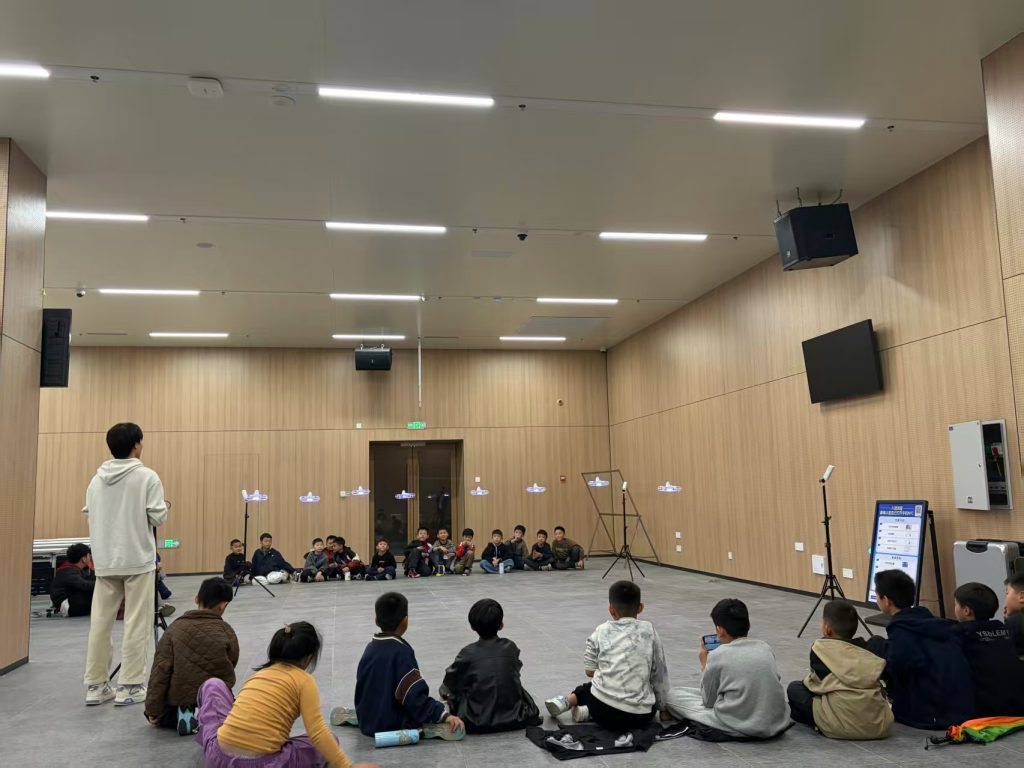
Secondly,以大师为引领,多措并举建立双导师教学团队 to address薄弱师资力量. Institutions can build a “dual-mentor” team for drone training through多渠道, adopting “external recruitment and internal cultivation” and “master-led” approaches. One strategy is to adjust教师培养方向, sending骨干教师 to domestic drone industry training events and for挂职训练 at合作企业. This immerses them in frontline production, R&D, and meetings, enhancing their understanding of operational experiences and workflows. Another approach is to recruit drone engineers, Civil Aviation Administration of China (CAAC) drone license instructors, AOPA instructors, or UTC instructors from合作企业 as师傅. In industry-academia cooperation, the “dual-mentor” model involves校内教师 teaching theoretical knowledge and企业 engineers focusing on practical经验, achieving理论教学与实践教学的统一 and boosting students’创新能力和实践能力. Additionally,以大师为引领, we can发挥 skill masters and their teams’领军作用, conducting “master-apprentice pairing” between young and experienced teachers or enterprise experts. This includes planning青年教师参与专业技能培育、课程建设、实训基地建设、企业实践, and encouraging专任教师 and企业兼职教师 to交换岗位 for joint participation in教改科研项目. Such initiatives strengthen the foundation for effective drone training.
Thirdly,深化产教融合 to建立校企合作模式. Establishing partnerships with drone application enterprises facilitates资源互补 and joint办学项目. However, institutions must thoroughly evaluate potential partners’资源优势、办学资质、技术水平. For instance, by visiting local reputable aviation technology companies to understand their products and advantages, we can推行合作计划 and共建无人机专业人才孵化基地. To deepen industry-education integration, several methods can be employed. Implementing a “three-two-two” talent cultivation model incorporates real enterprise cases in drone production, R&D, and application, along with corporate culture and operational techniques, into the教学体系, creating a职业化实践教学环境. Moreover, organizing技能竞赛 co-hosted by enterprises and schools, with awards from both, promotes “learning through competition, teaching through competition,” driving reforms in teaching models and methods for drone training. This stimulates students’个性发展和创新思维, fostering创新意识、实践技能、团队协作精神. Furthermore,开设第二课堂 co-organized by enterprise兼职教师 and校内教师 can include modules on理论与法规、设计与加工技能、组装与调试技能、无人机飞行操作, enabling多维度的知识技能综合考核与评测. These efforts ensure that drone training remains dynamic and responsive to industry needs.
To summarize and structure key aspects, we can use tables and formulas. For example, the stages of talent cultivation in drone training can be represented as follows:
| Stage | Duration | Focus | Key Activities |
|---|---|---|---|
| Basic Skill Reinforcement | 3 semesters | Professional素养 and ethics, basic skills | Societal projects, goal-oriented learning |
| Comprehensive Ability Cultivation | 1 semester | Specialized skill training | Virtual simulation, progressive methods |
| Directional Specialization | 2 semesters | Advanced专业能力 | Project-based training,方向划分 |
This table outlines the phased approach to drone training within skill master studios. Additionally, the effectiveness of such training can be assessed using metrics. For instance, a formula for evaluating skill acquisition in drone training might be:
$$ S = \alpha T + \beta P + \gamma I $$
Where \( S \) represents overall skill level, \( T \) denotes theoretical knowledge, \( P \) stands for practical experience, \( I \) indicates innovation capability, and \( \alpha \), \( \beta \), \( \gamma \) are weighting coefficients adjusted based on industry requirements. This emphasizes the balance needed in drone training programs.
Another important aspect is the resource allocation for drone training. We can model the investment in实训教学资源 as:
$$ R = \sum_{i=1}^{n} (C_i \cdot Q_i) $$
Here, \( R \) is the total resource input, \( C_i \) represents the cost of drone model \( i \), and \( Q_i \) is the quantity acquired. Given budget constraints \( B \), we have \( R \leq B \), highlighting the挑战 of limited resources in drone training. To optimize, institutions can leverage partnerships through skill master studios, where enterprises contribute equipment or funding, expressed as:
$$ R_{\text{total}} = R_{\text{school}} + R_{\text{enterprise}} $$
This collaboration enhances the practical component of drone training without overburdening institutional budgets.
Furthermore, the impact of skill master studios on talent output can be analyzed. Suppose the number of skilled graduates \( G \) from drone training programs is a function of studio engagement \( E \), faculty quality \( F \), and curriculum relevance \( C \). We can propose:
$$ G = k \cdot \ln(1 + E \cdot F \cdot C) $$
Where \( k \) is a scaling constant. This logarithmic relationship suggests diminishing returns, emphasizing the need for continuous improvement in all factors to sustain high-quality drone training.
In terms of curriculum design for drone training, a modular approach can be tabulated:
| Module | Content | Skills Developed |
|---|---|---|
| Theory and Regulations | Flight principles, airspace laws, safety protocols | Regulatory compliance, risk assessment |
| Design and Processing | CAD modeling, material selection, prototyping | Technical design, manufacturing basics |
| Assembly and Debugging | Component integration, system testing, calibration | Hands-on technical skills, problem-solving |
| Flight Operations | Pilot training, mission planning, data collection | Operational proficiency, situational awareness |
This modular structure supports the “one-specialization, multiple-skills” goal in drone training, ensuring that students gain a broad yet deep competency set.
To enhance the industry-education integration, we can also consider a feedback loop for drone training programs. Let \( D \) represent industry demand for drone skills, which changes over time \( t \). Educational output \( O \) from institutions should track \( D \), but often lags due to curricular inertia. Skill master studios can mitigate this by incorporating real-time enterprise input \( I_e \), leading to an adjusted output:
$$ O(t) = \int_{0}^{t} [\lambda D(\tau) + (1-\lambda) I_e(\tau)] \, d\tau $$
Where \( \lambda \) is a blending parameter between historical demand and current enterprise needs. This dynamic model underscores the agility provided by studios in drone training.
In conclusion, cultivating high-level technical and skilled talent in drone training requires institutions to deepen industry-education integration, reforming and adjusting teaching content,师资力量,教学资源, and practical venues to address existing issues. By leveraging skill master studios, we can optimize课程设计, establish “dual-mentor” teams, and implement school-enterprise co-cultivation models, thereby preparing students comprehensively for实践技能培养 in drone application technology. The integration of tables and formulas helps summarize and systematize these concepts, providing a clear framework for ongoing improvements in drone training. As the drone industry continues to evolve, such approaches will be vital for ensuring that educational outcomes meet societal and economic demands, ultimately contributing to a skilled workforce capable of driving innovation and growth in this dynamic field.