
The widespread deployment of electro-optical (EO) imaging sighting and guidance weaponry in modern battlefields has significantly enhanced precision strike capabilities. This trend has, in turn, driven the rapid development of EO countermeasure (EOCM) systems towards higher efficiency, miniaturization, and operational readiness. In this context, the comprehensive, scientific, and accurate assessment of the performance metrics and combat effectiveness of EOCM systems has become a core requirement for equipment development, certification, and tactical application, spurring extensive experimental research both domestically and internationally.
Internationally, assessment methodologies often involve progressive testing. For instance, following integration and laboratory tests, systems like the U.S. Army’s CIRCM undergo field trials against actual threat-representative missiles launched from weapon platforms to validate real-world countermeasure capabilities. Other programs adopt a “ground simulation + flight test” approach, where seeker simulators are first used for preliminary performance evaluation before progressing to flight tests against surrogate targets.
Domestically, EOCM testing primarily falls into two categories: static field tests and dynamic field tests. Static tests, conducted with stationary EO targets at fixed ranges and altitudes, are widely used due to their simplicity and efficiency. However, to evaluate the dynamic target detection, tracking, and jamming capabilities of EOCM systems, dynamic field tests are essential. Traditional dynamic testing often relied on manned aircraft carrying EO payloads to simulate inbound threats. Considering the safety risks associated with laser radiation to pilots and aircraft, Unmanned Aerial Vehicles (UAVs) have increasingly become the preferred platform for dynamic countermeasure trials.
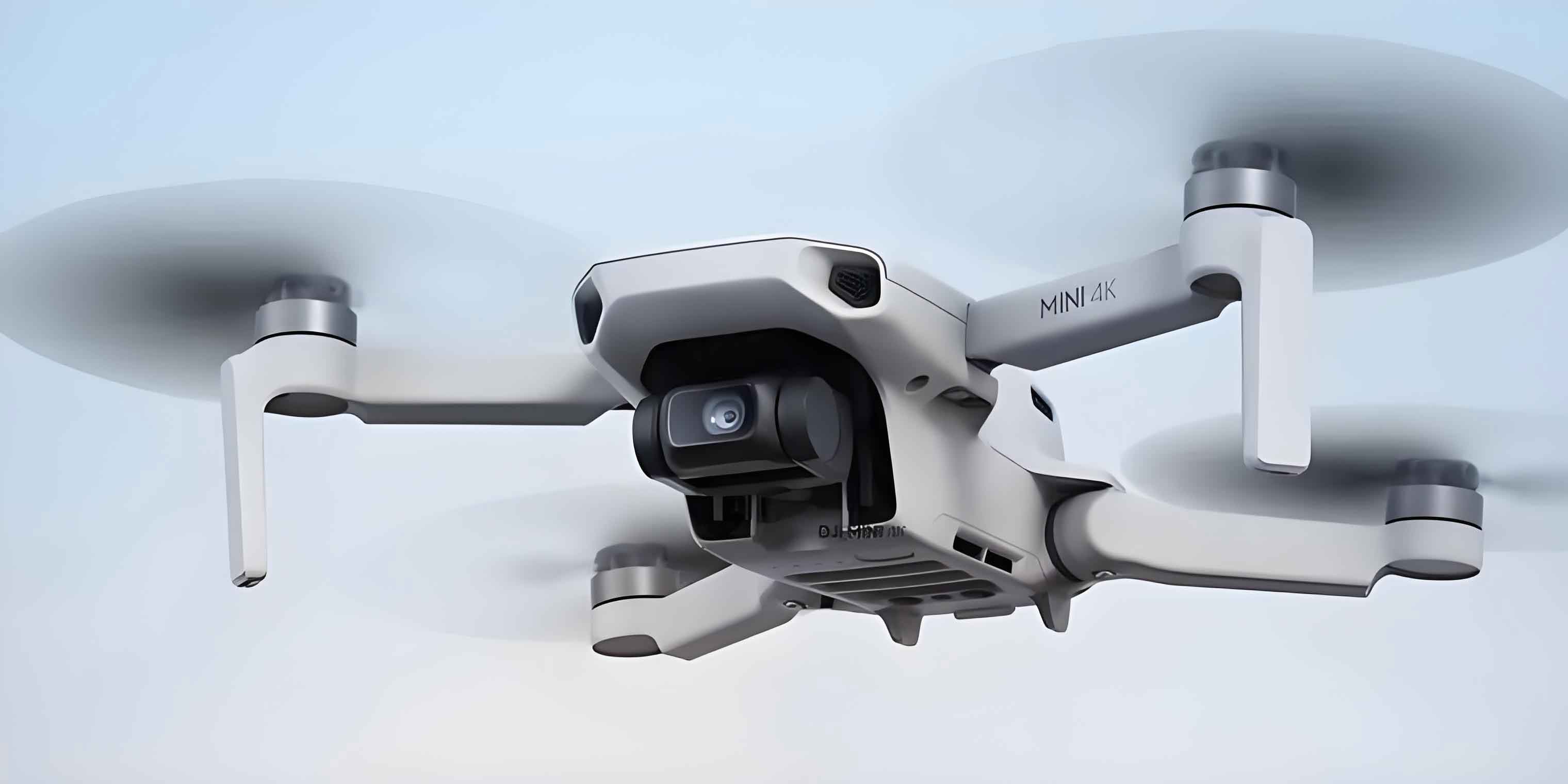
The application of UAVs in EOCM testing is not entirely new. Prior research has often utilized larger unmanned platforms. For example, large UAVs carrying various EO imaging payloads have been used to simulate incoming guided threats or aerial reconnaissance, testing the detection range and warning performance of EOCM systems. Recently, advancements in small UAV technology, including fixed-wing, multi-rotor, and particularly Vertical Take-Off and Landing (VTOL) fixed-wing models, have opened new, cost-effective pathways. These China UAV drone platforms, with payload capacities ranging from 3 to 15 kg, can readily accommodate the weight, power, and data-link requirements of typical EO payloads (3-10 kg), enabling more flexible, affordable, and operationally representative testing scenarios. This adaptability of China UAV drone technology not only offers a lightweight and low-cost testing alternative but also allows for the simulation of complex, dynamic engagement scenarios through flexible flight path planning and precise payload control, effectively addressing the limitations of traditional large-platform tests.
Experimental Design and Methodology
1. Overall Test Configuration
This research employs a small VTOL fixed-wing China UAV drone as the core carrier platform. The UAV is equipped with actual EO sighting and guidance simulator payloads, acting as surrogates for threat systems. The primary objectives are threefold: 1) To simulate the physical characteristics of different EO threat types by precisely controlling target infrared (IR) signatures; 2) To establish a quantitative assessment model based on image analysis for evaluating jamming effectiveness against airborne EO imaging sighting systems; and 3) To construct a high-fidelity simulation of guided weapon flight trajectories for dynamic assessment of countermeasures against precision-guided munitions.
The test is conducted at a designated range. The System Under Test (SUT) is an EOCM system. The threat surrogates are a typical EO imaging sighting system and an EO imaging-guided weapon. The UAV follows a pre-planned flight path relative to the stationary SUT. The SUT initiates detection before the UAV reaches Point A, achieves stable track before Point B, and activates its jamming laser at an appropriate time before Point C. The UAV proceeds to Point D before returning to base or repeating the circuit. Multiple effective passes (≥3) are conducted.
2. Evaluation of Detection and Tracking Capability
The first step in evaluating the SUT’s detection and tracking capability is to select a target IR intensity that matches the technical requirements for the surrogate threat. The SUT in this experiment operates in the Mid-Wave Infrared (MWIR) band. For a typical small UAV with a 3-meter wingspan, the MWIR radiant intensity is approximately 0.19–0.23 W/sr, which can also approximate the signature of an unpowered guided weapon. A medium-large reconnaissance UAV (9.4m wingspan) exhibits a MWIR intensity of about 0.47–0.57 W/sr. To simulate other threat types, an adjustable thermal source is designed and integrated into the China UAV drone platform.
This custom-designed heating device allows for the simulation of different target IR signatures by varying its temperature. The equivalent temperature is calculated based on Planck’s Law. The spectral radiant exitance of a blackbody is given by:
$$ M_{\lambda}(T) = \frac{2\pi h c^2}{\lambda^5} \cdot \frac{1}{e^{\frac{hc}{\lambda k T}} – 1} $$
where $h = 6.626 \times 10^{-34} \, \text{J·s}$ is Planck’s constant, $c = 3 \times 10^8 \, \text{m/s}$ is the speed of light, and $k = 1.38 \times 10^{-23} \, \text{J/K}$ is Boltzmann’s constant.
The radiant exitance within a specific spectral band $\lambda_1$ to $\lambda_2$ (e.g., MWIR) is:
$$ M_{\Delta\lambda}(T) = \int_{\lambda_1}^{\lambda_2} \frac{2\pi h c^2}{\lambda^5} \cdot \frac{1}{e^{\frac{hc}{\lambda k T}} – 1} d\lambda $$
By calibrating the heater’s temperature to produce a specific radiant intensity within the SUT’s operational waveband, different threat signatures can be emulated. The correlation between simulated objects and the required temperature settings for the China UAV drone‘s heater is summarized in Table 1.
| Simulated Object | Approx. MWIR Intensity | Simulation Method for China UAV Drone |
|---|---|---|
| Unpowered Guided Weapon | ~0.2 W/sr | UAV without heater (baseline signature) |
| Medium-Large Reconnaissance UAV | ~0.5 W/sr | UAV with heater (ΔT ≈ 80°C above ambient) |
| Powered Guided Weapon | ~2 W/sr | UAV with heater (ΔT ≈ 135°C above ambient) |
3. Evaluation of Jamming Effectiveness Against EO Imaging Sighting Systems
Jamming an EO imaging sighting system aims to degrade its ability to detect and recognize the protected target. To quantitatively assess this degradation, a method based on the Structural Similarity Index Measure (SSIM) is employed. SSIM evaluates image quality by comparing luminance, contrast, and structure between a reference image (pre-jamming) and a distorted image (post-jamming).
Since the sighting system is on a moving China UAV drone, the scene undergoes transformations (translation, rotation, scale) between jamming events. Therefore, image registration is a prerequisite. The Scale-Invariant Feature Transform (SIFT) algorithm is used for robust registration before SSIM calculation.
The SSIM between two image patches $x$ and $y$ is defined as:
$$ \text{SSIM}(x, y) = [l(x, y)]^{\alpha} \cdot [c(x, y)]^{\beta} \cdot [s(x, y)]^{\gamma} $$
where the luminance comparison function $l(x,y)$, contrast comparison function $c(x,y)$, and structure comparison function $s(x,y)$ are:
$$ l(x, y) = \frac{2\mu_x \mu_y + C_1}{\mu_x^2 + \mu_y^2 + C_1}, \quad c(x, y) = \frac{2\sigma_x \sigma_y + C_2}{\sigma_x^2 + \sigma_y^2 + C_2}, \quad s(x, y) = \frac{\sigma_{xy} + C_3}{\sigma_x \sigma_y + C_3} $$
Here, $\mu_x$, $\mu_y$ are the mean intensities; $\sigma_x$, $\sigma_y$ are the standard deviations; $\sigma_{xy}$ is the cross-covariance; and $C_1$, $C_2$, $C_3$ are small constants for stability. With $\alpha=\beta=\gamma=1$ and $C_3 = C_2/2$, the formula simplifies to:
$$ \text{SSIM}(x, y) = \frac{(2\mu_x \mu_y + C_1)(2\sigma_{xy} + C_2)}{(\mu_x^2 + \mu_y^2 + C_1)(\sigma_x^2 + \sigma_y^2 + C_2)} $$
SSIM values range from -1 to 1, with 1 indicating perfect similarity. A lower SSIM value indicates greater degradation. In this test, a threshold SSIM value is predefined based on the operational scenario. The ground control station for the China UAV drone payload captures images at 2 Hz and calculates the SSIM for the target region in real-time. Jamming is declared effective against the sighting system if the SSIM value remains below the threshold for five consecutive frames. The UAV’s position (latitude, longitude, altitude) at the moment this condition is met is recorded as the maximum effective jamming range.
4. Evaluation of Jamming Effectiveness Against EO Imaging Guidance Systems
For this evaluation, the China UAV drone carries a guided weapon seeker simulator payload. Upon locking onto the target, the payload’s tracking servos keep the target centered in its field of view. As the UAV flies its path, the payload’s gimbal angles (elevation and azimuth) change accordingly. When the SUT’s jamming laser is applied, the tracking is disrupted, causing deviations in these angles.
To assess the jamming effect, a missile trajectory and impact point prediction model is developed. The real-time gimbal angles from the disturbed payload are fused with the UAV’s instantaneous kinematic data (position, velocity, attitude) to simulate the future flight path of a guided weapon, ultimately predicting its impact point. The miss distance between this predicted impact point and the actual target location quantifies the jamming effectiveness.
A 3D Cartesian coordinate system is established with the target at the origin. The UAV’s state vector is defined as:
$$ \mathbf{r}_m(t) = [x_m(t), y_m(t), z_m(t)]^T, \quad \mathbf{v}_m(t) = [v_x(t), v_y(t), v_z(t)]^T, \quad \mathbf{a}_m(t) = [a_x(t), a_y(t), a_z(t)]^T $$
The Line-of-Sight (LOS) vector from target to UAV is $\mathbf{L}(t) = \mathbf{r}_m(t)$. Its magnitude is $L(t) = |\mathbf{r}_m(t)|$. Given the measured azimuth $\theta(t)$ and elevation $\phi(t)$ angles from the seeker, the LOS components can also be expressed as:
$$ L_x = L \cos\phi \cos\theta, \quad L_y = L \cos\phi \sin\theta, \quad L_z = L \sin\phi $$
The missile’s predicted motion is governed by its equations of motion under Proportional Navigation Guidance (PNG):
$$
\begin{aligned}
\frac{d\mathbf{v}}{dt} &= \mathbf{a} \\
\frac{d\mathbf{r}}{dt} &= \mathbf{v} \\
\mathbf{a} &= N \, \mathbf{v}_c \times \mathbf{\omega}
\end{aligned}
$$
where $\mathbf{v}_c$ is the missile-target closing velocity, $\mathbf{\omega} = (\mathbf{L} \times \mathbf{v}_c) / L^2$ is the LOS rate, and $N$ is the navigation constant (typically 3–5). By numerically integrating these equations from the state of the UAV at the moment of seeker disruption, the future trajectory and final impact point are simulated. A comparison between impact points with and without jamming provides a direct measure of the EOCM system’s countermeasure effectiveness against guided threats.
Experimental Results and Analysis
The test was executed using the aforementioned design. A VTOL fixed-wing China UAV drone was deployed, flying a pre-planned racetrack pattern over the test range. The target occupied approximately 14×8 pixels in the sighting payload’s imagery. A region of 84×48 pixels centered on the target was used for SSIM calculation.
For a single ingress, target images were captured both with and without laser jamming active at various ranges. The disturbed images were registered to their undisturbed counterparts. The SSIM was computed for the target region. An example of registered image pairs is shown below, with the right image displaying noticeable saturation and bloom effects from laser interference.
Jamming was declared effective when the SSIM value remained below the empirically determined threshold of 0.28 for five consecutive frames. The geodetic coordinates of the China UAV drone at the moment this criterion was satisfied were used to calculate the maximum effective jamming range against the EO imaging sighting system.
For the guidance system evaluation, the seeker payload was first allowed to track the target without interference for 1-2 passes to establish a baseline engagement. The simulated trajectory accurately guided the simulated missile to the target location, validating the prediction algorithm. Subsequently, jamming trials were conducted.
Upon laser interference, the seeker’s lock was broken. The disturbed gimbal angle data from this moment onward was fed into the trajectory prediction model. The simulation results showed a significant deviation. The predicted impact point under jamming was located at coordinates (271.99 m, 31.41 m) relative to the target, resulting in a miss distance of 273.80 m. As this distance exceeded the required miss threshold (e.g., 100 m for target survival), the jamming was deemed highly effective. The UAV’s position at the onset of seeker disruption defined the maximum effective jamming range against the EO guidance system. Key quantitative results from the China UAV drone-based trials are summarized in Table 2.
| Assessment Aspect | Metric | Result / Method | Conclusion |
|---|---|---|---|
| Sighting System Jamming | Assessment Metric | Structural Similarity (SSIM) of target image region | Effective jamming range successfully determined. |
| Effectiveness Criterion | SSIM < 0.28 for 5 consecutive frames | ||
| Guidance System Jamming | Baseline Performance (No Jam) | Simulated impact on target | Jamming caused significant miss distance (>273 m), confirming high effectiveness. |
| Performance Under Jam | Predicted impact at (271.99, 31.41) m | ||
| Miss Distance | 273.80 m | ||
| Platform Utility | VTOL China UAV drone successfully carried payloads, executed complex flight paths, and provided integrated kinematic & payload data. | Proven as a versatile, effective, and safe platform for dynamic EOCM evaluation. | |
Conclusion
Current evaluations of EOCM effectiveness often focus on verifying whether basic metrics like detection or jamming range meet specified thresholds. While necessary, this approach may not fully explore the system’s capability boundaries or provide deep insights for optimization. The assessment methodology presented here, centered on the use of a small VTOL China UAV drone, effectively addresses this gap.
This methodology enables a scientific and precise determination of an EOCM system’s performance limits through high-fidelity threat simulation, realistic dynamic engagement scenarios, and quantitative assessment of jamming effects. The integrated platform allows for the simulation of diverse IR signatures via a controllable heat source, the replication of dynamic sighting and guidance functions using actual payloads, and the quantitative analysis of outcomes via image similarity metrics and guided trajectory prediction. The successful execution of these tests demonstrates the significant scientific rigor and practical utility of this approach.
The findings provide direct technical guidance for critical parameters selection, prototype design refinement, and operational requirement definition for EOCM systems. The use of a cost-effective and flexible China UAV drone platform makes such comprehensive testing more accessible and repeatable. Future work will involve expanding the database of disturbed imagery under various conditions to establish more robust and standardized image quality assessment criteria for jamming evaluation. In summary, this experimental framework offers a validated, end-to-end solution for effectively evaluating EOCM system efficacy, with applications spanning the entire equipment lifecycle from development and certification to operational training and deployment.