
The developmental history of military unmanned aerial vehicles can be traced back to the early 20th century. Constrained by the technologies of propulsion, control, communication, and navigation of that era, and coupled with a lack of systematic and comprehensive understanding of their application prospects, the evolution of military drones progressed slowly. It was not until the 1990s, following their frequent and impactful deployment by the U.S. military in several high-tech localized conflicts, that military drones once again captured significant attention from armed forces worldwide. Since the dawn of the 21st century, military drones have played an increasingly vital role in missions such as surveillance and reconnaissance, tracking of specific targets, battle damage assessment, and close air support. With advancements in communication technology and artificial intelligence, and the emergence of manned-unmanned teaming (MUM-T) concepts, military drones have begun to enter more complex operational domains like air superiority and strike missions.
Unlike manned aircraft, a military drone—particularly medium and large unmanned systems—constitutes a complex equipment system comprising the aerial platform, ground control stations (GCS), and ground support systems. It demands characteristics such as agile deployment, rapid mobility, and strong battlefield survivability. Consequently, the support for military drones leans more towards a systematic, integrated logistics approach. It is imperative to fully leverage modern information technology to achieve rapid diagnosis and comprehensive assessment of various drone systems, realizing cross-domain, precise, and agile informationalized support capabilities. This is paramount for enabling military drones to rapidly achieve operational readiness.
The Concept of Integrated Logistics Informatization
Integrated Logistics Informatization refers to the application of information technology within equipment maintenance and support operations. It involves the in-depth development of various maintenance information resources, the informatization construction or transformation of processes such as maintenance operations, maintenance management, and supply support, and the improvement of support workflows. By integrating information technology with equipment maintenance technology, it focuses support resources on maintenance activities, enhances the precision and scientific rigor of equipment support, and ultimately improves overall equipment availability and readiness.
The development of Integrated Logistics Informatization is primarily driven and influenced by three key factors:
- Technological Advancement as a Driver: The continuous evolution of information technology accelerates the update cycle of information systems, consequently propelling advancements in equipment support informatization.
- Support Requirements as a Pull: Within the current maintenance framework, specific integrated logistics informatization capabilities are required to fulfill needs such as technical status management, supply support, maintenance operations, and training support.
- Future Operational Needs as a Mandate: To enhance operational effectiveness in future combat paradigms, focusing on mission/performance-based support and enabling responsive, integrated support necessitates corresponding adaptations and changes in integrated logistics informatization strategies.
Current State of Integrated Logistics Informatization Development
In the practice of military aircraft integrated support, nations worldwide have been continuously developing their own support ecosystems. A robust and comprehensive support information system forms the bedrock for the efficient operation of any military aircraft’s integrated support system.
Taking the U.S. military as an example, through the establishment of an Integrated Logistics System (ILS), the Air Force Materiel Command plays a crucial role, albeit not directly commanding maintenance units. This role manifests in two primary ways: firstly, implementing full life-cycle data management for military aircraft, including mastering and controlling technical configuration, approving modifications to technical documentation, issuing technical orders, and adjusting maintenance intervals and work packages; secondly, undertaking depot-level maintenance for designated aircraft, as well as the procurement, storage, and supply of materials and spare parts, enabling timely support to operational units.
Since the 21st century, air forces have placed growing emphasis on promoting the transformation towards integrated logistics informatization. A series of informatization-specific systems have been developed alongside new equipment, such as Interactive Electronic Technical Manuals (IETM), Portable Maintenance Aids (PMA), Integrated Training Systems (ITS), and Maintenance Support Information Systems (MSISS). These have established a relatively comprehensive informationalized support architecture, significantly enhancing maintenance efficiency.
Application and Challenges of Foreign Support Information Systems
The Autonomic Logistics System (ALS) for the F-35 fighter represents a novel maintenance and supply support concept leveraging advanced digital information technologies. Under this scheme, nearly all common testing, maintenance, and support activities for the F-35 are automated. Within the F-35’s ALS, the Prognostics and Health Management (PHM) system and the Autonomic Logistics Information System (ALIS) are its most critical functional systems and key enabling technologies. Despite significant progress in their development and application, numerous challenges persist, failing to fully meet operational demands.
During development, ALIS faced persistent delays (the ALIS 3.0 version required for F-35 development testing was not released until 2018, eight years after the initial plan). It contained numerous system defects. High false alarm rates and data inaccuracies hampered correct assessment of aircraft health by managers, while disorganized parts management increased the burden on maintenance personnel. The U.S. Government Accountability Office identified the ALIS system as a significant factor affecting the F-35’s mission readiness.
In response, in January 2020, the U.S. Department of Defense announced the replacement of ALIS with a new “Operational Data Integrated Network” (ODIN). Initial deployments of ODIN to F-35 squadrons were completed in July and August 2021.
Application and Challenges in Domestic Support Information Systems
Currently, various computer software systems related to integrated support are in use, including aviation maintenance support systems, maintenance management systems, electronic logbook systems, technical data management systems, flight data analysis software, oil analysis software, tool and equipment management software, supply management systems, and training systems.
Although numerous support information systems exist for in-service or in-development aviation equipment, they are often relatively independent or duplicate efforts. A lack of holistic planning and insufficient coordination among support elements leads to dispersed support information. Resource elements struggle to be “visible” in real-time, comprehensive support situational awareness is difficult, and the intelligent level of support decision-making is low, hampering the rapid generation of flexible and precise support plans.
Characteristics of Informationalized Support for Military Drones
Compared to manned aircraft, military drones—especially medium and large systems—exhibit distinct support characteristics due to differences in system composition, remote operation, and mission profiles.
- Separated Deployment: The Ground Control Station (GCS) and the drone platform are typically deployed separately in a one-station-to-many-aircraft configuration. Not only is the GCS separated from the aircraft, but different GCS units are also often separated from each other. This necessitates coordinated support for both the GCS and drone platforms during mission preparation phases, differing from the support model for manned aircraft, which centers on a single aircraft as the basic support unit.
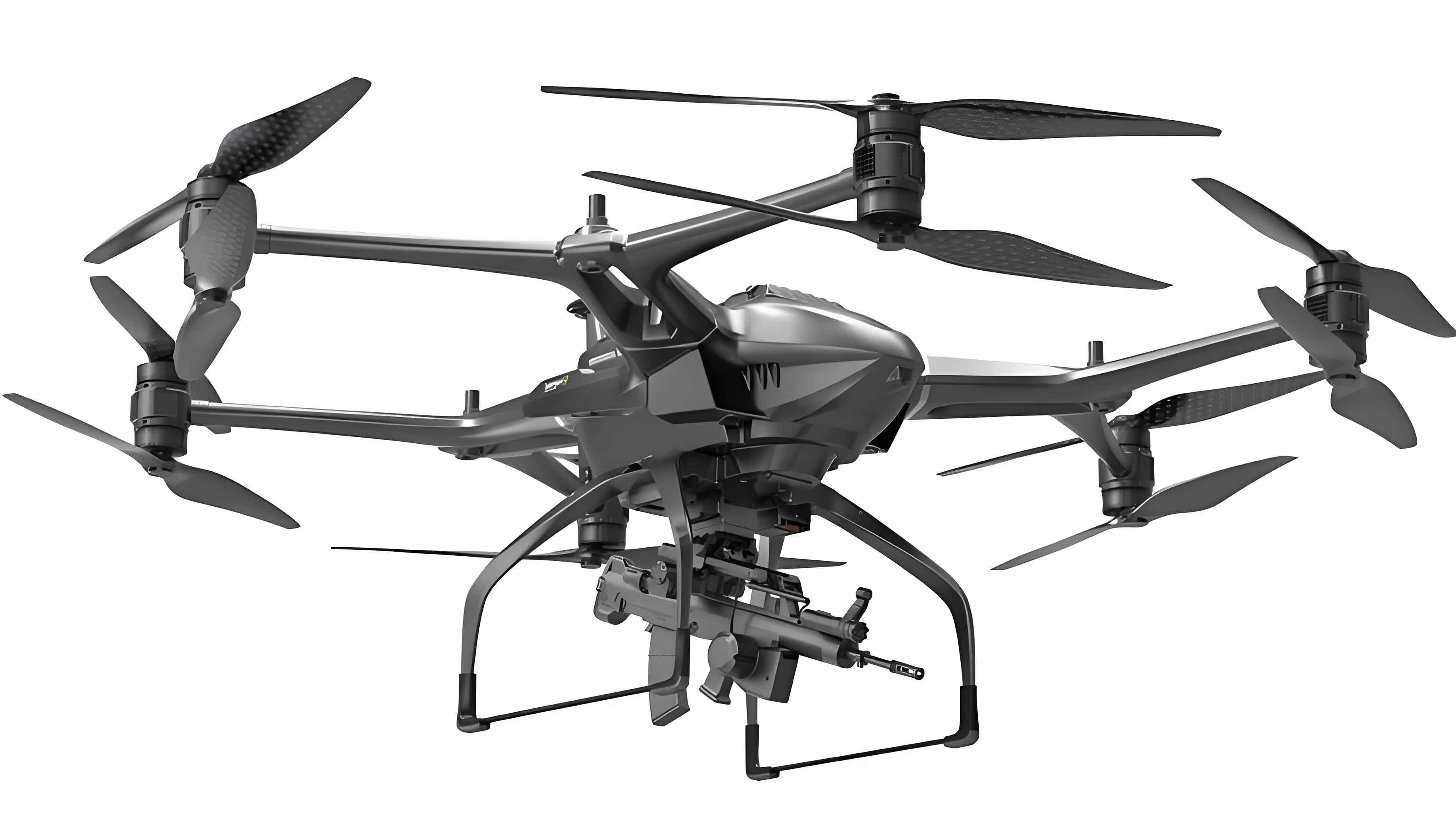
- System Complexity: Military drones often feature large operational radii, long endurance times, diverse mission payloads, and complex platform systems. Consequently, they generate vast amounts of maintenance data, requiring rapid and accurate processing to provide timely launch/abort recommendations and fault diagnostics.
- Mobility and Rapid Redeployment: Military drones possess agile deployment capabilities. Configurations may vary for different mission types. This demands that ground support systems can flexibly configure transportable support resources based on mission type, duration, sortie intensity, and operational conditions, aiming to minimize the logistical footprint during redeployment.
Therefore, informationalized support for military drones must enable Cross-Domain Support, Precise Support, and Agile Support.
| Feature | Manned Aircraft | Military Drone (Medium/Large) |
|---|---|---|
| Primary Support Unit | Single Aircraft | System (Aircraft + GCS + Support) |
| Deployment | Co-located Crew & Aircraft | Separated (GCS, Aircraft, possibly other GCS) |
| Data Generation | High (Post-flight download primary) | Very High (Real-time telemetry + Post-flight) |
| Support Flexibility | Fixed/Staged Support Infra | Requires Agile, Tailorable Support Packages |
Reflections on New Information Technology Development and Application
To address the support challenges of military drones and meet the practical demands of future large-scale, sustained operations and high-mobility agile support, their informationalized support should leverage new technologies like data links, big data, and artificial intelligence to achieve air-ground integration, precise fault diagnosis and prediction, and intelligent support decision-making.
Integrated Support Based on Data Links
1) Military Drone Data Link: The data link is the critical tether connecting the drone and its GCS. Its primary function is to transmit various information and commands using agreed-upon communication protocols and transmission methods from the GCS to the drone for precise flight and mission control. Conversely, the drone transmits data such as system status, critical consumable levels, and critical fault data to the GCS. Key transmitted data includes:
- System Status Data: Airspeed, pressure altitude, throttle position, engine RPM, oil inlet temperature, etc.
- Critical Consumable Data: Fuel remaining in various tanks, battery charge state, etc.
- Critical Fault Data: Fault codes, time of occurrence, fault severity/impact level.
Thus, leveraging the military drone data link enables real-time health status monitoring, allowing for autonomous triggering of fault warnings and responsive support tasks, facilitating a shift from “reactive support” to “proactive support.”
2) Space-Based Internet: Comprised of Low Earth Orbit (LEO) satellite constellations, space-based internet offers advantages like low transmission latency and reduced link loss, providing global or regional internet coverage. By accessing a secure, military-grade space-based internet, drone fleets can be enabled for cross-domain support, achieving functions like data sharing, resource integration, and mission collaboration across vast distances and disparate theaters.
Big Data-Based PHM Systems
Maintenance data from military drones exhibits the classic 5V characteristics of Big Data: Volume (massive scale), Velocity (high speed of generation), Variety (diverse data types—telemetry, logs, images, test results), Value (low value density, requiring extraction), and Veracity (data quality and accuracy). Conventional software tools are increasingly inadequate for uncovering patterns and correlations within these vast datasets.
Therefore, by utilizing cloud computing, cloud storage, and distributed database technologies, a deep data mining analysis can be performed on the full life-cycle support data—from design and manufacturing through service. By establishing various fault and performance models and uncovering the physical meaning behind the data and the mechanistic logic linking different features, it becomes possible to accurately and timely detect and isolate faults, predict remaining useful life (RUL), and assess overall system health status.
The health assessment for a complex military drone system can be viewed as a multi-parameter function:
$$ H(t) = f(S_1(t), S_2(t), …, S_n(t), E[\Theta], M) $$
Where:
- $H(t)$ is the overall Health Index at time $t$.
- $S_i(t)$ represents the real-time or historical value of the $i$-th system parameter (e.g., vibration, temperature, pressure).
- $E[\Theta]$ represents the expected operational profile and environmental conditions.
- $M$ represents the maintenance history and modifications applied.
- The function $f$ is learned and refined through big data analytics on historical fleet data.
| Data Category | Examples | Primary Source | Usage in PHM |
|---|---|---|---|
| Real-Time Telemetry | Engine parameters, control surfaces, voltages | Data Link | Instantaneous health monitoring, fault detection |
| Post-Flight Data | Full system logs, expanded sensor data | Data Transfer Unit (Post-mission) | Detailed analysis, trend identification, model training |
| Ground Test Data | Radar performance, EW suite diagnostics | Automatic Test Equipment (ATE) | Subsystem verification, performance degradation tracking |
| Design & Manufacturing Data | CAD models, material specs, assembly logs | Enterprise Systems | Baseline definition, failure mode understanding |
AI-Based Support Decision-Making
Artificial Intelligence aims to study and develop theories and technologies for mimicking and executing certain human intellectual functions with machines. Since 2011, fueled by rapid advances in cloud computing and the Internet of Things (IoT), AI technology has achieved breakthroughs, particularly in the cross-disciplinary application of deep neural networks.
By endowing computer systems with autonomous learning capabilities through AI, it becomes possible to discern patterns of equipment support under different combat scenarios, scales, and intensities to a certain extent. This enables the scientific prediction of material consumption, thereby assisting in the formulation of support plans and guiding activities such as equipment allocation, supply, maintenance, and transportation. This makes support decision-making for military drone operations more precise and data-driven.
An AI-driven decision support system can optimize resource allocation. A simplified objective function for agile support resource planning during redeployment might be:
$$ \min_{x} \sum_{i=1}^{m} \sum_{j=1}^{n} c_{ij} x_{ij} + \lambda \cdot P(\text{Failure}|x) $$
Subject to constraints:
$$ \sum_{j=1}^{n} x_{ij} \leq R_i \quad \forall i $$
$$ \sum_{i=1}^{m} a_{ik} x_{ij} \geq D_{jk} \quad \forall j,k $$
$$ x_{ij} \in \mathbb{Z}^+ $$
Where:
- $x_{ij}$ is the quantity of support resource $i$ allocated to drone unit $j$.
- $c_{ij}$ is the cost/weight associated with that allocation.
- $P(\text{Failure}|x)$ is the AI-predicted probability of mission failure given allocation $x$.
- $R_i$ is the total available quantity of resource $i$.
- $a_{ik}$ is the amount of capability $k$ provided by one unit of resource $i$.
- $D_{jk}$ is the required capability $k$ for drone unit $j$ for the mission.
- $\lambda$ is a weighting factor balancing cost and risk.
Key Capabilities for Informationalized Support of Military Drones
Informationalized support for military drones will fully utilize modern IT, establish data standards, construct big data platforms, and integrate support information systems to achieve the following key capabilities, providing powerful support for drones to fulfill their diverse missions.
- Real-Time Support Situational Awareness: Throughout the drone’s flight, acquire system status, critical consumable data, and fault information via the data link. Ground-based PHM systems perform classified storage and rapid processing of this real-time data, enabling dynamic system state monitoring and health assessment. This provides ground crews with a visualized, real-time health status of the aircraft and relevant flight information.
- Comprehensive System Health Assessment: Beyond real-time data, post-flight downloads from maintenance data cards and data imports from ground test equipment (e.g., for radar, electronic warfare suites) are aggregated into a big data platform. Correlated with design and manufacturing data specific to the production batch, big data analytics enhance ground PHM capabilities. This reveals trends in aircraft state/performance, predicts airframe remaining life, and comprehensively evaluates mission system performance and combat capability. A composite readiness metric could be formulated as:
$$ \text{MR}(t) = \alpha \cdot H_{\text{platform}}(t) + \beta \cdot \sum_{p=1}^{P} w_p \cdot C_p(t) $$
Where $\text{MR}(t)$ is the Mission Readiness index, $H_{\text{platform}}$ is the platform health index, $C_p(t)$ is the operational capability score of payload $p$, $w_p$ is the mission-specific weight for that payload, and $\alpha, \beta$ are normalization coefficients.
- Intelligent Maintenance & Support Decision Support: Leveraging AI, the support information system mimics human intelligence, possessing capabilities for reasoning, learning, and solving (or assisting in solving) support problems. By assessing alignment with mission requirements from both flight capability and mission capability perspectives, the system can automatically generate mission-tailored support plans and autonomously plan specialized mission training support.
- End-to-End Support Process Control and Optimization: During the operation of the ground support system, applying Digital Twin technology enables the real-time monitoring and simulation of the entire support process. This allows for proactive issue identification, autonomous process reconfiguration and optimization, and synchronized monitoring and预警 of support resource status and consumption rates.
| Capability Pillar | Enabling Technologies | Key Outputs | Impact on Support |
|---|---|---|---|
| Real-Time Awareness | Secure Data Links, Edge Processing, Real-time Dashboards | Live Health Status, Fault Alerts, Consumable Levels | Proactive Response, Reduced Ground Time |
| Comprehensive Assessment | Big Data Analytics, Cloud PHM, Predictive Algorithms | RUL Predictions, Performance Trends, Fleet Health Overview | Condition-Based Maintenance, Optimized Lifecycle Management |
| Intelligent Decision Support | AI/ML, Optimization Algorithms, Decision Trees | Automated Support Plans, Resource Allocation, Training Schedules | Precise & Agile Support, Enhanced Operational Planning |
| Process Control | Digital Twin, IoT Sensors, Workflow Automation | Process Visibility, Anomaly Detection, Optimized Workflows | Efficient Operations, Resource Optimization, Continuous Improvement |
In the future operational landscape, military drones will serve as an integral component of the combat system, delivering increasingly outstanding military utility. To underpin the sustained development of military drone technology and enhance support effectiveness, it is essential to fully apply modern information technologies like data links, big data, and artificial intelligence in developing a new generation of intelligent support information systems. The goal is to realize cross-domain, precise, and agile informationalized support capabilities oriented toward operational missions at the earliest opportunity. The evolution from standalone systems to a connected, intelligent support ecosystem is not merely an enhancement but a necessary transformation to unlock the full operational potential of modern military drone fleets.