
From my perspective as a researcher in aerospace technology, the rise of unmanned aerial vehicles, particularly military drones, has fundamentally transformed modern warfare. Through various regional conflicts, nations worldwide have fully recognized the critical role of military drones, leading to a rapid expansion in their development and deployment. Currently, over 55 countries have integrated unmanned systems into their armed forces. In 2010 alone, the United States invested approximately $5.4 billion in drone technology. It is projected that by 2012, the U.S. Air Force will establish squadrons comprising 12 unmanned aircraft, representing one-third of its long-range aviation fleet. By 2025, an estimated 90% of U.S. combat aircraft may be unmanned. Thus, military drones undoubtedly stand as a highlight in 21st-century weaponry development, underscoring the immense significance of advancing unmanned systems.
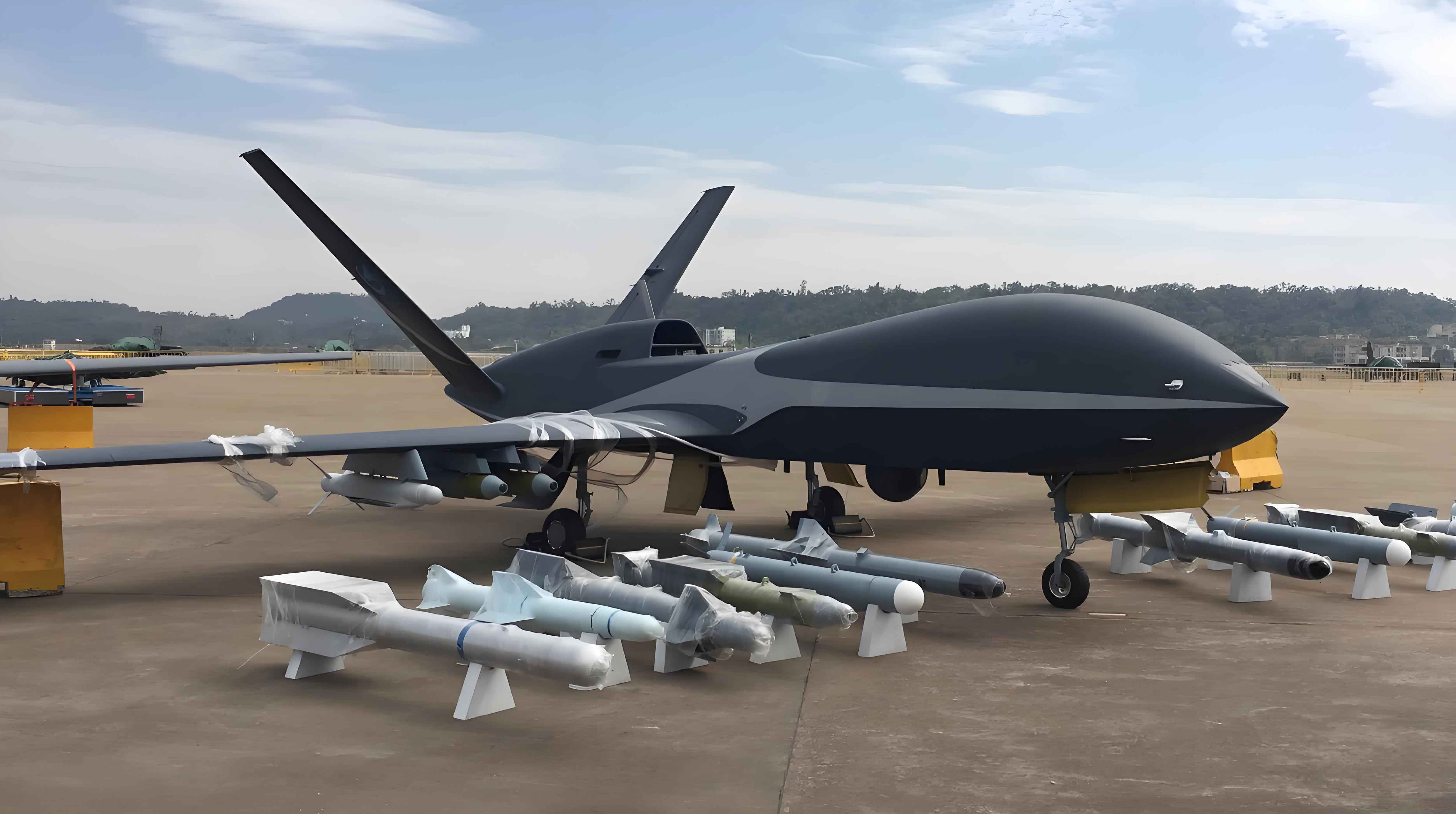
Among unmanned aerial vehicles, unmanned helicopters represent a vital category. They offer advantages such as reduced vibration, lower noise, higher reliability, simple construction, and cost-effectiveness. More importantly, they require no runways or extensive takeoff facilities, enabling vertical takeoff and landing (VTOL) and free hovering, which grants exceptional maneuverability. These military drones are invaluable for artillery training, army intelligence reconnaissance, battlefield surveillance, and naval short-to-medium-range maritime monitoring. The U.S. military has set key requirements for unmanned helicopter development, which have been widely adopted globally as foundational principles: (1) VTOL capability on land or ships without auxiliary equipment; (2) payload capacity exceeding 90 kg; (3) combat radius of 203 km, with endurance over 3 hours while carrying 90 kg payload against 25-knot winds; (4) maximum flight altitude above 3962 m (note: original text stated 3962 km, but this is likely a typo; I assume it means meters); and (5) use of JP-5 aviation fuel. These criteria guide the design and研发 of modern military drones.
In this article, I will delve into the current state and future directions of military drones, focusing on unmanned helicopters. The development of these military drones is categorized by rotor configuration, each with distinct technical characteristics. To provide a clear overview, I will use tables and formulas to summarize key parameters and performance metrics.
Current Development Status of Military Drones
Globally, numerous types of military drones exist, varying in design and function. Based on rotor形式, they can be classified into conventional single-rotor, coaxial twin-rotor, tiltrotor, and disc-shaped axisymmetric configurations. Each type offers unique benefits for military applications, influencing their adoption in different operational scenarios.
Conventional Single-Rotor Military Drones
Conventional single-rotor helicopters dominate the manned helicopter market, accounting for over 85% of the fleet. They utilize a tail rotor to counteract torque and feature streamlined fuselages, with technology that is relatively mature. Unmanned versions leverage this成熟 technology, facilitating development. Key examples of such military drones include:
- U.S. “Fire Scout” RQ-8A/MQ-8B: Developed by Northrop Grumman, these VTOL tactical military drones evolved from Schweitzer civilian helicopters. MQ-8B, an enhanced model, boasts a four-blade rotor, improved powertrain, and greater endurance. It carries a payload of 272 kg, reaches speeds up to 232 km/h, and offers 9 hours of flight time. Equipped with electro-optical/infrared sensors, synthetic aperture radar, and laser rangefinders, it can deploy weapons like Hellfire missiles or Hydra rockets, making it integral to the U.S. Army’s Future Combat Systems and Navy’s Littoral Combat Ship program.
- U.S. A160T “Hummingbird”: Boeing’s A160T military drone features a turboshaft engine with high fuel efficiency, enabling endurance up to 48 hours. It incorporates advanced radar and electronic reconnaissance systems, with a maximum takeoff weight of 3 tons, allowing it to carry significant payloads, including multiple missiles. This military drone exemplifies the push toward long-endurance capabilities.
- Israel “Picador”: Based on the Dynali H2S helicopter, this military drone has a maximum takeoff weight of 720 kg, cruise speed of 203 km/h, and 8-hour endurance. It highlights Israel’s growing expertise in unmanned systems, though its development lags behind fixed-wing military drones.
Other notable conventional single-rotor military drones include Austria’s Camcopter S-100 “Saber,” Sweden’s Skeldar V-150, and the Franco-South African “Vigilant.” To compare their performance, I present a table summarizing key parameters:
| Military Drone Model | Max Speed (km/h) | Endurance (hours) | Payload Capacity (kg) | Max Altitude (m) |
|---|---|---|---|---|
| MQ-8B Fire Scout | 232 | 9 | 272 | ~5000 |
| A160T Hummingbird | ~250 | 48 | ~500 | >6000 |
| Picador | 203 | 8 | ~150 | 3658 |
| Camcopter S-100 | 220 | 6 | 50 | 5500 |
The performance of these military drones can be analyzed using formulas. For instance, endurance \( T \) is often related to fuel capacity \( F \) and fuel consumption rate \( C \): $$ T = \frac{F}{C} $$ where \( C \) depends on engine efficiency and flight conditions. Similarly, the power required for hover \( P_h \) in single-rotor systems can be estimated with: $$ P_h = \frac{T \cdot v_i}{\eta} $$ where \( T \) is thrust, \( v_i \) is induced velocity, and \( \eta \) is efficiency. These equations help in designing军事 drones for optimal missions.
Coaxial Twin-Rotor Military Drones
Coaxial twin-rotor military drones feature two counter-rotating rotors on the same axis, eliminating the need for a tail rotor. This design offers compactness, making it ideal for ship-based or confined operations. Prominent examples include:
- Russia Ka-137: Developed by Kamov, this spherical military drone has a diameter of 1.3 m and height of 2.3 m. It achieves a max speed of 175 km/h, endurance of 4 hours, and ceiling of 5000 m. Used for reconnaissance and civilian tasks like maritime搜索, it demonstrates the versatility of military drones.
- Canada CL-327: A ship-based VTOL military drone derived from the CL-227, it cruises at 158 km/h with 6-hour endurance and 100 kg payload. Its ability to operate from naval vessels without launch/recovery systems underscores its utility in maritime environments.
- Germany “SEAMO”: EADS’s coaxial military drone, designed for German Navy corvettes, has a max takeoff weight of 1125 kg, patrol range of 180 km, and payload of 180 kg. It showcases advanced sensors for naval surveillance.
Additional coaxial military drones under development include Switzerland’s KOAX X-240 and Germany’s Sharc. The compact design of coaxial systems reduces radar cross-section, enhancing stealth—a key consideration for military drones. A comparison table is provided below:
| Military Drone Model | Rotor Diameter (m) | Max Speed (km/h) | Endurance (hours) | Payload (kg) |
|---|---|---|---|---|
| Ka-137 | 5.3 | 175 | 4 | 80 |
| CL-327 | ~4.0 | 158 | 6 | 100 |
| SEAMO | ~3.0 | ~150 | >5 | 180 |
For coaxial rotors, the figure of merit \( FM \) is a key performance metric, calculated as: $$ FM = \frac{T^{3/2}}{\sqrt{2\rho A} \cdot P} $$ where \( T \) is thrust, \( \rho \) is air density, \( A \) is rotor disk area, and \( P \) is power. Higher \( FM \) indicates better efficiency, crucial for extending the range of military drones.
Tiltrotor Military Drones
Tiltrotor military drones combine VTOL capability with high-speed forward flight, merging helicopter and fixed-wing advantages. The U.S. Bell “Eagle Eye” is a prime example, based on the V-22 Osprey. It reaches 370 km/h max speed, cruises at 111 km/h, has a ceiling of 6100 m, combat radius of 185–370 km, payload of 136 kg, and endurance of 3 hours. This military drone exemplifies multi-role potential, though tiltrotor technology is complex and costly. The transition between modes involves aerodynamic adjustments; the lift force \( L \) during conversion can be modeled as: $$ L = \frac{1}{2} \rho v^2 S C_L $$ where \( v \) is velocity, \( S \) is wing area, and \( C_L \) is lift coefficient. Such formulas aid in optimizing performance for diverse missions involving military drones.
Disc-Shaped Axisymmetric Military Drones
Disc-shaped axisymmetric military drones are a novel concept, featuring a环形的机身 with coaxial rotors. Sikorsky’s Cypher “Zero” and Cypher II “Mariner” represent this type. Cypher has a payload of 22.7 kg, cruise speed of 121 km/h, combat radius of 60 km, and endurance of 2.5 hours. Cypher II, an enhanced version, is being considered for U.S. Navy programs. These military drones offer low observability and stability, suitable for surveillance tasks. Their unique design minimizes drag, with drag force \( D \) given by: $$ D = \frac{1}{2} \rho v^2 C_D A $$ where \( C_D \) is drag coefficient and \( A \) is reference area. Reducing \( C_D \) is vital for improving the efficiency of such military drones.
Future Trends in Military Drones
As technology accelerates, military drones are evolving rapidly. Based on current advancements, I identify four key trends that will shape the future of unmanned helicopters.
Long Endurance and High Range
Long-endurance military drones are crucial for extended missions like reconnaissance, communication relay, and border patrol. Unlike manned aircraft, they avoid pilot fatigue, allowing continuous operation. The A160T, with 48-hour endurance and 5560 km range, sets a benchmark. Endurance \( E \) can be enhanced by optimizing fuel efficiency and reducing weight. A simplified model for range \( R \) is: $$ R = v \cdot T = v \cdot \frac{F}{C} $$ where \( v \) is velocity. Innovations in hybrid-electric propulsion and solar power may further boost the capabilities of military drones. For instance, integrating solar panels could extend endurance, with power input \( P_{solar} = \eta_{solar} \cdot A_{solar} \cdot I \), where \( \eta_{solar} \) is efficiency, \( A_{solar} \) is area, and \( I \) is solar irradiance.
Enhanced Stealth Capabilities
Stealth is vital for the survival of military drones, especially given their low-speed, low-altitude profiles. To reduce detectability, future military drones will incorporate radar-absorbent materials, composite structures, and shapes that minimize radar cross-section (RCS). The RCS \( \sigma \) can be approximated for simple shapes; for a sphere, \( \sigma = \pi r^2 \) at optical frequencies, but for stealth, designers aim to lower it through shaping and coatings. Infrared and acoustic stealth are also critical; exhaust cooling and noise suppression techniques will be employed. The overall detectability \( D_t \) might be modeled as: $$ D_t = \alpha \sigma + \beta IR + \gamma N $$ where \( \alpha, \beta, \gamma \) are weighting factors for radar, infrared, and noise signatures. Minimizing \( D_t \) ensures that military drones can operate covertly in contested environments.
Polarization in Size
Military drones will diverge in size: large platforms for long-endurance, heavy-payload missions, and small, tactical units for agility and cost-effectiveness. This polarization will create a layered ecosystem of military drones. Large military drones, like the A160T, may replace manned surveillance platforms, while micro军事 drones, with dimensions under 0.5 m, will excel in urban reconnaissance. Size affects performance parameters; for example, the power-to-weight ratio \( \frac{P}{W} \) is crucial for small军事 drones: $$ \frac{P}{W} = \frac{T \cdot v_h}{W} $$ where \( W \) is weight and \( v_h \) is hover velocity. A table below illustrates this trend:
| Military Drone Category | Typical Size (m) | Endurance (hours) | Payload (kg) | Primary Role |
|---|---|---|---|---|
| Large (e.g., A160T) | >6 | >24 | >500 | Strategic surveillance |
| Medium (e.g., MQ-8B) | 3-6 | 6-12 | 100-300 | Tactical operations |
| Small/Micro (e.g., Cypher) | <2 | <3 | <50 | Close-range recon |
This stratification will enable militaries to deploy军事 drones across various operational tiers, enhancing flexibility.
Multi-Role and High Intelligence
The ultimate goal for military drones is to achieve multi-role functionality and high autonomy. Current systems often lack adaptability to dynamic situations, relying on pre-programmed tasks. Advances in artificial intelligence (AI), machine learning, and sensor fusion will enable军事 drones to make real-time decisions, collaborate in swarms, and perform complex missions like strike,电子 warfare, and logistics. Autonomous navigation can be described using path-planning algorithms, such as the A* algorithm with cost function \( f(n) = g(n) + h(n) \), where \( g(n) \) is path cost and \( h(n) \) is heuristic estimate. Moreover, multi-role capabilities will be enhanced by modular payload systems, allowing quick reconfiguration. The effectiveness \( E_f \) of a military drone in a multi-role context could be expressed as: $$ E_f = \sum_{i=1}^n w_i \cdot C_i $$ where \( w_i \) are weights for roles (e.g., reconnaissance, attack) and \( C_i \) are capability scores. As军事 drones become smarter, they will reduce the need for human intervention, aligning with the “zero-casualty” objective in future warfare.
Conclusion
In summary, military drones, particularly unmanned helicopters, are undergoing rapid evolution driven by technological innovations and operational demands. From conventional single-rotor designs to novel disc-shaped configurations, these军事 drones offer diverse capabilities for modern combat. The future will see them becoming longer-enduring, stealthier, size-polarized, and more intelligent. As I reflect on these trends, it is clear that military drones will play an increasingly pivotal role in defense strategies, reshaping the battlefield dynamics. Continued investment in research and development is essential to unlock their full potential, ensuring that军事 drones remain at the forefront of aerospace advancement.