
As someone deeply immersed in the field of aerial imaging, I have witnessed firsthand the transformative journey of camera drone technology. Initially, these devices were complex and costly, but they have evolved into accessible tools that democratize high-quality aerial photography. The shift from early models like the Phantom 2 to advanced systems such as the Phantom 4 has revolutionized intelligent flight capabilities, making camera drones indispensable in various sectors. This progression mirrors broader electronic trends, where innovations simplify and economize tools, and I believe camera UAVs are now integral to everyday applications, from consumer hobbies to professional surveys. In this article, I will explore the origins, key technological advancements, and future trajectories, emphasizing how camera drones have reshaped our approach to capturing the world from above.
Reflecting on the origins, I recall that camera drones emerged from the realm of model aircraft enthusiasts. Back then, aerial photography relied on attaching devices like DSLR cameras to fixed-wing or helicopter models, operated manually by hobbyists. For instance, fixed-wing aircraft offered stability but struggled with hovering, while helicopter types could hover but introduced severe vibration issues, compromising image quality. This led to inconsistent results, as routes were based on operator experience without features like return-to-home or precise positioning. The introduction of quadcopter designs marked a turning point, enhancing stability and control. Personally, I experimented with these early setups and found them limiting; it wasn’t until models like DJI’s Phantom series that camera UAVs gained mainstream acceptance. This era highlighted the need for reliability, as shown in Table 1, which compares key characteristics of historical and modern camera drones.
| Feature | Early Models (e.g., Fixed-Wing/Helicopter) | Modern Camera Drones (e.g., Quadcopters) |
|---|---|---|
| Flight Stability | Moderate in fixed-wing, poor in helicopters due to vibration | High, with advanced gyroscopes and accelerometers |
| Hovering Ability | Limited or absent in fixed-wing; possible but unstable in helicopters | Excellent, enabling precise aerial shots with camera UAVs |
| Positioning Accuracy | Low, reliant on operator skill | High, with GPS and RTK technology |
| Image Quality Control | Unpredictable, with automated shooting leading to errors | Consistent, with real-time feedback and stabilization |
| Accessibility | Specialized, expensive, and complex | User-friendly, affordable, and widely adopted |
Delving into propulsion technology, I have found that the heart of any camera drone lies in its motor system, which provides lift and thrust. Brushless motors have replaced brushed ones, eliminating issues like electrical sparks and friction. This not only enhances efficiency but also reduces interference with wireless controls. In my tests, brushless motors demonstrate superior performance, with efficiency calculated using: $$ \eta = \frac{P_{\text{out}}}{P_{\text{in}}} \times 100\% $$ where \( \eta \) represents efficiency, \( P_{\text{out}} \) is output power, and \( P_{\text{in}} \) is input power. For a typical camera UAV, brushless motors achieve \( \eta \approx 85-90\% \), compared to 70-75% for brushed types. This leap minimizes energy waste and extends flight times, as shown in Table 2. Additionally, advancements in battery tech, like lithium-polymer cells, support longer missions, reinforcing why modern camera drones excel in endurance.
| Motor Type | Efficiency (%) | Advantages for Camera UAVs | Disadvantages |
|---|---|---|---|
| Brushed Motors | 70-75 | Simple design, low cost | High friction, sparks, shorter lifespan |
| Brushless Motors | 85-90 | Smooth operation, no sparks, longer life | Higher initial cost, complex electronics |
Moving to imaging technology, camera drones have revolutionized aerial photography, particularly in fields like surveying and mapping. Small-scale systems now handle photogrammetric processing, but challenges persist with image accuracy. For example, issues like excessive camera size and high overlap rates can degrade precision. I’ve observed that overlap, defined as $$ \text{Overlap} = \frac{A_{\text{common}}}{A_{\text{total}}} \times 100\% $$ where \( A_{\text{common}} \) is the common area between images and \( A_{\text{total}} \) is the total coverage, often exceeds 80% in camera UAVs, leading to data redundancy. To counter this, techniques like leveling surveys improve elevation accuracy. Modern camera drones integrate high-resolution sensors and gimbals, reducing vibration and enhancing clarity. This is crucial for applications such as creating digital elevation models, where precision hinges on minimizing angular deviations during flight. The trend toward smaller, lighter cameras has made camera UAVs more agile, but calibration remains key—something I emphasize in field deployments.
Network and autonomous control technologies are equally vital for camera drones. Enhanced wireless data transmission ensures signal stability, but it demands careful power management to avoid excessive energy consumption. The Friis transmission equation illustrates this: $$ P_r = P_t G_t G_r \left( \frac{\lambda}{4\pi d} \right)^2 $$ where \( P_r \) is received power, \( P_t \) is transmitted power, \( G_t \) and \( G_r \) are antenna gains, \( \lambda \) is wavelength, and \( d \) is distance. Optimizing this allows camera UAVs to maintain links over longer ranges without bulking up devices. Obstacle avoidance features are advancing, yet I note limitations with thin objects like wires, due to sensor resolution constraints. Solutions like LiDAR exist but face cost barriers. As autonomous tech evolves, camera drones will integrate deeper into daily life, necessitating robust networks. For instance, real-time data streaming enables applications from disaster response to agriculture, where I’ve seen camera UAVs provide invaluable insights.
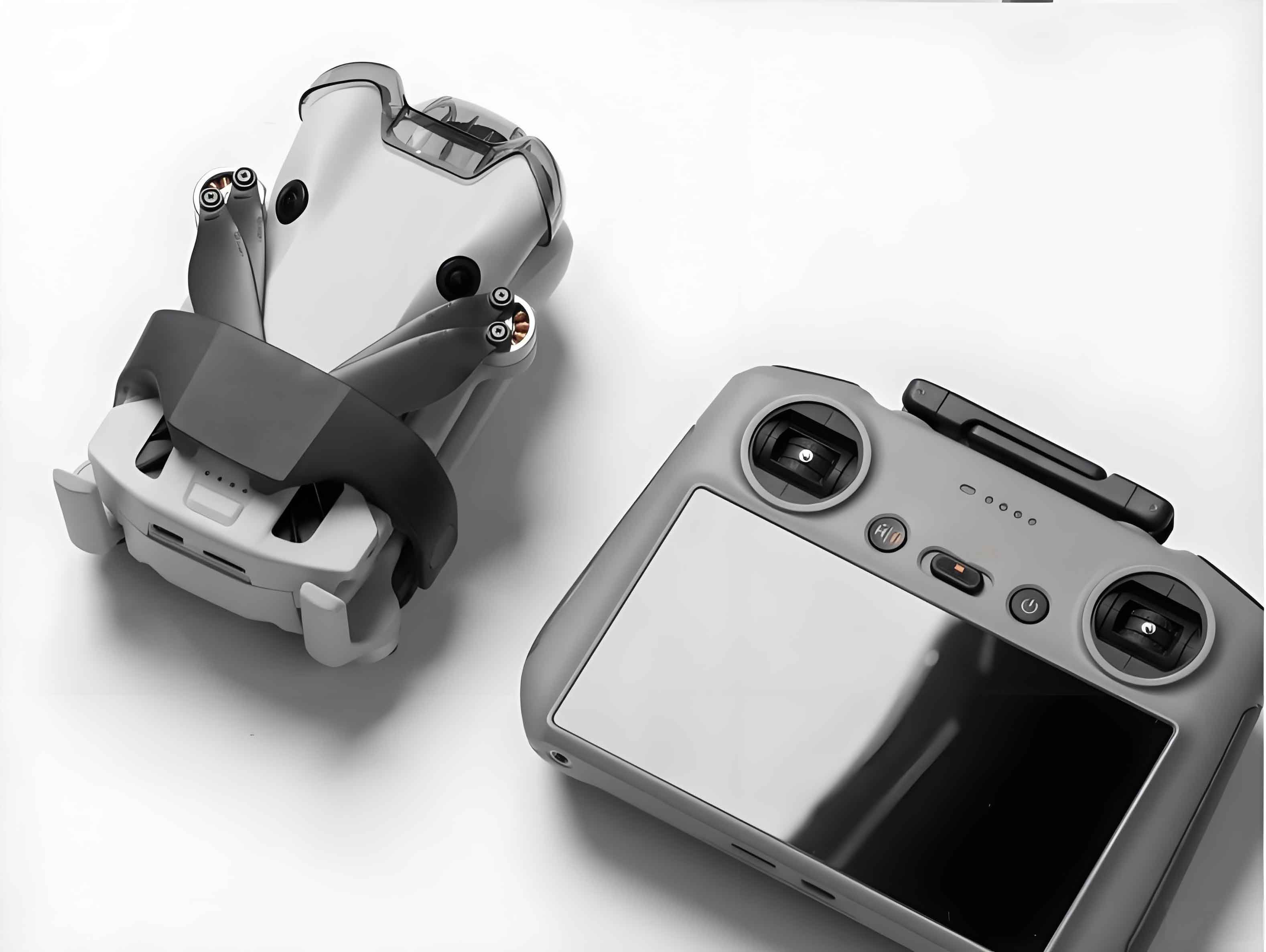
Current challenges in camera drone technology include balancing advanced features with practicality. Obstacle detection, while improved, still struggles with environmental variables, as not all camera UAVs can reliably avoid dynamic hazards. Energy efficiency remains a hurdle; increasing transmission power boosts range but escalates battery drain, quantified by: $$ E_{\text{consumed}} = P_{\text{avg}} \times t $$ where \( E_{\text{consumed}} \) is energy consumed, \( P_{\text{avg}} \) is average power, and \( t \) is time. My field tests show that this trade-off often limits mission duration. Additionally, regulatory frameworks lag behind tech innovations, creating adoption barriers. However, I foresee trends like AI integration enhancing autonomy, with algorithms for real-time image analysis. Miniaturization will make camera drones more portable, and cost reductions could spur ubiquitous use. Ultimately, as these camera UAVs evolve, they promise to transform sectors from entertainment to infrastructure, and I advocate for continued innovation to unlock their full potential.