
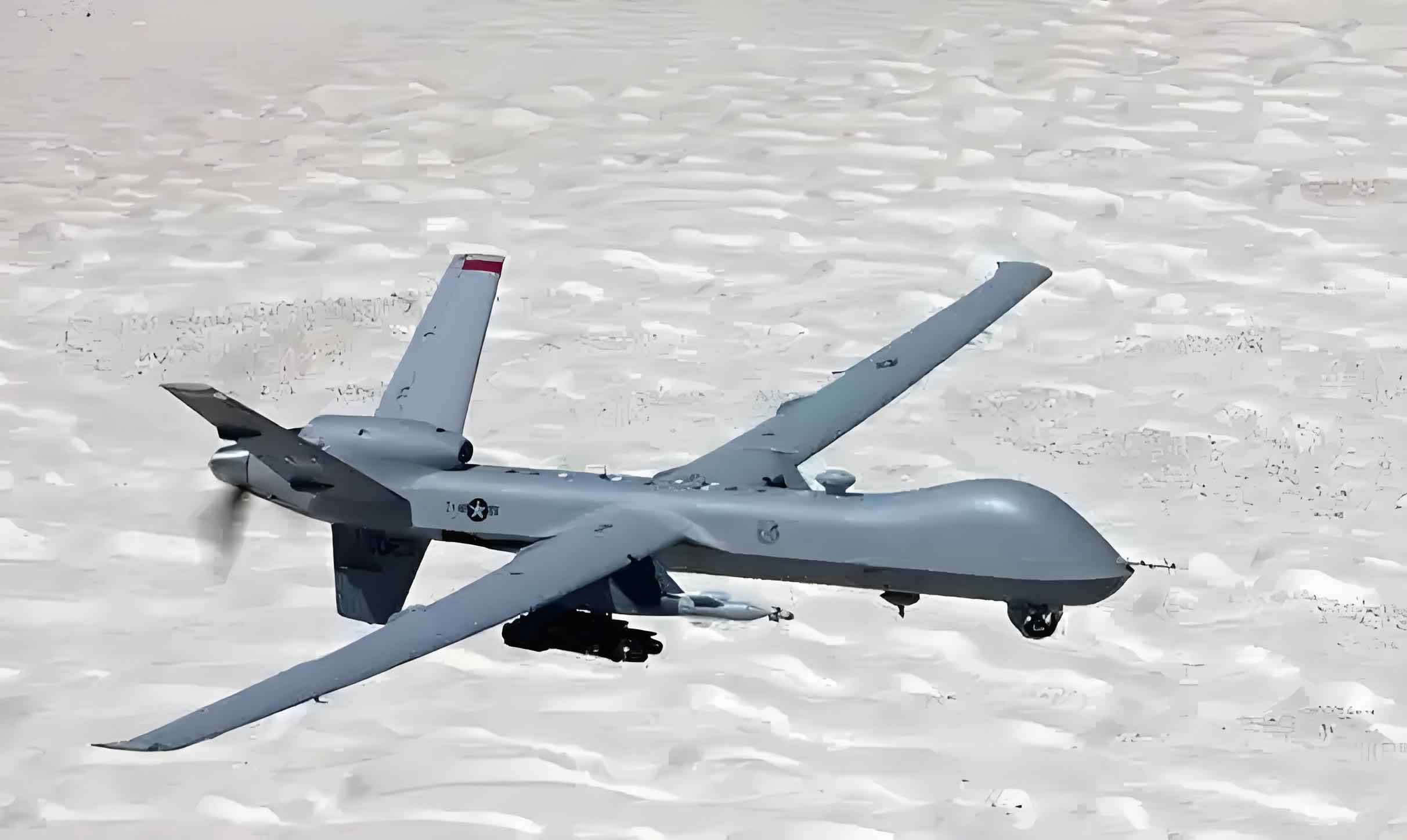
The landscape of modern warfare is undergoing a profound transformation, accelerated by the relentless pace of technological innovation. At the forefront of this revolution is the military drone, a platform whose utility has evolved from simple reconnaissance to a cornerstone of multi-domain operations. The demonstrated effectiveness of unmanned systems in recent conflicts underscores their growing strategic value. This analysis, from a systems-engineering perspective, explores the classification of military drones, the key technologies propelling their capabilities, the emergent operational paradigms they enable, and the strategic considerations for their future development.
1. A Systematic Taxonomy of Military Drones
The vast and growing ecosystem of military drones can be systematically categorized based on their primary mission set, which directly informs their design parameters, payload requirements, and operational concepts.
| Primary Category | Sub-Category / Role | Key Characteristics | Representative Platforms |
|---|---|---|---|
| Reconnaissance & Surveillance | Strategic ISR | Very high altitude, extreme endurance (>24h), long range, high-precision sensors feeding directly into C4ISR networks. | RQ-4 Global Hawk |
| Medium-Range Tactical | Radius 700-1000 km, high-subsonic/supersonic, for rapid area surveillance and real-time data relay. | Historical: D-21 | |
| Short/Near-Range Tactical | Radius 150-350 km or <100 km, lower altitude, for battlefield surveillance, target acquisition for tactical units. | ScanEagle, RQ-11 Raven | |
| Combat & Strike | Multi-Role (ISR & Strike) | Integrates persistent surveillance with onboard or offboard precision-guided munitions for Time-Sensitive Targeting (TST). | MQ-9 Reaper, Wing Loong II, CH-5 |
| Loitering Munition (Suicide Attack) | Designed for one-way missions; autonomously seeks and engages high-value targets like radar emitters using a passive seeker and warhead. | Harpy, Switchblade | |
| Electronic Warfare & Communications | Communications Relay / Jamming | Carries payloads for establishing tactical communication networks or for suppressing/disrupting enemy communications and radars. | Often modified variants of existing drone platforms. |
| Target Simulation | Full-Scale & Sub-Scale Target | Simulates the Radar Cross Section (RCS), flight profiles, and infrared signatures of threat aircraft/missiles for weapon system testing and training. | BQM series, reusable high-performance target drones. |
This taxonomy is not exhaustive; military drones can also be classified by launch/recovery platform (land, sea, air), size/weight, and level of autonomy. However, mission-centric classification most directly relates to their operational impact.
2. Foundational Technologies Enhancing Military Drone Performance
The leap in military drone capabilities is not serendipitous but is driven by targeted advancements in several core technological domains. These technologies directly translate into enhanced survivability, autonomy, and resilience.
2.1 Low-Observable (Stealth) Technology
Survivability against advanced Integrated Air Defense Systems (IADS) is paramount. Stealth technology for military drones focuses on reducing detectability across multiple spectra.
Radar Cross Section (RCS) Reduction: The primary metric is RCS ($\sigma$). The goal is to minimize $\sigma$ through shaping and materials.
$$ \sigma = \lim_{R \to \infty} 4\pi R^2 \frac{|\mathbf{E}_s|^2}{|\mathbf{E}_i|^2} $$
where $R$ is range, $\mathbf{E}_s$ is the scattered field strength, and $\mathbf{E}_i$ is the incident field strength. Techniques include:
- Shape Optimization: Aligning edges, using swept wings, and burying engines to reflect energy away from the source radar.
- Radar Absorbent Materials (RAM): Both coating-type (e.g., epoxy with carbonyl iron or nano-ferrite particles) and structural composite RAMs are used to convert incident RF energy into heat.
- Plasma Stealth: An emerging technique where an ionized plasma cloud around the drone absorbs and deflects radar waves, potentially offering dynamic RCS reduction without compromising aerodynamics.
Infrared Signature Suppression: Reducing thermal emissions is critical against Infrared Search and Track (IRST) systems. The total radiant exitance is governed by the Stefan-Boltzmann law:
$$ M = \epsilon \sigma T^4 $$
where $M$ is total emitted energy per unit area, $\epsilon$ is emissivity, $\sigma$ is the Stefan-Boltzmann constant, and $T$ is absolute temperature. Military drone design mitigates this by using high-bypass turbofan engines, shielding hot exhaust parts, and employing active cooling for critical surfaces.
2.2 Artificial Intelligence and Autonomy
AI is the force multiplier that transforms the military drone from a remotely piloted vehicle into an intelligent, collaborative asset.
| AI Application Level | Capabilities Enabled | Key Technologies |
|---|---|---|
| Single-Platform Intelligence | Real-time obstacle avoidance, dynamic path re-planning, automatic target recognition (ATR), and feature-aided tracking. | Computer Vision (CNN), Sensor Fusion (Kalman Filters), Reinforcement Learning for control. |
| Collaborative & Swarm Intelligence | Distributed task allocation, collective decision-making, adaptive formation flying, and emergent behaviors for saturation attacks. | Distributed AI, Bio-inspired algorithms (Ant Colony, PSO), Robust communications protocols. |
| Mission-Level Autonomy | Interpretation of commander’s intent, autonomous mission planning and re-tasking, dynamic resource management, and self-assessment of mission success. | Natural Language Processing (NLP), Hierarchical Task Networks (HTN), Explainable AI (XAI). |
The progression is towards fully autonomous missions where a swarm of military drones can be tasked with “locate and neutralize all SAM sites in Area X,” with the system autonomously determining the best composition, approach, and tactics.
2.3 Electromagnetic Environmental Effects (E3) Resilience
Operating in contested electromagnetic spectrums requires robust protection. The resilience of a military drone’s data link and avionics is critical.
Link Robustness: The performance of a wireless data link in jamming can be analyzed through the Signal-to-Interference-plus-Noise Ratio (SINR):
$$ \text{SINR} = \frac{P_r}{P_j + N} = \frac{P_t G_t G_r \lambda^2}{(4\pi R)^2 L (P_j + N)} $$
where $P_r$ is received signal power, $P_j$ is jamming power, $N$ is noise power, $P_t$ is transmit power, $G$ are antenna gains, $\lambda$ is wavelength, $R$ is range, and $L$ is system loss. Countermeasures include:
- Low Probability of Intercept/Low Probability of Detection (LPI/LPD): Using spread-spectrum techniques (e.g., Frequency Hopping, Direct Sequence) to make signals appear as noise.
- Adaptive Nulling: Employing phased array antennas to dynamically steer nulls in the antenna pattern towards jammers.
- Source/Channel Coding: Advanced Forward Error Correction (FEC) codes (e.g., LDPC, Polar codes) to recover data under high bit-error-rate conditions.
Platform Hardening: This involves electromagnetic shielding of critical components, ensuring proper grounding and bonding to prevent coupling, and designing for high immunity to electromagnetic pulse (EMP) and High-Power Microwave (HPM) weapons, which are potent threats against military drone swarms.
3. Predominant Operational Paradigms for Military Drones
The convergence of advanced platforms and enabling technologies has given rise to new operational concepts where the military drone is no longer merely a supporting asset but a central player.
| Operational Paradigm | Core Concept & System Composition | Primary Mission Sets |
|---|---|---|
| Stand-Alone Strike Operations | A high-endurance combat military drone (e.g., MQ-9) operates in a kill-chain supported by national or theater ISR assets and satellite communications. | Counter-Terrorism (CT) strikes, Time-Sensitive Targeting (TST), armed overwatch, and strategic persistent strike. |
| Manned-Unmanned Teaming (MUM-T) | A manned aircraft (e.g., fighter, command node) acts as a mission commander and forward controller for a team of loyal wingman military drones. | Penetrating ISR, SEAD/DEAD vanguard, distributed sensor/shooter networks, extending the manned platform’s tactical reach and survivability. |
| Drone Swarm Operations | A large number of low-cost, attritable military drones operate as a collective with decentralized or hive-mind intelligence. | Saturation attacks to overwhelm air defenses, distributed sensing for wide-area surveillance, electronic warfare “clouds,” and precision cooperative strike. |
| Network-Centric Warfare Node | The military drone functions as an agile, persistent node in a larger sensor and communications grid, linking space, air, maritime, and ground assets. | Communications relay, data fusion hub, battle damage assessment (BDA), and providing over-the-horizon targeting for other weapon systems. |
| Component of Cross-Domain Operations | Military drones are integrated into multi-domain battle plans, such as anti-access/area denial (A2/AD) breach operations, often from sea-based platforms. | Carrier-based long-range strike (e.g., X-47B concept), maritime surveillance, and contributing to sea control and power projection in contested environments. |
The effectiveness of these paradigms hinges on secure, resilient communications (data links) and a robust command and control (C2) architecture capable of managing the complexity and dynamic re-tasking inherent in these operations.
4. Strategic Imperatives for Future Military Drone Development
To fully realize the potential of military drone technologies and operational concepts, a holistic and strategic approach to development, integration, and testing is required.
| Strategic Imperative | Key Focus Areas | Expected Outcome |
|---|---|---|
| Centralized Oversight & Architectural Design | Establish a unified requirements authority and develop joint architecture standards (e.g., STANAG, Open Mission Systems – OMS). | Interoperability across services, reduced development redundancy, and the ability to form integrated “systems of systems.” |
| Requirements-Driven Development & Rigorous Operational Testing | Anchor development in validated joint warfighting needs. Test prototypes and systems in operationally representative environments against a thinking adversary. | Fielding of effective, suitable, and survivable military drone systems that deliver real tactical and operational advantage. |
| Technology-Pushed Engineering & System Integration | Targeted investment in breakthrough technologies (AI/ML, advanced propulsion, directed energy weapons for drones) and their seamless integration into platforms and networks. | Maintaining a technological edge. Creating adaptable, upgradable platforms that can leverage new payloads and software updates rapidly. |
A critical formula for success in this domain is the balanced alignment of User Needs (N), Technological Opportunity (T), and Programmatic Resources (R):
$$ \text{Development Priority Score} = f(N, T, R) = \alpha \cdot \text{Mission Criticality}(N) + \beta \cdot \text{Technology Readiness & Impact}(T) – \gamma \cdot \text{Integration Risk & Cost}(R) $$
where $\alpha, \beta, \gamma$ are weighting coefficients determined by strategic goals. This heuristic helps prioritize which military drone capabilities to pursue.
5. Concluding Perspective
The trajectory of the military drone is one of exponential growth in capability and strategic significance. From its origins as a remote sensor, it has matured into a versatile, intelligent, and network-integrated combatant capable of executing roles across the full spectrum of conflict. The synergy of stealth, artificial intelligence, and electromagnetic resilience technologies is creating a new generation of autonomous systems that will redefine air power, challenge traditional defense paradigms, and necessitate novel countermeasures. The future battlespace will undoubtedly be shaped by the proliferation and sophistication of military drones, making their thoughtful development, integration, and ethical deployment a paramount concern for defense establishments worldwide. The nation that best masters the integration of these unmanned systems into a cohesive, joint force will secure a decisive advantage in the conflicts of tomorrow.