
In recent years, Unmanned Aerial Vehicle technology has advanced significantly, with applications spanning agriculture, environmental monitoring, disaster response, and more. Quadrotor Unmanned Aerial Vehicles, a popular category of Unmanned Aerial Vehicle, are widely studied due to their simple structure and versatility. However, single Unmanned Aerial Vehicle systems face limitations in complex tasks, leading to increased interest in multi-Unmanned Aerial Vehicle formation control. This paper addresses the formation control problem for multiple quadrotor Unmanned Aerial Vehicles by proposing an event-triggered two-level tandem game-theoretic control algorithm. Our approach decomposes the formation task into multiple games, constructing a framework that enables rapid formation and resource efficiency. We design two parallel games in the first level for position and velocity strategies, followed by a second-level game to optimize control gains. An event-triggered mechanism dynamically adjusts strategy updates, reducing computational and communication burdens on the limited onboard resources of Unmanned Aerial Vehicles. Through simulations and real-platform tests, we validate the effectiveness and feasibility of our method.
The quadrotor Unmanned Aerial Vehicle model is essential for control design. For the i-th Unmanned Aerial Vehicle in a multi-Unmanned Aerial Vehicle system, the kinematic and dynamic models are given by:
$$ \dot{P}_i = V_i, \quad \ddot{P}_i = \dot{V}_i, $$
where \( P_i = [p_{i,x}, p_{i,y}, p_{i,z}]^T \) and \( V_i = [v_{i,x}, v_{i,y}, v_{i,z}]^T \) represent position and velocity, respectively. The dynamics along each axis are:
$$ \begin{aligned}
\ddot{p}_{i,x} &= -\frac{k_{i,x}}{m_i} \dot{p}_{i,x} + \frac{T_i}{m_i} \left( \cos(\phi_i) \sin(\theta_i) \cos(\psi_i) + \sin(\phi_i) \sin(\psi_i) \right), \\
\ddot{p}_{i,y} &= -\frac{k_{i,y}}{m_i} \dot{p}_{i,y} + \frac{T_i}{m_i} \left( \cos(\phi_i) \sin(\theta_i) \sin(\psi_i) – \sin(\phi_i) \cos(\psi_i) \right), \\
\ddot{p}_{i,z} &= -\frac{k_{i,z}}{m_i} \dot{p}_{i,z} + \frac{T_i}{m_i} \cos(\phi_i) \cos(\theta_i) – g,
\end{aligned} $$
with \( m_i \) as mass, \( T_i \) as total thrust, \( k_i = [k_{i,x}, k_{i,y}, k_{i,z}]^T \) as aerodynamic damping coefficients, \( \phi_i, \theta_i, \psi_i \) as roll, pitch, and yaw angles, and \( g \) as gravity. The force components \( S_i = [s_{i,x}, s_{i,y}, s_{i,z}]^T \) are:
$$ \begin{aligned}
s_{i,x} &= T_i \left( \cos(\phi_i) \sin(\theta_i) \cos(\psi_i) + \sin(\phi_i) \sin(\psi_i) \right), \\
s_{i,y} &= T_i \left( \cos(\phi_i) \sin(\theta_i) \sin(\psi_i) – \sin(\phi_i) \cos(\psi_i) \right), \\
s_{i,z} &= T_i \cos(\phi_i) \cos(\theta_i).
\end{aligned} $$
For a constant strategy \( S_i \) applied over time \( t_s \), the velocity and position evolve as:
$$ V_i(t_s) = \kappa_i (S_i – m_i g e_3) + \lambda_i V_i(t_0), $$
$$ P_i(t_s) = P_i(t_0) + \mu_i (S_i – m_i g e_3) – \gamma_i V_i(t_0), $$
where \( \kappa_i, \lambda_i, \mu_i, \gamma_i \) are diagonal matrices derived from system parameters, and \( e_3 = [0, 0, 1]^T \).
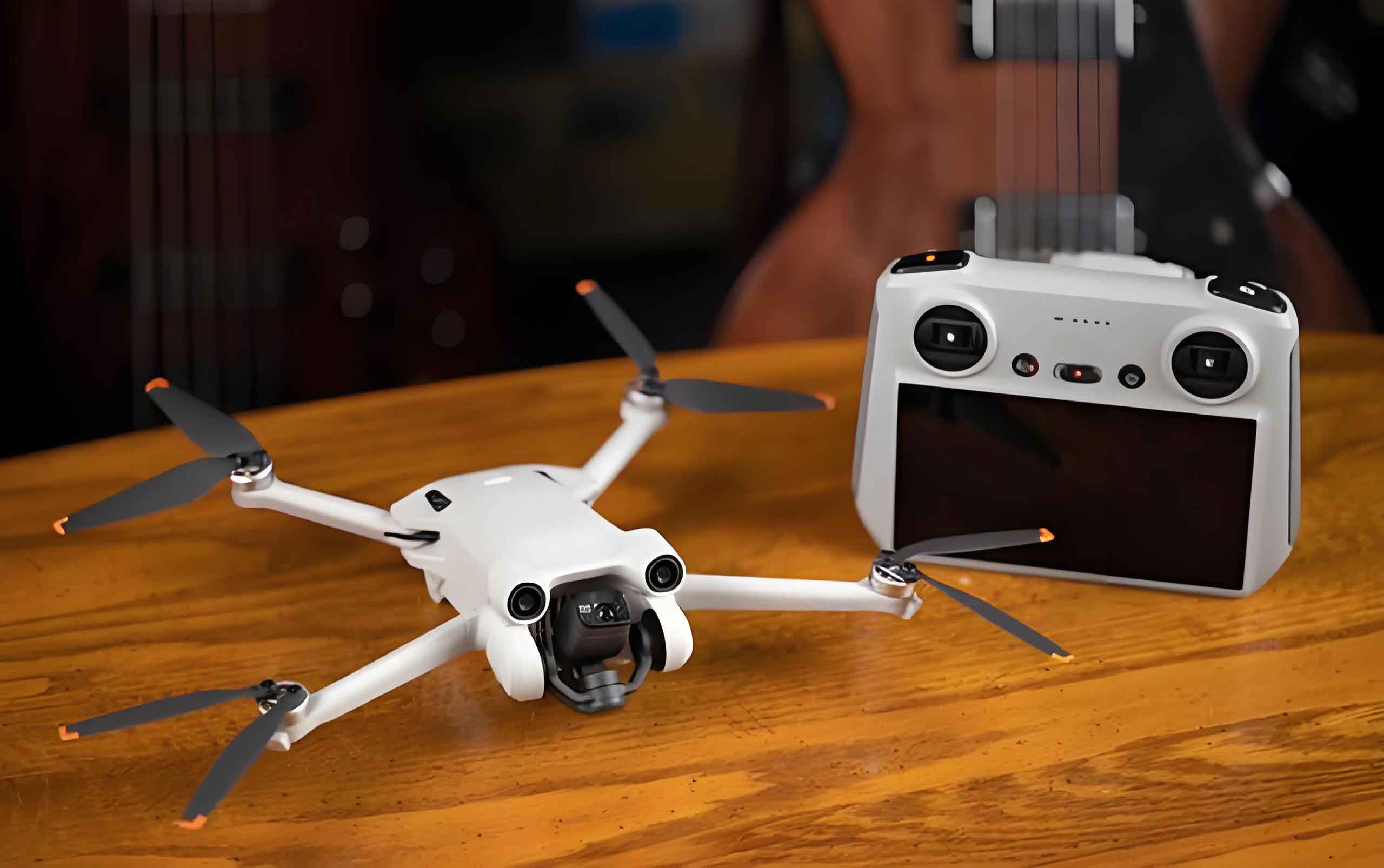
Our control framework employs a two-level tandem game. In the first level, Unmanned Aerial Vehicle pairs engage in two parallel games: one for position and one for velocity strategies. Consider Unmanned Aerial Vehicles i and j with communication capability. The position game involves cost functions:
$$ J^P_{ij}(S^P_i, S^P_j) = \alpha \| P_i(t_s) – P_j(t_s) – P_{di} + P_{dj} \|^2 + \beta \| P_i(t_s) – P(t_s) – P_{di} \|^2, $$
$$ J^P_{ji}(S^P_j, S^P_i) = \alpha \| P_j(t_s) – P_i(t_s) – P_{dj} + P_{di} \|^2 + \beta \| P_j(t_s) – P(t_s) – P_{dj} \|^2, $$
where \( S^P_i \) and \( S^P_j \) are strategies, \( P_{di} \) and \( P_{dj} \) are desired positions, \( P(t_s) \) is the virtual leader’s position, and \( \alpha, \beta \in (0,1) \) are weights. The Nash equilibrium is found by solving:
$$ \begin{bmatrix} \frac{\partial J^P_{ij}}{\partial S^P_i} \\ \frac{\partial J^P_{ji}}{\partial S^P_j} \end{bmatrix} = \begin{bmatrix} 0 \\ 0 \end{bmatrix}, $$
which reduces to a linear system \( H^P_x s^P_x = C^P_x \) with a unique solution. Similarly, the velocity game uses cost functions:
$$ J^V_{ij}(S^V_i, S^V_j) = \alpha \| V_i(t_s) – V_j(t_s) \|^2 + \beta \| V_i(t_s) – V(t_s) \|^2, $$
$$ J^V_{ji}(S^V_j, S^V_i) = \alpha \| V_j(t_s) – V_i(t_s) \|^2 + \beta \| V_j(t_s) – V(t_s) \|^2, $$
leading to another Nash equilibrium solution. Each Unmanned Aerial Vehicle i obtains strategy sets \( \mathcal{S}^P_i = \{S^P_{i,1}, \dots, S^P_{i,n_i}\} \) and \( \mathcal{S}^V_i = \{S^V_{i,1}, \dots, S^V_{i,n_i}\} \) from interactions with neighbors in set \( Q_i \).
In the second level, these strategies are weighted to form participants in a new game. We apply Algorithm 1 to compute weights based on position and velocity errors:
| Step | Description |
|---|---|
| 1 | Determine \( n \) as the size of \( Q_i \) |
| 2 | Initialize error sums and weights to zero |
| 3 | For each neighbor, accumulate errors \( e^P_{ik} = \| P_i – P_k – P_{di} + P_{dk} \| \), \( e^V_{ik} = \| V_i – V_k \| \) |
| 4 | Initialize weight sets |
| 5 | For each neighbor and axis, compute weights \( w^P_{ik}(j) = e^P_{ik}(j) / E^P_i(j) \) if \( E^P_i(j) \neq 0 \), else \( 1/n \) |
| 6 | Output weight sets \( \mathcal{W}^P_i \) and \( \mathcal{W}^V_i \) |
The weighted strategies for the second-level game are:
$$ S^v_i = \sum_{k=1}^{n_i} \text{diag}(w^v_{ik}) S^V_{i,k}, \quad S^p_i = \sum_{k=1}^{n_i} \text{diag}(w^p_{ik}) S^P_{i,k}. $$
Players in the second-level game are gain coefficients \( W^v_i = [w^v_{i,x}, w^v_{i,y}, w^v_{i,z}]^T \) and \( W^p_i = [w^p_{i,x}, w^p_{i,y}, w^p_{i,z}]^T \), which scale the strategies to form the actual control:
$$ S_i = \text{diag}(W^p_i) S^p_i + \text{diag}(W^v_i) S^v_i. $$
The cost functions for the second-level game are:
$$ J^v_i(W^v_i, W^p_i) = \| V_i(t_s) – V(t_s) \|^2 + \| \text{diag}(W^v_i) S^v_i – S^v_i \|^2, $$
$$ J^p_i(W^p_i, W^v_i) = \| P_i(t_s) – P(t_s) – P_{di} \|^2 + \| \text{diag}(W^p_i) S^p_i – S^p_i \|^2. $$
Solving for Nash equilibrium gives optimal gains. For example, along the x-axis:
$$ \begin{bmatrix} \frac{\partial J^v_{i,x}}{\partial w^v_{i,x}} \\ \frac{\partial J^p_{i,x}}{\partial w^p_{i,x}} \end{bmatrix} = \begin{bmatrix} 0 \\ 0 \end{bmatrix}, $$
which simplifies to \( H^w_{i,x} w_{i,x} = C^w_x \) with a unique solution due to a positive determinant.
An adaptive algorithm adjusts the critical parameter \( t_s \). Algorithm 2 computes \( t_s \) based on maximum position errors among communicating Unmanned Aerial Vehicle pairs:
| Step | Description |
|---|---|
| 1 | Determine the number of Unmanned Aerial Vehicles |
| 2 | For each Unmanned Aerial Vehicle, compute errors with neighbors |
| 3 | Find maximum error \( e^P_{\text{max}} \) |
| 4 | Update \( t_s = e^{(e^P_{\text{max}} – e^P_0) / e^P_0} \) |
| 5 | Output \( t_s \) |
Event triggering reduces game activation. The total error between Unmanned Aerial Vehicles i and j is \( e_{ij} = e^P_{ij} + e^V_{ij} \), where \( e^P_{ij} = \| P_i – P_j – P_{di} + P_{dj} \| + \| P_i – P – P_{di} \| \) and \( e^V_{ij} = \| V_i – V_j \| + \| V_i – V \| \). If \( e_{ij} < E \) or \( e_{ij} \) is decreasing, strategies remain unchanged; otherwise, games are triggered. Algorithm 3 outlines the overall process:
| Step | Description |
|---|---|
| 1 | Get neighbor count \( n_i \) |
| 2 | For each neighbor, compute error; trigger first-level game if needed |
| 3 | Update weights using Algorithm 1 |
| 4 | Update weighted strategies |
| 5 | Trigger second-level game for optimal gains |
| 6 | Update control strategies |
We conducted simulations with six Unmanned Aerial Vehicles. Initial states and desired positions relative to a virtual leader are:
| Unmanned Aerial Vehicle | Initial Position | Initial Velocity | Desired Position |
|---|---|---|---|
| 1 | [1, 2, 0] | [0, 0, 0] | [1, √3, 0] |
| 2 | [4, 3, 0] | [0, 0, 0] | [2, 0, 0] |
| 3 | [4, -1, 0] | [0, 0, 0] | [1, -√3, 0] |
| 4 | [2, -3, 0] | [0, 0, 0] | [-1, -√3, 0] |
| 5 | [-5, -2, 0] | [0, 0, 0] | [-2, 0, 0] |
| 6 | [-2, 5, 0] | [0, 0, 0] | [-1, √3, 0] |
Parameters include \( \alpha = 0.8 \), \( \beta = 0.2 \), \( E = 0.05 \), masses \( m_i = 1.121 \), and damping coefficients \( k_{i,j} = 0.01 \). The virtual leader’s trajectory is \( P = [10 \sin(0.1t), 10 \cos(0.1t) – 10, 0.5t]^T \). Over 40 seconds, the Unmanned Aerial Vehicles quickly form the desired formation and follow the leader. Position and velocity errors converge to near zero within 5-10 seconds, demonstrating rapid formation. Control strategies evolve smoothly, and event triggering reduces game updates, with triggering frequencies below 45% for all Unmanned Aerial Vehicles, as shown in Table 3.
| Unmanned Aerial Vehicle | Triggering Frequency |
|---|---|
| 1 | 36.18% |
| 2 | 33.58% |
| 3 | 34.49% |
| 4 | 32.78% |
| 5 | 34.25% |
| 6 | 33.88% |
Comparative experiments with finite-time formation control highlight our method’s superiority. Using three Unmanned Aerial Vehicles with a virtual leader trajectory \( P = [5 \sin(0.2t), 5 \cos(0.2t), 0.5t]^T \), our approach achieves faster convergence (6.77 s vs. 10.35 s) and higher accuracy (0.0191 m vs. 0.0521 m steady-state error). Triggering frequencies remain under 45%, conserving resources.
Real-platform tests with three JUYE UAV units further validate practicality. The virtual leader follows \( P = [\sin(0.1t), \cos(0.1t), 0.05t]^T \). Initial states are:
| Unmanned Aerial Vehicle | Initial Position | Initial Velocity | Desired Position |
|---|---|---|---|
| 1 | [2, 1.5, 0] | [0, 0, 0] | [0.75, 0, 0] |
| 2 | [0, -1.5, 0] | [0, 0, 0] | [-0.75, -0.75, 0] |
| 3 | [-1.2, 1.5, 0] | [0, 0, 0] | [-0.75, 0.75, 0] |
The formation is achieved within 10 seconds, with errors maintained at low levels. Triggering frequencies are approximately 24%, indicating efficient resource use. This demonstrates that our event-triggered two-level tandem game-theoretic control is effective for multi-Unmanned Aerial Vehicle systems, enabling rapid formation and reduced computational load.
In summary, we propose a novel control algorithm for multi-Unmanned Aerial Vehicle formation that leverages game theory and event triggering. The two-level tandem structure allows Unmanned Aerial Vehicles to optimize strategies through Nash equilibrium, while adaptive parameters and triggering mechanisms enhance efficiency. Simulations and real-world tests confirm that our method outperforms traditional approaches in convergence speed and resource conservation. Future work could extend this to heterogeneous Unmanned Aerial Vehicle teams or dynamic environments. The integration of JUYE UAV platforms shows promise for practical applications in various fields.